

Captain “Sully” Sullenberger on Leadership, Humility, and Safety for Healthcare and Beyond
TL;DR: Captain “Sully” Sullenberger's leadership lessons from Flight 1549 highlight that safety depends on humility, trust, teamwork, and learning from mistakes–not heroics or checklists alone. High-risk industries like aviation improve safety by focusing on systems, psychological safety, and fact-based decisions. Healthcare has adopted some tools, but without the same cultural commitment from leaders, progress has plateaued.

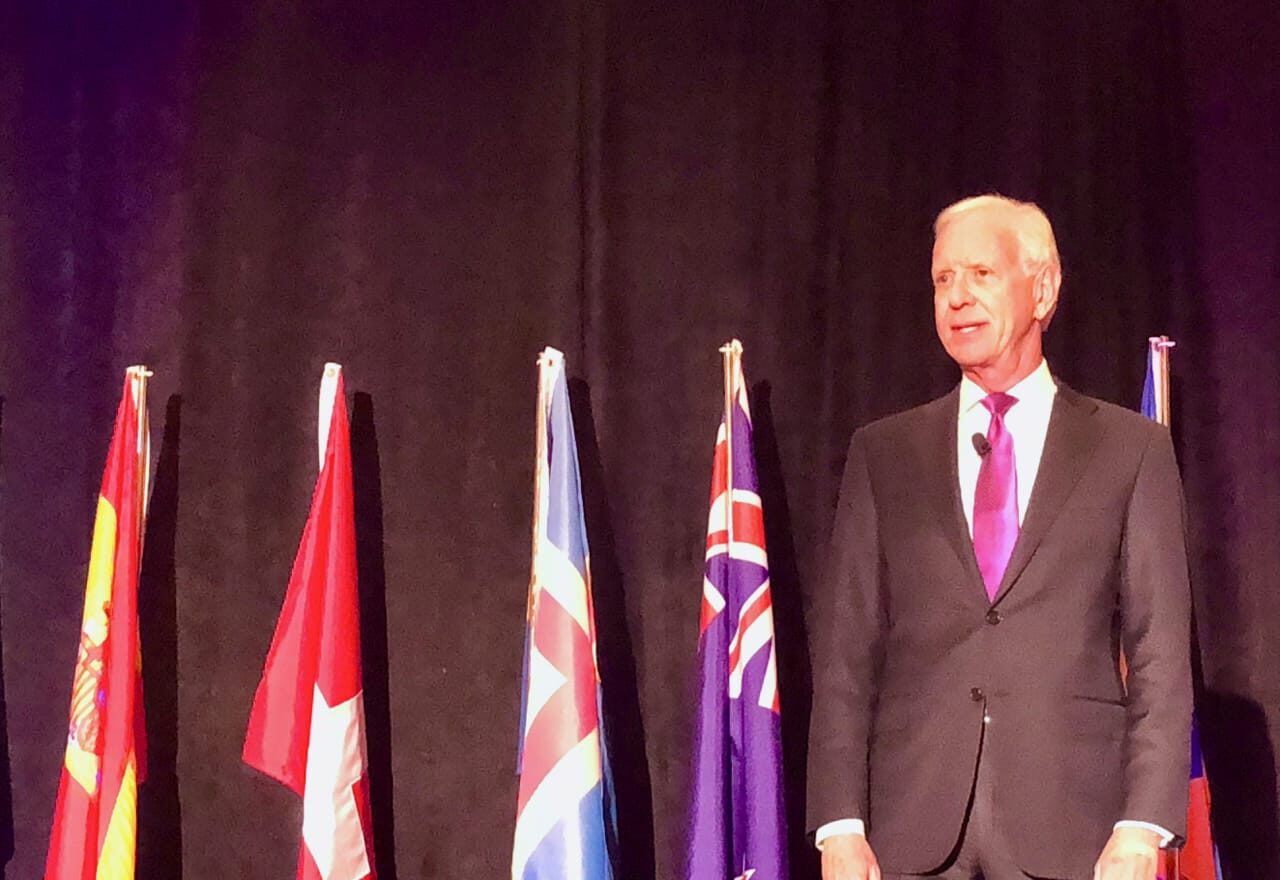
After I kicked off the Lean Six Sigma World Conference this week, I had the fantastic opportunity to hear the now-legendary Captain Chesley “Sully” Sullenberger speak on Wednesday to bring the event to a close.
What Captain “Sully” Sullenberger Says About Leadership After Flight 1549
Sully did not disappoint. What an amazing talk and what an impressive person he is, on so many levels.
He spoke, of course, about Flight 1549, but in this post, I'll share some notes from his talk that seemed most relevant to Lean, patient safety, and topics we normally discuss here on the blog. I think some of the stories and themes from Sully's talk are outlined in his two books.
First, here are some older posts and podcasts about Sully from or with author Naida Grunden, who happens to be a mutual friend of mine and Sully's (she's known Sully far longer than she's known me):
Sully Demonstrates Humility & Graciousness
Sully started his talk by saying, “Despite my best efforts, I've gotten most of the attention… it's unfortunate.” He graciously shared credit with his co-pilot, Jeff Skiles, the rest of the crew, and people with boats who came to rescue passengers.
Flight 1549 was just a few days before President Obama's inauguration in January 2008. The president-elect called Sully and invited him to the inauguration. Sully said that, while he was still in shock from the events, he had the wherewithal to say that he could only accept the invitation if it also included all of his crew and their families. Obama said “yes” to that request.
Why Most Accidents Are Caused by Systems, Not a Single Mistake
Sully talked about how “bad outcomes are rarely due to a single mistake.” They are more likely the end result of a causal chain of events, as he said.
This should remind people in healthcare of the so-called Swiss Cheese Model and how, oftentimes, a number of mistakes or conditions have to line up just right for a bad outcome to occur.
How Humility in Leaders Enables Better Teamwork and Safer Decisions
Sully talked about the importance of leadership and culture, saying the “leader is responsible for every aspect of the welfare” of those they lead. This reminds me of former Alcoa CEO Paul O'Neill talking about the idea that a leader is responsible for everything that happens in an organization they lead. Responsibility for errors or bad outcomes can't be delegated.
Sully said:
“With authority comes great responsibility.”
The Role of Leaders
Sully talked about what he called “realistic optimism,” where leaders can find the balance in saying, “Ultimately, we will survive” but “at the same time, having the courage to fully face reality.”
He said that leaders “must give a clear vision of a possible future.” Leaders must motivate people and show them how their hard work matters and connects to the whole.
Sully talked about how excellence “requires”:
- Top-down culture and
- Bottom-up engagement
We talk about that exact same dynamic A LOT in discussions of Lean Leadership and Kaizen (continuous improvement). John Shook talks about how a Lean culture is neither completely top-down, nor completely bottom-up… it's both at the same time.
Why Trust Matters More Than Compliance in Safety-Critical Organizations
Sully emphasized the need for trust. He took a slap at US Airways management in saying that leaders needed to “motivate the crew to follow protocols even when they didn't trust our management (because they weren't trustworthy.”
Without trust, I don't know how far a hospital (or any organization) is going to get in their attempts at starting a “Lean journey.”
In my experience, far too many leaders in healthcare have big egos. Arrogance in aviation led to a lot of accidents, as Sully explained.
“Ego can wall people off from the innovation of others.”
Sully said, “None of us are infallible,” and if you're the type of leader who thinks they don't need to rely on others because they can know it all or make all of the decisions, “You will fail… and you will fail spectacularly,” Sully emphasized.
Why Psychological Safety Is Required for Speaking Up in High-Risk Work
Leaders need to make it psychologically safe to speak up and issues need to be addressed, Sully added. That's an important lesson and need in healthcare.
The Need for Fact-Based Decisions
Sully talked about the theme of facts a few times. He said leaders need to focus on “what is right, not who is right.” Earlier in his talk, he said people need to be scientifically literate.
“You can't use data if you don't understand it,” he said.
He said we should make “critical decisions based on fact… not fear, lies, or deception…” no matter who says the deceptive things “or how loud” they are.
Why Checklists and Tools Fail Without a Supportive Culture
Unfortunately, healthcare often repeats the same mistakes over and over. Sully talked about how aviation learned from accidents, and the safety we experience today was “bought with blood.”
However, learning and recommendations after accidents can help prevent recurrence. Sully said the NTSB made 35 recommendations after Flight 1549, and only six have been mandated by the FAA and adopted.
Sully said that before Flight 1549, planes that were scheduled on routes that didn't fly over open water didn't need to carry life vests. It was basically a matter of chance that Flight 1549's plane DID have vests and life rafts and not just slides. Without that, “Lives would have been lost” that day.
Sully talked about how he and Skiles were able to be so effective in their teamwork even though they had only first met three days before the fateful flight. Their training, including Crew Resource Management, along with their protocols and checklists, allowed them to work together so well.
Skiles had just recently gone through Airbus training. He had previously been a captain on Boeing 757 flights but, due to downsizing, was forced to take a co-pilot role and learn new equipment.
It struck me that the combination of experience and fresh training was such a helpful combination in the cockpit.
As the flight was in its last stage of descent, Sully asked Skiles,
“Got any ideas?”
Sully said it was a serious question and wasn't flippant.
Skiles said,
“Actually, not.”
But Sully asked. That's great leadership.
My Question About Healthcare
I had a chance to submit a question in advance, and I said, basically, “You've been a great advocate for patient safety. How would you assess the progress (or lack thereof) in quality and safety improvement in healthcare?”
Why Healthcare Has Plateaued on Safety, According to Captain Sully
Sully said that “many are frustrated or surprised by a lack of progress.” I'm in that camp (maybe he could tell from the wording of my question.
He emphasized that there's been “much good” that's come from checklists (but it requires leadership and a sense of professionalism to avoid checklists being “pencil whipped” — as somebody had asked about in a previous question).
Sully said:
“We have plateaued.”
He said we need more leadership. “The missing secret sauce is culture.” Sully said “that's a very difficult challenge… culture has not been addressed.”
He also pointed to healthcare being “Balkanized” (I'd call it being “siloed”). Sully also talked about the challenge of many providers not being employees, although he seemed to be describing systemic structural challenges, as opposed to blaming doctors.
What Leaders Must Do Differently to Restart Learning and Improvement
It was a treat and an honor to hear him speak. Even though the photo is blurry, it captures the moment I got to meet him, shake his hand, thank him, and mention our mutual friend Naida.

A true hero, in so many ways…
2025 Reflection: Why Sully's Message Still Matters
Since this talk, healthcare has faced unprecedented strain, burnout, and moral injury. Sully's emphasis on culture, trust, and psychological safety feels even more urgent today. Checklists and tools still matter–but without leadership behaviors that make it safe to speak up, organizations plateau rather than improve.
What can healthcare learn from aviation safety?
Aviation's safety record shows that learning from mistakes, strong teamwork, and psychologically safe communication are essential for preventing harm in complex systems like healthcare.
Why is psychological safety important for leaders?
Without psychological safety, people with critical information stay silent, increasing risk and preventing leaders from seeing problems early.
How does humility affect leadership and safety?
Humility allows leaders to listen, ask for ideas, and acknowledge uncertainty–behaviors that improve decision-making and reduce risk in high-stakes environments.






What a wonderful synopsis of what must have been an amazing talk! You synthesized more in this blog post than many could do in a book, Mark. Why can’t we just “apply” what aviation has learned to healthcare? The culture–and management–must be ready to receive it.
(Thanks for the shout-out, Mark. My friendship with Sully is coincidental. But it is an honor that he, you, I and thousands of others are embarked on this same safety journey.)
Thanks, Naida. Same question about why we can’t just “apply” lessons from manufacturing or anyplace else, I guess. It comes down to culture and management. Lean isn’t complicated… it’s just different. That’s the challenge.