

Admitting Mistakes Is Not Enough: The Leadership Lesson Behind the Burger King and Domino’s Ads
TL;DR: Burger King, T-Mobile, and Domino's have all built ad campaigns around the same confession: our product was bad, but it's better now. The marketing is interesting. The leadership lesson is better. In each case, the harsh verdict comes from a customer rather than the brand's own scorecard, and the apology only works because the company fixed the underlying problem first. The same pattern applies inside any organization trying to build psychological safety. Admitting mistakes is a start. It's not the finish.
Watching the NBA playoffs last night (Go Spurs Go!), I saw two commercials running the same play. The product got bad, the company says, but it's better now. Trust us. One was Burger King. The other was T-Mobile. Both reminded me of the campaign that wrote the playbook, Domino's in 2010, and all three have something to teach leaders that has nothing to do with fast food or phone coverage.
Disappointing to see the Spurs lose the first game at home. But anyway…
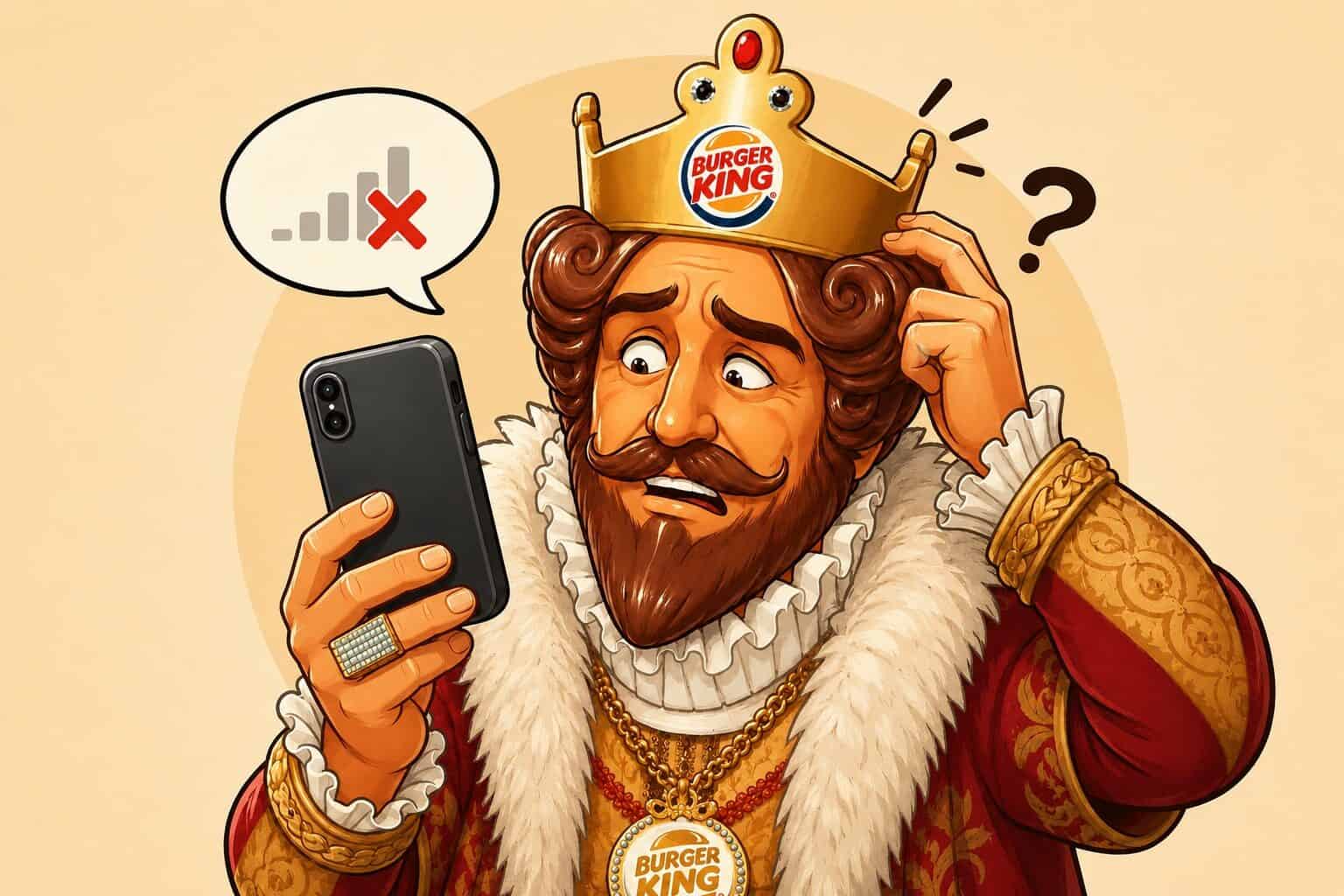
The Burger King confession
Burger King's spot, “There's a New King, and It's You,” puts U.S. and Canada president Tom Curtis on camera to own years of slow service, crushed Whoppers, flopped menu items, and even the creepy King mascot of recent years. He admits the brand “used to be King” before the food, in his words, “just fell off.” Then he points to what has been fixed.
This is the longer version:
What makes it credible is everything Curtis did before the camera turned on. Curtis had already published his personal phone number and spent weeks taking unfiltered customer calls, receiving roughly 30,000 messages and personally answering about 2,000 of them. That feedback drove specific changes: a reworked Whopper bun, better packaging so the burger doesn't arrive smashed, and a fix for something every Lean practitioner will recognize. Curtis found that employees at different restaurants weren't following consistent preparation methods, which produced wide swings in quality by location. That's not a marketing problem. That's a standardized-work problem, and it sat behind a roughly $700 million, multi-year investment the company made before it put any of this in front of an audience.
The playbook is Domino's, and so are the people
If the approach feels familiar, it should. In December 2009, Domino's released a four-minute documentary in which executives read brutal customer comments on camera, including the now-famous complaint that the crust tasted like cardboard. CEO Patrick Doyle didn't use a script. The company had reformulated the entire pizza first, a huge operational lift that changed every ingredient and every supplier.
Here's the part that isn't a coincidence: the people running the Burger King play came from Domino's. Curtis, marketing chief Joel Yashinsky, and Restaurant Brands International's executive chairman, Patrick Doyle himself, all came out of that turnaround. They've done this before. They know the move.
Notice who delivers the verdict
Strip away the brands and one move stands out. Neither company grades its own homework. The harsh verdict comes from a customer. Domino's put real complaints from real customers and employees on screen. Curtis built his campaign on the feedback he solicited by phone. Even T-Mobile, in its Billy Bob Thornton spot, has him quote a friend who said the network “used to suck” before arguing that things change and pointing to independent data.
In some versions of the ad, he says “a little dodgy” instead of “used to suck.”
The T-Mobile ad is the softest of the three. It's really a “best network now” brag with a self-aware setup. Burger King's is the fuller reckoning. But the device is identical: let the customer say the hard thing. We tune out a brand praising itself, because we assume it's selling. A complaint the company chose to broadcast is the opposite, like someone pointing out the dent in their own car before you can. You believe whatever they say next.
The same move works inside your building
This is where it stops being about advertising. The most useful thing a leader can do is exactly what these brands did in public: let the hard truth be heard instead of defending the scorecard. When a leader says “we got this wrong” out loud, or actively invites the verdict the way Curtis did with that phone line, it models the candor that gives everyone else permission to name what's broken. That permission matters, because the problems worth fixing are usually the ones people are afraid to raise.
Notice that Curtis did two things, not one. He modeled candor by going on camera, and he enabled it by creating an easy, direct channel for the bad news to reach him. Admitting fault once is a moment. Building a system that keeps surfacing the truth is the actual work.
Honesty without improvement is just confession
But there's a catch. None of this works without the fix. Domino's rebuilt the pizza before it ran the ad. Burger King spent four years and a great deal of money on operations before Curtis said a word on the Oscars broadcast. The confession earned attention. The improvement earned the second chance. The reverse is also true, and it's the mistake leaders actually make. A quiet fix moves nothing, because nobody updates their opinion of a company they've stopped thinking about. The improvement only counted once Domino's made people look at it.
Did it pay off? For Domino's, it did. Domestic same-store sales rose 14.3% in the first quarter the new pizza launched, and the stock went from single digits to several hundred dollars over the following decade. But the sequence is the point. Honesty without improvement is just confession. It can even make things worse, because you've now drawn attention to a problem you haven't solved.
The same is true on a team. An apology without a countermeasure is theater. “We hear you” without a visible change teaches people that speaking up is pointless, which is the opposite of what you wanted. If you're going to invite the hard feedback, you have to be ready to act on it, or you'll spend your credibility instead of building it.
So here's the question I'd put to any leader watching these ads: Does your team watch you grade your own homework, or have you made it safe for them to tell you the crust tastes like cardboard?
For what it's worth, I haven't ordered a Domino's pizza since about 2012, when the texture was cardboard and the main flavor was chemical. The campaign moved millions of people. It hasn't moved me yet.
Update: A review and false advertising
So my wife and I felt inspired to try the “new” Whopper. Sadly, what I got was the “before” example of the supposed before and after Whopper comparisons shown in the ad. The ad said “one store at a time” and apparently this store in the Cincinnati hasn't been touched yet.
It was 6 pm on a Monday night and the restaurant was EMPTY. It was really sad compared to an In-N-Out or a better burger joint that has some buzz and activity. The store was clean. An employee was busy mopping the floor. He certainly wasn't needed making Whoppers.
The comparison:

And the packaging — the promise versus my reality:

Was my Whopper smashed, even without being put in a bag? Yes. The best thing I can say was that the “flame broiled” flavor was good. Everything else was wilted, flat, and sad.
And $10 for a combo? I feel misled by the BK ad and I'm not sure I'm going to give them another chance. An ad backfiring, at least for this one consumer?
Frequently asked questions
What is the Burger King “There's a New King, and It's You” campaign?
It's a 2026 brand platform built around a 90-second ad, narrated by president Tom Curtis, that admits years of declining food and service quality and retires the King mascot. It launched during the Academy Awards broadcast.
Why is it compared to the Domino's Pizza Turnaround?
Both campaigns lead with a public admission that the product wasn't good enough, backed by a real reformulation. The comparison is deliberate. Several of the executives behind Burger King's effort, including Patrick Doyle, came from the Domino's turnaround.
Did the Domino's Pizza Turnaround actually work?
Yes. Domestic same-store sales rose 14.3% in the first quarter after the new pizza launched in 2010, and the company's stock and market share climbed for years afterward.
What is the leadership lesson?
Admitting a mistake builds trust only when it's paired with a real fix and a channel that keeps the truth reaching you. Modeling and enabling candor is a core behavior for building psychological safety. An apology without a countermeasure erodes trust rather than restoring it.