
Larry Culp’s 2025 CEO Letter: Why Safety and Lean Leadership Drive GE Aerospace’s Results
TL;DR: Larry Culp's GE Aerospace CEO letter is a rare example of Lean leadership in practice, showing how safety, Respect for People, and small frontline improvements–not slogans or dashboards–create measurable operational and financial results.
Most annual reports and shareholder letters follow a familiar script. Financial results take center stage. Operations show up mainly as risks, constraints, or background noise. Culture is often reduced to platitudes and slogans.
That's why I found GE Aerospace's 2025 annual report–and especially the CEO letter from Larry Culp–so striking.
It doesn't read like a traditional investor document. It reads like an operations story–written by a CEO who is notable not just as a turnaround leader, but as someone who consistently emphasizes systems, culture, and the work itself, not just results.
This may be the clearest example in recent years of a Fortune 50 CEO describing Lean management through operations, safety, and trust.
Starting With the Work, Not the Numbers
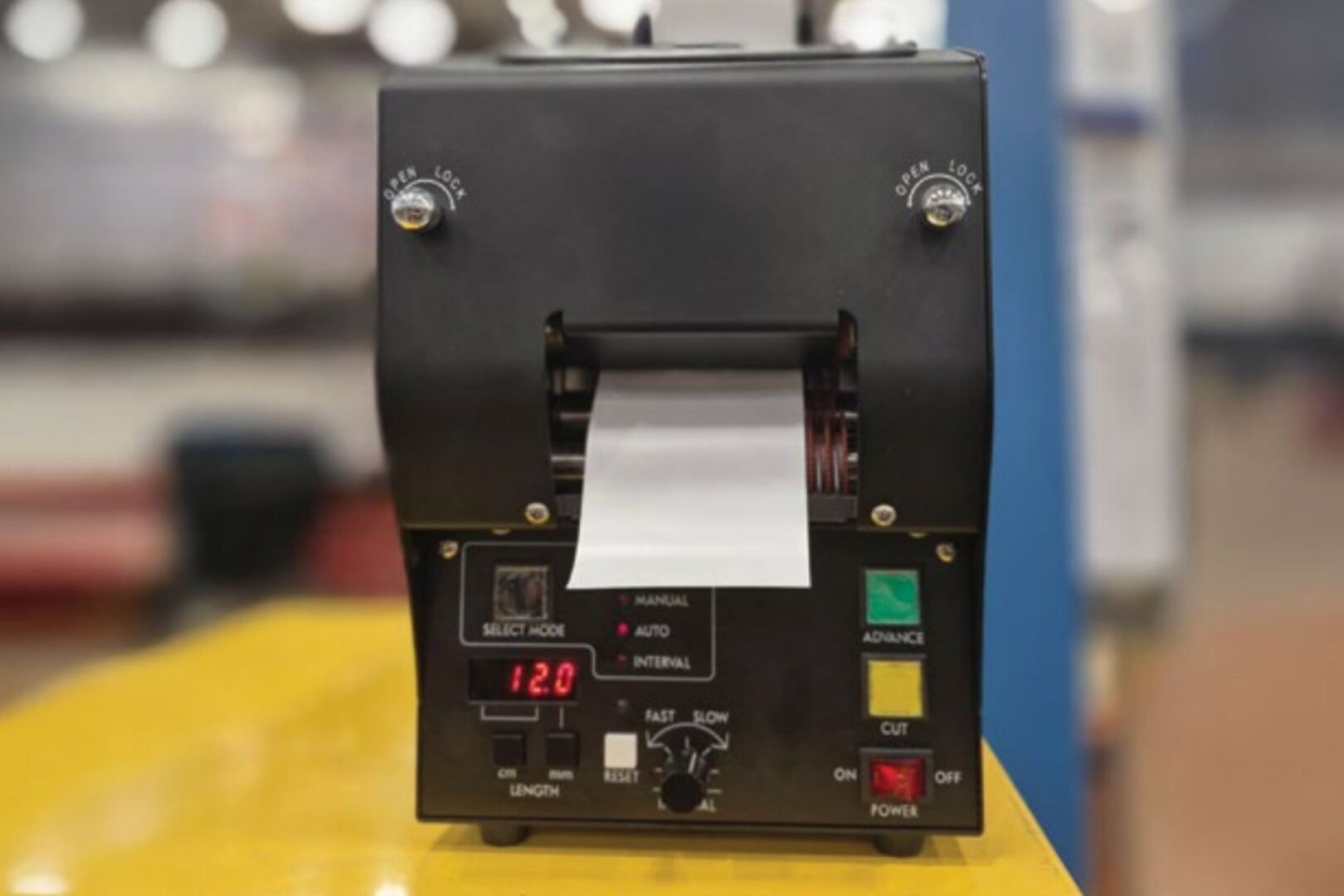
Culp opens the letter not with revenue, margin, or market outlook–but with a story about a tape dispenser on a shop floor in Terre Haute, Indiana.
The turbine center frame line there had an on-time delivery rate of just 20%, far short of its goal of perfection (100%). The team identified a straightforward bottleneck: a manual, time-consuming step that required cutting tape by hand to label parts and protect openings.
When the team requested an automated tape dispenser, the initial response was the familiar demand for extensive justification. But as the team's energy faded, plant leader Gerald Beuvelet recognized the real problem: he wasn't listening closely enough to the people who understood the work best. He changed course and approved the purchase immediately.
That decision didn't just improve a process. It changed behavior.
As the annual report puts it,
“One tape dispenser did not solve all the challenges at the site, but it did begin to change the culture.”
And that's the point.
This is a CEO signaling that how improvement happens matters as much as what improves. The tape dispenser — later nicknamed “The Gerald” — became a symbol of trust, empowerment, and Respect for People as a daily leadership practice.
They even included a photo in the report (of the tape dispenser, not the plant leader, Gerald Beuvelet):
That framing will sound familiar to anyone who has studied Toyota seriously.
Companies like GE Aerospace believe that “the right process will bring the right results.”
And the results matter, as I'll highlight throughout the post.
Respect for People Is Operational, Not Philosophical
Throughout the report, Respect for People is not framed as a cultural aspiration or a set of values statements. It's described through structural and behavioral choices that make better work possible.
GE Aerospace puts it plainly, describing its approach as
“empowering our teams on the ground with trust to do what is needed to make a process better for everyone involved.”
It ties trust directly to action, and action directly to process improvement–not to heroics, compliance, or top-down directives.
When supply chain performance lagged, GE Aerospace didn't default to finger-pointing or external blame. Instead, the company was candid–both internally and publicly–about its own shortcomings. Teams were reorganized to improve the flow of information across safety, quality, engineering, manufacturing, and sourcing. Demand signals to suppliers were stabilized so partners could plan and perform more effectively.
That's Respect for People expressed as system design–and it extends beyond GE Aerospace employees to suppliers and partners.
It's about removing friction that makes good work harder–and replacing it with clarity, stability, and support for those closest to the work. Trust isn't treated as an abstract value; it's treated as an operational necessity.
The connection between leadership behavior and results is made explicit:
“By leading with Respect for People and deploying FLIGHT DECK across the supply base, we are driving sustained impact. In 2025, material input from our priority suppliers grew 40% year-over-year, with seven consecutive quarters of sequential improvement. As material availability improved, total engine deliveries were up 26% year-over-year. Commercial Engines & Services (CES) deliveries grew 25%, including record LEAP deliveries up 28%, and Defense deliveries growing 30% for the year.”
Safety as a Core Expression of Respect for People
Another very Toyota-like theme that runs through Larry Culp's letter is the unambiguous prioritization of safety.
GE Aerospace consistently frames operational excellence through SQDC–Safety, Quality, Delivery, and Cost, in that order, every day. That sequencing matters. It sends a clear signal that safety is not a constraint to be managed or a trade-off to be weighed later. It is the foundation.
Read more: GE's CEO Larry Culp on SQDC and Putting Safety First
This echoes both Toyota's long-standing philosophy and the approach Paul O'Neill made famous as CEO at Alcoa: if leaders cannot keep people safe, they lack both moral authority and operational discipline. Safety, in that sense, is not separate from performance–it's evidence of it.
Hear some of O'Neill's thoughts in my 2011 podcast with him: Paul O'Neill on Leadership, Safety, and Long-Term Thinking in Healthcare
Culp reinforces this by acknowledging aviation tragedies and personal loss experienced by the industry and the company. Rather than distancing the organization, the letter leans into responsibility, humility, and purpose. Safety is explicitly framed as something companies should never compete on.
“We never compete on safety, because nothing matters more.”
That statement reflects Respect for People in its most concrete form–and it reinforces a culture where speaking up about risk, quality, or concern is not just allowed, but expected. Feeling safe to speak up and be candid–often referred to as “psychological safety“–is treated here as an operational requirement, not a “soft” concept.
There's more to unpack here about safety, trust, and leadership behavior–and how this mindset enables continuous improvement. I explore that more deeply in a follow-up post: Safety First Isn't a Slogan: GE Aerospace's CEO on Respect for People and Lean Leadership.
Lean Thinking Without Lean Buzzwords
The report repeatedly references FLIGHT DECK, GE Aerospace's “proprietary Lean operating model,” as they call it. What's interesting is how little emphasis there is on tools–and how much emphasis there is on behaviors. Tools work when we have a foundation of the right mindsets and behaviors.
Read more: Lean Lessons from Japan: Mindsets, Culture, and the Challenge of Speaking Up
Across manufacturing sites, MRO operations, and suppliers, the pattern is consistent:
- Identify constraints
- Make problems visible
- Establish standard work
- Improve flow
- Use daily management to detect and respond to abnormalities
- Learn, adjust, repeat
In Celma, Brazil, turnaround time for LEAP engine test cycles dropped 23%.
In Lynn, Massachusetts, small fixture and process changes contributed to a 49% reduction in lead time on a critical shaft line.
These are classic continuous improvement stories–but told at a CEO level, with credibility and specificity.
Customer-Driven, Not Self-Congratulatory
Another rare feature of the letter: a clear distinction between financial success and customer satisfaction.
Despite strong results–21% revenue growth, 25% operating profit growth, 24% free cash flow growth–the message is explicit:
“We are not satisfied, because our customers are not satisfied.”
That mindset aligns closely with Lean thinking: value and performance are measured through the eyes of the customer, not through internal scorecards alone.
Even the discussion of AI is grounded in this logic. AI isn't presented as a shiny strategy–it's framed as a way to reduce waste, improve accuracy, shorten turnaround times, and free people to focus on value-added work.
Small Improvements, Compounding Impact
What I appreciate most about this report is its emphasis on compounding.
- One tape dispenser.
- One fixture redesign.
- One hour removed from a setup.
None of these are transformational on their own. Together, they create momentum–and results.
This is the opposite of the “big initiative” mindset that so often undermines continuous improvement. No transformation program. No slogan. No campaign. Just leadership behavior enabling many small improvements.
I've seen this in so many healthcare organizations — hundreds and thousands (or hundreds of thousands!) of improvements add up to have a huge impact in examples including Franciscan St. Francis Health and UMass Memorial Health.
Why This Matters
It's rare to see a CEO talk this openly, this concretely, and this respectfully about operations.
Larry Culp comes across not as someone delegating improvement to “Lean teams,” but as a leader who understands that culture, behavior, and systems are inseparable. Instead of sponsoring or supporting this, he's leading it.
This leadership and transformation style depends on listening to people closest to the work. And that long-term results come from doing the fundamentals well–over and over again.
For leaders who care about Lean, continuous improvement, and real operational excellence, this annual report is worth reading–not for what it claims, but for what it reveals.
It's a reminder that when senior leaders truly understand operations, they don't just talk about results.
They talk about the work that creates them.
What Executives Should Take Away
What makes GE Aerospace's annual report notable isn't any single improvement story, metric, or operating tool. It's the clarity of leadership intent.
Larry Culp's letter shows what happens when a CEO genuinely understands operations–not as a set of dashboards, initiatives, or slogans, but as a human system that produces results through behavior, trust, and disciplined improvement.
Respect for People is not treated as a cultural aspiration; it's treated as an operational requirement. Safety is not framed as compliance; it's framed as leadership responsibility. Continuous improvement is not delegated; it's modeled.
That combination is rare.
For executives, the lesson isn't “copy GE Aerospace” or “adopt FLIGHT DECK.”
The leadership signals embedded in the letter are clear:
- Results follow systems, not speeches
- Trust enables learning, and learning enables performance
- Safety and Respect for People are leading indicators, not soft values
- Small, well-supported improvements compound faster than big programs
This is what Lean leadership looks like when it's taken seriously at the top. Not Lean as a toolkit. Not Lean as a department. Lean as a way leaders think about work, people, and responsibility.
GE Aerospace's results matter–but what's more instructive is how those results are being created. For organizations struggling with stalled improvement efforts, disengaged teams, or short-lived transformations, this report is a reminder that operational excellence is not something leaders sponsor.
It's something they practice.
And when CEOs talk about the work this clearly, it's a strong signal that improvement isn't a phase–it's how the organization is being led.
Who is Larry Culp?
Larry Culp is the CEO of GE Aerospace and former CEO of Danaher. He is widely known for applying Lean management principles to large industrial organizations and driving operational turnarounds.