

Paul O’Neill on Leadership, Safety, and Long-Term Thinking in Healthcare
What happens when a Fortune 500 CEO brings a long-term mindset and a bold commitment to safety into healthcare? In this conversation with Paul O'Neill, former U.S. Treasury Secretary and CEO of Alcoa, we explore how leadership, transparency, and aiming for the theoretical limit–zero harm–can transform outcomes for patients and workers alike.
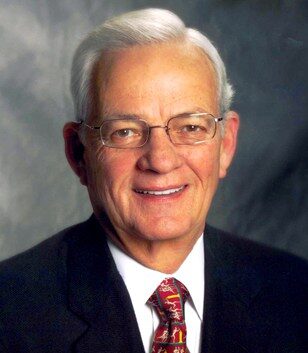
I have a very special guest for Podcast #124 – he is Paul O'Neill, the U.S. Treasury Secretary from 2001 to 2002 and former CEO of Alcoa.
About Paul O'Neill
2020 Update: Read my reflections on Mr. O'Neill's passing
Mr. O'Neill shares his thoughts on patient safety and healthcare, including his time spent as the Chair of the Pittsburgh Regional Health Initiative and his work with Dr. Richard Shannon in dramatically reducing hospital-acquired infections to near their “theoretical limit” of zero. Dr. Shannon will be a podcast guest next month. Mr. O'Neill talks about the leadership required to have such an impact on safety and quality, drawing on lessons from his years as Alcoa's CEO.
This podcast was produced in conjunction with the Healthcare Value Network as a continuation of their previous podcast series.
For a link to this episode, refer people to www.leanblog.org/124. Scroll down for quotes in readable form.
Podcast Summary
You can also read and download this 4-page PDF summary of the podcast:

Why This Conversation Still Matters
As healthcare continues grappling with safety, cost, and complexity, O'Neill's ideas remain bold, clear, and relevant–perhaps more so now than in 2011.
The Leadership Mindset Required for Habitual Excellence
In this powerful conversation, Paul O'Neill reflects on the leadership mindsets required to create dramatic improvements in both workplace and patient safety. Drawing from his time as CEO of Alcoa and his work in healthcare, he shares how Allegheny General Hospital achieved a near-total reduction in hospital-acquired infections by engaging frontline staff, setting ambitious goals, and treating every incident as an opportunity to learn and improve.
Why We've Made So Little Progress Since “To Err Is Human”
O'Neill expresses deep frustration that, despite the urgency signaled by the 1999 Institute of Medicine report To Err Is Human, the United States has accomplished “practically nothing” at a national level to reduce harm in healthcare. He argues that the root cause of this stagnation isn't a lack of tools or knowledge–it's a lack of real leadership. In his view, the most critical skill missing in our society is the kind of leadership that insists on “theoretical limit” goals and fosters a culture of habitual excellence.
A Better Way to Respond to Harm in Healthcare
He also offers provocative ideas for reforming how we respond to harm in healthcare. Rather than relying on adversarial legal processes, O'Neill advocates for systems that provide fair compensation to harmed patients while also ensuring organizations learn from each mistake. Transparency and learning–not fear and blame–are the foundation for meaningful change.
From Financial Engineering to Real Improvement
Finally, O'Neill critiques policymakers, including then-Congressman Paul Ryan, for prioritizing financial engineering over real-world improvement. He challenges leaders in Washington to visit organizations like ThedaCare, where patient-centered, systems-driven improvement is showing what healthcare transformation should truly look like.
In the podcast, O'Neill was first asked about the workplace safety improvements that took place during his CEO tenure at Alcoa. When this idea of safety improvement was initiated, Alcoa was already in the top 1/3 of U.S. companies for avoiding injuries and their injury rates (as found on the Alcoa health & safety website) are now 30x lower than hospitals, says O'Neill. O'Neill argues this 30x improvement can be achieved in healthcare organizations, but it requires the right leadership and the articulation of goals at the “theoretical limit” (zero harm and zero injuries).
A Hospital's Journey to Nearly Zero Infections
O'Neill then talks about Dr. Richard Shannon, now at the University of Pennsylvania, and how he got interested in this “theoretical limits” approach to improvement from an Alcoa University course that he attended. O'Neill recounts how Dr. Shannon had 39 patients who got infections in 3 ICUs in the 12-month period before the course, with 19 of those patients dying.
Allegheny General Hospital started their infection prevention efforts using these principles:
- get people involved
- get them observing how the care is done
- come to agreement with all about how they would do the work
- do it the same way everyday,
With this approach, if there was an infection, they could more easily understand why that happened.
Over 18 months, they worked in this, and then started measuring for a 12 period. They had 100 more patients than the comparable 12 months, but just 1 infection (not 39) and nobody died. O'Neill said, “Dr. Shannon's experiences were very consistent with my own at Alcoa, that when we got people to practice good ideas and to learn from every instance of anything going wrong, that the process (whatever it was) got better and better and better. And so, even today, Alcoa has maintained the safety culture.”
Why We've Made So Little Progress Since ‘To Err Is Human'
O'Neill said, “Since 1999, when the Institute of Medicine's famous study was published, called “To Err Is Human,” we've accomplished, on a national basis, practically nothing in terms of reducing things gone wrong in the delivery of health and medical care.”
After mentioning some of the success stories (UPenn, ThedaCare, Virginia Mason), O'Neill continued, “The tragedy is, as straightforward as these ideas are, leadership in health and medical care institutions around the country have not grabbed these ideas and implemented them, which is, frankly, unbelievable when it's so clear that the benefits are not only to significantly better outcomes for health and medical care, but significant cost reductions at the same time.”
The rest of the story is best told in O'Neill's own words, edited in some instances for clarity:
“So, I believe, having observed the practice of caregiving around the country, in a lot of different venues, that if we can get these ideas practiced every day in every caregiving institution in the U.S., we could have an enormous improvement in the outcomes for patients and we could save $1 trillion a year out of the $2.7 trillion we're spending on health and medical care. And that would be unbelievably positive for our society.”
Leadership Is Our Greatest Skill Shortage
“I honestly think the skill shortage in our society, maybe in the world of civilized people, is real leadership. There are a whole lot of people who I suppose are leaders by designation, but I don't honestly know a lot of people who are leaders in the sense that they will articulate goals at what I call the theoretical limit and then help their people to acquire and practice the skills that are necessary to what I call habitual excellence. It's really hard to find leaders who understand the concept of habitual excellence, which means a leader should expect every aspect of his organization to perform at the known level of possibility. Having that kind of leadership and a leadership that is not about punishing or blaming people, but about using every single instance of anything gone wrong as a basis for organizational learning is really critical to this. There are a lot of people working on pieces of these ideas but, unfortunately, there isn't a national movement yet. Hopefully, soon there will be.”
A New Approach to Patient Harm and Compensation
“There are several pushbacks to the idea of habitual excellence. One is to say, “well, we can never be perfect, and we don't want to set goals we can't achieve.” I found in my own early days at Alcoa when people told me that about workplace safety, then I said to them, ‘OK, if you don't want to have a goal of zero, then let's go around and find out who wants to volunteer to be hurt to make sure we reach our goal of somebody being hurt. And it's so ridiculous on its face, it's equivalent to people saying, “Oh, there's no way we can eliminate all of the infections in the hospital,” – it's a lie. It is simply not true. To aspire to less [improvement] than [reaching] zero is to excuse every single one that happens rather than learning from them and figuring out a way to introduce practices that take away the possibility [of infections].”
“If you don't want a goal of zero harm, tell me who should volunteer to get hurt.” –Paul O'Neill
“In the secondary case of medical malpractice, they say, ‘Oh my God, if we start reporting things gone wrong, we're creating a roadmap for the lawyers to come and attack us with our own information. So, I believe there is a legitimate answer to that, and it rests in this observation: if you go around the country and you try to find people who are malevolent malefactors who are intentionally hurting people, I would submit to you that, except for criminally insane people, you can't find any examples of that. You find that people do get hurt in the practice of medicine in the United States… the answer is yes.
So, we need to combine that observation that people do get hurt with the idea that the way to avoid people getting hurt by the same set of circumstances over and over again is to learn from everything gone wrong. In order to do that, we need to have a transparent system where everything gone wrong is observed, documented, and shared on a real-time basis in every day in every healthcare giving institution.
In order to take away the excuse that they can't have transparency because of the threat of lawsuits, we should abandon (it was already a bad notion of medical malpractice), and in its place, create a system where when an individual is injured as a consequence of a medical intervention, we simply turn the case over to a board of experts to judge the economic loss associated with the injury, and award that individual that economic loss without any lawyers involved and without any trying to hide the fact that an individual was injured so that we can insist on transparency and there won't be an economic cost associated to the individual events. I believe that this is sufficiently worthy that we ought to pay for it out of the general federal revenue stream of the federal government.
I would be willing to accept a step back from that with the medical care system producing the standby fund to service the economic cost of things gone wrong. I honestly believe, in a fairly short period of time, the costs would be sufficient that it wouldn't matter.
I've been advocating to the government that they should implement a system where every caregiving institution in the nation is required to hook up to the internet at 8 o'clock in the morning local time, wherever you are, and report on the internet every instance of a newly identified patient acquired infection, every case of a patient fall, and every case of a medication error. And I think the availability of that data – first of all, it would be shocking to the people, and secondly, I think it would spur action to bring those numbers down quickly. It would cause the caregiving institutions to put their shoulder to the wheel of continuous learning and continuous improvement, and we would stop this madness.”
Stop Financial Engineering–Start Visiting ThedaCare
“One hope that I'd have is that the Congressman from [John Toussaint and ThedaCare's] state who has become fairly famous for advocating financial medicine for health and medical care would go to ThedaCare, which exists in his own state, and see the real way we should deal with health and medical care instead of the financial engineering Paul Ryan is advocating these days in Washington.”
Boards and the Role of Operational Leaders
“I would urge Boards of Directors of health and medical care institutions, hospitals, and nursing homes to ensure the day-to-day operational leader is supportive of the idea of establishing theoretical limit goals for everything that goes on in their institutions. Because I think if Boards of Directors urge the people who are day-to-day responsible for care delivery, it might provide some stiffening of the backbone of those who are supposed to lead institutions to habitual excellence.”
Paul O'Neill's Legacy and Career
Paul O'Neill is a founder of Value Capture, LLC, where he provides counsel and support to healthcare executives and policymakers who share his conviction that the value of healthcare operations can be increased by 50% or more by pursuing perfect safety and clinical outcomes. He was the 72nd Secretary of the U.S. Treasury, serving from 2001 to 2002. During his 21-month tenure, the lost workday rate among Treasury employees fell by more than 50%.
He was the chairman and CEO of Alcoa from 1987 to 1999 and retired as chairman at the end of 2000. Mr. O'Neill led Alcoa to become the safest workplace in the world while increasing its market capitalization by more than 800%. Today, Alcoa operates across more than 40 countries at a lost workday rate that is 20 times lower than the average rate for American hospitals.
Before joining Alcoa, Mr. O'Neill was president of International Paper Company from 1985 to 1987 and vice president from 1977 to 1985. He served as the deputy director of the U.S. Office of Management and Budget from 1974 to 1977, after serving on staff beginning in 1967. He worked as a computer systems analyst for the U.S. Department of Veterans Affairs from 1961 to 1966. During his government service, Mr. O'Neill helped to shape many of the policies that define the American healthcare system today. He serves as a board member at the National Quality Forum, RAND, and more than a dozen other major corporations and non-profit organizations.
Mr. O'Neill passed away in 2020:
Full Transcript
June 20, 2011
Mark Graban: Mr. O'Neill, thank you for taking time to talk.
Paul O'Neill: My pleasure.
Background: From Alcoa to Healthcare
Mark: Some of the listeners might not be familiar with your transition from your role as CEO of Alcoa and the work that was done there on the employee safety front, and how that translated into healthcare. Can you tell the listeners about that part of your background?
Paul O'Neill: I've been interested in health and medical care issues for a very long time. When I first went to work for the federal government in 1961, it was as a management intern at the Veterans Administration. I was hired specifically to bring and apply ideas of operations research to a variety of things the VA was doing, including insurance programs and compensation and benefit programs — and of course, at that time, delivering health and medical care through 212 different VA hospitals around the country.
Subsequent to that, I was recruited into what was then the Bureau of the Budget, later the Office of Management and Budget, where I had principal responsibilities for advising the director and the president on issues of health and medical care. This was right after Medicare and Medicaid were enacted. So I've had a very long engagement with health and medical care issues.
After I left the government in early 1977, I became president of International Paper Company and then CEO of Alcoa, with different sets of responsibilities for dealing with health and medical care issues. I've never lost my interest in this area.
In fact, while I was still chairman and CEO of Alcoa in 1997, I was asked to be a co-founder of something called the Pittsburgh Regional Healthcare Initiative. I accepted that responsibility because I believed — as I had found at Alcoa — that with the right articulation of values, it was possible to help organizations accomplish a level of performance that most people would have said was impossible.
Those ideas began with something I initiated on the day I arrived at Alcoa, out of my earlier experiences at International Paper and in the federal government: announcing that it should be and would be our goal to create a workplace — ultimately involving 140,000 people in 43 countries — with a goal of achieving zero injuries.
When I initiated this at Alcoa, we were already in the top third of companies in the United States in terms of avoiding injuries. Over a period of a few years — and even today — if you go to Alcoa's website and look at their health and safety data, you'll find that Alcoa's injury rate is lower by 30 times than the injury rate for people who work in US health and medical care facilities.
I believed then, and continue to believe, that with the right leadership and the right characterization of organizational objectives at what I call the theoretical limit, it is possible to achieve worker safety in health and medical care that is 30 times better than it is today. And those same principles — setting goals at the theoretical limit, which means zero — apply not only to the workforce but to the patients being served.
Dr. Richard Shannon and Allegheny General Hospital
Mark: Can you talk about some of the early work in Pittsburgh with Dr. Richard Shannon and Allegheny General Hospital, looking at reducing infections for patients? It sounds like human nature leads people to look at a goal like zero and say that's not possible. Can you talk about the work that was done there, and how you make a goal of zero motivating rather than discouraging?
Paul O'Neill: It's worth telling a little bit about how Dr. Richard Shannon came to be interested. When I was at Alcoa, I thought we should share our expertise in achieving remarkable levels of performance with the broader community. So we created something called Alcoa University. Dr. Shannon came to one of our sessions and was intrigued by the idea of applying continuous learning and continuous improvement — with an established goal of zero injuries — to patients.
After attending, he set out to import these ideas into his work at Allegheny Medical Center, where he had responsibility for three intensive care units. In the year before they started, 1,754 patients went through those three units. Thirty-nine of them acquired an infection during the course of their care, and 19 of them died.
Dr. Shannon began working with all the people involved in delivering care — nurses, doctors, technicians, and the people who clean the rooms — to observe how care was being done and to come to agreement on how they would do the work. They would all do it the same way every day, so that if there was an infection, they could more easily understand what had caused it.
Over a period of about 18 months, as they implemented these ideas, they began to make progress. In the subsequent 12-month measurement period, they had over 1,850 patients — 100 more than the previous year. They had one infection instead of 39, and no one died.
His results were very consistent with my own experience at Alcoa: when you get people to practice good ideas and to learn from every instance of anything going wrong, the process — whatever it is — gets better and better. Even today, more than 11 years after I left, if you look at Alcoa's website, they've maintained the safety culture and the injury rate continues to be 30 times better than the national average across all industries, including health and medical care.
The Pace of Adoption
Mark: That success at Allegheny is being duplicated by Dr. Shannon now that he's at the University of Pennsylvania in Philadelphia, and it's proving repeatable. Similar methods are being promoted through checklists by Atul Gawande and the World Health Organization. Given how well proven this is and how dramatic the results are, you would hope everyone would rush to duplicate those results. What are your thoughts on the pace of adoption of these ideas and methods?
Paul O'Neill: In the last six months or so, there have been a couple of studies — one in North Carolina and another sponsored by the Centers for Medicare and Medicaid — and what they've concluded is that since 1999, when the Institute of Medicine's famous study To Err Is Human was published, we've accomplished practically nothing on a national basis in terms of reducing things gone wrong in the delivery of health and medical care.
It's true, as you say, that Dr. Shannon proved the case in Pittsburgh. He's proving it again at the University of Pennsylvania. ThedaCare in Wisconsin is producing the same kind of results. Gary Kaplan at Virginia Mason in Seattle is producing similar results. There are a few other places around the country. But the tragedy is that, as straightforward as these ideas are, leadership in health and medical care institutions around the country has not grabbed them and implemented them — which is frankly unbelievable when it's so clear that the benefits include not only significantly better outcomes for patients but significant cost reductions at the same time.
I believe, having observed the practice of caregiving around the country in a lot of different venues, that if we could get these ideas practiced every day in every caregiving institution in the United States, we could have an enormous improvement in outcomes for patients and save a trillion dollars a year out of the $2.7 trillion we're spending on health and medical care. That would be unbelievably positive for our society.
The Leadership Gap
Mark: What do you think is getting in the way of more rapid adoption, if the benefits are so clear?
Paul O'Neill: I honestly think the greatest skill shortage in our society — maybe in the world of civilized people — is real leadership. There are a great many people who are leaders by designation, but I don't honestly know many people who are leaders in the sense that they will articulate goals at the theoretical limit and then help their people acquire and practice the skills necessary to what I call habitual excellence.
If you look around the health and medical care environment in the United States, you can find endless examples of projects where people have worked on some small part of the opportunity. But it's really hard to find people in leadership positions who understand the idea of habitual excellence — which means a leader should expect every aspect of his organization to perform at the known level of possibility. And having that kind of leadership — leadership that is not about punishing or blaming people, but about using every single instance of anything gone wrong as a basis for organizational learning — is critical to this.
There are a lot of people working on pieces of these ideas. Unfortunately, there isn't a national movement yet. Hopefully soon there will be.
Medical Malpractice as a Barrier
Mark: I know there are certainly leaders and organizations trying to move away from shame and blame culture — John Toussaint and ThedaCare, his successor Dean Gruner as CEO, Gary Kaplan — all trying to create environments where people can raise issues, flag near misses, and use that to drive improvement and organizational learning. Looking at a higher level, I saw an interview where you talked about the structure of medical malpractice and how it may interfere with healthcare improvement. You've advocated eliminating medical malpractice. Can you elaborate on that and tie it back to improving patient safety and quality?
Paul O'Neill: As I go around talking to people about aspiring to habitual excellence, one pushback I often get — which you alluded to earlier — is that people say we can never be perfect and we shouldn't set goals we can't achieve. In my early days at Alcoa, when people told me that about workplace safety, I said: if you don't want to have a goal of zero, then let's go around and find out who wants to volunteer to be hurt, to make sure we reach our goal of somebody being hurt. It's ridiculous on its face. It's equivalent to people saying there's no way to eliminate all infections in a hospital. That's a lie. It is simply not true. To aspire to less than zero is to excuse every single one that happens, rather than learning from them and figuring out how to introduce practices that take away the possibility.
On medical malpractice: people say, if we start reporting things gone wrong, we're creating a roadmap for lawyers to attack us with our own information. I believe there is a legitimate answer to that.
If you go around the country and try to find people who are malevolent malefactors intentionally hurting patients, I would submit that — except for the criminally insane — you can't find any examples of that. People do get hurt in the practice of medicine in the United States. That's true. So we need to combine that observation with the idea that the way to avoid people getting hurt by the same circumstances over and over again is to learn from everything that goes wrong.
In order to do that, we need a transparent system where everything gone wrong is observed, documented, and shared on a real-time basis every day in every healthcare institution. In order to take away the excuse that they can't have transparency because of the threat of lawsuits, we should abandon medical malpractice — which was already a bad idea — and in its place create a system where, when an individual is injured as a consequence of a medical intervention, we simply turn the case over to a board of experts to judge the economic loss associated with the injury and award that individual that economic loss, without lawyers involved and without any attempt to hide the fact that someone was injured. That way we can insist on transparency without an economic cost attached to the individual events.
I believe this is sufficiently worthy that we ought to pay for it out of the general federal revenue stream. I would be willing to accept a step back from that — the health and medical care system producing a standby fund to service the economic cost of things gone wrong. I honestly believe that in a fairly short period of time, the costs would be sufficiently reduced that it wouldn't matter.
Mark: The idea being that this approach to compensating those who are wronged, while also driving improvement, would help prevent future cases of harm and reduce costs far more effectively than the current system does.
Paul O'Neill: Exactly right. And I've been advocating to the government that they should implement a system where every caregiving institution in the nation is required to report on the internet — by eight o'clock in the morning local time — every instance of a newly identified patient-acquired infection, every case of a patient fall, and every case of a medication error.
The availability of that data would, first of all, be shocking to people. And secondly, I think it would spur action to bring the numbers down quickly. By best estimates, there are 300 million medication errors in this country every day. If we could cause people to report medication errors on a 24-hour cycle, we would have on average 800,000 reports of medication errors every day. Which is the truth — and which I believe would cause caregiving institutions to put their shoulder to the wheel of continuous learning and continuous improvement, and we would stop this madness.
Value Capture and Final Thoughts
Mark: I'm very appreciative of your leadership on this important issue, Mr. O'Neill. To wrap up, can you tell the listeners a little about the work you're still doing through Value Capture, and share any final thoughts for those trying to inspire change in their own healthcare organizations?
Paul O'Neill: Value Capture is dedicated to the propositions I've been describing, and we're working in a variety of healthcare institution settings around the country. We're also working with the Institute of Medicine — coming up on August 23rd, we have a session in Washington to bring together leaders in the field to create what I call bulletproof documentation of the size of the patient improvement and cost-saving potential across the nation.
I'm also involved with a number of other institutions, including ThedaCare in Wisconsin. John Toussaint demonstrated that he not only believes in these ideas, he brought them into practice. His successor is continuing that work.
One hope I would have is that the congressman from his state — who has become fairly famous for advocating financial medicine for health and medical care — would go to ThedaCare, which exists in his own state, and see the real way we should deal with health and medical care instead of the financial engineering Paul Ryan is advocating in Washington.
Mark: Do you have any final thoughts on how others can help create or inspire the sort of leadership that John Toussaint and others have shown to improve patient safety in healthcare?
Paul O'Neill: I would urge boards of directors of health and medical care institutions, hospitals, and nursing homes to work with their leaders to assure the day-to-day operational leader that they are supportive of the idea of establishing theoretical-limit goals for everything that goes on in their institutions. Because I think if boards of directors urge the people who are day-to-day responsible for care delivery, it might provide some stiffening of the backbone of those who are supposed to lead institutions to habitual excellence.
Mark: Thank you, Mr. O'Neill, for taking time to share your thoughts and talk about your experiences on this important topic of improving healthcare quality and patient safety. I really appreciate it.
Paul O'Neill: Thanks for having me.





If you have comments on the podcast, please add them here with the other comments:
https://www.leanblog.org/2011/07/text-and-quotes-from-the-paul-oneill-podcast-interview/
[…] by Mark Graban on October 12, 2011 · 0 comments Hat tip to Dan Markovitz for pointing out this excellent post on John Toussaint’s blog: “The Key Leadership Behaviors in a Lean Organization?” The post is a letter written by Paul O’Neill answering a question from a hospital leader. Paul O’Neill is a great leader in the patient safety movement and you can listen to my podcast with him here. […]
[…] mentioned in the blog, Paul O’Neill (my podcast with him is here) was also a big supporter of Dr. Berwick. In an age of hyper-partisianship, there’s a […]
[…] O’Neill (check out my podcast with […]
[…] methods and mindsets that help improve quality and safety… but it requires leadership. As Paul O’Neill told me a few years ago, the bottleneck is leadership, or the lack […]
[…] destroy trust that people have in our healthcare providers and facilities. Lean is often a “safety first” philosophy in manufacturing companies and we need more of that thinking in healthcare, instead of focusing just on cost and […]