

You Can’t Punish Your Way to Pride: Deming, Toyota, and Learning from Mistakes
Fear Drives Compliance — Respect Builds Pride, Learning, and Improvement
TL;DR: Don Ephlin once wrote, “You can't punish your way to pride.” That insight still resonates today. Fear might create short-term compliance, but respect creates long-term learning. Here's what Ephlin, Deming, and Toyota taught us about turning mistakes into improvement.
“You can't punish your way to pride.” — Don Ephlin

In 2016, I found myself sitting in a quiet reading room at the Walter P. Reuther Library at Wayne State University in Detroit, paging through boxes of papers donated by the late Don Ephlin, a former vice president of the United Auto Workers.
Those archives told a story that every modern leader should hear — a story about how learning from mistakes, not punishing them, became the foundation for quality and pride.
The folders were filled with speeches, correspondence, meeting notes, and reflections — fragments of a man's lifelong effort to bring dignity and partnership into industrial work.
It was like opening a time capsule — not just of history, but of respect as a core management principle.
Among the memos and letters were insights from the UAW's study trips to Japan, notes on Dr. W. Edwards Deming's management principles, and reflections on early experiments in labor-management partnership at Ford, NUMMI, and Saturn.
Again, that one line, written in Ephlin's unmistakable voice, stood out to me then — and it still resonates a decade later… to let it sink in:
“You can't punish your way to pride.”
Ephlin wasn't theorizing. He was describing the lived reality of workers who were blamed, ignored, and humiliated — even in organizations that claimed to value “quality.”

What Ephlin understood — and what Deming, Toyota, and so many Lean thinkers have confirmed — is that you can't build pride through fear, yelling, or punishment.
Pride doesn't come from control. It comes from trust.
Fear Creates Compliance. Respect Creates Pride.
In too many American factories of the 1970s, performance management was synonymous with punishment. Miss a quota? You were written up. Make a mistake? You were scolded. Speak up about a defect? You were told to stay in your lane.
Sadly, this mindset was still alive when I started my career at the GM Powertrain Livonia Engine Plant in 1995. (Hard to believe that's been 30 years.)
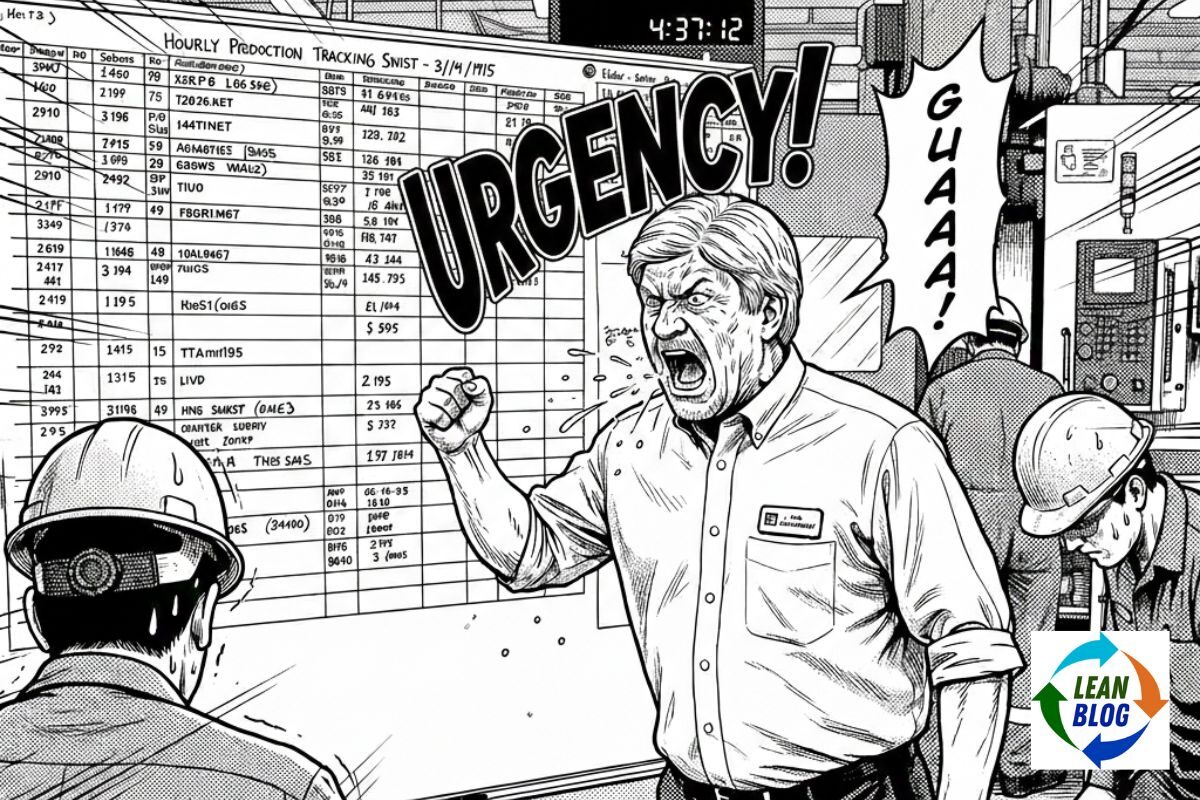
The result wasn't improvement — it was silence. Frustration. Bitterness. Poor performance.
As Ephlin saw it, fear might buy you compliance, but it would never buy you commitment. I completely agree.
That conviction echoed the words of Dr. W. Edwards Deming, who had become something of a mentor and intellectual ally to many union and management leaders in that era:
“Drive out fear so that everyone may work effectively for the company.”
Deming taught that 94% (or so) of performance problems come from the system, not from individuals. Ephlin saw that truth firsthand.
The 1981 Lesson: It Wasn't the Workers — It Was the System
When Ford and UAW leaders visited Japan in 1981, they went looking for secrets — some hidden formula behind Toyota's remarkable quality and productivity.
What they found was much more human.
- They found a culture that treated workers as thinkers.
- They found managers who coached instead of commanded.
- And they found that improvement wasn't the job of the few — it was the responsibility of everyone.
As Ephlin later wrote:
“We found out the Japanese didn't have better people. They had a better system — one that gave people a chance to do their best work.”
That better system was built on learning, not blame.
The Andon Cord: Respect in Physical Form
The most striking image from that trip was the andon cord — a simple rope above the Toyota assembly line.
Any worker could pull it to stop production if they saw a problem.

To an American manager at the time, that sounded like sabotage. In Japan, it was a badge of honor.
When the line stopped, a team leader would come running — not to reprimand, but to help.
“When a worker can stop the line,” Ephlin wrote, “that's not control — that's confidence. It means management believes in the people closest to the work.”
The andon cord wasn't a mechanical device. It was a management philosophy.
It was a visible commitment to the idea that respect for people isn't sentimental — it's structural.
NUMMI: Proof That Respect Works in America
In 1984, General Motors and Toyota launched the NUMMI joint venture in Fremont, California, with UAW participation — and Ephlin's fingerprints were all over it.
The same workforce that had been dismissed as “lazy” or “undisciplined” under old GM management became one of the highest-performing teams in North America.
The difference? A new system built on trust and collaboration.
“When people are treated with dignity,” Ephlin said, “they don't have to be pushed — they pull together.”
NUMMI became the living example of Deming's principle that a bad system will defeat a good person every time — but a good system, built on respect, could unleash pride and performance in the same breath.
Saturn: The Next Experiment
He envisioned Saturn as a company that learned as it worked — where problems were surfaced, not hidden. The goal wasn't blame, but shared learning and better systems.
That vision, rooted in Deming's influence, was one of the most advanced expressions of labor-management collaboration in American manufacturing.
From Deming to Ephlin to Today: Learning from Mistakes
Decades later, in healthcare, tech, and service industries, I see the same challenge Ephlin confronted: people are still afraid to speak up.
In my book, The Mistakes That Make Us: Cultivating a Culture of Learning and Innovation, I describe how organizations flourish when they make these promises:
- You won't be punished for speaking up.
- You won't be punished for systemic mistakes.
- You won't be punished for human error.
- We will learn from what happened, not hide it.
That's not soft. That's effective leadership.
Ephlin's legacy — and Deming's before him — reminds us that learning from mistakes isn't a modern fad; it's the oldest and most reliable form of continuous improvement.
The only sustainable form of pride — whether in a car plant, a hospital, or a startup — comes from participation, not punishment. In any of those settings, people want to serve others and do quality work.
You can't build pride by fear any more than you can build quality by inspection.
You Can't Punish Your Way to Pride — You Have to Listen Your Way There
When I read Ephlin's papers at the Reuther Library, I realized that his vision for labor-management partnership wasn't just about contracts or committees. It was about culture — a culture that listens.
Pride doesn't come from control; it comes from contribution. Respect isn't a policy; it's a practice.
And learning from mistakes isn't weakness; it's strength.
That's what Toyota built. That's what Deming taught. That's what Ephlin embodied.
And that's still a practice we can choose — every day.
Key Takeaways
- Punishment silences improvement.
Fear might create compliance in the short term, but it kills creativity, honesty, and pride. - Pride grows from trust, not control.
Real commitment comes when people feel respected, not when they're managed through fear. - Respect for people is a system design principle, not a soft skill.
Toyota and Ephlin both proved that dignity can be built into the process — not added on later. - Learning organizations turn mistakes into progress.
From the andon cord to psychological safety, lasting improvement begins when people feel safe to learn out loud.
Reflection Question
When someone on your team makes a mistake, what happens next — punishment or partnership?
Your answer will tell you whether you're building fear or pride.
Author's Note
All direct quotations attributed to Don Ephlin are drawn from his speeches and correspondence housed in the Don Ephlin Papers, Walter P. Reuther Library, Wayne State University, or from Ford-UAW Quality of Work Life documents of the 1980s.





This blog was very interesting and informative. While reading this, I learned how important respect and psychological safety are to making sure continuous and lean is always improving. In some workplace environments, there is tension and some “punishment” styles can be rather aggressive. This article explains that by having a friendly and trusting environment, this encourages people to speak up. The article explains that mistakes are opportunities for improvement, they are not to be punished. I liked this perspective and I also learned that this encourages problem solving and collaboration.