
How Great Leaders Prevent Mistakes and Learn from the Ones That Happen
I recently gave a virtual keynote for a global manufacturing company that's a customer of KaiNexus. Their leaders wanted to explore how to strengthen a culture of improvement — not just by preventing mistakes, but by learning from the ones that still happen.
That's one of my favorite topics, because it sits at the heart of what I've seen in the best Lean organizations and what I've written about in The Mistakes That Make Us: Cultivating a Culture of Learning and Innovation.
When we talk about “mistake-proofing,” it's tempting to believe we can design all errors out of our work. But reality has other plans. Even in the most well-run organizations, mistakes still occur — because people are human, systems are complex, our working world is always changing, and reality refuses to follow our flowcharts.
The goal is perfection — but it doesn't mean we'll achieve that. That said, we must work to prevent mistakes where we can, and learn from the ones that still occur.
The Classic Toyota Lesson: “We Are Not Perfect”
I've heard this lesson expressed again and again by people who've lived it inside Toyota.
In My Favorite Mistake Episode 30, I had the privilege of speaking with Isao Yoshino, a retired Toyota leader and the subject of Katie Anderson's Shingo-award winning book Learning to Lead, Leading to Learn.
Mr. Yoshino told a story from his very first weeks at Toyota in 1966. Working in the paint shop, he accidentally grabbed the wrong solvent — solvent B instead of solvent A — and mixed it into a batch of paint.
It was a serious error. About one hundred cars had to be repainted. He was afraid he'd be fired.
But instead of punishment, his leaders gathered the team and asked a simple, powerful question:
“How did this happen?”
They discovered that the two solvents were stored side by side in nearly identical containers. It was an easy mistake to make — not a careless one.
Rather than blaming him, they redesigned the workspace. They separated the materials, labeled them clearly, and prevented the next new employee from making the same mistake.
Yoshino said,
“They could easily have blamed me for the mistake, but they didn't. Because they wanted to solve the problem — and because we are not perfect.”
That attitude — that systems, not individuals, are the primary cause of errors — is one of Toyota's greatest strengths. Mistakes are not moral failings. They are opportunities to improve the process.
“What Did We Learn Today?”
Fast forward a few decades. And shift halfway around the globe.
In Episode 94, I talked with David Meier, former Toyota team leader, co-author of The Toyota Way Fieldbook and Toyota Talent, and now founder of Glenns Creek Distillery in Kentucky.
He shared a story from his Toyota days that mirrors Yoshino's. A chemical mix-up caused a massive production problem — the wrong drum, the wrong material, same shape, same color. The line stopped for hours.
Dozens of engineers and experienced Toyota veterans worked to diagnose the problem and eventually discovered the cause.
When they finally did, Toyota's president, Mr. Cho, asked one question:
“What did we learn today?”
No yelling. No shaming. Just reflection.
David told me that moment reframed his entire view of leadership. Toyota didn't measure success by the absence of mistakes, but by the speed and depth of learning that followed them.
He realized that the true error wasn't the wrong chemical — it was how long it took them to discover it. It was a problem-solving mistake on top of a process mistake. The real improvement came not from blaming anyone, but from strengthening how they investigated and learned.
Prevention and Learning: The Two Loops of Improvement
Lean thinking gives us a rich set of tools for preventing mistakes:
- Mistake proofing (poka-yoke)
- Standardized work
- Visual management
- Root cause analysis
- Continuous improvement
But no matter how robust your systems are, mistakes will still happen.
The second loop — the learning loop — begins when they do.
When something goes wrong, do we hide it or study it? Do we react with blame or respond with curiosity?
Organizations that focus only on prevention become brittle — they look good until the first unexpected event breaks them.
Organizations that combine prevention with learning become resilient — they use every problem as a spark for improvement.
The Bridge: Psychological Safety
I once visited a hospital where every department had a continuous improvement board: neat handwriting, color-coded magnets, perfect columns labeled “New Ideas,” “In Progress,” and “Completed.”
But almost all of the boards were empty.
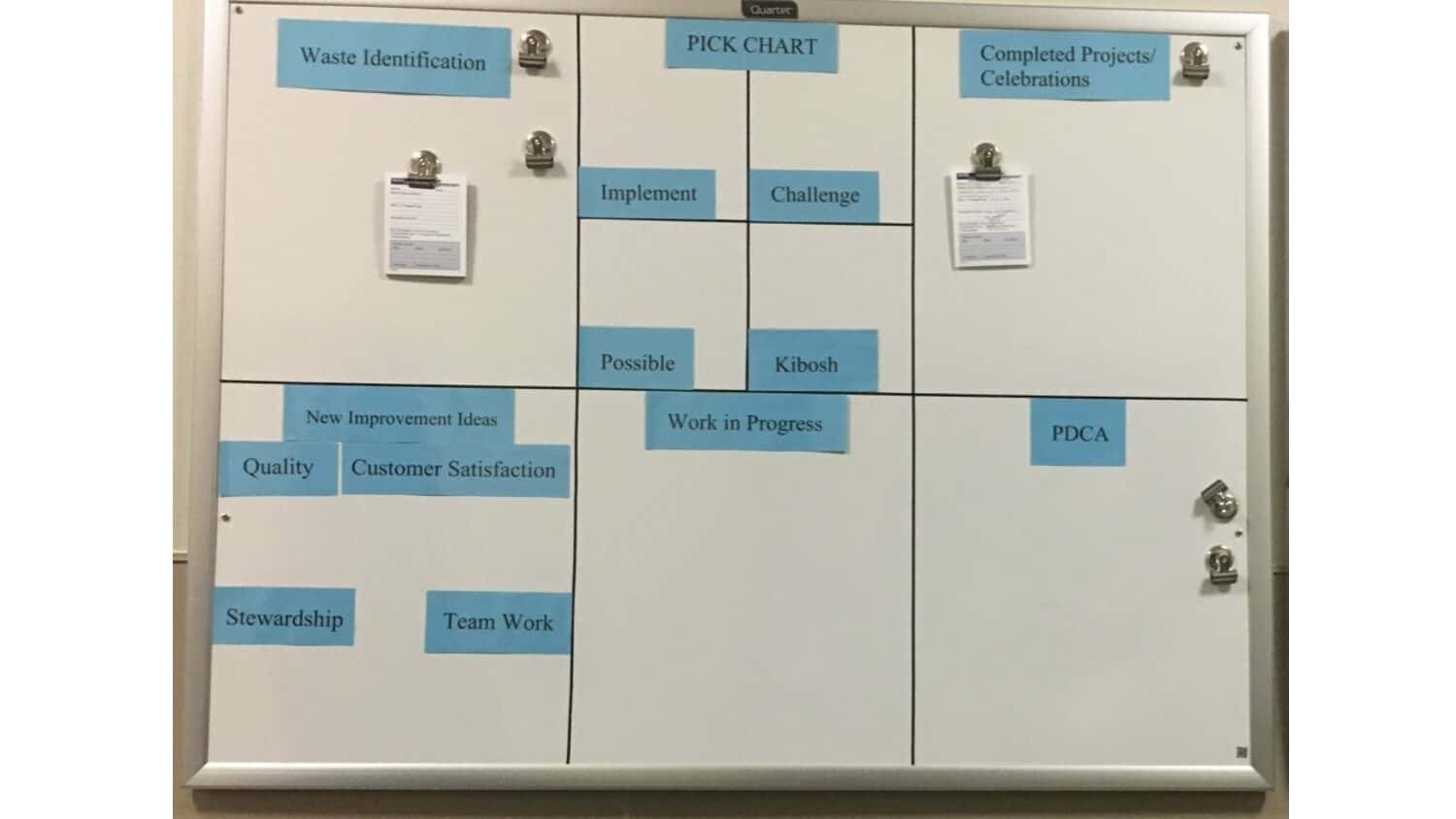
The problem wasn't a lack of ideas — it was a lack of psychological safety.
People were afraid to admit when things went wrong. The culture rewarded perfection, not progress.
You can't improve a system that people are afraid to talk about.
Safety is the bridge between prevention and learning. Without it, problems stay hidden, and mistakes repeat themselves silently.
“Hard on the Process, Not on the People”
David Meier described Toyota's approach as “no blame, but high responsibility.”
Leaders were responsible not for punishing errors, but for creating systems that made success possible.
He put it beautifully:
“Mitigation is probably a better term than error-proofing. We have to acknowledge that mistakes are inevitable, but we can apply certain thinking to minimize them.”
That humility — the recognition that we'll never eliminate all errors — is what makes continuous improvement possible.
At Toyota, accountability wasn't about punishment. It meant ownership, reflection, and learning. When leaders respond to mistakes with curiosity instead of anger, they model the same behavior they want from their teams.
That's how you get a learning culture.
Mistakes as Data, Not Drama
The best organizations treat mistakes as data — signals that something in the system needs attention.
Blame adds noise. Learning adds clarity.
In healthcare, manufacturing, or any industry where the stakes are high, the goal isn't zero mistakes; it's zero mistakes unfollowed by learning.
If people are punished for small missteps, the big ones will always stay hidden. When people are encouraged to surface errors early, the cost of learning goes down — and the safety and quality go up.
Prevention and learning aren't opposites. They're two sides of the same improvement coin.
How Leaders Set the Tone
When someone brings you bad news — a quality issue, a missed target, an unexpected problem — that moment is a test of your leadership culture.
If your first question is “Who did this?”, you'll get silence next time.
If your first question is “What happened, and what can we learn?”, you'll get trust — and improvement.
Leaders teach every day through their reactions. They can either build a culture of fear or a culture of curiosity.
From Fear to Learning
In The Mistakes That Make Us, I describe the shift from a culture of fear to a culture of learning.
In fearful cultures, mistakes are hidden, innovation is stifled, and improvement is superficial. In learning cultures, mistakes are surfaced, studied, and turned into insight.
If you want to explore how to create a workplace culture that both prevents mistakes and learns from them — one that balances discipline and discovery — that's the work I do.
Through keynotes, workshops, and coaching, I help leaders connect Lean management, psychological safety, and continuous improvement so they can react less, lead better, and improve faster.You can learn more at MarkGraban.com or through my book The Mistakes That Make Us.
Reflection
Both Isao Yoshino and David Meier, decades apart, discovered the same truth: mistakes aren't the opposite of excellence — they're the raw material for it.
As Mr. Cho asked after a costly day on the Toyota line, “What did we learn today?”
That's the question that builds a learning culture.