
Leadership, Laughter, and Lean: How a CEO’s Shaved Head Symbolized $7 Million in Improvement
In Lean circles, we talk a lot about leadership commitment. But it's not every day that a CEO puts their hair on the line to show it.
As we wrote about in Healthcare Kaizen, at IU Health Goshen Hospital, the commitment to continuous improvement was more than symbolic–it's been deeply cultural, sustainable, and financially impactful. Since launching its Lean-based improvement program in 1998, Goshen has saved more than $30 million through a steady stream of staff-driven ideas and innovations (through 2012).
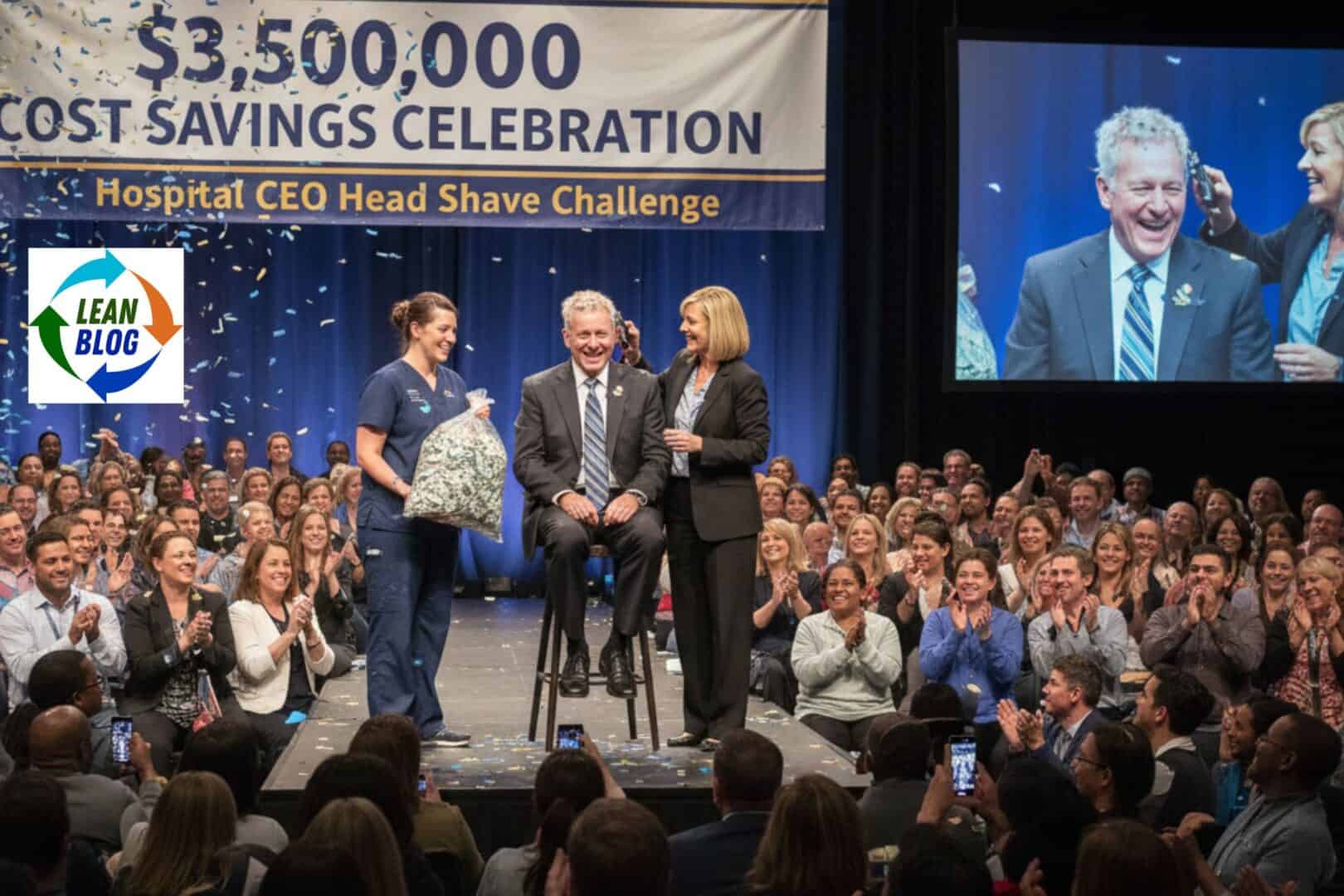
A pivotal moment came in 2009, when then-CEO James Dague made a bold and public promise: if employees could generate $3.5 million in savings that year through improvement ideas, he would shave his head. That wasn't just theater–it was a statement of trust and empowerment.
Staff didn't just meet the challenge; they more than doubled the savings goal. They saved $7 million.
And Dague kept his word, shaving his head in front of his colleagues as a sign of gratitude and humility. It was funny. It was visible. And it mattered.
Because by then, the culture at Goshen had already begun to shift. Improvement wasn't something done to staff–it was something done by them. It was something they owned. Everyone was empowered to make improvements to their daily work, whether that impacted cost, quality, safety, or the patient experience.
One emergency department nurse educator noticed that the napkins used on patient trays were unnecessarily expensive–and saved $4,000 by recommending a change. A team in the GI department switched from disposable paper gowns to reusable cloth ones, saving $22,000. These may sound like small things–but in Lean, that's the point. Small changes, every day, add up.
Goshen's program, called The Uncommon Leader, isn't about rare heroic efforts. It's about everyday leadership at every level. And it's not just about cost savings. In fact, the hospital went more than 17 years without layoffs–building a foundation of psychological safety that gives people confidence to speak up, share ideas, and try new things without fear.
That stability and trust help explain why Goshen has consistently been named one of Indiana's top workplaces. Employees feel valued not just because of perks or slogans–but because they are treated as valued problem solvers.
We often say that Lean is about respect for people. At Goshen, respect isn't just a value hanging on a wall. It's baked into daily habits, leadership behaviors, and yes–occasional public head shavings.
What can we learn from Goshen?
- Leadership matters–but so does followership. Trusting people to improve their own work can unlock surprising creativity.
- Cultural transformation doesn't require giant leaps. It requires steady, visible commitment and a willingness to celebrate the small wins.
- A no-layoff philosophy supports long-term thinking. Psychological safety isn't just a buzzword–it's the soil where continuous improvement takes root.
Lean isn't just about tools. It's about people. And when people are given the freedom to improve, and the support to do so, they often exceed expectations–whether the goal is dollars saved or hair lost.
What about your organization?
Does your culture invite ideas–or inadvertently shut them down? Have you ever considered a fun public challenge to energize improvement efforts?
If you're curious about how to build or strengthen a culture like Goshen's–where improvement is everyone's job and joy–I'd love to hear from you. Let's talk about how to create uncommon leaders in your own organization.
Feel free to share your thoughts or experiences in the comments. What's the boldest thing your leaders have done to support improvement?