When a Lean Leader Admits He Doesn’t Know What He’s Doing, with Gary Peterson
Gary Peterson spent almost 40 years helping O.C. Tanner build a continuous improvement culture, work that earned the company the Shingo Prize in 1999. He joins me to talk about psychological safety, autonomy, leading change from the middle, and the hardest story he tells about himself.
Scroll down for how to subscribe, transcript, and more
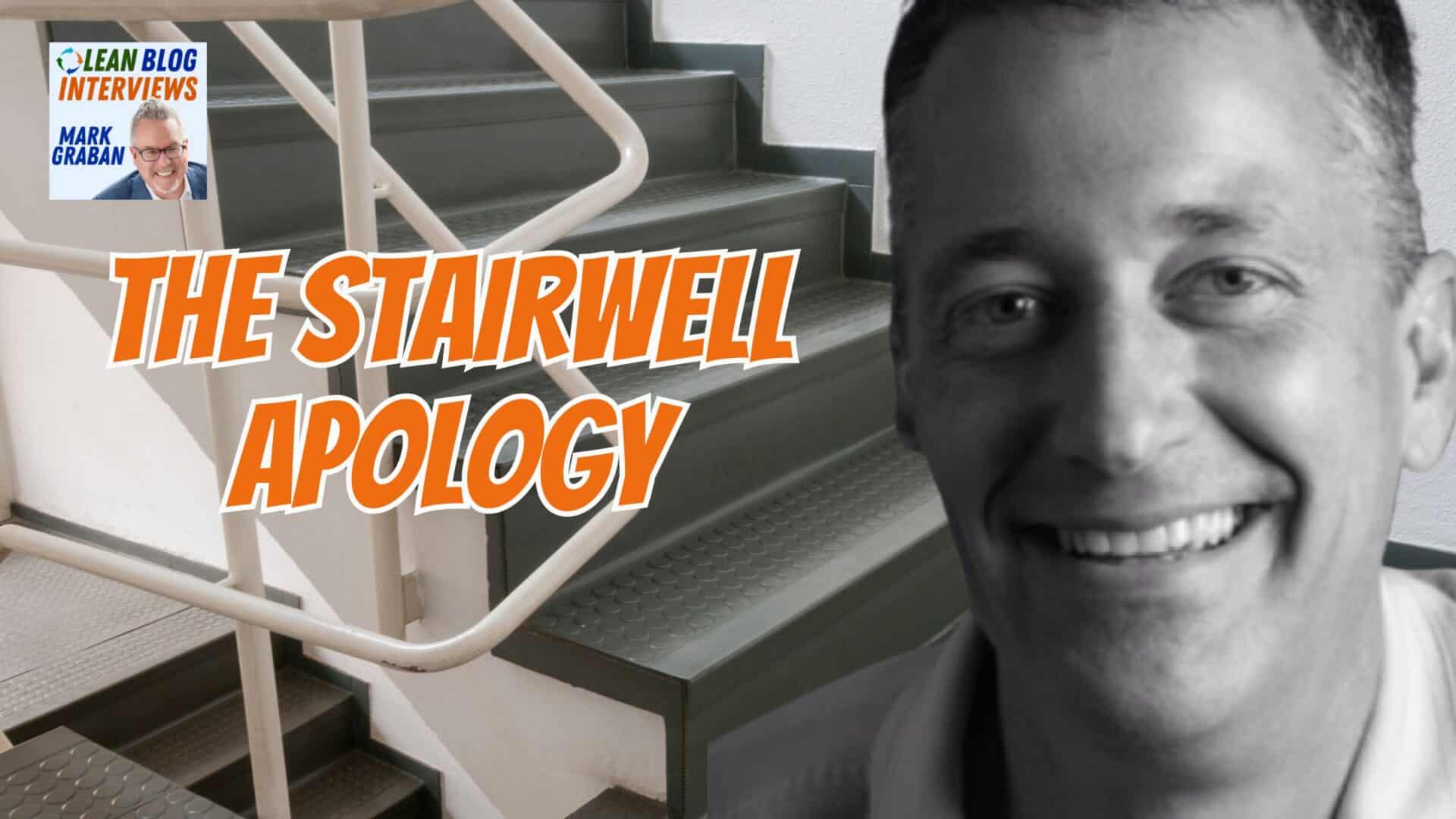
My guest for Episode #546 of the Lean Blog Interviews Podcast is Gary Peterson, recently retired from O.C. Tanner, where he served as Executive Vice President of Supply Chain and helped lead the continuous improvement work that earned the company the Shingo Prize in 1999. Gary is an AME Hall of Fame inductee. He now serves as an executive in residence at the Ohio State University Fisher College of Business, working with their Master of Business Operational Excellence (MBOE) program.
Gary started this work before the word “Lean” was in common use. A change in how O.C. Tanner went to market shrank order sizes from thousands down to one or two, and a factory built for big batches started losing ground on cost and quality. Gary took a job titled facilitator of change. He pulled departments apart, built one-piece flow, and asked frontline people to solve problems in a culture that had taught them it wasn't safe to speak up.
We spend much of the conversation on psychological safety and autonomy, and why Gary thinks neither one does much without the other. He also tells what he calls the hardest story in his repertoire. An employee stopped him on a stairwell to tell him his system wasn't working. She was right. He argued her down until she cried. What he did next, and what two coworkers did a few hours later, became a turning point for him and for the company.
We also get into leading change without support from the top, cutting an 1,800-person workforce roughly in half through attrition with no layoffs, the 30 to 40 systems that quietly stopped during COVID, and why Gary says discipline is the hardest part of Lean.
What We Discuss in This Episode:
- What is your Lean origin story, going back to the early days at O.C. Tanner?
- The job was posted as “facilitator of change.” What drew you to it?
- You went from “this will be fun” to “painful” quickly. Was the pain technical, people-related, or both?
- How did psychological safety, or the lack of it, show up when you asked people to speak up?
- You say autonomy and psychological safety mean little without each other. Why?
- Did you have a real mandate to change the business, or did you take it on and lead from the middle?
- How much did a genuine business problem help you sustain the change?
- Tell the stairwell story. What happened, and what did you do next?
- You told 1,800 people you would only need half of them, with no layoffs. How did that work?
- What are the early warning signs that a culture is starting to drift?
- How did you coach frontline teams differently than directors and VPs?
- What did you build so the culture didn't depend on your energy alone?
- What are you learning from the students in the MBOE program?
This podcast is part of the #LeanCommunicators network.


Watch the Episode:
Thanks for listening or watching!
This podcast is part of the Lean Communicators network — check it out!

Automated Transcript (Not Guaranteed to be Defect Free)
Mark Graban: Hi, welcome to Lean Blog Interviews. I'm your host, Mark Graban. Our guest today is Gary Peterson. Gary recently retired from O.C. Tanner, where he served as Executive Vice President of Supply Chain and helped lead the continuous improvement work that earned O.C. Tanner the Shingo Prize back in 1999. Gary was inducted into the AME Hall of Fame, and today he is an executive coach, teacher, and consultant. He has been named executive in residence at the Ohio State University Fisher College of Business, working with their Master of Business Operational Excellence program, or MBOE, as we've talked about here on the show. Gary, welcome to the podcast. How are you doing?
Gary Peterson: Thank you, Mark. I'm delighted to be here.
Mark Graban: It's great to have you. We crossed paths again fairly recently at the Shingo Connect event, and I appreciate you accepting the invite. There's so much we could talk about, but I always like to start by asking about your Lean origin story, going back to the days at O.C. Tanner. I'd love to hear how and why and where and when you got exposed to this.
A Lean Origin Story, Before the Word Existed
Gary Peterson: Almost 40 years ago, when I was at the O.C. Tanner company, they were changing the way they were going to market, which changed the way demand hit the factory. Up until that point, production was in big batches. They do recognition awards, and at the time the major way of recognizing people was at annual events. Annual banquets, Christmastime, May for hospital week, things like that. With the change in market, it became more like, when somebody accomplishes something, let's recognize them in a timely manner. So order size shrank from hundreds or thousands down to one or two, and everything was set up for big runs. Not unexpectedly, costs were going up and quality was taking a big hit. The company wanted to do something about it, and they posted a job for a facilitator of change. I was in marketing at the time, and I thought, “Facilitate change? That sounds like fun. Can I make a career of that?”
I applied for it, and I sold myself on two things. One was that I had seen a video in MBA school that Hewlett-Packard made back in the 1970s, showing that one-piece flow was more efficient than batch. It blew my mind and stuck with me. I thought, “I know we can do small runs. We can do a pull system better than this big push batch system we have.” I was very confident of that, and maybe that was the biggest differentiator for me, because no one else knew what to do. The term Lean hadn't even been invented yet, so I didn't know where to go for more information than that.
The other thing was, I believed our people probably had more to contribute than they'd been asked to give. We were a very top-down, controlling, autocratic culture. The manager was god of his kingdom or her kingdom, and people just did what they were told. So I stepped into this role and immediately started changing the way work flowed. I tried to get a pull system in place, which was very painful, but I also started to engage people more, teach them problem-solving methodology, teach them how to work together as teams. Also very painful. We stumbled around a lot. We fumbled in the dark, we fell down, we got up. But very quickly the company started saving money. The results started coming in, and people started to engage. We spent the next three decades improving on that system, right up until they booted me out the door in January. Mandatory retirement age for executives at O.C. Tanner is 65, and I hit my mark. What a great place to work. What a great career I had there.
Mark Graban: It went from “this will be fun” to “painful” pretty quickly. Getting into those details, was the pain more about technical challenges or people challenges, or both?
Gary Peterson: Both. I started solving the flow issues by putting Kanban in between departments. In the end, we took apart all the departments and put every person right next to each other in a U-shaped cell. But that's not how we started. We started with Kanban, trying to get people to learn more job skills and move with the work. That was hard. And taking apart departments was hard. We had 1,800 people when we started. Everyone was now sitting by someone new, someone they had always mistrusted and been told was not good for them. “It's the jerks back there who are screwing things up, and the ones up there who think they're so smart.” Now I'm sitting next to you, making a new product, talking things through. That was hard. It was also hard on the managers, because I'd say, “We're going to engage our people more. We're going to trust them, help them do some of the problem-solving,” and a manager would say, “I don't know how to be successful in that world.” So it was painful there as well.
Mark Graban: I think we're on the same page, but when I talk about people challenges, I'm not blaming the people. Old habits are hard to break. It's hard for anybody to go through significant changes to the way they're used to doing things.
Gary Peterson: It absolutely is. On top of that, we had a lot of fear. The team members, as far as they could tell, any time they opened their mouth and expressed an opinion, they got their head handed to them. So it was best for them to stay quiet. And here's this new guy saying, “I'd like you to talk. I'd like you to solve problems.” They're thinking, “That's not safe to do around here.” So getting the managers to back off and become more of a mentor and coach, and getting team members to gain confidence in themselves and each other, it's a lot of work.
Psychological Safety and Autonomy
Mark Graban: Another phrase that wasn't really being used at the time comes to mind: psychological safety. It sounds like there was not a lot of that, given that people had learned to protect themselves by staying quiet.
Gary Peterson: Yeah. You can talk about autonomy, you can say you want more autonomy in your people, but without psychological safety the autonomy is meaningless. And likewise, without autonomy, psychological safety doesn't give you a whole lot. Together they're very powerful. So you're not just asking management to hand over autonomy, you're asking them to make it safe. And then team members have to make it safe for each other. What we had was a bullying mentality. It wasn't just the managers who were mean. People were mean to each other. There was a pecking order, like a schoolyard. None of that works in a culture of continuous improvement.
Mark Graban: Tell me more about autonomy, then. You suggested psychological safety alone isn't enough. It sounds like autonomy is the ability to make improvements happen, to solve problems.
Gary Peterson: I asked a couple of managers right up front to hand me some of their best people and let me do a kind of quality circle. I had a group from our merchandise team. Incredible. They were all women, by chance, and they were really smart, coming up with great ideas for how to improve the merchandise function. We worked together once a week for a month or six weeks, and we got to a point where we had something powerful to share with the manager. I said, “Let's bring the manager up here and have you present your ideas.” They were horrified. “No, no, we're not going to present our ideas.” I said, “It's okay. He chose you to be part of this. He wants to hear your ideas.” They would not be the ones to share. They said, “We assumed, Gary, that you were going to sit down one-on-one with him and share the ideas without our names associated with it.”
Mark Graban: That's safer.
Gary Peterson: That speaks to the psychological safety. Even though the manager really was granting them autonomy by saying, “Go be part of this group,” neither one was working in that environment. So getting managers to let go of control is what actually allows team members to take autonomy. You start small, you give them small wins, and they start to realize, “I tried something new, and whether it failed or worked, the world didn't end. I got to experiment, I got to learn.” That's when they start to feel like it's safe, and they can take more autonomy and try more things. Something like the Improvement Kata that Mike Rother teaches is a great technique for helping team members experiment with autonomy, and the methodology makes it psychologically safe for them to do so.
Mark Graban: When I started my career right out of college 31 years ago, at General Motors, that plant was very much autocratic, command and control, blaming and shaming. The phrase “toxic workplace” wasn't being used, but it fit the definition. I saw some culture change start to happen when we got a new plant manager leading the 800 of us. A lot of companies you hear about, this kind of change starts with a new CEO. Larry Culp at GE Aerospace comes to mind as someone who's talked about this at AME. It sounds like you had this mandate from being an in-the-middle facilitator. Was it a mandate, or did you take it on? Leading from the middle, it's unusual for that to turn into a success story.
Leading Change From the Middle
Gary Peterson: You're right. It's a great question. I had a mandate to change the business, but our CEO called me in repeatedly to challenge me on what I was doing.
Mark Graban: You were making waves. I'm sure people were coming in saying, “What's this guy Gary doing?”
Gary Peterson: When he gave me the job, he handed me Richard Schonberger's book, “World Class Manufacturing.” It had a picture of a U-shaped cell in it, but he had never actually cracked the book. So the idea of taking apart departments, to him, was “that's not what I hired you to do.” And he said, “I'm hearing a word that bothers me, empowerment. Can you explain that to me?” I definitely acted on the floor like I had a mandate. But my boss and the CEO were questioning, pushing back, and often undermining me. I just had to be resilient, pick myself up, and go to a different corner of the factory where maybe they couldn't see what I was doing, and continue my work.
Mark Graban: The framing of the mandate is interesting to me, partly because there was a real business problem. You're describing changes in customer behavior, customers not ordering far in advance. The need to be responsive reminds me of the VIBCO story and Karl Wadensten in Rhode Island. He's been a guest on the podcast, and his mission for Lean was very much about figuring out, we've got to ship everything same day or next day. Competitive pressure, as opposed to “I read a book” or somebody saying “you should do the Lean thing.” How much was that a factor in the success?
Gary Peterson: I think the fact that the things we were doing were actually improving the business was what saved me. Instead of being told “you're done,” because we were getting results, the conversation was “what are you doing?” When we put in Kanban, we took our lead time from issue of materials to shipping product from 28 days down to 20 minutes, by the time we got into the U-shaped cells. In the first year alone, we went from 28 days to 14 days. With that came a ton of freed-up capital, millions of dollars saved, and quality improved. Every time you shrink time, every time you bring processes closer together, efficiency goes up, quality goes up, time goes down, and the ability to think systemically goes up. Time is a great metric for improvement. I was buying myself time. I think our CFO was saying to the CEO, “Cut this guy some slack.” I can't otherwise understand why they put up with me. I was a little bit of a prima donna. I was young, I was ambitious. But things were happening.
Mark Graban: From a competitiveness standpoint, being more responsive would help win more orders and get into a growth mode, which seems like the best circumstance, as opposed to being in a cost-cutting, shrinking death spiral. When you're growing, there's no need to say “no layoffs due to Lean,” because you're growing.
Gary Peterson: That's exactly right. Since that time, the company has been very creative at coming up with new products that let us create new value streams and move people from lines that are more mature, and somewhat dying, into newer products. At the time we only had the one product line, which was quite mature and wasn't growing.
Halving the Workforce Without Layoffs
Gary Peterson: When we moved to the U-shaped cells, the mini factories, we knew right off the bat we'd be twice as efficient when we were done. We started with 1,800 people. I brought in all the employees in groups of 100, and I said, “This is where we're going. Here's the U-shaped cell.” Everyone followed along. Then I said, “When we finish putting all these in place, we're only going to need half of you.” Everyone said, “Okay, say more about that.” I said, “We're going to build one mini factory, hire the best 16 people we can find, put them in there, and then wait until 16 people leave by attrition. Then we'll hire the next 16 best of you, build the second cell, and wait until 16 more leave. It'll take us three or four years, and the workforce will be in half. But let me tell you what I mean when I say the best 16 of you,” because half the people in the room thought I meant the most tenured, highest-skilled people. I said, “That's not who we're going to hire. We're going to hire the problem solvers, the creative thinkers, the people who come to work with energy and enthusiasm and love to work as a team to solve problems.”
Half the people in the room thought, “That sounds fun to me.” The other half thought, “You'll never be twice as efficient. You won't hire me.” I said, “If you're not what I'm describing, we've got years. Let us help you get there.” We built the first cell, hired just like we said, and they were more than twice as efficient. It was fun to watch them. Work was joyous. They were laughing, there was music, they were dancing, enjoying themselves as they solved problems. And immediately, the people who didn't match those criteria, who didn't want to be part of a team, started leaving in droves. Our attrition went way up. We only had to build nine cells, and we were done in about two years. Not only was the workforce the right size, we had raised the bar on what it meant to be an employee in this new environment.
Mark Graban: I'm empathetic toward the people who selected out, because there's a matter of habit and being conditioned to keep your head down, do your job, don't make waves. I've seen that in different organizations, and sometimes the kindest thing is to let them go somewhere else where they can fall back into that role. Maybe not ideal, but what's right for them. And then the people you keep and hire going forward, you're not going to wear them down the way some of the others had been.
Gary Peterson: I used to think there are some people who will never make it in this new environment. But “Christian Hoberg” told me they did a transition in pharmaceuticals in Denmark and didn't lose a single manager. I asked how, and he said, “It was a very clear message from above and everywhere you looked. Everyone was saying the same thing: this is what we're doing, get on board.” We didn't have that clear message, and I think that's unfair. I led from the middle. I didn't have support up top. The most success for every person comes when there's a clear message from the top: this is what we're doing, get on board.
The Stairwell Story
Mark Graban: I appreciate the humility you're expressing, saying you were young and a prima donna. Hopefully we're all growing and maturing, and we all look back at things we did as younger professionals. I wanted to ask, if you don't mind telling it, about the stairwell moment.
Gary Peterson: That's the hardest story in my repertoire, but I'd be happy to. It was early on. We were experimenting. I was trying to put in a pull system between departments, and the work was getting tight enough that the signal was telling supplier departments, “Stop working. We don't need your work here.” At the time, we didn't have any way to do a heijunka smoothing of the schedule, so work would bottleneck and there wasn't much we could do about it. A mini factory can handle that, but the big departments struggled with it. What I was encouraging people to do was go to the next department and help, which meant learning new job skills. We were in a situation where work was bottlenecked at about the sixth department, and everyone else was moving downstream trying to help. The net effect was that a lot of people were in departments where they didn't know what they were doing.
I was troubled and concerned. I didn't know how to solve it, and it bothered me. One day a woman from the soldering department, which was in the middle of these affected areas, stopped me on the stairwell. She said, “This isn't working.” I asked what she meant, and she told me all the things that were wrong. She was spot on. It was terrifying, because I thought I could see the problems, but I assumed everyone else was oblivious. All of a sudden I realized, if what she's saying gets out, it'll be obvious that I'm in over my head and I don't know what I'm doing. I panicked.
Standing there talking to her, I figured I had to get her to shut up. I started telling her why she was wrong, even though she was right. I told her what she was missing, what she didn't understand. I basically made myself superior, intellectually. I had the arguments. I could talk circles around her. I could see her confidence start to wane, so I was winning the day. I kept going, I kept talking, I doubled down, until she started to cry. That stopped me. I was looking at her crying, and I didn't know what to say. She turned and walked away.
I felt awful. I wasn't raised like that. I knew I had to apologize, and I started thinking through what an apology might look like. The only thing that made sense, I tried to find a way to apologize without admitting I didn't know what I was doing, and I couldn't make it work. The only thing that worked was the truth. I'm in over my head, I'm trying to figure this out, and I'm scared. Once I figured out that's what I had to do, it still took me several days to work up the strength to actually do it. Then I was ready, but I couldn't catch her alone. She wouldn't make herself available to me. Big surprise. I realized the only way I was going to apologize was to walk into the soldering department. There were 30 people working in there, shoulder to shoulder. I was going to have to apologize to her in front of the department.
I walked in. There were no extra chairs, so I went over to her and knelt down next to her. The whole room went quiet. Everybody was listening, and I realized everybody knew, and I wasn't just apologizing to her. I was going to have to explain to everybody why I behaved so badly. I put it on the table. I understand the gist of this. We need to flow the work. We need to let the customer pull it. I know where we want to get to, but between here and there I don't know what I'm doing. I'm trying to figure it out, and that doesn't excuse me, but it's my reason. And I apologized to her. She never looked at me while I was talking. She just sat there looking forward, and at the end she gave me a barely perceptible nod. “Okay.” That's all I got. It's all I deserved.
I got up, went back to my desk, and thought, “Okay, pitchforks and torches, here they come. Gary's blood is in the water. Now's the time to get him. That was the best chance to get me.” A couple of hours went by, and two people from the soldering department, two of the really high performers, were standing in my doorway. I thought, “What's this?” They said, “We've been thinking about the problem, and we're wondering, would this work?” And they showed me what they had. It was the first time in about four years of our transition that somebody had come forward suggesting something. I'd actually already tried what they were suggesting, but I thought, “What can I do with this?” I said, “What do you think? Do you think it might work?” They said, “We think it might.” I said, “Are you willing to try and implement it?” They said, “Really? You'd let us implement it?” I said, “You heard me say I don't know what I'm doing. Would you?”
They went and tried it, and it didn't work. So they adjusted it and tried a variation, and that didn't work, so they tried something else. They just kept tweaking it. As they experimented, people came over and joined them. I wasn't present, but I have a feeling they were saying, “It turns out Gary doesn't know what he's doing, but he told us we could try this, so we're experimenting.” I think it became the impetus for our people jumping in at full strength. And it strikes me as very important that it didn't happen until I made myself vulnerable. All growth requires vulnerability. If we're going to grow, people have to be vulnerable. I think I showed our management that you can be vulnerable and survive, and people will rise up. I think it was a turning event for O.C. Tanner. It was also a refining event for me.
Mark Graban: I appreciate you telling the story, and the honesty and candor. A lot of thoughts come to mind. One is empathy toward you and others who have been in that situation, a command and control, top-down culture where there's pressure to be a know-it-all because of fear, versus being a learn-it-all in a figure-it-out culture. Think about the vulnerability, not just to the team members, but to the executives. If the executives at O.C. Tanner had heard you admit you didn't know what you were doing, they might have thought, “We need to find someone who does.” When, in reality, does any of us 100 percent know what we're doing? If that's the threshold, that's a hard spot to be in. If, starting from the CEO, they had been modeling “we don't really know things, the best we can do is go figure it out,” you might not have had the fear, and you might not have lashed out. The other thought is that it's interesting you had an opportunity to model upward. It usually doesn't flow that direction.
Gary Peterson: That's a great statement. Even then, I felt safe admitting to the team members that I didn't always know. I don't know if I felt safe admitting it upward.
Mark Graban: There are different punishments that could come from either direction. The frontline team could make your life difficult, but they can't fire you.
Gary Peterson: I thought they were going to come at me with everything they had.
Mark Graban: Or try to get you fired.
Gary Peterson: Maybe. But I think we'd come far enough. For all my weaknesses, I had done something to make them want to help. Maybe I laid the foundation that allowed me to be successfully vulnerable.
Respect for People as a Higher Calling
Mark Graban: Changing topics a little. You wrote the foreword to a book that's now a Shingo recipient, “Why Care?” by Chris Warner, Carolyn Greenlee, and Chris Butterworth. We've talked about that book on the podcast. At this point you're sharing more late-career reflections about leaders, a higher calling, culture, and safety. I'd be curious to hear your thoughts.
Gary Peterson: Part of psychological safety says I can be myself. My work wants me to bring my true self to work. My work understands that each of us is different. There are similarities, but a huge spectrum across the workforce. If we're going to be as smart as a team, we have to acknowledge those differences, respect them, honor them. It runs the full range, every type of diversity, every type of scale you could use to describe your workforce. It's so easy to think of them as a single blob of something. But they're not. It's a dynamic, rich range of human experience. I really believe that to get the most out of people, every person has to feel valued and honored for who they are. They have to feel like, “My company wants me to be my best self. My company will help me be my best self. My coworkers help me be my best self.” Then coming to work is safe, and it's fun and exciting. It's very difficult to be your best self every day. Some days you struggle. I want to work at a place where, on days when I'm struggling, other people prop me up. They see my need and an opportunity to serve me. That's a great place to work.
I used to ride the train into work and walk through a blue-collar neighborhood between the train tracks and O.C. Tanner. Going home at night, I'd pass people coming home from their jobs. They'd get out of their trucks in their driveways, and they looked beat. They looked like the life had been sapped out of them, trudging into their homes, almost saying, “Help me. Save me. Prop me up. Feed me, and let me go back to work tomorrow to get the crap beat out of me.” I don't want to work in a place like that. I want to work where, when we walk in the door, we feel energized, excited about being ourselves and doing work with other human beings, where we can be powerful together. That's what attracted me to the book. I knew Chris before, and now I know all three authors. They're wonderful people, and I was excited to write the foreword.
Mark Graban: What you're describing goes beyond physical safety. It's important not to be physically injured, that's one level. But there's a higher calling I've heard from people like Paul O'Neill when he was CEO at Alcoa, and more recently from Bob Chapman at Barry-Wehmiller, who sadly passed away. I remember Bob very vividly at an event talking about the goal that not only do we have zero injuries, but that people go home healthier than they were when they came in, and that included mental health. We use the word “toxic” loosely, but think about what it means: harmful. Chronic exposure to a bad workplace has a major impact, not just on mental health but physical health. Bob Chapman said one measure they looked at through HR was the divorce rate of their employees, as a lagging indicator of workplace culture. Clearly not the only factor, and they knew that. It's rare, in a nice way, when leaders talk about leadership as a calling, in terms of how it affects people's lives, how that employee treats their family when they get home. A lot of people say that's not the role of business, but it can be framed as the role of leadership in business.
Gary Peterson: I disagree that it isn't the role of business. I think for sure it is. At O.C. Tanner, people talk about it like it's family. When you ask them about it, they say, “I spend more waking hours here than I do with my family.” Then you realize the impact work has on the human experience. You couldn't sit in a room with Bob Chapman talking about ways of being without wanting to be a better human being, without wanting to improve the lives of everyone around you. I think in the best improvement cultures, every person feels that way, not just the leaders. Every team member is like, “I'm here for you. What do you need from me to be successful? I'll do what I can.” That's the culture we achieved, and we were a study site for TSSC, for Toyota, and also for McKinsey and Company. I loved having people come and walk around the floor, because that's what they could feel, that sense of family and camaraderie and caring for each other.
Mark Graban: Another word that comes to mind is what Toyota people call respect for people, or respect for humanity. Part of that is different from being comfortable all the time. Toyota people use the word challenge as one of the core ideas. Challenging people to be creative, challenging them to improve performance, because we're all in this together. Let's make it interesting. That's a great environment to be part of.
Gary Peterson: I agree. When you hire somebody new, we spend months teaching them the way we talk, the way we solve problems, the way we approach the work. But nothing is as impactful as the time they spend with their trainer, where the trainer helps them experience, through TWI, who we are, and the time they spend on their team. They might say something inappropriate, something racial or unkind, or they might roll their eyes or belittle a comment. It's the team itself that corrects them: “That's not the kind of thing we do here.” And by the way, you get one. That's it.
Mark Graban: Learn from that.
Gary Peterson: Yeah.
Mark Graban: Talk to people who really study psychological safety, and there's a reminder that there's a fine line between being your authentic self and making other people feel bad. It's like the old line: your right to do whatever you want with your fist ends at the beginning of my nose. You can be your authentic self, but that doesn't give you license to be a jerk. If it's affecting others negatively, that's a problem.
Gary Peterson: We all learn things at home and at school that may be inappropriate in terms of healthy ways of interacting. I had people early on saying, “That's just who I am. That's the honesty you get from me.” But it was brute unkindness, and it doesn't fly here. There are a lot of things we have to unteach. The right culture at work sends home a better person. Someone who no longer berates, no longer uses shame, no longer criticizes, who now believes in building people, instilling confidence, teaching, and letting people try and fail and learn. These are new ways of being that should be taught, and if not taught at home, they should be taught at work.
Mark Graban: It comes down to having self-esteem, valuing yourself, which can be strengthened in a workplace, or, sadly, drained out of people.
Gary Peterson: Yep.
Momentum, Entropy, and the Discipline to Sustain
Mark Graban: Let's turn to what seems like a positive, long story at O.C. Tanner. A lot of organizations have a good run and then backslide, drift, or collapse. What did O.C. Tanner do, and what was your role, to keep things moving forward?
Gary Peterson: During the transition I found out how much momentum is my friend. Building and keeping momentum is everything, and momentum takes energy. Without energy, entropy takes over and things fall apart. That's the natural state. That's the law. You can expect that if you're not applying energy, everything is going to backslide and fall apart. It takes work and time to recognize where the energy has to be applied. I truly think discipline is the hardest part of any Lean work. We put systems in place that make it harder to do the wrong thing and easier to do the right thing. But then you have to put systems in place that track the systems. Are we doing them? Is everybody doing what they're supposed to do? Is it working the way it's supposed to? Can we improve it?
Early in COVID, everyone in the office went home, and the factory kept working. In addition to making awards, we became the de facto manufacturing arm of the Utah health community. We were making parts, 3D printing, doing whatever we could to help. Everyone was wearing masks and afraid. I could see fear in their eyes for weeks. Then they got a lot better at it. About six weeks in, I was talking to somebody about their last team meeting, and they said, “We're not holding team meetings anymore.” I said, “What?” “We stopped when COVID started.” “What about your morning huddles?” “We're not doing those. Spacing.” “What about your strategy deployment projects?” “We're not working on them.” It was mind-blowing. Thirty or forty systems, and just like that they all stopped. I would have bet big money that was impossible, and I would have lost.
Mark Graban: You assumed habit and momentum were carrying it.
Gary Peterson: I did. But it stopped overnight. They thought, what, three to six weeks and we'll be back to normal.
Mark Graban: So it was more of a pause than wanting to get rid of it.
Gary Peterson: Maybe a pause. But I got everyone together and said, “When things are tough, you don't let go of your systems. You double down on your systems.” Everyone said, “You're right.” And just like that, they turned them on again.
Mark Graban: The challenge then is, how do we do it safely?
Gary Peterson: Right. Okay, we'll do the huddle, but it won't be a big mass of people like before. They turned everything back on. One fear about me retiring was how much of it depended on the energy I was putting into it. So we spent the last five years making sure I wasn't the only energy source.
Mark Graban: Five years. That's good planning.
Gary Peterson: Significant time, building competence. Before that, my VPs and I owned all the systems. One by one we handed them off to whoever wanted to run them, and they've rotated several times since. Now the floor owns the systems. It's not me, it's not the VPs. Getting them to own it is where we applied a lot of energy, and that has become incredibly effective.
Mark Graban: There's a great lesson there. When you think about the tendency to drift, even Toyota drifts. If you talk to Toyota people, they'll say, “We've lost some discipline around standardized work,” and then you hear about a back-to-basics movement. I'm not trying to shame them for that. It's a reality for people listening that this is a tough force to work against. Toyota bounces back, and hopefully they learn not to drift again. What are some early warning signs you've seen that the culture is starting to drift, before performance catches up to it?
Gary Peterson: If you've espoused a principle like respect for each other, or humble leadership, then you need some sort of litmus test to ascertain whether the systems meant to reinforce that principle are working. We called it a gemba assessment. You go to the floor and ask questions to find out whether the systems are working, how well, and whether everybody is using them. There has to be a way to evaluate everybody, talk about the results, and either improve the system or reinforce it. We used to have a monthly leadership meeting with all the exempt employees and some hourly employees, maintenance techs, trainers, team leaders. There were a hundred-plus people in the room. About every five months I'd have to reiterate something, like, “5S, what are we doing? Visual management. I'm visiting the boards and I'm seeing this and that.” Then two weeks later I'd be in a team with someone who was in that meeting, look at their board, and it's not right. I can call the team leader over and say, “This is what we were talking about, right here.” That's the energy you have to put into it. If you don't do that, everything gradually falls apart.
Coaching the Floor Differently Than the VPs
Mark Graban: What I hear you describing is pointing these things out in a way that's both coach and challenger.
Gary Peterson: With my directors and vice presidents, I could specifically tell them, “You guys are blowing it,” and tell them what they were doing wrong. But every level below that, I focused more on positive reinforcement. I'd thank them profusely for the good things, and I'd say to the manager or team leader, “You guys are doing great, but maybe we could do this, maybe we could do that.” Then I'd go to their director and say, “This is what I told the manager. Would you please make sure it happens?” I don't know that the approach is necessarily correct, but I was always more upbeat and positive with the team leaders and team members. The directors and VPs knew exactly where they stood with me.
Mark Graban: It's an example of situational leadership. In my experience, it's not that frontline people can't handle direct feedback, but when you have positional power, people are intimidated by the title. They don't know you as well because they don't interact with you as much as your direct reports do. There's something to be said for a different approach. I've seen leaders, well-intended, come down to the shop floor and ask a question that at a peer level wouldn't be threatening. They'll ask something like, “Tell me why you did this instead of that.” Maybe it was meant as humble inquiry, but it comes across as criticism. The person walks away thinking, “He chewed me out,” when he just asked a question. It's a matter of perspective.
Gary Peterson: Every three months, the directors, vice presidents, and I, twelve of us, would go to every team, and the team would have an hour to tell us about all the great things they'd done in the last three months. I'd tell my directors and VPs, “We're not going there to show them how smart we are. We're not going there to make a comment that shows we get it. We're going there to let them impress us.” So you nod, you smile, you look impressed. It wasn't hard to look impressed, because they were doing impressive things. Inevitably you see one or two things that shouldn't be, or they say something and you think, “I wish they weren't saying that.” But the whole time I'm smiling and saying, “Thank you. Fantastic.” Then I circle back with the manager afterward to correct something. It's really important that you talk to people. With my kids, I've got six wonderful kids. My first five are boys. I was very demanding of them when they were younger, but also very positive, and I think it was a good mix. But when my oldest was 12 or 13, I realized I have no control over how this turns out. This could go any direction. I needed a connection with him. I needed to be less demanding and controlling, more praising and appreciative, and I shifted. I think it made a big difference in the teenage years, and I think it worked on the floor.
Mark Graban: There's a difference between praising what's happening and blowing smoke. It doesn't sound like any part of what you're describing is “go tell them it's great even if it's terrible.” It has to be sincere, a real celebration of improvement, even if it's not perfection, because nothing's perfect.
Gary Peterson: It's got to be sincere, and it's got to be specific. Not finger guns and “great job.” And it's got to be timely. If you see something worth praising, do it. Whether it's family, neighbors, or work, I call it out. It's a good habit to get into. You can always circle back and ask somebody to do something better.
A Lifelong Learner and the Next Generation
Mark Graban: Maybe one final question. In your role with the MBOE program at Ohio State, they always want you to say “the Ohio State University.” You did it. You said it casually. As an executive in residence, would you wear the mantle of lifelong learner?
Gary Peterson: I hope so. I do a lot of reading. I learn from anybody I can, people like you. I want to learn what I can.
Mark Graban: What are you learning from the students in the MBOE program?
Gary Peterson: I've been associated with the program for years because I like what they do there. I'm very impressed, so I've been a fan, and they started inviting me to come in for a couple of hours. Now I'm mentoring a student, my second one, through the school year. I think they heard me say something nice about the program every chance I got, and they said, “Why don't you come do it for real? Come represent us.” I've done meetings with the whole business school, with different professors, and it's a great program. I didn't go to Ohio State. I went to BYU. But BYU didn't ask me to do this, so here I am. If anything, I'm gaining increased confidence in our future. I'm seeing these up-and-comers. Bruce Hamilton asked me about five years ago, “Gary, when we're all dead, who's going to lead this thing?” I have a lot of confidence that there are people coming up through the ranks who care, whose heads and hearts are in the right place. That's probably the biggest thing I've learned. A lot of energy, a lot of capability.
Mark Graban: A great thing to learn and a great thing to pass along. Thank you, Gary, for passing along stories, reflections, and lessons learned. It sounds like it was more fun than pain during that career.
Gary Peterson: Yeah. In the end, I feel so grateful for what I experienced, what I learned, and the relationships I developed. I wouldn't trade it for anything.
Mark Graban: Thank you so much, Gary. Our guest, Gary Peterson, retired from O.C. Tanner. I know there's a book in you. I'm going to put you on the spot. Are you going to write it?
Gary Peterson: I'm actually working with several different people on books. I'm working with Michael Martin on one. I'm also working with Peter Hines and Sheryl Jaeckel on a book on the human value stream. Theirs is the academic side, and I'm telling stories that exemplify the ideas. We'll have a couple of books out there, which I look forward to. I'm also very busy with coaching and mentoring. I've got some clients. I'm retired from O.C. Tanner, but I'm still working a few afternoons a week, and loving it. I'm just loving my life right now.
Mark Graban: Thank you for taking time to join us today. Maybe we can do this again sometime.
Gary Peterson: I'd love to, Mark. Thank you very much. Always a pleasure.
Mark Graban: Thank you, Gary.