Robert Maurer on Mastering Fear, Deming, and Motivational Interviewing

Why do successful people talk about “fear” when the rest of us say “stress”? My guest for Episode #315 is Robert Maurer, PhD, author of the excellent book Mastering Fear: Harnessing Emotion to Achieve Excellence in Work, Health, and Relationships. Bob studied prospective research on people who thrive over decades and found they rarely use the words “stress” or “anxiety” — they talk about being afraid, and they see fear as a normal part of any important undertaking. We talk about two healthy responses to fear, how Kaizen acts as an antidote, and how to reconcile Bob's work with Deming's famous call to “drive out fear.”
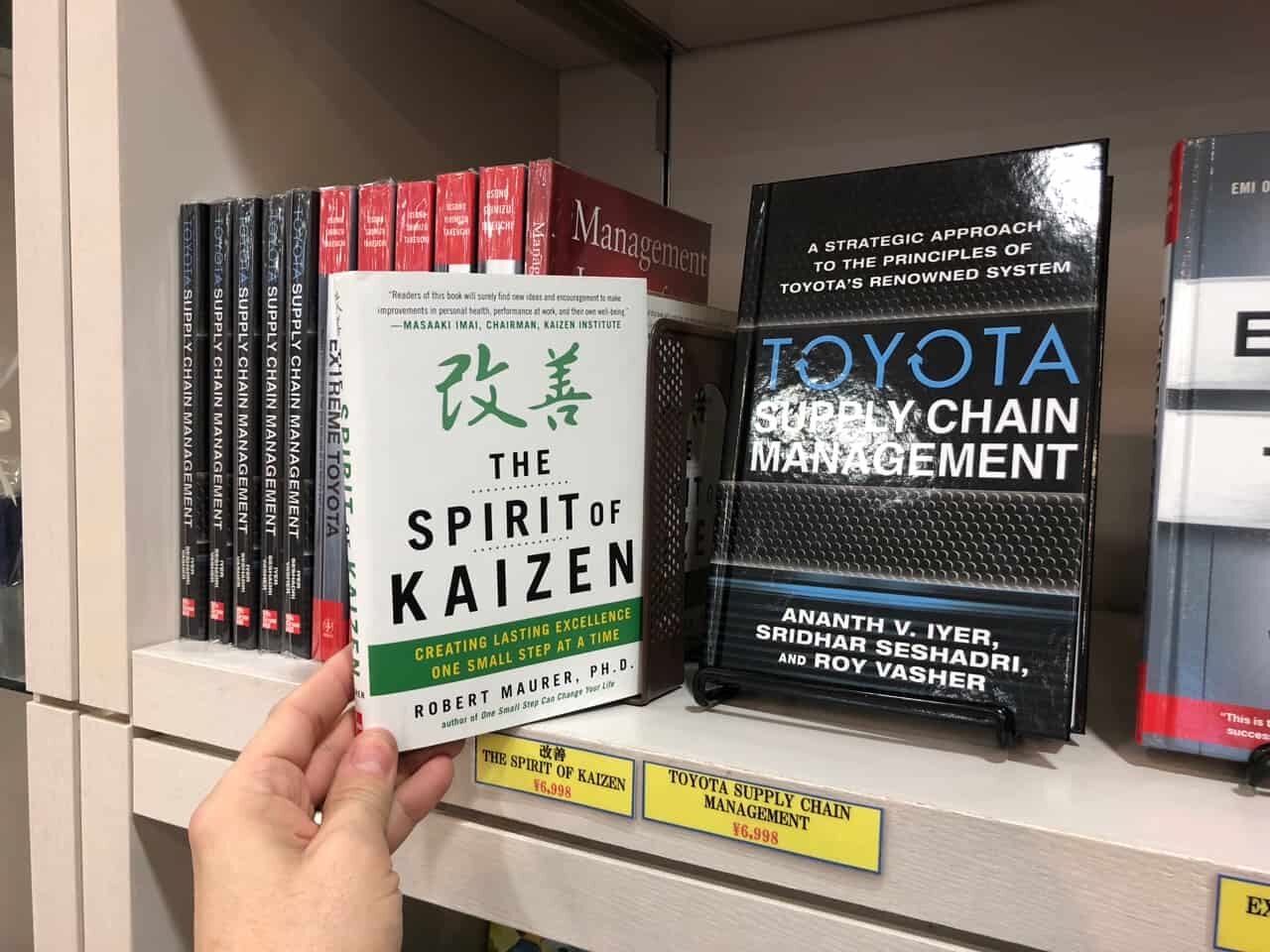
Bob was previously my guest for Episode #153, where we discussed one of his earlier books on Kaizen, One Small Step Can Change Your Life: The Kaizen Way By the way, earlier this year I noticed that his other book The Spirit of Kaizen was one of the few books by an American author that Toyota was selling at the Toyota Commemorative Museum of Industry and Technology in Nagoya (see photo below).

I hope you enjoy today's discussion on Mastering Fear. As the subtitle says, can we “harness emotion to achieve excellence in health, work, and relationships”? Emotion is part of the human condition. I don't think it can (or should) be removed from the workplace. I think part of the Toyota “respect for people” principle (better stated as “respect for humanity”) is accepting and bringing our full selves to the workplace. We're not just logical creatures. I think it's better to recognize and accept that than it is to stifle emotion. Anyway, on to today's discussion:
Listen:

For a link to this episode, refer people to www.leanblog.org/315.
For earlier episodes of my podcast, visit the main Podcast page, which includes information on how to subscribe via RSS, through Android apps, or via Apple Podcasts. You can also subscribe and listen via Stitcher.
Topics and notes for this episode:
- Dr. Maurer's website – his bio
- After we talked last, about The Spirit of Kaizen, is there anything new you've learned or seen that's surprising related to Kaizen?
- Building people, not just cars
- Application to personal lives… small problems / mistakes
- What led to you writing Mastering Fear?
- Why do you say that “stress does not exist?”
- Why do successful people prefer the word “fear” over “stress?”
- Deming said “Eliminate Fear”
- Management by fear doesn't work… but people try it anyway.
- What are some strategies for mastering fear? A healthy response is:
- Run to another for support
- Develop a nurturing inner parent
- If somebody says they are “afraid of their CEO,” is the problem the external factor (the CEO) or the person's unhealthy stress response?
- “Leaving the fear response on for a long time” is bad
- Are there connections between the habits of Mastering Fear and successful, continuous improvement organizations?
- Are leaders there more comfortable with talking about fear?
- Is it natural to fear change? What's the natural, healthy response to it?
- I've done two podcasts about “Motivational Interviewing” – what are your thoughts on this methodology and possible connections to organizational continuous improvement?
- Powerful… lots of research behind it. Stay out of judging people.
- M.I. can help calm their fears
His other book is sold by Toyota in Japan:
Previous Podcast Episode:
Videos of Dr. Maurer:
Thanks for listening!
Transcript:
Here's the cleaned transcript with H2 subheaders. I've removed ads, timestamps, disfluencies, and fixed transcription errors (including the obvious ones like “Mark Raven” and “Mark Grin” in the opening bumpers). Flags for anything I wasn't sure about are at the bottom.
Mark Graban: Well, Bob, it's great to talk to you again. Thank you for coming back on the podcast. How are you?
Robert Maurer: I'm doing fine, Mark. It's a pleasure to be back.
Mark Graban: Last time we talked about your outstanding book, The Spirit of Kaizen. Can you recap a little bit about your background and how you discovered Kaizen, and in particular, is there anything new that you've discovered or anything that's been surprising as you continue teaching about Kaizen?
How a Clinical Psychologist Discovered Kaizen
Robert Maurer: How I came to this is I'm a clinical psychologist, but I'm in an unusual setting. I work in a family medicine clinic, training family physicians who are in their three years of residency training, and I spend about half my time following one of the doctors through a half day of her clinic, standing in the corner of the exam room and then giving them feedback. It's this amazing opportunity for a psychologist because you're seeing people before they make poor health choices, before they make relationship choices that are problematic, before they have problems. We were struggling with, is there a way to intervene in people's lives before they need the help?
So I started looking at research on success, and one day I was reading the newspaper. There was a full page ad for the umpteenth year, Lexus was the number one highest quality car made in the world. I thought, well, maybe there's something metaphorically about how you build a car that I can apply to building your life. That led me to a book called The Machine That Changed the World, which you'd think might be about the computer, but it's actually about the automobile.
Mark Graban: Mm-hmm.
Robert Maurer: They kept talking about Dr. Edwards Deming and this process of Kaizen. As I started researching it, I found that Kaizen, the idea of making extremely small steps to accomplish large goals, had been applied in business. There were literally hundreds and hundreds of references in Google, but I couldn't see any applications of it in people's personal lives. That's what led me to look at it, and I actually had, long story short, an opportunity to work with Dr. Deming for a week.
Mark Graban: Oh, wow.
Robert Maurer: And hear it from him. That's how I got this idea of small steps. The other reason why it's often useful in a medical setting or many settings is Mark Twain said it beautifully when he said, “I'm all for progress. It's change I object to.” It just seems like it's hard for us to make change. We found in our studies that if you could break the steps down so small they didn't require self-control, discipline, or willpower, people could make those changes.
Small Mistakes Before They Get Big
To go back to your other question about what surprises we've seen, there's a couple. One is in the area of business, because one of the things we cover in both of the Kaizen books is about paying attention to mistakes while they're so small they don't seem to be very consequential or matter, and fixing them before they get too big to avoid. The most dramatic and most painful example since the publication of the book is the Deepwater Horizon spill in the Gulf of Mexico. There had been over 200 small spills at that platform before that fateful night when those 11 people died and the Gulf was poisoned. Paying attention to very, very small mistakes, which the airline industry is very good at doing, but many corporations in their haste to get a product out into the marketplace or to make the quarterly profit ignore.
Other dramatic changes in the area of health. Something that's been going on, a research project going on for the last 15 years, is looking at sitting versus standing. People think exercise means you go to the gym and sweat for 30, 40 minutes. But it turns out that not only walking, but just moving from sitting to standing is extremely important to your health. In fact, the chief cardiologist at the Mayo Clinic found that sitting six to seven hours a day without getting up every hour and just stretching or moving gives you the same cardiac risk as smoking a pack of cigarettes a day. There's all this research now on sitting versus standing.
Mark Graban: You talk about making changes small, and there might be a situation where somebody wants to try a standing desk and maybe they're afraid to. Correct me if I'm wrong, but one of my takeaways from your first books, The Spirit of Kaizen and before that One Small Step Can Change Your Life, is the idea of starting small. Maybe you can build on this example. If someone thinks, “Well, I don't think I could stand all day long,” you would recommend, maybe try starting stand five minutes at a time and try to work your way from there.
Robert Maurer: Well, we're not even sure that standing all day is necessarily the answer.
Mark Graban: No, fair enough.
Robert Maurer: The standing desk is often great. You can sit or stand and move, but they're expensive and a lot of companies don't want to invest the money. What we found is if you get up every 30 minutes or every hour at the latest, just stretch or move for two to three minutes, you get much of the same benefit. We've inherited the body of a hunter gatherer. Our bodies just weren't designed for sitting. Just get up and stretch periodically is enough to give you much of the same benefit. Sometimes there's too much of a good thing. Standing all day doesn't necessarily help.
Mark Graban: Sure. Maybe we can tie this into your latest book, Mastering Fear. Somebody fears this change, “I'm going to sit less however we define that, or I'm going to exercise more.” There's examples in, I forget which of your earlier books, about helping somebody get started with exercise, and they were maybe not confident, or they were afraid, and there was a Kaizen strategy that would help to address that fear. The amygdala and the fight or flight instinct kicking in, that fear is a very natural human response to a situation, right?
Robert Maurer: Yes. The bigger the demands we make on ourselves — I want to lose all this weight before the summer so I can look nice in a bathing suit, I want to be married by the end of the year, I want to get rich — the bigger the goal, the more it triggers the amygdala, the fear response in the body. What we found in Kaizen is if you could make the steps ridiculously small, you were building habits and creating change without triggering the amygdala and getting overwhelmed.
Why Successful People Talk About Fear Instead of Stress
Mark Graban: Let's transition and talk about your book Mastering Fear. What led to that book? I'm guessing a listener might guess the strategy that involves respect for people, or respect for humanity as Toyota might call it, isn't about lecturing people about “you shouldn't be afraid.”
Robert Maurer: Right. What led me to it was, because I'm working in a setting where we see people for annual physicals and we see them for flu shots, here was a chance to intervene in people's lives, but we really didn't have any tools. My team and I began doing is collecting what they call prospective studies, where they follow people for 10, 15, 20, sometimes up to 70 years to see who, in spite of adversity and challenge and setbacks, ultimately thrives. Not just in their jobs, not just in their health, not just in relationships. All three. There's over two dozen studies that have done that. One of the most consistent findings is the people in these studies rarely use the word “stress” or “anxiety” or “nervousness.” They talked about being afraid.
I couldn't figure out for a while why they'd prefer the word “fear” to “stress.” Working in a family medicine clinic, we see people every age, and we realized children never talk about being anxious or stressed. Did you ever hear a small child say they're anxious about the boogeyman? No. The reason we think successful people as adults use the word fear is they assume that whenever they're doing something important, fear shows up. They see it as a normal, healthy part of life, not something they have to get angry at or depressed about, or blame somebody else about, or overeat or drink in order to squelch. What they do with fear is very different than other people, which we can talk about. But they see fear as a normal part of life instead of something that's a disease they have to get rid of.
Mark Graban: What do you think happens as we age? Whether it's school, workplaces, society, there's a part of your book where you say, ask somebody what are you afraid of, and you might find that to be a really awkward question. Why is that? Does that instinct kind of get drummed out of us?
Robert Maurer: That's a good question. I don't know if I have the answer, but we think what happens in most Western cultures is we've banished fear from our conversation. The two examples I use to see how far we've come from that childlike acceptance of fear — go up to another adult at dinner tonight, wait for a pause in the conversation, and say, “So what are you afraid of?” People are going to look at you like you're crazy. Whereas if you say to a 5-year-old, “What do you want for Christmas?” you're in for a 20-minute conversation. Ask a child what they're afraid of, you're in for a 20-minute conversation. Children know they live in a world of fear. They can't control if their parents are in a good mood or bad, if a teacher's going to be nice or mean. Kids stand in line all summer to see scary movies. They can't wait for a Jurassic Park to come scare them. They know they've got to engage fear. They might as well have some fun doing it. For some reason, in Western culture, we banished fear from our conversation and turned it into a disease. If you look at the physical symptoms of fear, it's the same as what we're calling stress, but we're wanting help to get rid of it.
Two Healthy Responses to Fear
Mark Graban: What are some strategies for an adult, whether it's in the workplace or in personal life, to embrace that fear? We don't want to repress it or ignore it or be in denial about it, but what are some things that we can or should do?
Robert Maurer: One of the reasons I wrote the book on fear is to show people that virtually every successful person recognizes that fear is going to show up when they have big dreams. There's quote after quote after quote of world famous people talking about their fears, from astronauts to actors to famous business people. The first thing is to recognize that if you set your dreams big enough, fear is going to show up.
Then the question is, what are we supposed to do with fear? What people tend to do is they tend to turn it into anger, or they depress it, or they try to avoid the things they desire and therefore are afraid of. There are basically only two strategies. That's the good news. There's not a lot to learn. As they say in Alcoholics Anonymous, life is simple but not easy.
I ask this to audiences all over the world. I'll say, every other animal has a healthy response to fear. When a deer is frightened, what does it do? Runs away. When a bird is frightened, what does it do? It flies away. When a mouse is frightened, what does it do? It burrows. When a lion is frightened, what does it do? It attacks. I've asked audiences all over the world, if every other animal on the planet has a built-in response to fear, we must have one too. What do you think it is? No one's ever given me the answer that seems obvious once I show them video and research. I can do it without that by asking you or your listeners, when children have a nightmare or a thunderstorm, what do they do? They run to their parents' bed.
Mark Graban: Yeah.
Robert Maurer: I ask the audience, do you think the doctor taught your baby to do that before they sent him home with you? People laugh. Of course not. The healthy response in humans is to reach to another for support.
Many of us learned otherwise growing up, that that's not the right thing to do, either because our parents discouraged us from coming to their bed thinking that was the right thing to do, or because much of our schooling and education and even our vocation is based on competing with other people for the next slot. Even the most successful listeners to this show got where they are in life by competing against the kid next to them in high school, and the kid next to them in college, and competing for the jobs they now have. Individual competition has served all of us very well. But you get to a place in life where that's no longer the necessary skill. It's now about cooperating, asking for help, and collaborating. Some people make that shift effortlessly. Many people have trouble learning to ask for help. That's one skill.
The other skill is developing an inner parent that allows you to be nurturing of yourself, because many of us have a harsh inner voice in our heads. I could try to prove that to you if you like, but that harsh voice, the minute we're in a scary situation, is beating us up, and asking for help is the last thing we want to do.
Meeting Dr. Deming
Mark Graban: Earlier you mentioned Dr. Deming, and that you had the opportunity to spend time with him. Dr. Deming often gets labeled as a statistician, which I think sells him short in terms of his skills and insights. Dr. Deming at one point said one of the most important things for a manager is understanding psychology, understanding the psychology of the individuals who work for you. I imagine he was very much looking to learn from you, from your psychology background. I'm curious if you have any recollections of talking about the psychology of employees and the workplace with him.
Robert Maurer: I met him very late in his life. He was already doing workshops for 500 people at a time. Much of his life after World War II was spent teaching other countries, namely Japan, about quality. The United States was very late to recognize his gifts and talents. I was in his programs, but didn't have much opportunity to speak with him directly.
Mark Graban: Oh, okay. But that was an element of what he was teaching and talking about in his famous four-day seminar, right?
Robert Maurer: What's interesting about that four-day seminar, and I heard it from so many people the week I was there, is he was talking about Kaizen as it applies to business. He was talking about how you achieve quality. And while these people who were there from Ford and Marriott and other companies were there to learn about how to be more effective in their business, every one of them, including me, said that it changed their personal lives. There's not one place in the brain for business and one for personal. Something that's transformative in terms of creativity and organization and effective management has to apply to being a parent and a spouse and a friend.
Mark Graban: I see a lot of examples of that. Joe Swartz and I, when we did our book Healthcare Kaizen, intentionally put a chapter at the end of stories and examples of people taking Kaizen practice home with them.
Robert Maurer: Yes.
Mark Graban: His health system encouraged that. They thought the more people practice this, they wanted people to share their examples with others because it would be either helpful or inspiring, or to give recognition around people solving problems like, how do I get my kids out the door on time in the morning? There was not one magic silver bullet, but there were a number of different small, clever things that people did, and I think that builds an enthusiasm then to bring it back into the workplace.
Robert Maurer: Exactly. Yes.
Reconciling “Drive Out Fear” with “Mastering Fear”
Mark Graban: One other question I had, thinking back to Dr. Deming, and your book really had me thinking about this. This idea that fear exists, we should embrace it, figure out how to best address it. Dr. Deming always famously talked about eliminating fear. I'm curious your thoughts on reconciling this. It's good advice for managers to stop doing things that introduce more fear into the workplace, that people have enough to be afraid of with their lives and their careers, or the project they're working on. I'm curious to hear your thoughts on that.
Robert Maurer: That's a great question. The second chapter of one of his books is called “Getting Fear Out of the Workplace.”
Mark Graban: Yeah.
Robert Maurer: What he was addressing was a management style that was very common then, and unfortunately still exists in some organizations, where you motivate people by scaring them, by being abusive to them or verbally attacking them in meetings, and thinking fear was the motivation. There's just no evidence that that works. It just crushes people.
Many of his techniques were ways of responding to fear in a creative way. For example, he encouraged people to create systems where if you thought there was even the potential of a mistake, that you'd pull the andon cord in the factory, or be able to take it to your manager, so that you got to deal with mistakes before they got too big. As you know, there was a sign at the Toyota factory, “Fix the problem, not the blame.” Many of his brilliant management techniques were designed because he knew people lived in fear in situations. How do we get the fear out of it? By making it safe for people to ask for help, to bring help, give help to others, and to continually look for small steps so that you didn't get overwhelmed.
Mark Graban: That's a nice way of putting it, making it safe for people to speak up, instead of lecturing people “thou shalt speak up.” If they're in an environment that doesn't really truly embrace that, that lecturing could maybe be counterproductive. You talk about environments where leaders try to manage by fear, that there's no evidence that it works. But boy, people keep trying that.
Robert Maurer: Yes.
Mark Graban: Maybe they think they need to double down. Maybe “scaring people isn't working, so maybe I need to scare them more.” I don't know if that's a conscious thought process. But I was working with an organization where many people, and I thought this was sort of ironic, they were very unafraid of saying that people here are afraid of the CEO. Part of me thought, thank you for feeling safe with me to tell you to say that. But then part of me thought, aren't you afraid that that will get back to the CEO?
Robert Maurer: Right.
Mark Graban: In that environment where, maybe for good reason, people say they're afraid of the CEO, where do you find the balance of the problem being the external factor, the CEO and their behavior, versus what I think you described in the book as an unhealthy stress response?
Robert Maurer: The unhealthy stress response is basically leaving the fear response on for hours, days, or weeks at a time. The fear response that we have is again that of a hunter gatherer, and the examples I gave of the deer running and the bird flying and the mouse burrowing, those responses work instantly or you die instantly. The fear response wasn't intended to stay on for long periods of time. There's two types of fear in a workplace. One is managers that are abusive or harsh, setting unrealistic goals and being punitive, not giving enough communication, not giving praise. And the other, sometimes you have a really good manager, but you have people whose own fears of their own self-worth make it difficult for them to feel the safety of the environment. You're trying to make the environment as safe as possible and keep people focused. You don't necessarily need to eliminate fear, but you don't want it to be afraid of the person next to you or afraid of your boss. It's like Amazon says, if you set your goals at a certain level, you eventually get to be complacent. If you're always looking at what's best for the customer as opposed to looking to see what your competitors are doing, you never stop learning and growing.
Mark Graban: In a workplace, if somebody's afraid in the short term, that may be a necessary healthy response. If that means people are careful with their words, it may be a short-term survival instinct. “I'm going to try to avoid saying something that might get me fired.” But that response being on for a long time — would an example of that be, outside of that moment, really spending a lot of time thinking about how they're afraid? Is that what you mean by that stress response still being on, like if you can't get it off your mind, if you continue worrying about it?
Robert Maurer: Sure. If you're worrying, if you're thinking about what could possibly go wrong next, if you're dreading going to work or dreading the next meeting, all those things may be realistic fears, but they compromise your performance and make it even harder for you to meet up to whatever expectations this boss has of you.
Mind Sculpture for a Difficult Boss
One of the ways we try to train people to deal with that fear is to do something that we talk about in the first book, One Small Step. It's a concept called mind sculpture, where if you have a difficult boss who berates people in the meeting and you've got to make a presentation, for just 15 seconds at a time, you close your eyes. Picture yourself giving your presentation with complete confidence and assuredness, seeing your boss in front of you, scowling or on their phone checking emails, or whatever your worst fears are. You close your eyes, picture yourself in that situation and you continuing to be confident and articulate and poised, and imagine the most abusive response and what you'd want to say. But again, 10 or 15 seconds at a time, several times a day. What the brain decides to store and use is repetition. It's like a commercial. You watch an hour of TV, they show you the same commercial over and over again, knowing they're trying to build the image into your mind. Repetition is the way to do that. Mind sculpture is the best way to prepare for a scary boss that you can't fire and you can't escape.
Mark Graban: Thinking back to your two strategies, mind sculpture sounds like it's in that category of looking within, that nurturing inner parent, as you call.
Robert Maurer: Yes.
Mark Graban: And then somebody talking to an outside consultant about the fear is a form of turning to somebody else for support in a way.
Robert Maurer: Exactly right. I suspect that employee may be hoping that, without revealing who it is, that this CEO's behavior is going to be confronted by you, the consultant, now that they've taken the courageous step of trusting you and giving you the information. I think they're hoping you'll go to bat for them.
Kaizen as an Antidote to Fear
Mark Graban: I wanted to talk maybe also about connections between the habits from the book Mastering Fear and Kaizen. Do you think or suppose that there are connections where, let's say, an organization that really embraces Kaizen tends to have leaders who are more comfortable with the idea of talking about fear?
Robert Maurer: That's a great question. The more a culture is focused on Kaizen, the less reason there is to have anything to fear, because everyone's coming to work each day trying to figure out what they could do to make the product or process better. It's a culture of change. People aren't afraid of the next big change, the next big program that's going to be put upon them, the next expensive consultant coming in with new this and new that, that tends to just create fatigue and cynicism. Everyone feels they're participating. It's actually an antidote to fear.
Mark Graban: In the early days of Kaizen, I hear people express fear of what if we try something and it doesn't work?
Robert Maurer: Right.
Mark Graban: I think there's that classic Kaizen strategy of make the change small, which eliminates some of that risk, which might help eliminate some of that fear around worst-case scenarios. Making that worst-case scenario small, right?
Robert Maurer: Exactly. If there's a need for a change or a desire for a change, you set up a small pilot study, and maybe more than one pilot, if there are two debating ideas about what change needs to take place, and see in this small environment what seems to be working, rather than making wholesale changes and sometimes putting even the organization's health at risk. Making the pilot project small is the way around that.
There's also a book called The Innovator's Dilemma, which you've probably heard of. It looks at these huge, successful corporations that essentially got destroyed, and the scenario was always the same. These big organizations were looking for big products to satisfy big customers and big shareholders. Eventually some company comes along with some small idea, too small for the big company to pay attention to, and then leapfrogs over them with a product that's superior and often less expensive. The only solution that this Harvard professor could think of is you have to set up small skunkworks, small projects within these big companies so that small ideas have a chance to get nurtured.
Mark Graban: My understanding of Innovator's Dilemma is that the company on some level fears the innovation, that the new innovation is going to damage their existing business. That might very well be true, and it might be something to try to address. Maybe there's those two strategies. If the executive is afraid of that innovation crushing the existing business, they can go to others for support, maybe within the company or within a network of other executives, or they can work on that nurturing inner parent.
Robert Maurer: Exactly right.
Mark Graban: I don't often get to work with CEOs directly. Are there cases where you think these strategies are helpful in coaching an executive through a really high-level, trying to reinvent the company level change? CEOs are human, and CEOs are afraid as well, right?
Robert Maurer: Yes. Often they have more fears than the people below them. I've asked the heads of several Fortune 500 companies, where'd you feel more in control and mastery of your destiny, at the bottom working your way up, or here at the top? To a person, they said at the bottom. As you're working your way up an organization, you have the belief, often with justification, that if you work hard and get good results, you'll get promoted. If you've got 50 or 100 or 1,000 or 50,000 people working for you, there are moments when you realize how many people have to do their job with competence and integrity for your success to be ensured. At the end of the day, how much control do you have over these people? That fear either leads you to become more creative and inventive in your hiring, or it can lead you to become more difficult and demanding and harsh with your employees.
Mark Graban: There's that common expression, it's lonely at the top. I imagine you get to a certain level, there's fewer peers or fewer people to turn to for support.
Robert Maurer: Unless you see reaching for support as a critical part of your agenda as a CEO, in which case you're seeking out different opinions. You're looking for conflict. You're trying to figure out where can I go to learn more. You're having lunch and learns with your line employees to get more information. You don't see yourself as having to have all the answers. You have to have the right questions.
Mark Graban: To me, that's very much a characteristic of what we might call a Lean organization. There's that transition from being the all-knowing boss who has to have all the answers, which puts a lot of pressure on people, to being in a place where it's okay not to have the answers, to be more collaborative, to ask employees or leaders within the chain for input. John Toussaint, who was the CEO at ThedaCare, talks about this idea of how it's incredibly freeing to not need to have all the answers anymore, and to try to create a different type of culture. I imagine that's one of those behaviors that would really cascade through the organization. If a CEO turns to their direct reports for support, I imagine that sets a tone where it's okay then for those leaders to reach out to others for support, and so on.
Alan Mulally and Learning from Mistakes at Ford
Robert Maurer: And ask for help. Yes. My favorite example of that is a good man named Alan Mulally, who was the chief engineer on the Boeing 777, which was one of the few planes in aviation history that came in under budget and under time. When he got passed over for CEO of Boeing, he went to Ford. He talks about how when he had his first meetings — and again, Ford was bleeding money — he asked the heads of all these parts of Ford, “What mistakes or what problems are we having?” Nobody would bring one up. Finally one man who was heading up the Toronto division of Ford raised his hand and talked about a tailgate problem they were having. Alan's response was to applaud, trying to give people the message, unless we know about mistakes, we can't fix them. This is a safe place to bring them.
Mark Graban: It's funny, just this past week I heard a former Ford product development leader, Jim Morgan, tell that same story at a conference, and from his perspective of being in the room, that when that was happening, Mark Fields is the one who spoke up.
Robert Maurer: Yes.
Mark Graban: Jim said, and he got a laugh, because he said, “Oh, that's a shame. I really liked that guy.” People in the room really thought he had just signed his own early retirement papers. But Mark Fields ended up becoming, I think he directly succeeded Alan Mulally. Whether he succeeded as CEO, I don't know. He got replaced, Mark Fields did, about a year ago. Alan Mulally was maybe a tough act to follow, for a number of reasons. Within that context of saying, our status on a project or a status on a metric, to be able to speak up and say it's red, but to reach out for support, again, seems to be a healthy response to that.
Robert Maurer: Yes. As Mulally tells the story, when they were talking about this tailgate problem with one of Ford's products, other people in the group started jumping in because they had ideas on how to solve it. Making this a place where people were helping each other rather than competing with each other.
Mark Graban: I see that dynamic a lot. Instead of being at more of the boardroom, at the frontline levels where there's a huddle or a department meeting about Kaizen, I love it when you see somebody being willing to speak up with a problem that they don't have an answer for, and then their colleagues very collaboratively start jumping in. Kaizen may start with the spark of an individual, but I think it's quite often in the workplace a team activity, and things that we can do to nurture that are really helpful.
Robert Maurer: Yes.
Motivational Interviewing and Respect for People
Mark Graban: One other topic I was hoping we could touch on here, considering your background, is something I was introduced to three or four years ago by a social worker I met at a conference, a methodology called motivational interviewing. I've done two podcasts on that topic, and it's still something I'm trying to learn about and find really fascinating. These ideas that come from more the realm of addiction counseling or treatment. I was wondering if you could share some thoughts on the methodology, and connections you might draw to continuous improvement.
Robert Maurer: Motivational interviewing is a powerful technique with lots of research behind it, and it's very useful when you master the techniques of being able to deal with people who are struggling or who are dealing with their own fears. Motivational interviewing is based on the premise that if I can stay out of judging this person, they don't go on the defensive.
One of my mentors put it this way: the purpose of any negotiation, whether it's with a difficult employee, whether it's with your spouse, teenager, is to create doubts in the mind of the other person about their point of view. No one will let you create doubt unless they trust you, and no one will trust you until they're sure you understand and respect their point of view. It goes against human nature. The minute you're doing something I don't like, you're showing up late, you're interrupting, my first impulse is to say, why are you doing that?
The problem is, we have lots of research in medicine. When you say to a patient, “Why didn't you take the medicine I gave you? Why didn't you go see the nutritionist?” you're actually making the situation worse, because all you're asking them to do is justify their behavior, and one more time rehearsing their excuses for something that isn't working. This motivational technique is far more challenging and difficult than it seems on the surface, but there's two basic strategies.
One is reflecting back in your own words what you heard. What this does is give the person the message, “Yes, this person understands where I'm coming from.” I don't know about you, I've been in arguments with people, usually at home, where they're saying the exact same thing over and over and over again. It's a sign we have failed to convince them we have heard and respect their point of view. In our haste to persuade somebody to change their mind and change their behavior, we're actually digging them deeper by asking them to justify and explain. What you do first of all is reflect back what you heard, which is harder for many people than it seems because it's just not how we're used to dealing in conflict situations.
Then asking open-ended, curious questions, which is extremely hard for technical people to do, because we're used to asking questions to solve problems. These are questions that are just designed to understand the person's point of view, in order to help them see what changes they would like to make. It seems like it's going to take forever, but it's actually paradoxically faster than if you're just sitting there pounding it into somebody.
Particularly in a situation where you have an incredibly talented, gifted employee you don't want to lose, but they're having behaviors that are making it very hard on the team and are destructive. Telling them this occasionally works, most of the time not. Motivational interviewing is a way of calming their fears, because what you're doing is guiding them along and helping them discover solutions to the problem. It's a technique that calms other people's fears and takes the intensity and pressure and judgment out of a conversation.
It's extremely challenging for people to learn this. I just gave a talk last week to a group of engineers and I said to them, “How many of you think you're curious?” Everybody raised their hand. I said, “I don't. Most of you raised your hand because you ask questions all day long. But that's asking questions just to understand — you're trying to get data to solve a problem.” Motivational interviewing, you're just trying to understand the person's point of view. When I gave them exercises just to practice it, every single one of us fails the first time because it's just not natural. You can learn it, but it's a powerful technique for getting people to change without you imposing it on them.
Mark Graban: One consistent theme that comes out of a lot of these approaches, your books, the motivational interviewing approach, that talks about human behaviors that are natural. The connection I would draw to Lean and the Toyota Production System is this idea of respect for people, which I think doesn't just mean “I am treating you with respect,” but it's also the element of, I respect your humanity, your human nature. So when you talk about andon cords or error proofing, I think there's a respect, a healthy respect to say people get fatigued, distracted, there are all kinds of reasons people might make a mistake. We need to try to help. We need to understand that instead of lecturing and saying, “Hey, be a superhero and don't make a mistake.” With your work, there's this human nature that we get scared by change.
Robert Maurer: Yes.
Mark Graban: And that should be respected and acknowledged. In motivational interviewing, I like the phrase they use, the righting reflex.
Robert Maurer: Yes.
Mark Graban: It seems like it's human nature. “I want to help you, Bob. I'm going to tell you what to do.” But there's also this Toyota idea of go slow to go fast, of investing in a relationship with somebody you're trying to help, guiding them, drawing out motivations instead of telling them what to do. That investment of time may lead to faster improvement as a result, right?
Robert Maurer: Yes. As Toyota says, we build cars and we build people.
Mark Graban: The phrase you used about not triggering someone's defensiveness, that defensiveness seems also like a natural human reaction. To think of a situation, to have a conversation with a CEO people are afraid of, saying, “Why are you doing that? Why are you yelling at people? Why do you fire people who disagree with you?” — whether this is true or it's just perception, that's not really going to lead to a helpful conversation. It's accusing as opposed to, I'm trying to think, because I didn't have a chance to have that conversation, unfortunately.
Robert Maurer: Of course.
Mark Graban: I'm trying to think what a healthy, constructive way of addressing that would be. There's a former Toyota leader, Ron Oslin, who teaches motivational interviewing and frames a lot of this in terms of leaders are addicted to the status quo, and that on some level they might be afraid to say that some of their behaviors are counterproductive. They may rationalize it in different ways. “I need to show people this stuff is serious,” or they rationalize giving answers because, “We don't have time to develop people.” At some level, somebody has to be willing to come to the table to even explore the idea that a behavior might be counterproductive to the organization.
Robert Maurer: In motivational interviewing, the strategy would be, if you had the opportunity to sit down and say, “What is your vision for where you want the company to go? What would an ideal employee look like to you? How do you want your employees to be looking at you and thinking about you and the organization?” Trying to get them to a level where they have some values and aspirations. Once you've established the value or the purpose that they see, and often there's a nobility that is there, once their vision is clear, then you can say, “Can you share with me how you're treating your employees that you think is helping you get there, or what help you need so that your employees will see you the way you just described?” You're asking them to come up with the dream, and asking them to come up with solutions.
There's another motivational technique I like, because some people want to change but they have no idea how to do it. “Would it be helpful to you if I shared with you some strategies that others, successful CEOs I've worked with, have found very essential?” You've asked permission to give them the information. They've said yes. You give them specific information, then “How does that sound to you?” You're asking permission, giving them suggestions, and then asking for their feedback. That's the motivational way of giving specific help.
Mark Graban: There are times where people will ask, “What do you think I should do?” One thing I've tried to practice from motivational interviewing is double-checking. If the permission maybe has clearly been given, but maybe double-check that permission to say, “Here's something that others have done. I want to share that with you,” which is different than saying “You should do that.” You're just presenting an alternative. To me, motivational interviewing, one key takeaway is that you respect the choice of the person you're helping. Ultimately the choices are theirs, and maybe you can propose choices or help them talk about their motivation for making different choices, instead of trying to impose your will on them. That doesn't work either, right?
Robert Maurer: Not very easily. No. Not when you're working with somebody who's got more power and authority than you, or has been resistant to change. Absolutely.
Closing Thoughts
Mark Graban: I really do recommend for listeners to check out all of the books. The one title was One Small Step Can Change Your Life, The Spirit of Kaizen, and Mastering Fear. There's a lot of really thought-provoking, helpful, practical strategies in there. This might embarrass you a little bit, but in terms of endorsements of the book Spirit of Kaizen, Bob, listeners might not know that when I was at the Toyota Visitor Center in Japan, at the bookshelf they sold a lot of books in Japanese, of course, and there were a handful of books from Americans in English, and The Spirit of Kaizen was one of those books that Toyota was choosing to sell.
Robert Maurer: You sent me that picture, and I was so grateful, Mark. Thank you.
Mark Graban: They clearly appreciate your work and the insights there. Any other, kind of open-ended question, any other final thought you might want to share with the listeners?
Robert Maurer: Just that again, Dr. Deming believed that Kaizen was a way of thinking, a way of living. He used to say that it took three years for a company to develop a Kaizen culture. I don't think he was telling the truth, but he knew how impatient a culture we were, and he knew that if you were going to invest in making small steps, you needed to give it whatever time it was going to take and not expect instant results that we tend to associate with a good technique. Be patient with yourself as you're thinking small, because it's the tortoise and the hare. Sometimes the smallest steps are the most powerful and fastest way to get results.
Mark Graban: That's well said. Thank you, Bob. Thanks so much for sharing your thoughts and taking questions today. I find it very helpful. Gives me a lot to think about, on top of the books, which I appreciate very much. Thanks for taking time here today.
Robert Maurer: Thank you, Mark. It's a privilege.
FAQ
Why do successful people talk about “fear” instead of “stress”?
Robert Maurer's research on people who thrive over decades found they rarely use the words “stress” or “anxiety.” They talk about being afraid, because they see fear as a normal signal that they're doing something important, not a disease to eliminate.
What are the two healthy responses to fear?
Reaching out to another person for support, and developing a nurturing inner parent. Maurer argues every other animal has a built-in response to fear. Ours is to turn to someone else. Many adults have unlearned this and need to relearn it.
How does Maurer's “mastering fear” square with Deming's “drive out fear”?
Deming was addressing management by intimidation — scaring people into performance, which doesn't work. Maurer's point is that fear itself is a normal part of doing meaningful work. You can't eliminate fear from the human experience, but you can stop introducing more of it through abusive management and make it safe for people to ask for help when fear shows up.