Lean Manufacturing Behind “Made in USA” Political Hats (Including Trump’s)
tl;dr: The story behind “Made in USA” political hats isn't politics–it's Lean manufacturing. Unionwear competes with low-cost overseas labor by focusing on flow, speed, leadership, and respect for people–not just tools or cost cutting.

The “Make America Great Again” hat became a political symbol–but it's also a powerful example of how Lean manufacturing enables U.S. companies to compete on speed, quality, and leadership rather than low wages.
Last week, I attended the Northeast Lean Conference in Massachusetts, produced by GBMP. I had a great time, teaching a half-day workshop on Kaizen, leading a session where I facilitated Dr. Deming's “red bead experiment,” and hearing my friend Dan Markovitz talk about his new book Building the Fit Organization.
The conference had a “Lean Mall” where various companies had displays about their Lean efforts. I saw a very recognizable red hat — it's the Donald Trump “Make America Great Again” hat.
These hats (and hats for other candidates including Hillary Clinton and Jeb Bush) are made by a Newark company, Unionwear. Lean is their strategy and their production system. That's how they are competing against China.
I wrote an article about this on LinkedIn, but you can also read the full text below and I'll share more photos here.
Hear Mark read the post (subscribe to the podcast):
Why These Hats Are a Lean Manufacturing Story (Not a Political One)
Politicians have long sold merchandise as a way of raising money and allowing supporters to spread their names. In the current American presidential primary season, Donald Trump's red “Make America Great Again” hat has been all over the news. Of course, politicians from both parties are generally going to use American producers instead of importing hats. The more interesting part of the story is that many of these hats come from a Newark, NJ manufacturer that uses “Lean” as a competitive business and operations strategy.
Last week, I participated in a conference in Springfield, MA that focused on “Lean,” a management system and improvement methodology that's based, primarily, on the Toyota Production System. Companies around the world have been adopting these methods for more than 25 years, including in healthcare for the past decade or so.
Lean Is a Leadership Strategy, Not a Set of Tools
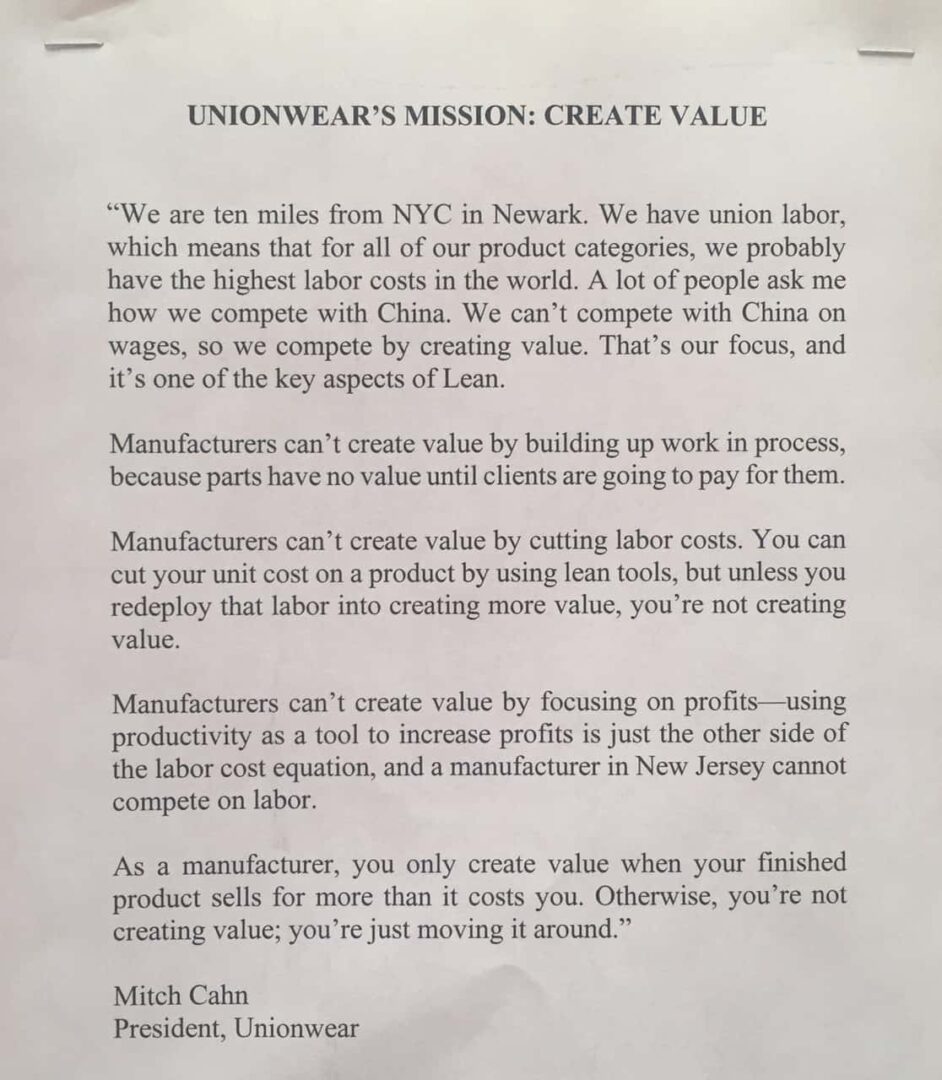
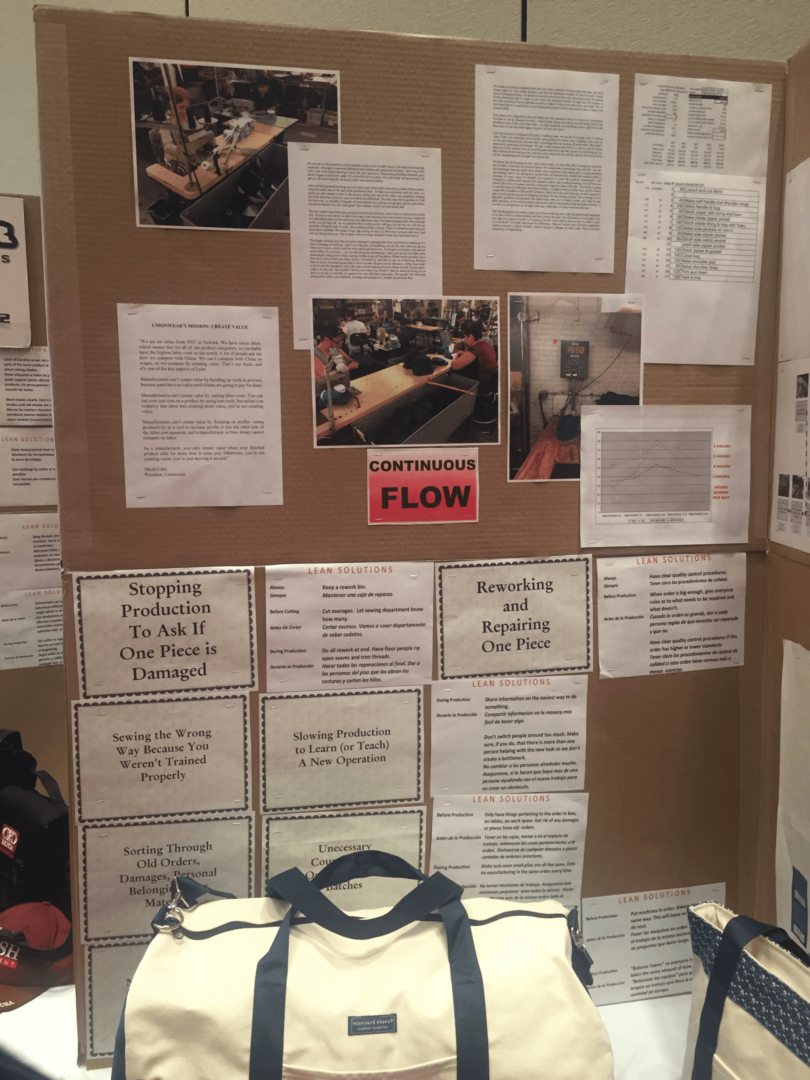
At the conference, a company called Unionwear had a humble display that explained how Lean has helped them. In my opinion, the key ingredient isn't the use of common Lean tools, like 5S and value stream mapping. What really matters is leadership and, more specifically, senior leaders embracing the Lean philosophy, as illustrated in this letter from Mitch Cahn, Unionwear's president that was posted.
How Lean Helps U.S. Manufacturers Compete on Speed, Not Low Wages
Unionwear, as its website explains, has employees represented by a union, Workers United. They undoubtedly have high rent, high wages, and some high costs in other areas, but Lean has been their strategy for countering those disadvantages. Candidate Trump blames China for “killing us” through smart trade negotiations. The reality is that American companies (and global manufacturers) have been flocking to China (and other countries) over the past 20 years as they chase cheap labor. However, as Cahn explains, companies can compete by creating value, such as being able to get hats to candidates more quickly, competing on speed, not just labor cost.
Maybe Washington can help, but even with the current political, legal, and tax environment, this “reshoring” strategy can work. Companies like General Electric have brought some manufacturing back to the United States, using Lean and being close to their customers to their advantage. Among other things, being a Lean manufacturer means keeping inventory low and, ideally, making only the hats that are ordered by their customers. Not having excess inventory keeps costs down. Any company can have low inventory levels. But, without Lean methods, that company might not be nimble or agile enough to produce the right hats in the right quantities at the right times (and at the right quality levels).
A Lean manufacturer also works to create a more respectful workplace, engaging employees in continuous improvement efforts, as shown in the conference displays. Toyota calls this approach “respect for people” or “respect for humanity” and it goes far deeper than being a slogan. Lean is an alternative to traditional cost cutting, which usually means layoffs (in manufacturing or in healthcare). Lean companies help protect jobs in a number of ways, as they commit to their employees instead of laying them off as productivity improves.
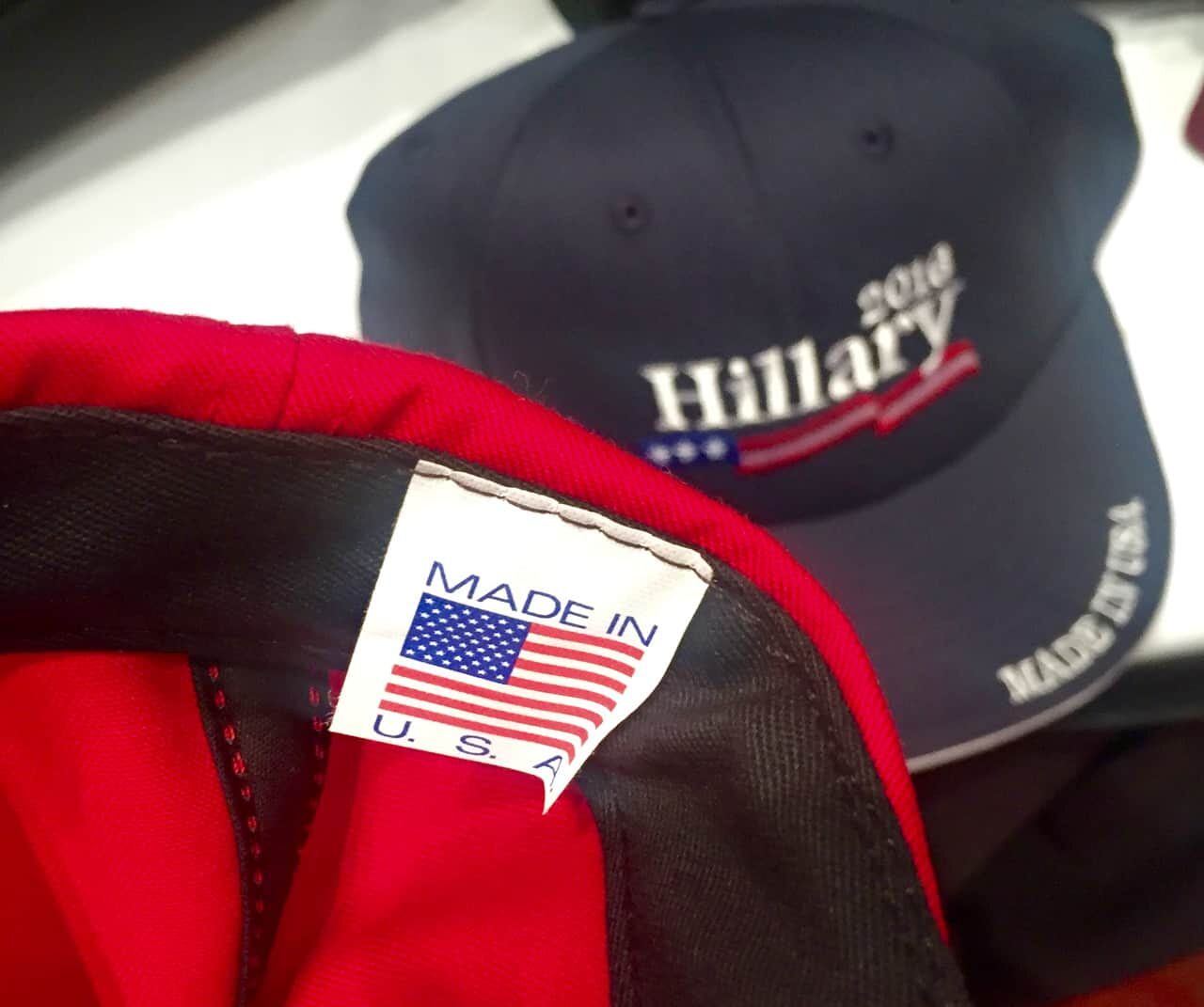
The hats made to promote Hillary Clinton and Jeb Bush have an obvious “Made in U.S.A.” label on the brim. The Trump hats have a label inside the hat that says the same thing.
Instead of “looking for the union label,” we might start looking for the Lean label as a way to improve competitiveness and our economy, regardless of what's being said in stump speeches or what's happening (or not happening) in Washington.
Conclusion: Lean Leadership Builds Competitive Manufacturing, Not Just Slogans
The story of political hats–from Trump's iconic red cap to other campaign merchandise–isn't really about politics at all. It's about how companies in the United States can compete amid global supply chains and cheap labor abroad by focusing on Lean leadership systems that emphasize flow, quality, and respect for people.
American campaigns often tout “Made in USA” merchandise because voters expect that authenticity, and companies like Unionwear in Newark, New Jersey, have been producing hats for presidential campaigns (including Trump's in 2016 and other candidates across the political spectrum) using union labor and domestic manufacturing for decades.
Some unofficial merchandise bearing similar slogans has at times been imported or labeled misleadingly overseas, but official campaign hats–including Trump's “Make America Great Again” caps–have been manufactured in the U.S., with documented production in states like California and distribution handled domestically.
What makes companies like Unionwear competitive isn't nostalgia or politics–it's how they organize work: shortening lead times, reducing waste, engaging employees in improvement, and building systems that can respond to demand quickly and reliably. Those aren't slogans; they're principles of Lean manufacturing leadership.
For organizations trying to strengthen their own competitiveness–whether in apparel, healthcare, or manufacturing–the lesson is the same: economic resilience isn't built by chasing the cheapest labor. It's built by designing systems that deliver value faster and more reliably than competitors do, and by creating workplaces where people are empowered to improve how work actually gets done.
Lean isn't a set of tools or a political statement–it's a leadership system that enables organizations to win on quality, responsiveness, and innovation. That's why companies embracing these principles can thrive even when others chase low-cost options overseas.
More Photos
Click on any of the photos for a larger view.
Part of the display (I didn't get a picture of the width of the entire display, unfortunately):
The storyboards emphasize core Lean concepts like:
- Continuous flow or one-piece flow
- Quality at the source
- Stopping the line
- Effective training
- Reducing waste
There's one story that was posted about improving flow by reducing batching:
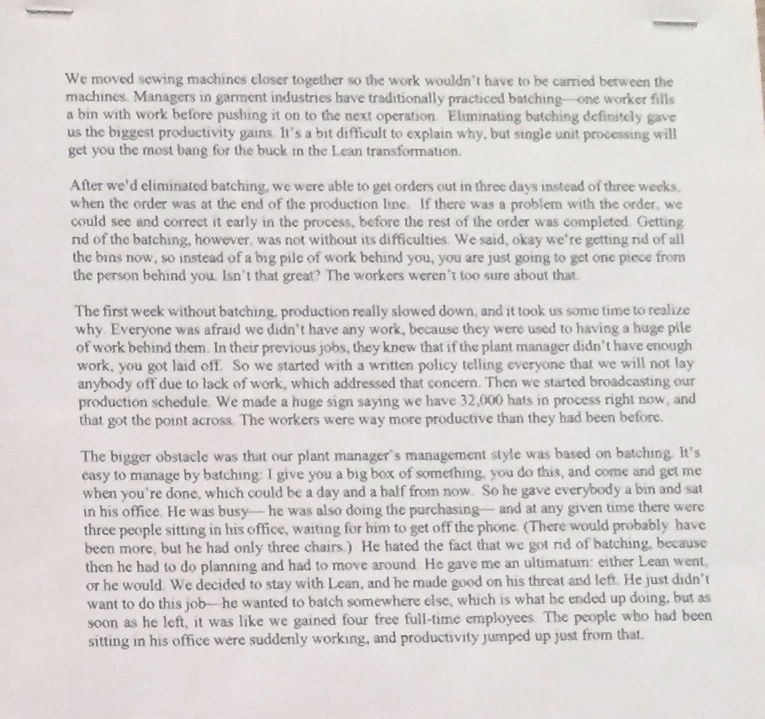
They moved machines closer together to reduce traditional batches. They were able to reduce lead times from three weeks down to three days. Smaller batches means, also, that you're going to find quality problems (and solve them) more quickly. Reducing batching isn't easy (I know that's true in more recent experiences in hospital labs), but if you work together to sort through the challenges, it's worth it.
I love, also, how they talk about having to change their management styles. That's key, of course, with Lean. It's not about fixing broken workers.
Here's a photo of their value stream analysis (for a type of bag they produce):

I'm hoping to connect with Cahn to learn more about this story and, hopefully, do a podcast with him.
Update — I did do a podcast with Mitch! Two of them actually.





[…] learned about Mitch and his company because of a display they had at the Northeast LEAN Conference, which I blogged about here. What caught my eye was their display of politician hats they produce, including the famous red […]
[…] generally avoid politics here on the blog… In October, I broached the subject I blogged about a company that uses Lean principles to make Donald Trump hats in New Jersey (and interviewed the owner of the company), but that was during a time when Trump seemed like a […]