
The Suggestion Box Is Dead — And Kaizen Replaced It
For decades, the suggestion box promised employee engagement and continuous improvement–but mostly delivered silence. In Lean organizations, Kaizen replaced the suggestion box with visible, collaborative systems that turn ideas into action. This throwback looks at why the suggestion box failed–and what works instead.
Why the Suggestion Box Never Really Worked
As a Throwback Thursday, I'm sharing this webinar that I did back in 2012, hosted by Karen Martin:
On this theme of “The Suggestion Box is Dead,” I thought to prompt ChatGPT to create an image of a burial scene and mournful employees:
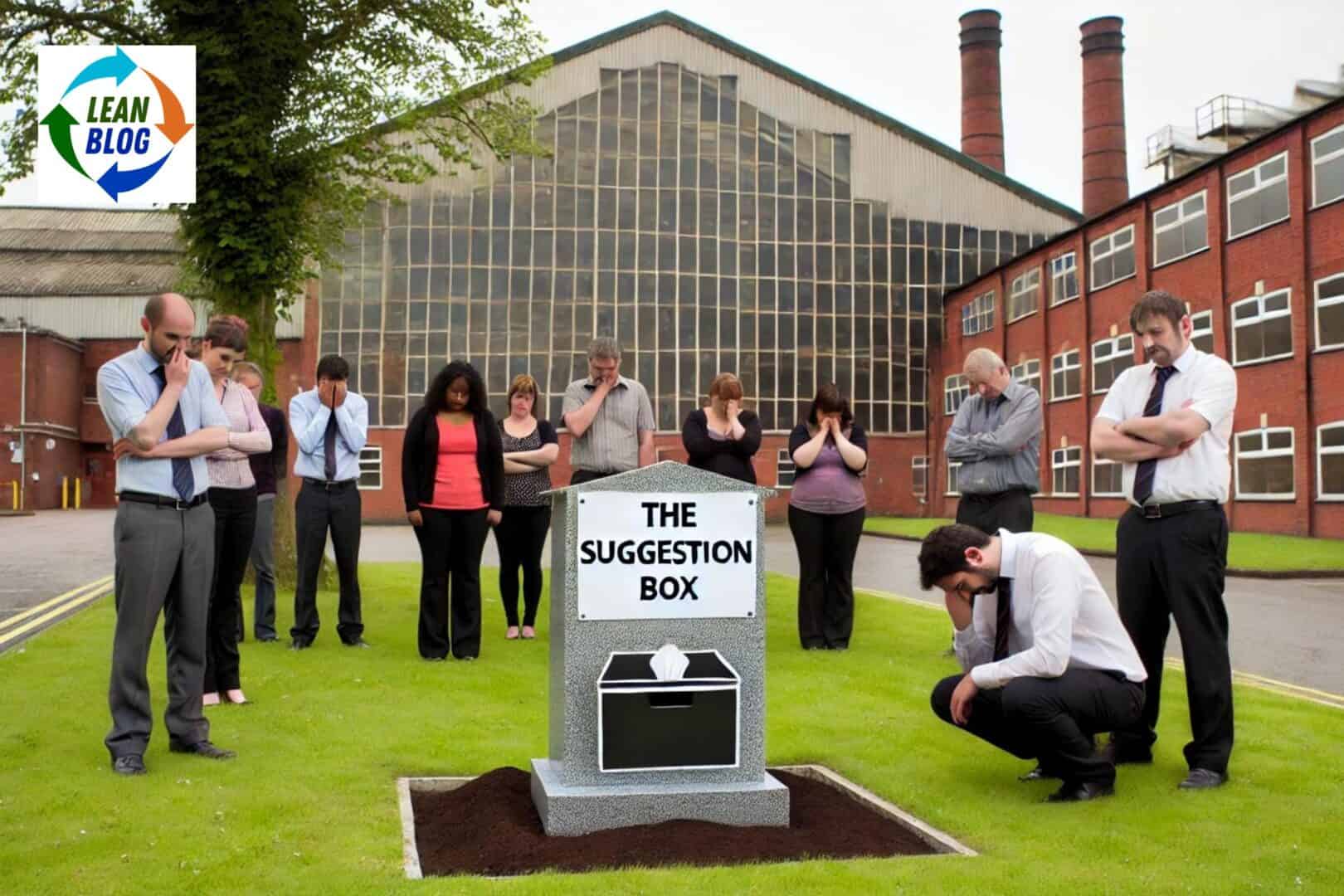
That got me thinking even more… I also worked with ChatGPT to write an obituary, which I've tweaked and edited.
An Obituary for a Broken Improvement System
Suggestion Box (1910s-2012)
It is with a mix of mild amusement and a touch of sentimentality that we announce the passing of the Suggestion Box, who departed this world in 2012. Born in the 1910s, the Suggestion Box led a long, often ignored life, marked by neglect and unfulfilled potential. Truth be told, Box faced a number of chronic conditions over its entire life, never quite living up to the hype and potential.
From its early days, the Suggestion Box found a cozy spot in break rooms, hallways, and lobbies across the world. Despite its sometimes cheerful exterior, the Suggestion Box often found itself filled with crumpled notes, passive-aggressive comments, and the occasional gum wrapper.
Despite its optimistic exterior, the Suggestion Box knew deep down that many of its contents would never see the light of day.

What Replaced the Suggestion Box — and Why It Works
In its twilight years, the Suggestion Box faced fierce competition from its flashy cousins, the Kaizen Board and the high-tech KaiNexus Continuous Improvement (C.I.) platform. These younger, more energetic relatives promised real collaboration, transparency, and immediate feedback–concepts that the Suggestion Box could only dream of during its many lonely hours.
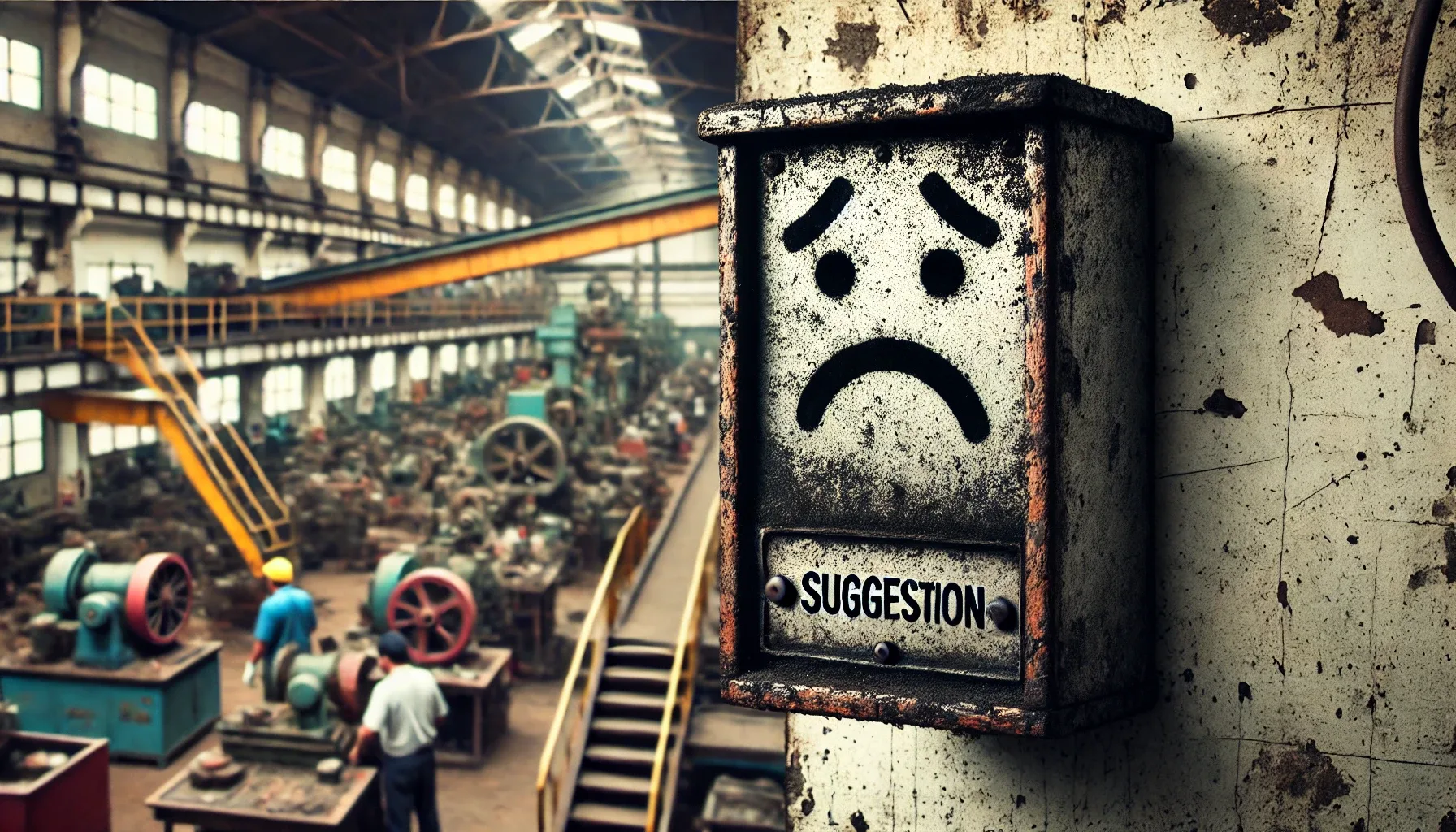
The Suggestion Box leaves behind a legacy of well-intentioned, if largely ignored, contributions. It is survived by a ragtag group of office supplies, including the trusty stapler, the sticky note that never sticks, and the whiteboard with the permanent marker stain. Its demise marks the end of an era of anonymous submissions and the dawn of a more engaging, interactive approach to workplace improvement.
A small, informal memorial service will be held near the recycling bin. In lieu of flowers, employees are encouraged to participate in their nearest Kaizen event or submit their ideas directly to their managers for immediate feedback.
The Real Lesson: Ideas Need Systems, Not Slots
Rest in peace, dear Suggestion Box. May your once-locked lid find eternal freedom, and may your forgotten contents finally get the attention they deserve.
Why This Still Matters in 2026
The suggestion box didn't fail because people ran out of ideas–it failed because organizations treated improvement as optional, anonymous, and disconnected from daily work. In 2026, with workforce shortages, burnout, and complexity only increasing, leaders can't afford passive systems that collect ideas without learning, action, or feedback.
Modern Continuous Improvement requires visible leadership, psychological safety, and fast learning loops–not a box in the hallway (physical or digital). When organizations replace suggestion boxes with real Kaizen systems, they move from idea dumping to problem solving, from silence to dialogue, and from frustration to shared ownership for making work better every day.
In other words: the suggestion box isn't just outdated–it's incompatible with how serious organizations need to improve today.
Join the Discussion on LinkedIn: