Gerald Harris on Lean Lessons from Auto Manufacturing and Healthcare
Gerald Harris spent 25 years leading lean transformations in automotive manufacturing before shifting into healthcare consulting, and his origin story starts with a Toyota supplier in crisis that went from shipping 250 door sets per shift to 2,400. In this conversation, we talk about why adding inventory is sometimes the right move, how short-term countermeasures quietly become permanent, what leaders miss when they “go and see” instead of “go and observe,” and why healthcare keeps piling work onto nurses without ever taking anything off.
Scroll down for how to subscribe, transcript, and more
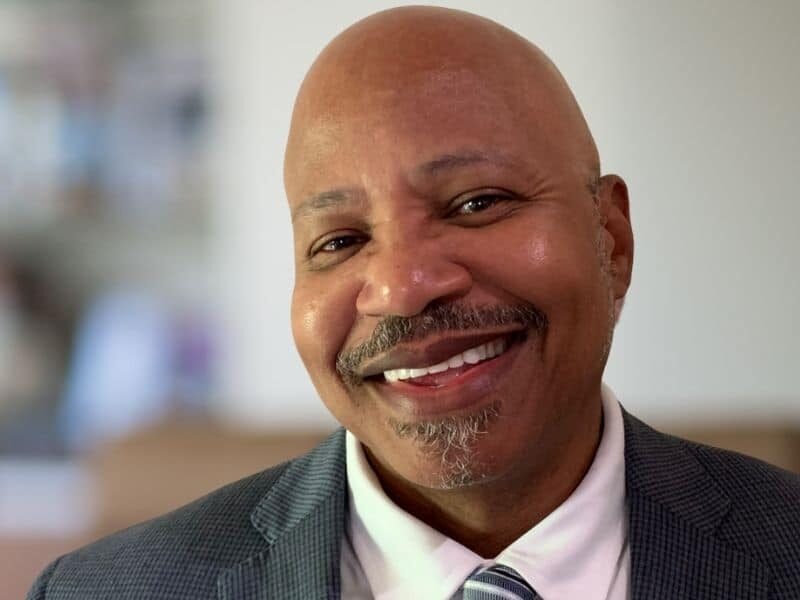
My guest for Episode #459 of the Lean Blog Interviews Podcast is my colleague, Gerald Harris, a Vice President of Advisory Services at the firm Value Capture.
Disclosure – I often work as a senior advisor with Value Capture clients and I have a marketing role with the firm.
Gerald has over 25 years of leadership experience in the delivery of successful large-scale lean transformations across a broad range of industries and companies. His industry experience includes various automotive manufacturing settings and products and, for the past 14 years, healthcare.
While at Tenneco Automotive, a $1.5 billion manufacturer of exhaust and ride control systems, Gerald implemented lean manufacturing and lean enterprise improvement principles throughout the organization.
For the 14 years before joining Value Capture, Gerald served as Executive Director for Simpler North America, where he was instrumental in client launches and Executive Coaching for most of Simpler's largest clients.
Today, we discuss topics and questions including:
- How — when and where — did you first get introduced to Lean?
- Motivations for Lean in those early settings?
- Early activities — what went well? Lessons learned from challenges?
- Pull – “flow if you can, pull if you must, but never push”
- Did people there even think that improvement was possible? Any improvement was possible?
- Short-term vs. longer-term countermeasures, adding inventory to be able to improve — or adding labor?
- “Step change” – response to medication errors? Adding inspection step?
- Interesting that Toyota still has final inspection??
- Systems vs. processes?
- Work, management, improvement systems
- From nursing tasks to the healthcare value stream
- Seeing vs. purposeful observation?
- Value Capture's “guided self-assessment”
- Leaders being too far removed from the work in healthcare
- How did you find the right balance as a plant manager?
- You've gotten more than comfortable with both… Bigger adjustment — becoming a consultant or shifting into healthcare?
- The pitch for Value Capture?
- The Habitual Excellence podcast
- Envisioning the ideal – how do we get to zero?
The podcast is sponsored by Stiles Associates, now in their 30th year of business. They are the go-to Lean recruiting firm serving the manufacturing, private equity, and healthcare industries. Learn more.
This podcast is part of the #LeanCommunicators network.

Video of the Episode:
Thanks for listening or watching!
This podcast is part of the Lean Communicators network — check it out!

Transcript
Announcer: Welcome to the Lean Blog Podcast. Visit our website www.leanblog.org. Now, here's your host, Mark Graban.
Mark Graban: Well, hi, welcome back to the podcast. I'm Mark Graban. This is episode 459 for October 4th, 2022. Joining us today is Gerald Harris. He is a Vice President of Advisory Services at the firm Value Capture. To learn more, you can go online to valuecapturellc.com. Today we are going to tap into Gerald's experience and expertise. He has more than 25 years of leadership experience in different settings. Like me, he started in the auto industry. Unlike me, he stayed longer and he had significant leadership roles in a number of organizations.
He then shifted into consulting, where he's been doing a lot of work with healthcare organizations, including recent years with Value Capture. So lots to learn today. I think a lot of great transferable experiences and stories that you're going to enjoy regardless of what industry you're working in. For more detail and links, you can look in the show notes or go to leanblog.org/459.
Well, hi everybody. Welcome back to the podcast. My guest today is Gerald Harris. He's a Vice President of Advisory Services at the firm Value Capture. As a quick disclosure, I myself often work as a senior advisor through Value Capture with their clients. I have a marketing role with the firm, and I'm thrilled that Gerald is one of my colleagues there. He has more than 25 years of leadership experience in delivering successful large-scale lean transformations. And he's done this across many industries and companies. He's worked in automotive manufacturing, various settings there, and for the past 14 years in healthcare.
At one of his stops at Tenneco Automotive, a large manufacturer of exhaust and other systems, Gerald implemented lean manufacturing and lean enterprise improvement principles throughout the organization. So I'm sure we'll hear some stories about all of that today, and his first step into healthcare, which we'll talk about as well. Gerald was an executive director for Simpler North America, a firm that you've likely heard of, where he was really instrumental in both client launches and executive coaching for some of their largest clients. So with that, Gerald, we'll learn more about your background as we talk here, but welcome to the podcast. How are you doing?
Gerald Harris: Well, I'm well, and thank you, Mark. Thank you for the gracious introduction. Much appreciated.
Mark Graban: Sure. I appreciate you being here. It's a great opportunity to pick your brain and hear your experiences from all of these different settings and what we can take away from that. But first off, it's become kind of a standard opening question here on the podcast. Gerald, to ask about your lean origin story, some of the where, when, and how. How did you first get introduced to all of this?
A Toyota Supplier in Crisis: Gerald's Lean Origin Story
Gerald Harris: Yeah, sure. So I'm going to date myself here a little bit, Mark. But back in the early to mid-eighties, I was working for an organization where we made door panels for Toyota, Toyota Georgetown. And we were in a situation where we couldn't make enough product for them. And not only could we not produce enough product, the product that we produced had grave quality issues associated with them as well.
So I'm going to give you some crazy numbers here, but from a quality standpoint, we were in the double digits in quality and defective doors that we were shipping to Toyota. And also we were only able to produce about 30% of the requirement.
Mark Graban: Gotcha.
Gerald Harris: So that's when Toyota graciously came in, and instead of firing us and looking for another supplier, they offered to help us with the troubles that we were having. And I'll tell you, it was pretty astounding to me. Working with them over about a nine-month period, we were able to reduce our quality issues down to about 3%. And we really improved productivity, or the amount of product that we were able to ship, by 160%.
Gerald Harris: Wow. So it was a huge turnaround. I'll give you some numbers. We were producing about 250 sets of doors, and in nine months we went from 250 sets of doors to 2,400 sets of doors in a shift. So it was pretty phenomenal as we implemented things like pull. So we implemented a pull system, and people think about TPS or Toyota Production System and they think, well, single piece flow.
And we had a saying, flow if you can, pull if you must, but never push. So that was kind of the jingle that we used in producing parts. And we actually added inventory, believe it or not, to the constraints where we had constraints, and then built the system that was able to support it. And again, went from 250 sets to 2,400 sets of doors in an eight-hour shift, which was pretty phenomenal. So they kind of had me at hello. And I've been going full bore ever since.
Mark Graban: That's certainly an eye-opening demonstration of what was possible. I'm curious to hear your reflections. There's a lot we can unpack from all of that. What do you remember about the attitudes of your coworkers or others about whether it was possible to improve at all, let alone to take such leaps?
The Problem Was the Process, Not the People
Gerald Harris: Yeah. So thanks for that question. Going into this, as you can imagine, the culture, the attitude around that particular department was way down. People were working 12-hour days, seven days a week, and seemingly no end in sight. And the people didn't really believe that this area could even be improved at all. They were doing… I mean, no pushback on the people. It wasn't the people's fault, it was the process. The people were just working hard and not seeing the fruits of their labor.
And we didn't go in with, back in those days, we didn't go in with an ideal state. What we thought was possible, I'll tell you, was 800 doors a shift. So we thought we could move from the 250 to 800. But once we hit that 800 mark, it really opened our eyes to everything else. That aperture just opened up for us, and we could actually start to see what was possible after we made that first step.
Mark Graban: Yeah, it's inevitable here. Your stories are going to trigger some of my own recollections from mid-nineties General Motors times. And I appreciate you emphasizing, Gerald, that the problem was not the workers or people's effort. A lot of times, I think people think if this problem was solvable, we would've already solved it through our effort. And that jumping ahead, that attitude is sometimes there in healthcare. We can talk about that more later.
But I remember the first plant manager and the first leadership style that I worked under at my two years at General Motors — that first leader did nothing but blame people's efforts. We heard every day, it became like a running gallows humor joke on some of us: which word is he going to use first, urgency or intensity? To him, those were the only two root causes and therefore the only countermeasures. We needed more urgency, more intensity. Come on — that's not what was lacking.
Gerald Harris: Mark, you bring to mind, even in the same department, I remember I had a hesitancy to go into that area because I saw managers being blamed for the process. People were blamed, managers were blamed, and every manager that went into that area was fired. They only lasted about three months or so. That was an area that, I'll just be honest with you, I wasn't looking forward to working in.
But because of my success in other areas, I was being asked, “Hey, Gerald, come over and help us out.” And I'm thinking, well, I need a job, and no one has lasted 90 days over there. So I wasn't putting my hand up to be fired as well. But things worked out, and I'm just telling you the power of lean. At that time, we really focused on cell redesign — redesigning the process. We looked at it more as a full value stream view, so looked at it end to end, understood where those constraints or bottlenecks were within the system, did the things we needed to do to elevate those, and we were off and running.
Slowing People Down to Get More Work Done
And the people could see… what the people saw, other than numbers, was they got their lives back. They went from 12-hour days to 10-hour days to eight-hour days, and from seven days a week to six days a week to five days a week. They got some real balance back in their lives as well.
And they really enjoyed it. You would think that, you know, you were talking about intensity, but really we were actually able to slow the people down so they could do the work that we were paying them to do and that they were intended to do. And so taking the waste out, they were able to slow down and make more product. I know that doesn't make sense. It's not intuitive when you think about it. But as you slow down, you're able to do more. So the people's work became much more satisfying and gratifying to them. And they weren't working as hard, quite frankly. But we were producing much more than we were when they were working hard.
Mark Graban: Well, then, jumping ahead again before we jump back — I know you and I have seen situations where improving processes of how the work is done and improving the support systems mean that nurses or doctors or other healthcare professionals are still working 10- or 12-hour days, but they can then spend more time on patient care because they're not running around dealing with waste. Same thing. It's probably less net effort, even if it's the same amount of time. Certainly, let's say, fewer steps. They're accomplishing more because of the system improvements.
Gerald Harris: Absolutely. Absolutely, Mark. When you asked me how I got started and when, back in the early eighties, going through that set of circumstances really opened my mind to what continuous improvement could do for not only me, but what it did for my career as well. It kind of launched me into a different stratosphere where people wanted to see. It created a pull. It's like, “How are you able to do that? You've got to come and teach us. You've got to show us.”
Mark Graban: Yeah. I'd love to talk more about the progression over time, both generally with lean as it was being talked about and your own experiences. You talk about this idea — I think the most counterintuitive idea is sometimes you add inventory to improve flow and delivery, even if it's a Toyota person coaching on this. I've seen organizations in manufacturing that took the idea of one-piece flow to an extreme, where the systems, whether it was quality or feeder lines of sub-assemblies, nothing was capable of one-piece flow.
But people want to make that leap. And then you see a Japanese consultant with Toyota experience come in and start telling people, “You need more inventory.” I heard it described as, “Job one is meet customer delivery. Job two is low inventory.”
Gerald Harris: There you go.
Mark Graban: Yeah. At General Motors, I saw people would want the pendulum to swing the other direction where, like you were describing, buffering around a constraint can really help improve flow. There was overlap. GM was learning Theory of Constraints. I was kind of in this battle against people who wanted to buffer everything everywhere — buffering something that was clearly not the constraint. But I'm curious if there's anything else you would share about this idea of, first off, supporting the customer and then figuring out how to drain down inventory.
Why Adding Inventory Is Sometimes the Right Move
Gerald Harris: Well, yeah, Mark. When you think about adding inventory, sometimes that's necessary because you have to stabilize a process before you can start to take the inventory away. And oftentimes, people that don't know any better would try to go straight to one-piece flow without the stabilization, and now all of a sudden you can't support your customer. Like you said, it's customer first. We have to support the customer.
So we do the things we have to do to do that, and then we start to put the tools of continuous improvement to work. Then you can start to see where you can reduce some of that inventory that was firstly added on. This takes me back to a systems approach. When you think about it as a system and not just the process, when you stabilize first and put the systems in around that, it allows you to then take the next step, which is actually reducing the inventory or those add-ons that you had to do before you became stable.
Back in the manufacturing days, Mark, I'm sure you remember, a lot of the reasons for our production lines not being stable was that they didn't have the capability from a quality standpoint or even from a downtime standpoint. You had so much downtime around you that you couldn't stabilize either. So you had to build that inventory in order to be able to satisfy the customer.
Mark Graban: It makes me think of language that you and I know, and a lot of our audience might know — the difference between a short-term countermeasure and a longer-term countermeasure. This idea of adding inventory, of buffering around a constraint, isn't meant to be a permanent long-term countermeasure. Can you tell us a little bit more about that? Or even other instances where a short-term countermeasure might seem to violate some lean principle, for what it's worth, but it's part of your pathway toward longer-term improvement.
Making Short-Term Countermeasures Painful On Purpose
Gerald Harris: So I've got an interesting story to tell you around that. Whenever we came up on equipment where there was too much downtime and you either had to add labor or another piece of equipment to supplement, to mitigate that downtime — those were the short-term things that were going into place. I learned early on as a plant manager, I would walk around and look, and those short-term mitigations would end up being long-term solutions.
And so, knowing that, I wanted to make sure that whenever I put in a short-term mitigation, I wanted it to cost me. So it would cost money because it couldn't stay.
Mark Graban: Right. There's some pain.
Gerald Harris: Right. So there had to be pain around that. We couldn't get comfortable with just leaving that add-on in place. I wanted to make it painful for us so it would force us to go after it until the thinking started to change. That was what I would use to get people to move, or get my engineers to move around those situations, and make sure that we came up with a long-term solution that didn't cost us.
Mark Graban: Right. That's said really well — not letting people get comfortable with throwing people at it or throwing inventory at it or throwing overtime at it.
Gerald Harris: Right. Over time, you'll see that those things cost you hundreds of thousands of dollars when you let a short-term mitigation go in place of a long-term solution. I tried to… the short term was necessary until we could engineer or come up with a better way of doing it. But I wanted it to be painful so we could continue to focus on what was necessary to make that solution the right solution.
Mark Graban: Yeah. And there's another word that we would both use back in the auto industry. I think it's interesting to think about how this might apply to healthcare. A different short-term countermeasure, when, Gerald, you talk about protecting the customer, comes to quality and defects. If defects were discovered somewhere along the line, you jump into containment mode, which might be a temporary increase in labor, an increase in inspection, and the quote-unquote waste of sorting out the defects. That waste and that cost wasn't as bad as the waste generated by letting a defect slip through containment to the customer from a quality standpoint.
Can you share a little bit more about the idea of containment? Are there times in healthcare, if we're not producing physical products that have defects — is there a time that would be applicable in healthcare?
The Trap of Making Short-Term Countermeasures Permanent
Gerald Harris: Absolutely. You'll see, from a healthcare standpoint — and I've been working in healthcare, Mark, for well over 15 years now from a consulting standpoint — the one thing that I see that healthcare does, they're pretty good at putting countermeasures in place, short-term countermeasures that end up being in that place for years. They'll put a countermeasure in place, and that just becomes the standard work, instead of looking at it from a continuous improvement standpoint and saying, “We've got this countermeasure in place, but we're working on a longer-term solution.”
And so — sorry for the long explanation — but I have to get into this term that I call step change. In healthcare, continuous improvement for a lot of healthcare professionals, they just look at it, “Hey, we put in a countermeasure. Maybe we had a med error. And so we put in a short-term countermeasure to make sure that that med error doesn't happen.” And that might be another person doing some manual inspection to make sure that that doesn't exist.
But then they don't go back and look at the true system and try to figure out, well, really what problem are we trying to solve? Solve it to root. So now you can take away the extra labor that you put in and make it a system, so the system takes care of it and you're not relying on an individual. When they rely on individuals to do that, that problem goes away, but then it comes back. It goes away, but then it comes back. You could almost even predict, if you did the analysis, when those problems are going to come back and haunt them again. They're not solving to root cause. They're only doing the first level of containment and not taking it deep enough.
Mark Graban: Yeah. I'm trying to remember the source. I read something recently that talked about a healthcare organization that had put some protocols in place to reduce — I think the issue they were specifically looking at was patient falls. It was a matter of protocol, standard work, kind of, extra effort that was meant to contain that problem. And they got patient falls down quite significantly, probably because of those protocols. And then the person who wrote this piece was complaining, I think correctly, that the organization said, “Well, that problem's been solved,” and they stopped doing the protocol. And it's an illustration of what you were describing. Guess what? The problem came back. I don't understand how anyone could predict anything different, because, to your point, maybe they convinced themselves they had eliminated some of the root causes of falls, but the data kind of showed, like you were saying, they hadn't.
Gerald Harris: Yeah. And Mark, I think sometimes we jump at symptoms and not the root cause. So we don't follow the process. There are lean tools that help you to… for me, tools are designed to help you see. And if they're not helping you to see or to tell a story, then they're not being used in the correct manner. They have to do a better job of really solving to root and not just looking at symptoms. Because you can eliminate a symptom. That symptom goes away and it fools you into a false sense of security, thinking that you've solved it. But it'll be back, and you'll be working on it again.
I've worked with so many teams and they're looking at me and they're saying, “Gerald, we fixed this like 10 times before.” Well, no, you never fixed it. Because had you fixed it, we wouldn't be working on it for the 11th time.
Why Toyota Still Has Final Inspection
Mark Graban: I think there might be a parallel. Think back to automotive assembly or a Toyota production environment. Toyota for many, many decades has talked about the idea of building in quality, quality at the source. They've worked on that, I'm sure, very diligently through error-proofing methods and error-proofing equipment. But I'm sure at some point, if defective cars get to the customer, at some point — if it wasn't always historically there — they put in a final inspection station at the end of assembly.
If you go to a Toyota plant today, anywhere in the world, I feel very confident saying this, even though I haven't been to a Toyota factory since late 2019. The last one I saw in Japan was just like the one there in Texas. Guess what? Toyota has this very elaborate final inspection operation. If at some point that was a short-term countermeasure, I think it's interesting to think through the thought process. Clearly Toyota isn't saying, “Well, let's save money by getting rid of the final inspection operations.” It's just interesting to think through how difficult it can be in a complex environment — and healthcare is a complex environment.
Gerald Harris: It is.
Mark Graban: How difficult it can be to really get to the point where you feel so confident in your process that you wouldn't need inspection steps.
Gerald Harris: It's interesting you bring up the final inspection process at Toyota or at GM. The final inspection is there to protect the end user, the customer. But you can use final inspection in different ways. Final inspection used properly would really understand what issues are we having, and then go back upstream and solve and fix those issues. It doesn't mean that you'll get to zero, but can you get closer to zero issues as you come into final inspection?
So if you use final inspection, look at what final inspection is telling you, and then go back upstream and fix where those issues occurred — root cause — so they don't happen. It doesn't mean that you might not get new issues. But those old issues should start to go away.
Mark Graban: There's a difference, again, back to your word of fixing, like, “we fixed the defect.” To your point, the goal of final assembly is not to get better at fixing the same defects over time. It's, like you said, to have those feedback loops.
Healthcare is a complex environment. Healthcare people would say, “Alright, it's more complex than automotive settings.” And what that's based on, who knows. People saying that things have generally only worked in healthcare — they have their perceptions. But let's grant their assumption that healthcare is more complex and there's more things that could go wrong. There are a lot of settings in healthcare where it seems like the patient would be protected by maybe having more final inspection, but as a way of not just catching, let's say, the medication error, over and over.
There's a lot in healthcare that's based on barcode scanning a wristband or having things that are meant to get better at fixing the problem, quote-unquote fixing, protecting the customer. How can we do a better job of making sure that we have those feedback loops within healthcare? I'd love to hear any examples or thoughts you have around that.
Healthcare Keeps Adding Work Without Taking Any Off
Gerald Harris: I think healthcare — let me just say this — I think from a healthcare standpoint, they are woefully behind manufacturing when it comes to lean, lean thinking, and lean concepts. And I might even agree with healthcare and say that they're more complex. But at some point, they have to realize that working harder is not working smarter.
Let's think of a caregiver, a nurse, for instance. She's probably, if she's fortunate — you've got one nurse caring for five to seven patients in a unit. And we keep putting more and more and more on nurses. I'll give you an example. Nurses are taking care of supplies and stocking supply rooms. You might think, well, why is a nurse stocking supply cabinets and supply rooms? That's not patient care. They do so much that has nothing to do with patient care. We keep asking them to do more, but we don't take anything off of them.
And so then we wonder, well, why do patients fall? Well, the nurse can't be in the room 100% of the time. What else can we do to ensure that patients aren't falling either on their way to the restroom or trying to get out of bed? Why are call lights going off and the nurse can't get to the room and answer them?
We continue to ask nurses to do more, but we're not taking the waste off of them. We're not allowing them to work to the top of their license. It's right back, in my mind, to what I talked about when I first broke into lean — it was slowing down so they could do more. How can we slow nurses down so they can give better patient care?
Mark Graban: Right. And how do we support them? This comes back to core concepts of standardized work, of not just diving into the detail of how we do the work — the procedures. Hospitals have endless procedures, in binders or nowadays they're probably online. There are these questions first. I'd love to hear some other examples from your experience of defining who should be doing what and when. Lots and lots of procedures does not equal the design of a shift.
Gerald Harris: That's right.
Mark Graban: I'd love to hear some other stories or thoughts from you around that.
Work System, Management System, Improvement System
Gerald Harris: Yeah. It's looking at it as a system, and I think sometimes we get too caught up in process. When I say system, I'm talking about the work system, the management system, and the improvement system. When we link those together, we can broaden our aperture and look at nursing more as a value stream, not as just what they do. Then you can start to extrapolate who's doing what, and you start to differentiate from actual patient care to other things that are going on.
As you start to parse that out, I believe we could deliver care cheaper, more efficiently, higher quality by doing that, than just trying to throw everything on one person's shoulders. From a healthcare standpoint, they look at it and say, “Well, labor is 85, 90% of what we have.” And so you keep seeing them either hiring people or laying off huge portions of people because they haven't figured out that if you rightly divide the work, you could do the work more efficiently. You could do the work with better quality, and you could do it cheaper.
Mark Graban: Yeah. Labor cost is such a huge chunk of a majority, and then some, of a typical hospital's cost structure. And it's increasingly hard to get nurses. If we're hiring travelers or agency nurses, they're even more expensive. It seems like that all points back to the need, as you've brought up, to maximize the amount of time that nurses are actually doing nurse work.
Gerald Harris: Right.
Mark Graban: There could be some labor efficiency that comes from that, but then there's also got to be this question of joy in work and satisfaction. Are nurses less likely to quit if they're better supported and allowed to spend more of their time doing what they went to school for, what they wanted to be doing — not restocking shelves or dragging bags of dirty linen down a hallway? It seems like there are a lot of complementary benefits from that.
Gerald Harris: Absolutely. And Mark, we've been talking about nursing, but what about the doctors and the amount of work that they're facing and that they take home every day? What I imagine is a physician who's able to go — say a primary care provider, for instance — going in, seeing a patient after that patient has had his labs so they can discuss them and see what problems they're having, solve those problems with the patient, go out, do all the charting and the work that they need to do, and at the end of their shift, they're on their way home with no work.
How many providers, if you were to poll providers, how many would say they're able to do that, go home and not have homework either before dinner or after dinner, and actually spend their evenings or their time with their family, and have that good division of work and personal time? Why can't we design the work so they only have to work when they're at work, and when they're at home, they're at home?
Mark Graban: Yeah. When I first started working in healthcare, people talked about the desire, the important desire, to go home on time, to get home for dinner. But you raise an important point there. Getting home on time might not mean as much if you're there logged into the EMR, catching up on messages or doing other stuff that ideally would have been done when someone was at work. Again, I'm not blaming individuals for being inefficient. They're doing their best. They're working harder than they need to. And that dissatisfaction and burnout and everything ends up being really, really, really harmful.
Gerald Harris: Yeah. When you think about the pressures that MyChart and those types of things put on physicians — again, division of labor, and why do we put everything on the physician to do, and why isn't that extrapolated up to allow them to see more patients? It would improve access for patients. They're not waiting forever, or panels are closed because they can't see doctors.
Even going in for a doctor's appointment, which I had yesterday, and I waited an hour before… I had a 1:30 appointment. I didn't see my doctor until 2:30. Well, my time's valuable too. Why am I sitting there waiting? I'm sure my caregiver was working hard and obviously behind schedule. But is that my fault, and should I have to pay for that?
Mark Graban: Just as a quick aside, I think back to the time I fired a primary care provider, meaning I took my business elsewhere, because every time I would go in — and thankfully it wasn't that often — it was always, they were always an hour, an hour and a half behind. And when I would ask about it, they would always say, “Oh, today's very unusual. Either I'm extremely unlucky, or that's unlikely to be true.” The excuse-making.
Eliminating Excuses as a Leadership Responsibility
Talk a little bit about Value Capture, the origins and the lessons from Paul O'Neill that are embedded in what we believe, what we do. One of the things that stands out to me that Paul O'Neill would say — in part, the job of the leader is to eliminate excuses. The things that, the reasons why people would say, “Well, we can't ever keep the schedule on time because of this or that,” or, “We're providing very customized care and great service and therefore we can't be expected to be on schedule.” Well, that's an excuse.
Gerald Harris: Yes. I've got something to say around that, Mark. As we talk about the work we do here at Value Capture and how we help leaders be better leaders, we really help leaders get closer to the work. What I see often is leaders don't know what's going on in the workplace because they are too far removed from the actual work. As a leader, they don't believe that they need to be or should even be close to the work. Because of that separation, they don't have a good feel for what's actually going on, either on the shop floor, in a hospital, or in a medical group. They're just not close enough to the work.
With them being so far removed from the work because they believe, “Well, I've got to worry about strategy, and I've got to worry about mergers and acquisitions and growing my business” — and yes, all of that is on them — but they also have to understand what conditions their people are working in. They also have to understand that it is their job to set the conditions for people to work and be viable and to do the great things that they're doing. That's leadership's responsibility.
Without that, they continue to flounder, or they have this belief that, well, things look good from my ivory tower, because they haven't gone down enough layers into the organization to even understand what's happening. I'm a firm believer that even as a leader, you have to come out of the ivory tower, and you have to go and observe. You notice I didn't say go see. It is go and observe. Go and observe what's happening, so you have a better understanding of current conditions and what's happening.
Mark Graban: That's an interesting distinction in the words. Is observe a lot deeper than see? Is it the difference between doing a gemba walk where you're walking through a department versus going to the gemba and really observing?
Go and Observe, Not Just Go and See
Gerald Harris: Yeah. In my opinion, when you go see, you're walking through, and it's not intentional. You're just being a cheerleader, kind of patting people on the back. You're just letting them see you, and you're not observing what work is being done, what issues are taking place.
Here at Value Capture, we have this Guided Self-Assessment that we take leaders through, and remarkably, within about three minutes, you could observe about 20 different things that are going wrong in an area, and you don't even have to pre-plant it. Observing is, I think, a deeper experience than just going and seeing. Definitely a difference there.
Mark Graban: So I think we can connect some dots back. I want to maybe shift back to your time as a plant manager. How did you find that balance, where as a plant manager or as a hospital CEO, how do you find the balance? You need to be aware. It doesn't mean you need to be giving all the answers, far from it. So how do you find this balance between observing and listening and understanding enough to be supportive, without getting into the realm of, let's say, micromanagement or controlling?
Gerald Harris: Sure. As a plant manager, part of my standard work was to go and observe. I had fairly large plants, large footprints, so you couldn't go and observe the entire building and what was going on. So I had different routes that I would take on a daily basis, and I really tried to make sure that I was out on the shop floor daily — not every other day, or once a week. I would try to make sure that I was out daily. When I had multiple facilities, obviously that wasn't possible, but I tried to make it to each facility. I would target a facility on a day.
As I walk through, I might stop and talk to a supervisor or a manager. As I'm asking them how things are going, what problems they're having, while we're having a conversation, I had the ability to actually look at the production process. We're having a conversation, I'm watching the lines run, and I'm looking for issues. I am seeking issues. I want to understand the problems that we're having.
Then I could go back to my office, I would call engineering or whatever support that we needed, and I would be able to describe in detail what I actually observed and what issues they're having. Over time, I was able to establish — when I go back and look at that place again, those same issues I shouldn't see. Because we've got on those and taken care of those issues. It doesn't mean that I'm not going to see new issues. But those same broken test stands, for instance, should have been repaired and back in service. Or whatever quality issues they're having, they shouldn't still be having those same issues days later.
Mark Graban: It sounds like there's a parallel between the feedback loop of, let's say, Toyota final inspection, of making sure things that are identified come back and get resolved in some way. A complaint I hear about a lot from people I work with in healthcare, or when I first go into an organization, is people have become discouraged because even when they speak up about problems that need leadership support to get fixed, those things more often than not are not getting fixed. And so people stop speaking up — not because they don't care, but because they think, “Well, it's just not worth the effort.”
So I think there's a big opportunity for leaders in healthcare to have that similar idea of really just kind of being tenacious in terms of getting the right support from different departments to make sure issues get resolved. What good is it if we encourage people to speak up, or even create the psychological safety to speak up, if speaking up doesn't lead to anything?
When People Stop Speaking Up Because Nothing Changes
Gerald Harris: That's right. If I could digress a moment, I'll tell you a quick story. I was consulting in a hospital and we had a project going in SPD — so sterile processing. And sterile processing had, it was probably towards the end of that process where we had done many, many improvements, and things were going well. The people loved it. But it wasn't supported by leadership.
Over about a six- or eight-month period, leadership had never even come down to see the great work that these people had done. When I called on this hospital — I don't know, it had been 10 months or so — I came back in, I went down to that department, to sterile processing, just to check on their progress and how things were going. To my dismay, the people were right back to where they had started. None of the production boards had been kept up. They had stopped doing the new and improved process and went back to the old way.
I looked around and I was thinking, so what happened? I talked to some of the leaders down there, and even some of the people working in that area, and their response to me, they said, “Gerald, our leadership never came down. They never recognized the good work that we had done.”
I said, “But it was working. Why did you let it go back?”
They said, “Well, they don't care, so we don't care.”
In their minds, they were punishing leadership for not supporting them. They were working harder, actually. It was the saddest situation I think I've seen in a very long time. But in their minds, they were punishing leadership for not supporting them.
Mark Graban: That points really powerfully to the need for recognition. People love using this phrase, rewards and recognition. What's the role of rewards and recognition? We can flip some of that. Recognition — maybe it doesn't cost you anything more than a little bit of time to give recognition. For any leader who said, “Well, people shouldn't need that recognition” — well, hey, guess what? We're all human. This work is not just in the realm of the rational. People, to state the obvious, have feelings. We can't ignore that, or we shouldn't ignore that.
Gerald Harris: That's right. And even a leader, they've been recognized because they're in the position they're in. So that's recognition to them. I don't know how you can feel like you don't need to recognize your people. And when I say support, I don't mean that their leadership had to go down and do a rah-rah. But they could have gone down and asked, “So what's going right? And what's going wrong in this area? What help do you need? How can we support you?” That's all.
Mark Graban: Yeah. How can we support you is such an important question. That doesn't mean we're — there's this balance again, where I know you're not suggesting that “how can I support you” means everything gets escalated to the leader. There's this kind of dual nature of, we're empowering you, we're giving you the resources you need to do your job and to improve, but at the same time, we're there to support you if we need to get help, if facilities isn't following up — not to pick on them — different systemic problem, or support you need from different areas.
Gerald Harris: Or you need crossover support, so you need another manager to come in and help, depending on what you're looking at. So support can take on a lot of different pictures. You need that.
The Bigger Adjustment: Manufacturing to Healthcare
Mark Graban: So much of what you're touching on goes far beyond the tools. It comes down to leadership and culture. As we start wrapping up here, Gerald, there was one question. When you made a transition — it was a double transition from being, let's say, an internal leader, a lean leader in a company — the transition to becoming a consultant at the same time of switching into healthcare. You've clearly gotten comfortable, more than comfortable, with both. But which was the bigger adjustment?
Gerald Harris: I think it was the healthcare. Going from manufacturing to healthcare was the bigger adjustment for me. It wasn't consulting. As a plant manager, as a lean leader within manufacturing organizations, I was acting as an internal consultant even in those roles. So the consultancy part, I think, was pretty easy for me.
It was going from manufacturing to healthcare. I'll just tell you this, the expectation in manufacturing, the urgency, the ability to make change, and make change quickly — that's what I was used to in manufacturing. When I made the flip to healthcare, it became much more political. The sense of urgency — they say everything is STAT, but not really.
I was a little disillusioned when I first came into healthcare, I'll tell you. I was thinking, “Hey, we're going to go in here and go and make these revolutionary changes.” Even my CEO at the time told me, “Hey, Gerald, you've got to slow down, because we take things a little slower here.” That was the disillusionment for me. Healthcare moves at a glacial rate when you think about the comparison between healthcare and manufacturing.
Mark Graban: I think there's a combination. There's a question of speed and there's a question of standards and expectations. As we wrap up here, and we're going to explore and talk more about Value Capture — Gerald, at some point, in the podcast series that I host for Value Capture, a podcast series called Habitual Excellence — thinking back to Paul O'Neill and the clients, the great leaders we've worked with in healthcare, before you can get speed, there's got to be higher standards. We're not going to be satisfied with reducing infections by 5%. We're aiming for zero, and we're going to reduce them by 50, if not 90%, very quickly. There's that belief that a high standard is something we're really going to seriously work for.
It's more of a statement than a question, but let me bounce it to you, Gerald, about when you see the best of leadership and the best of results, how does the expectation or the standard play? How does that inspire speed and effort?
Envisioning Ideal and Breakthrough Improvement
Gerald Harris: Sure. Healthcare leaders that can envision ideal — they start with ideal. Mark, you were talking about zero. How do we get to zero defects? How do we change processes so we see 50 to 75% improvement across all of our numbers, across cost, quality, delivery, growth? How do we see 50 to 75% improvement in those realms?
It's the leaders that can envision it and they can see it, and then they can start to set the conditions within their organization for other people to see it, feel it, and then set a plan to actually go after it. If you don't believe it, then you're kind of dead in the water there.
I've been doing this a long time, and sometimes when I talk to healthcare leaders and they say, “Well, how much improvement should we expect?” and I'm like, “50 to 75,” they are really hesitant to commit. “Well, let's commit to 10%.” I'm like, no, that's not breakthrough improvement. Breakthrough improvement is 50 to 75%, which means that we have to change the process. We have to change what we do. We're not going to make people go faster, because you won't get it making people go faster. You have to suck the waste out, slow them down so they can do more.
It's those leaders that can adopt that type of thinking quicker are the ones that — we see them every day, Mark. They're successful.
Mark Graban: And you, at Value Capture, and others who work with clients, and those of us kind of trying to help share the great examples of what's happening in different organizations — here's the challenge that I would lay out to healthcare, and I'll hear your reaction to it. When people think certain improvements to a certain degree, if they think it's not possible, we can point you to organizations where it's happened. If there, why not your organization?
Gerald Harris: Exactly. But they first have to get out of that mode that “we're different, and my patients are sicker.” If we can get rid of those excuses and get them to think about really what's possible, we can go and take them and see what's possible. Because they don't have to believe us. They look at us as guys in the shiny pants, and we're trying to sell them on something. But we can actually take them to go and observe what other people are doing in the same space. You can see the types of improvements that they're making, and that they're marching towards this habitual excellence.
That's a term you don't hear much. Habitual excellence. I love that term, and it's what drew me to Value Capture in the first place. People that want to become habitually excellent — they don't want to just be excellent one time. They just want to live excellence, and they want to see excellence all around them, and they won't accept anything less than that.
Mark Graban: So it's another one of those great Paul O'Neill ideals of striving for and achieving habitual excellence, so we can start reaching — another phrase — the theoretical limits of performance. As I try to emphasize to others, this is not about slogans. If zero harm is just a slogan, forget about it. It's about doing the work, as you've been describing — observing the work, improving the work, leading differently. There's a pathway. I know you and others at Value Capture are happy to talk to people about how they can do that.
People can learn more at the Value Capture website, ValueCaptureLLC.com. Gerald, if people want to reach out to you to talk, how can they reach you?
Gerald Harris: They can reach me on LinkedIn. They can reach me here at Value Capture. I'm open and available for people to talk to. I would love to have a conversation with leaders that are looking to be habitually excellent, and how do you get started around that idea?
Mark Graban: Yeah. And there's so much more. I feel like we scratched the surface on what we can learn from you, Gerald. I feel like the conversation, in a way, kind of came full circle from the way you described your first exposure to Toyota. People had to help you and the team understand what was possible. Like you said, some improvement, dramatic improvement, opened people's eyes.
I think the same thing happens when it comes to patient harm or employee harm. We can make that first 50% reduction, and we know we can, and then I think that likewise opens people's eyes to really keep going on the journey toward perfection or ideal care or theoretical limits, whatever you want to call it.
Gerald Harris: Agreed.
Mark Graban: So, Gerald, thank you. Thank you for being a guest. I look forward to doing another discussion in the Habitual Excellence podcast series. I'd encourage anyone listening here who wants to get a deeper dive in some of the concepts that we've brought up here today, search wherever you're listening to this podcast for the Habitual Excellence podcast, or you can go to ValueCaptureLLC.com/podcast. I'll put a link there in the show notes. Gerald, when we do our episode and our deeper dive into some of these approaches, I'll put a link to that on the webpage for this episode here in our lean discussion. So Gerald, really appreciate it. Thank you so much for joining us today.
Gerald Harris: Sounds good, Mark. And thank you so much.
Announcer: Thanks for listening. This has been the Lean Blog Podcast. For lean news and commentary updated daily, visit www.leanblog.org. If you have any questions or comments about this podcast, email Mark at leanpodcast@gmail.com.