
If Dolphins Game the System, What Are Your Employees Doing?
TL;DR: Dolphins gaming rewards illustrate a core Lean lesson: behavior follows system design. In organizations, quotas and incentives combined with fear lead to gaming the numbers–not real improvement. Leaders must fix systems, not blame people.
Oh, how I enjoyed this article a month ago when it was sent to me. It's from 2003, but it was new to me:
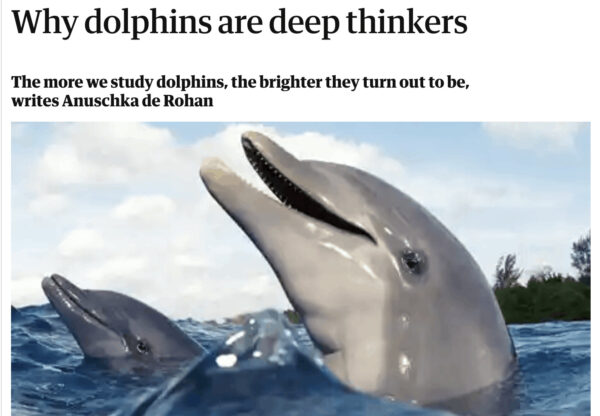
Why dolphins are deep thinkers
From the article:
“All the dolphins at the [Institute for Marine Mammal Studies in Mississippi] are trained to hold onto any litter that falls into their pools until they see a trainer, when they can trade the litter for fish. In this way, the dolphins help to keep their pools clean.”
If you're familiar with the concept of “gaming the system,” you might predict what might happen next, given the reputation that dolphins have for their intelligence.
How Incentives Shape Behavior (Even for Dolphins)
Dr. Deming warned decades ago that quotas and targets would distort behavior unless leaders focused on improving systems. The dolphins simply illustrate the point with unusual clarity. Below are additional examples–across industries–where management systems created the very behaviors leaders later claimed to be “surprised” by.
I've written about this concept before, with posts including:
Lessons From The Wells Fargo Scandal, Mismanagement, And Gaming The Numbers
The Real #VAscandal Is The Long Waiting Times & Bad Management, Not Gaming By…
Gaming The System: Graduation Rates & Pneumonia Rates
Easier To Game The Numbers Than Fix The System — In Education And Healthcare
A Vivid Example Of Gaming The Numbers On “The Office”
Gaming The System At Starbucks
And then there's one of my favorite examples, the police officer who fined himself to meet his ticket-writing quota:
The officer is like a dolphin?
Wait, what? Oh right, this was a post about dolphins.
Back to Kelly, the litter-fetching dolphin from Mississippi… according to the Guardian, Kelly has what the Brits would call a “scheme”:
- Person drops litter into the water
- Kelly could turn in the paper for a fish, but… tears the paper into SMALLER pieces
- Kelly turns in each smaller piece of paper for a fish
Kelly has “gamed the system” to get more fish. Amazing!
“This behaviour is interesting because it shows that Kelly has a sense of the future and delays gratification. She has realised that a big piece of paper gets the same reward as a small piece and so delivers only small pieces to keep the extra food coming. She has, in effect, trained the humans.”
That's not all. That's not the extent of Kelly's cleverness.
When Gaming Becomes a Strategy, Not an Accident
When a gull flys into the enclosure, Kelly could turn in the bird to get a fish.
The scheme Kelly came up with:
- Capture a gull
- Turn it in for a fish
- Take the fish and hide it
- Use the fish as a lure to attract more gulls
- Get even more fish
Kelly even taught this gaming to a young calf. Amazing!
There's a lot of interesting details about dolphins in the article. It ends:
“There is still much to learn about these flexible problem-solvers, but from the evidence so far, it seems that dolphins do indeed deserve their reputation for being highly intelligent.”
What Dolphins Teach Us About Workplace Metrics
In a human workplace, however, there's a fine line between “gaming” and “problem solving.”
Hear Mark read this post — subscribe to Lean Blog Audio
Why People Game Systems Instead of Improving Them
Gaming tends to be dysfunctional. But, it's natural human behavior that results when you have a combination of targets (or quotas) combined with fear.
When it's easier to game the system than it is to actually improve the system, people will game the system. They're often doing so to get rewards and praise — or they're doing so to avoid punishment or to save their jobs.
As leaders, we have to be careful when giving incentives that are intended to get behaviors that we want. As Dan Pink wrote about in his excellent book, DRIVE, incentives work… but they have side effects. Listen to my podcast with Dan:
As leaders, we have to think about how an incentive scheme might cause people to…. scheme. Instead of just pressuring people, we have to eliminate fear (as Dr. Deming would have said) and work with people to help them actually improve the systems they work within.
In a great “Ted Lasso” scene, Coach Lasso tells Sam Obisanya to “be a goldfish” — to have a short memory about a mistake or a failure.
If we're a “management goldfish” who quickly forgets the lessons of organizations that pressured employees into gaming the system, we might create more “dolphins” in our workplaces.
Leadership's Responsibility: Fix the System, Not the People
Don't blame them for gaming the system. You've given them no choice.
It's only dolphin human nature.
Don't Be Surprised When Your Dolphins Get Clever
The dolphins weren't unethical.
They weren't lazy.
They weren't “bad actors.”
They were responding intelligently to the system humans designed.
And that's the real lesson.
When leaders set targets without improving systems, dolphins (and people) don't suddenly become dishonest–they become creative. They do what makes sense in the environment they're given. Sometimes that looks like tearing paper into smaller pieces. Sometimes it looks like opening fake bank accounts. Sometimes it looks like “meeting the numbers” while real problems quietly grow.
So if you're seeing clever workarounds, metric manipulation, or behavior that feels just a little too on the nose, don't ask, “Why are they gaming the system?”
Ask instead:
What did we design that made this the smartest move?
Because if leaders forget that lesson, they shouldn't be surprised when their organizations fill up with very intelligent dolphins–doing exactly what the system taught them to do.