
Keith Champion of Lucid Motors on Built-In Quality and Lean EV Manufacturing
Scroll down for info, videos about Lucid Motors, how to subscribe, and more
My guest for Episode #410 of the Lean Blog Interviews podcast is Keith Champion, Senior Manager of Operational Excellence at Lucid Motors, a new entrant in the electric vehicle marketplace, with their Lucid Air luxury sedan hitting the market very soon.
Keith worked for Toyota for more than 17 years (thanks to fellow Toyota alum and previous podcast guest Tim Turner for making the connection). As Keith shares in the episode, he started as a Team Member at Toyota Georgetown, advancing to Team Leader, Group Leader, and other roles. He then spent nine years working for Tesla Motors. Keith then joined Lucid in 2019 — BTW, the CEO of Lucid, Peter Rawlinson, was previously Vice President of Vehicle Engineering at Tesla and Chief Engineer of the Model S.
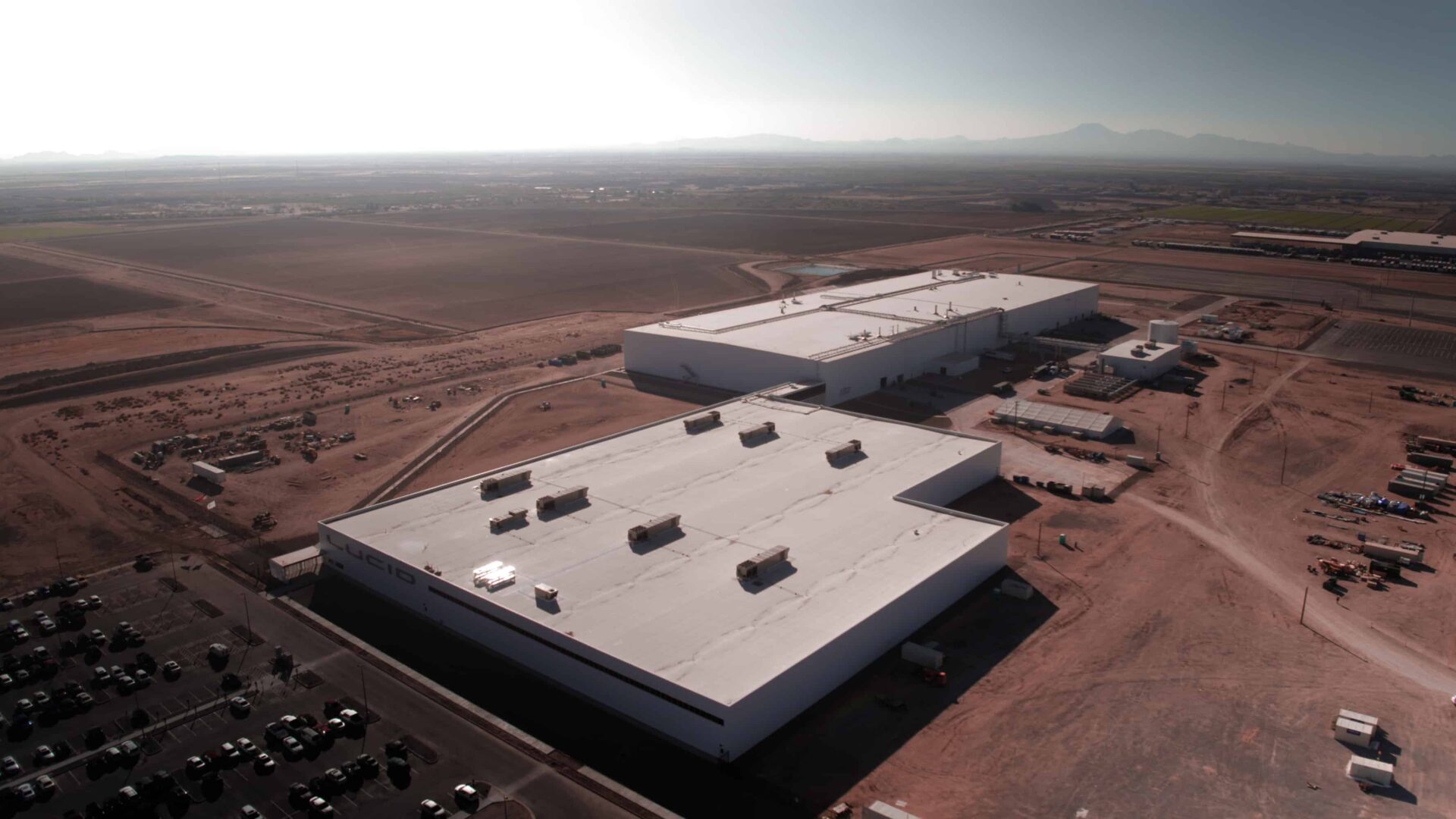
In today's episode, we discuss how Lucid Motors is applying Lean thinking and built-in quality principles while launching a new electric vehicle and scaling production. Keith Champion shares lessons from his career at Toyota and Tesla, and how those experiences are shaping Lucid's approach to operational excellence, standard work, problem solving, and culture. We talk about what it means to “build it right the first time” in a greenfield EV factory, and why quality has to be designed into both the product and the production system from day one.
We also explore the challenges and opportunities of building a Lean culture in a fast-growing startup environment, including training and developing people, creating psychological safety to speak up about problems, and balancing rapid innovation with disciplined manufacturing fundamentals. Keith explains Lucid's production system, how continuous improvement is embedded into daily work, and what established organizations — not just EV startups — can learn from launching new processes under real-world pressure.
The podcast is sponsored by Stiles Associates, now in their 30th year of business. They are the go-to Lean recruiting firm serving the manufacturing, private equity, and healthcare industries. Learn more.
This podcast is part of the #LeanCommunicators network.
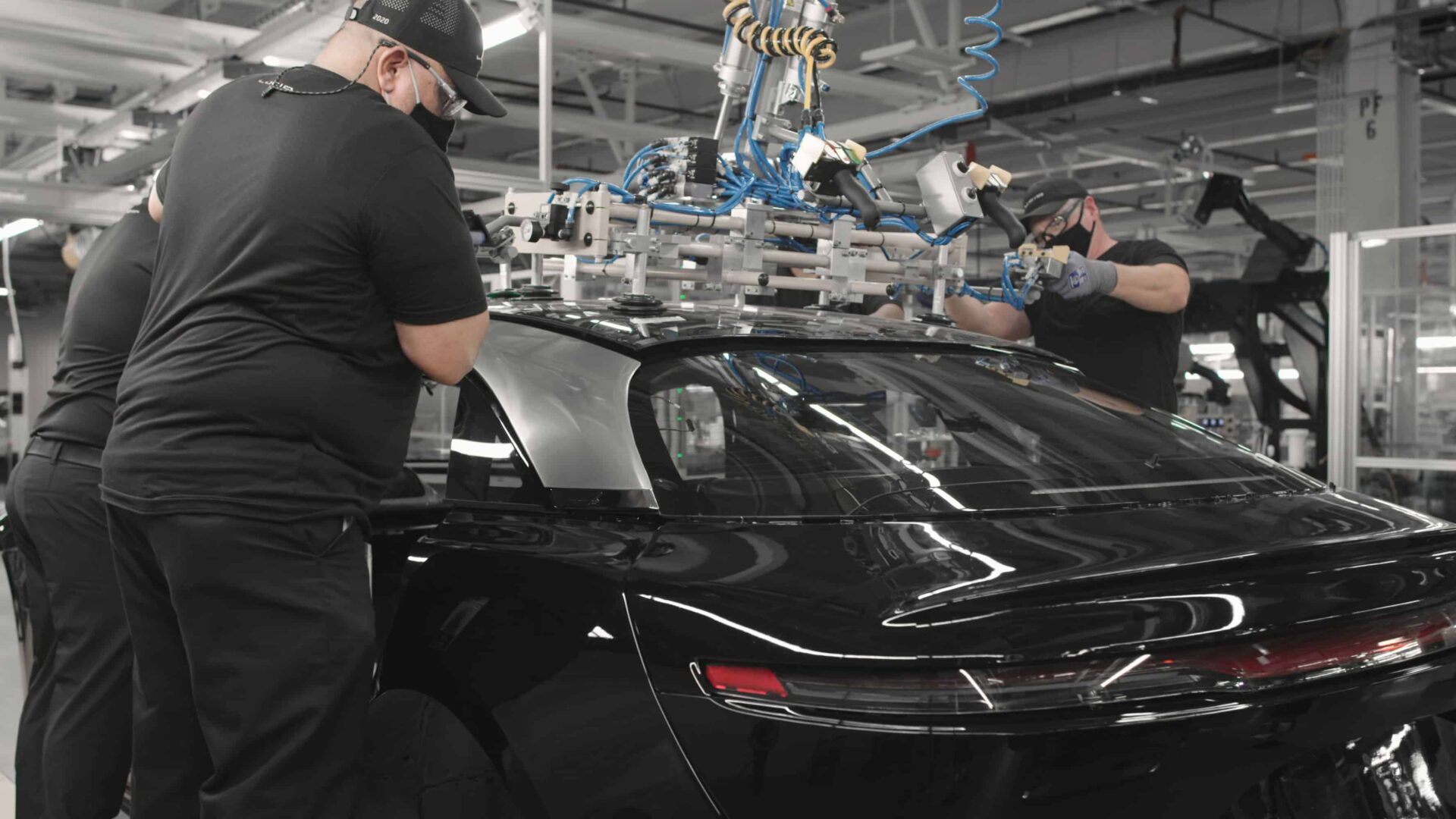

Videos about Lucid Manufacturing and the Lucid Air:
Thanks for listening or watching!
Automated Transcript (May Contain Defects):
Here is the cleaned-up transcript of the interview with Keith Champion from Lucid Motors.
Lean Blog Interviews: Episode 410 with Keith Champion
Here is the cleaned-up transcript for the interview with Keith Champion.
Lean Blog Interviews: Episode 410 with Keith Champion
Announcer: Welcome to the Lean Blog podcast. Visit our website at www.leanblog.org. Now here's your host, Mark Graban.
Mark Graban: Hi, welcome to the podcast. It's episode 410 for April 21st, 2021. Our guest today is Keith Champion from Lucid Motors. He's formerly of Toyota and also formerly of Tesla Motors. For show notes, links, videos, and more, you can go to leanblog.org/410.
Our guest today is Keith Champion. He is currently a Senior Manager of Operational Excellence at Lucid Motors. They are a really exciting, new electric vehicle company. They're expected to release their first model, the Lucid Air, an electric sedan, later this year. I saw one on the floor in a showroom, and I've watched a lot of videos. It is stunning. So I'm sure you're really excited about that too. Keith, before I tell the audience more about your background, let me first say welcome to the podcast. Thanks for joining us.
Keith Champion: Thanks. It's great to be here celebrating my birthday with you and your audience today. So it's a great way to celebrate. Thanks for having me.
Mark Graban: Happy birthday. I don't have a cake and candles for you, but I hope this is a good part of what's going to be a wonderful birthday.
Keith Champion: Very exciting. Thank you.
Keith's Lean Origin Story
Mark Graban: Okay. So Keith, before joining Lucid, going back a little bit further in his career, he worked more than 17 years at Toyota Georgetown in Kentucky, and we will, I think, have an opportunity to hear more about that. And then Keith also spent more than eight years working for a company that you might have also heard of called Tesla Motors. He was there through 2019 when he joined Lucid. So, Keith, as I ask most every guest here on the podcast, I'd really like to hear your story, a “lean origin story,” or for you, I guess it's a Toyota Production System story. I'm curious how you first started learning about these approaches.
Keith Champion: Absolutely. Mark, if it's okay, I'm going to take you back even further before I even started at Toyota. It's an interesting story. I grew up in New York and when I was a kid, me and my sisters, we had chores around the house. I remember writing down the instructions for doing the laundry, and I would post it right there at the washer and dryer. It would be step-by-step instructions with key points. And then every time I would be doing the loads of laundry and folding the clothes, I was always looking for how I can improve the efficiency. So I think ever since I was a kid, and even till today, that it's always been a part of me.
But fast forward to 1993, I started working at Toyota, as you mentioned, in Georgetown, Kentucky as a team member working directly on the frontline, and I began learning about the Toyota Production System. And it just really resonated with me. It validated what I practiced organically in my life. I remember learning specifically about the importance of standardization. Continuous improvement, which to this day I think is one of the greatest components of the Toyota Production System, and waste reduction. Built-in quality, which is one of the pillars of the House of TPS. The structured problem-solving methodologies using an A3 or TBP and other components of TPS. And over the years working there and getting to apply those tools was just a great experience.
Life on the Frontline at Toyota
Mark Graban: So what part of the plant? I'd like to hear a little bit about the team member experience. Because it seems like there is a very prevalent job history at Toyota of people working their way up the ranks into different levels of leadership, including some of the former Toyota people I've interviewed here on this podcast. So I was wondering if you could kind of paint a picture a little bit for listeners who maybe haven't worked in manufacturing or haven't worked in a frontline team member role. What was one of the settings that you were in? It would be curious to hear a little bit about what daily work life was like.
Keith Champion: Absolutely. I started in the Body Weld department as a team member. So we were doing a lot of welding, a lot of metal finish on the vehicle, or the body, the structure of the vehicle. It was fast-paced, it was repetitive. But Toyota has such a way of engaging its people that even though it's physical and it's repetitive, it's work that you can really enjoy because there's so many other things outside of that. You're constantly looking for ways to improve processes and you're empowered to make those improvements.
I feel like my experience as a team member on the frontline was invaluable. You talk about some people having gone on and moved up the ranks, and it gives you such a valuable insight. It gives you this holistic perspective as you do advance in your career. That lends extremely well, especially in an operational excellence position. You're building programs to engage all levels of the organization and how better to do that if you've lived in those shoes.
Mark Graban: Well, what were some of the other roles that you had over a relatively long time there at Toyota?
Keith Champion: I had several. Even as a team member, I remember expanding that role, taking, participating in and leading Quality Circles. So even as a team member, you have an ability to build that role. If you want to get involved in Quality Circles, I remember taking a lead role in the safety task force, supporting the diversity committee. So many great programs.
But over the nearly 18 years that I worked there, I did go on to become a Team Lead. So as a Team Lead, you get to support a team of team members, which is very rewarding, helping them be successful. And the next step is as a Group Leader. And then you have a team of team members and Team Leaders to support. During my time there, I finally joined the Pilot Team, which helped to launch new models and new manufacturing lines, traveled to Japan. Very exciting, as you can imagine. But all these opportunities and these career paths are available. It was a great experience.
And I'll tell you something, Mark, something interesting. After having been gone from Toyota for 10 years or so, a mutual friend of ours, Tim Turner, who I know you've had on the show maybe once or twice, took me on a tour last year of the Toyota factory. So going back after spending 10 years out here on the West Coast Silicon Valley EV startup environment, it was so great to go back. And I really appreciate Tim taking the time and taking me through a tour. Seeing some of the same faces from as far back as 28 years ago. And seeing smiles on people's faces, they're still enjoying their jobs. You know, Toyota has a very high retention rate. So yeah, I really, I can't say enough about the Toyota experience.
Mark Graban: When you had that chance to go back, did it seem more familiar than different? Do you recall anything that jumped out at you? Because I mean, they are continually improving. Was there anything that you remember as being noticeably different or better?
Keith Champion: One of the biggest things, I mean that it's now the largest Toyota factory in the world. They've added on their Lexus plant, and I know Tim was involved in that, helping to set that up along with a lot of my former colleagues. So it's really grown in terms of size. But all the foundational things were still there; I still recognized it. So there was that familiar feel. A lot of the improvements are not something you're going to see with your eyes. You'll experience working there a constant efficiency improvement. But from a visual perspective, it was great to see the expansion and that's a result of all the hard work, the great work that they're doing there.
Mark Graban: So I was just going back. I was going to ask you to elaborate a little bit. Some listeners might not know what you mean by TBP.
Keith Champion: Yeah, the Toyota Business Practice. So they may be more familiar with just a structured problem-solving methodology. And Toyota uses an eight-step problem-solving approach. Really defining the problem in a way that makes it solvable. Then taking a practical approach to really understanding the background of the problem, setting goals for how a problem is going to be improved, doing your root cause analysis, planning corrective actions. So when we talk about TBP, it's this structured approach. I know there are many different problem-solving methodologies that people practice. I think it's something that Toyota does extremely well.
Mark Graban: Yeah. So for a lot of listeners who are probably familiar with A3 problem solving, in a way, it's a different label for the same thought process. Is that fair to say?
Keith Champion: Yes, that's correct.
Built-In Quality at Lucid Motors
Mark Graban: Yeah. So, you know, I want to certainly take advantage of the opportunity to learn about what you and all of your colleagues are doing at Lucid Motors. You know, this is a really exciting opportunity in a lot of ways. But one connection to something you said, Keith, you talked about this concept of built-in quality. And I've been watching a lot of Lucid Motors videos on the YouTube channel about the product and about the factory there in Casa Grande, Arizona. One Lucid Motors video says, it starts off right in the beginning and it says something about how the approach… I don't know if they used the word philosophy, but they definitely used a phrase that stood out to me: “Build it right the first time.” And that's got to be… I mean, that's never easy in manufacturing. But now you've got this challenge of new product, new factory. I was wondering if you could maybe share first some thoughts, Keith, on how to start up and ramp up in a way that really emphasizes building it right the first time, built-in quality.
Keith Champion: Yeah, absolutely. I mean, from a technical perspective, it's understanding all the quality specifications and even upstream of that, designing a perfect vehicle, building a supply chain, working with suppliers that are capable. But from an operator perspective, if we look at the operation within the manufacturing facility, we always look in terms of input, throughput, and output. So we're not going to accept anything that is out of specification. We're not going to build anything outside of standard. So following standardized work. Making sure that we're following out quality control plans for every part, we've got to make sure that it's in specification. And in terms of output, this concept of built-in quality, you're not going to pass something along to the next stage of manufacturing unless it is in specification.
The culture has to be there. And I remember so much of what lessons learned from Toyota as a team member. I can still remember the first time that I had to actually stop the line as a team member because there was a quality issue in my station. And at some companies, I think people might get in trouble. You don't stop the line, you know, you gotta keep that line running. But at Toyota it's encouraged, it's expected, and it's not something that people get in trouble for. Somebody will come and respond to what we call an Andon call. Basically, you're stopping the line and we're going to solve the problem. Lucid is definitely very much focused on built-in quality. We're not going to release a vehicle to our customers that we're not extremely proud of.
Mark Graban: Yeah, it sounds like it's as much cultural as it is about tools or technology. I mean, there's the Andon cord. So Toyota plants have a button on the cart full of parts and supplies that move along with the vehicle and the team member. There are, you're right, a lot of environments in manufacturing or in healthcare where sadly people get in trouble for trying to put safety or quality first. They get in trouble for slowing down production. I mean, heck, I saw that the first year in my career at General Motors, 1995. I mean, it was quantity first, unfortunately. And so, you know, I have a lot of listeners in healthcare where people increasingly talk about the need to create a psychologically safe environment. So yeah, that culture as you describe it, it seems like maybe there are some advantages in a new company, a new factory, new employees to build in that culture from the beginning, right?
Keith Champion: You definitely want to build it in the beginning. And the process of building a new car, it's a very iterative process. So you go through multiple phases. We did our Alpha builds about a year and a half ago. Uh, it's a learning experience to really validate the design of the vehicle. We go through a Beta phase where now we're also validating manufacturing processes. Are they capable and really tuning things in.
The phase we're in right now is called Release Candidate. So it's getting everything perfect and you're right, now is the time, and it's something we teach people from day one during onboarding, the emphasis on quality. When you talk about companies where people will get in trouble for pulling that Andon, for stopping the line to address issues, it's reflected in what the customer sees. And we care about our customers, we care about our people. We're building that culture in. And so when we go to production here very shortly and we start building customers' cars, they can have the confidence knowing that their car was built right, and they can expect the best customer experience ever for any product, ever.
Mark Graban: New model launch is a fascinating time as you're going through those cycles between product and process. And in one of the videos, the Lucid Motor CEO–it's Peter Rawlinson, right? He was showing, or he was talking about, there was something about the car, there was something, I think it was the side mirrors where he said there was learning from the beta testing and then there was a change. And like that creates a challenge then with the suppliers to adjust and respond. And then he was showing, there were some buttons on the dash that have a physical pressing and you say, “Oh, well, we've gotta make sure the springs and the tension are just right.” So you can see that attention to let's learn early, let's iterate. And then that does create kind of… yeah. It's fun times, right? When you're trying to iterate and get this all ready to go for real.
Keith Champion: It is, it's… I like that you said it's fun times. I mean, it's for people who are up for the challenge, it's fun, it's exciting. It's definitely not a boring moment as you're learning and you're making those changes. And it's not just you, you're right. It's your supply chain that has to adapt very quickly. And I think that's one of the things that this EV revolution has really helped drive throughout the entire supply chain is having these hyper aggressive timelines and being able to do that, be more agile.
Mark Graban: So, you know, we talk about the importance of building in quality. It sounds like there's an opportunity here. You know, just elaborating on what you were sharing, building the culture right the first time. It's probably easier to try to instill some of these mindsets or this philosophy from the get go than it is to get up and running and realize that culture change is always so difficult. This is more an opportunity for culture building, culture development, right?
Keith Champion: That's right. And it starts at the very top, like you mentioned, Peter Rawlinson and his incredible focus on building this impeccable vehicle. Our Vice President of Manufacturing, Peter Hochholdinger, driving that down to his teams and each one of the directors and managers all the way down to the front line. It's something we talk about frequently through their communications, their events that we hold all focused on this built-in quality and not passing something on to the very next station unless it's within specification. I think those are the ways to really build that culture.
The Lucid Production System (LPS)
Mark Graban: With Toyota, we talk about the Toyota Production System and you know, Toyota talks about they'll use language around a Toyota Way approach and they'll often use the word philosophy. So, as Lucid Motors is going through these earlier stages of development and growth and launch to market, does Lucid Motors management talk about philosophy? Are there certain values and principles that they are sort of instilling as I'm sure they continue to hire and continue to develop that culture?
Keith Champion: Yeah, absolutely. You know, having worked for Toyota for as long as I did and seeing the benefits, I'm a huge advocate of the Toyota Production System and the Toyota Way, the philosophy behind that. A lot of people are familiar with the House of TPS. The visual representation with the foundation of standardization, you've got your pillars of Just-In-Time and built-in quality, all built on top of this Toyota Way philosophy. It's inspired a lot of the industry's production systems and philosophies.
Definitely at Lucid, we have the Lucid Production System, we have the Lucid way of thinking. It was actually my number one task from Peter Hochholdinger when he invited me to join Lucid. The challenge was to develop a Lucid Production System. The visual representation of it, if you can imagine a battery with three states of charge, which is very suiting, right? We're building electric vehicles.
So we've got three main components, Mark, for the Lucid Production System. It all starts with Why. If you're a fan of Simon Sinek like I am, you'll appreciate this. Our three components: it starts with Purpose. On top of that, we build our Strategies, every all the strategies, everything that we do to manage our performance within the factory. It has to be purposeful, it has to tie back to our mission, our vision, and our values. And then the third component, and there's a reason why we built it directly into this visual representation, it's our People. People that have the right mindset, skillset and knowledge to be successful in achieving our strategies. So we put a strong emphasis on our people. It's a very people oriented company.
But going back to let's go back to our purpose, our Why. This includes the reason why we do everything that we do, and it also incorporates our values. All of which are very much about our customer, our environment and our employees. When I talk about mission, vision, and core values, what is Lucid's mission? And this is something that is our mantra, right? Our mission is to inspire the adoption of sustainable energy by creating the most captivating luxury electric vehicles that are centered around the human experience. So again, a focus on the environment and our customer.
Our core values, we have six of them. We elaborate on these in great detail during onboarding to make sure they're not just words on a piece of paper. And all of our programs tie back to these core values.
- Passion is one of our core values because to do this type of work, to create a revolutionary vehicle and a company, you have to be passionate. You've gotta be all in.
- One of our core values is Collaboration, because we know that we can't do this alone. There has to be a synchronized effort among all of the teams.
- Innovation is something that we value.
- Empowerment, again, tying back to our people. And empowering them to make a direct impact.
- Impact being one of our core values in itself. Which by the way, I talk about programs and strategies tying back to our core values, our continuous improvement program is called Impact. And it's honestly one of the best I've ever seen in any company.
- And our other core value is Open and Honest Communication. It is very important for us to be transparent throughout the organization. And I think people respect that.
Mark Graban: Yeah. And a lot of that is also interconnected. You can't tell people on the one hand, “Hey, you're empowered. I want you to participate in improvement,” without it being safe for people to speak up.
Keith Champion: Absolutely. Absolutely. And we have a lot of ways for people to speak up. You know, we have the Impact continuous improvement program where they can not just submit ideas, but these are ones that they're actually going to implement, validate for themselves with their team members. We've got huge participation rate in manufacturing, and every day we're receiving more and more completed Impacts.
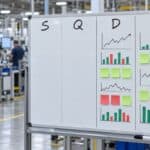
It's just one of our strategies, which I talked about this, the second element of the Lucid Production System. It starts with setting goals for all of our key performance areas. And for us, we've prioritized those in terms of Safety, People, Environment, Quality, Delivery, and Cost (SPEQDC).
The programs that we have, obviously we have standardized work throughout the factory. We understand the importance of standardization. It's our baseline for continuous improvement. We have a Success Program. I know a lot of listeners are familiar with the 5S plus Safety, and that's what we practice. It's the reason why we do the other sort, set in order, shine, standardize, and sustain efforts.
We have an incredible on-the-job training program called Building Excellence. And what this is, Mark, we have three levels of proficiency for an operator to achieve. And for customers that are listening, and I'm one of them–I have my reservation as well for Lucid Air–you can take comfort in knowing that our operators start as Supervised Trainees. So they have a qualified workstation trainer working with them until they've built the proficiency to qualify for Certification. And it's an actual process that each team member goes through with their supervisor to demonstrate that they've gained that level of proficiency on the job. The third level is becoming a Qualified Workstation Trainer. So not only have you mastered this job, but you've also mastered the training methodologies so you can effectively train other people on the job.
All of these actions, we monitor the results. We have our, I talked about safety, people, environment, quality, delivery, and cost. Well, throughout the factory, I'm just going to abbreviate that: SPEQDC boards are throughout the factory, so we're monitoring our results. We have factory audits that we do. Obviously, downstream customer feedback comes into account. So what are the results we're seeing in regard to the actions that we're taking? Are we meeting our goal? If not, when we are, we celebrate and when we're not… it's very important part of this production system is knowing how to deal with abnormalities and opportunities to improve.
So on every SPEQDC board throughout the factory, there are opportunity lists, which are basic action plans where you identify what is the problem, what's the solution, who's going to fix it and when. And the team works great collaboratively together. There are escalations if there are things that are outside of their control. And we do have different problem-solving tools and systems for the team to help them deal with those abnormalities. So our strategies definitely tie back to our mission, vision, core values.
And then finally, this last element of the Lucid Production System and the most important, it's our people and they're at the top of this battery. It was important to build people into the visual representation for us because we do value our people so much.
The Casa Grande Advantage
Keith Champion: And let me tell, I'll tell you something, you know, something interesting. Casa Grande, I don't know if you've ever been there, Mark, but it's such a great place. The people there are phenomenal. We have just the most incredible workforce and every time I go, I just, you know, I can close my eyes and be in Georgetown, Kentucky because that work ethic is there. People are so eager to contribute and be a part of this, what we're building. So it starts by hiring the right people and they're there in Casa Grande, Arizona, in abundance–people with the right mindset, skillset and knowledge to be successful.
Mark Graban: Yeah. Casa Grande, it's almost exactly halfway between Phoenix and Tucson, or at least vaguely halfway. It's maybe just a little bit closer to Phoenix. But you're right, it's pretty much in the middle. When I was a kid in elementary school going into middle school, this is just a random quick aside… growing up in the Detroit suburbs, one of my best friends from elementary school, his dad worked in city government and he was hired to what was then, I'm sure a much smaller but fast growing Casa Grande, Arizona. This would've been in the eighties. If I remember right, he was hired as city manager. And so I was upset that one of my best friends got pulled away all the way across the country. But I did have a chance to go out and visit and see Casa Grande when I was a kid. Random random thing to bring up that is probably not that interesting to the listeners. I apologize.
Keith Champion: I'm sure it is to your friend. No, it's a wonderful place and full of people who have the right mindset. People with this growth mindset, you know, people who really embrace challenges, they're persistent, know to learn from mistakes, practice teamwork. One of the things I hear a lot from the team members is this sense of family. And you can feel that when you're in the factory.
And I love that in the early days of Lucid, or early days of having a manufacturing team–cause Lucid has been around quite some time with the technology and the engineering–the first manufacturing folks were hired from Casa Grande, Arizona and brought to Newark, California where our headquarters are. And so they were away from home and away from family in those situations. And I remember at Toyota traveling to Japan and it was very similar. You bond and you become a family. So I remember hearing that feedback and I'm like, “How do we, when you guys are back in Casa Grande, how do we keep that like a forever thing? How do we have this sense of family among the team?” And I think we're doing a great job of that with this culture that the team is building.
Mark Graban: Well, it seems like it's a great opportunity in a lot of ways. I mean, there are no other automakers in Arizona, which probably creates some supply chain challenges, but you have an opportunity to create really good jobs for a community. And, you know, I don't know if part of the dynamic of Toyota going into Kentucky–which they may have been, well, Bowling Green General Motors had built Corvettes in Bowling Green, Kentucky for a long time–but when you look at other automakers who've come into the US and have located in sort of non-traditional areas, maybe one opportunity is that everyone has a fresh start and a clean slate to focus on building. This is going to be the culture in your case at Lucid Motors of not hiring people who maybe have been beaten down or worn down by a more traditional Detroit Big three kind of culture. There's probably more opportunity there than challenge.
Keith Champion: You just articulated very well what I… because I get that question a lot from job candidates and just in general, “What kind of challenges are you facing? Like what are the biggest problems?” And I have to sit there and think, and my response is exactly what you just said. It's, these are opportunities. And I think we've done such a great job of building this strong foundation infrastructure that a lot of the problems you might anticipate have been prevented. I'm a big fan of everyone in this lean community, from that are writing books and educating people on lean and trying to lead a transformation with an existing companies. And I have so much respect for that because I know how difficult that is. My job is easy. Yeah, I listen, we're building something from scratch. We're using lessons learned. I've seen both ends of the spectrum from very well established and strong cultural foundational companies, not so much. What were the lessons learned on opposite ends of the spectrum and how do we build the very best from from the beginning?
Mark Graban: Yeah. And you know, there's this term used in manufacturing, some of the listeners will know, a “Greenfield” site. Because I guess the idea is you've taken a green grass field and now you've put a factory in as opposed to a “Brownfield” older site. When I think of Arizona, having lived in Phoenix for a while, when you call it a greenfield, like the green is cactus, not grass, but it's still greenfield, right?
Keith Champion: That's right. Yeah. It's definitely much of Greenfield. I have this really cool video, I'm not gonna share it, but Peter Hochholdinger and I visiting the site before we had anything in Casa Grande. And it was just this great property. There's a funny story about burrowing owls. You know, they're very common there. And we were very sensitive to that when we were getting ready to start construction on a Greenfield site. So we relocated, found a great home for these burrowing owls that lived on this massive plot of land. And two of them actually stayed and we hired them. It's Lou and Sid. Lou, Sid… they're our mascots. But anyway, you're right, Greenfield is such a huge advantage. You're not constrained by any former building structure, you're not trying to make your factory fit into an existing building. You're building a factory around the operations that you need.
Scalability and Innovation
Mark Graban: Well, and when you're talking about not being constrained by an existing building, or maybe not constrained by land around it, I mean, part of the challenge and at this phase of Lucid Motors is you're having to plan for growth and scalability of production at different levels. Can you talk about that a little bit?
Keith Champion: Yeah, absolutely. So, you know, I know I made it sound easy like, “Oh, you just build a foundry factory around the operations,” so that, that's all, it's not easy. But yeah, there is so much work that our manufacturing engineering team has put into this. And and just the production team to plan out a multi-phase approach. You're building a greenfield based on a certain volume, but we have a four phase plan. We know that as the customer demand just continues to grow. We recently sold out of our reservations on our Lucid Air Dream Edition, but we have other models that are obviously available and then a completely new body, the “Gravity,” which will be our next one. You have to look into the future and build a factory that's future proof. And Peter Hochholdinger and his team have just done an amazing job of being able to scale this factory to additional models and the additional demand that's coming. And, you know, Casa Grande is just our first factory. So lots of exciting things to come. I'll just leave it at that.
Mark Graban: Well, you talk about demand for the cars. The one that sold out costs way up in six figures, a hundred and something thousand. So that says something that there's demand for a car that is expensive and you know, the base level of it is I think right about $70,000. And it seems at that level, I mean you described it earlier correctly, it's a luxury vehicle. The need for built-in quality to get off the ground as a company and to get and establish and maintain a good reputation. I mean, that initial quality with those initial customers at a price point like that, I mean, there's a lot at stake to have that built-in quality for the long-term good of the company. So that, I'm sure that's an exciting challenge for everybody involved in ensuring and refining and building in that kind of quality at that price point.
Keith Champion: Uh, you're absolutely right. I mean, you know, let's face it, Mark, look at traditional OEMs and the percentage of their fleets they're transitioning to EV. The day of the early adopters is gone. In the early days of Tesla, customers may have been more forgiving. The Lucid Air is the most luxurious EV. It's basically a new segment within the EV world. Um, and yeah, we've got, uh, you know, it's the fastest vehicle with proven Formula E technology. It's the fastest charging, it's the longest range. It's in really any category you can think of. It will be the best vehicle a person can purchase.
The price point that you mentioned, yes. That's, you know, obviously for our early customers, people that are looking for that level of luxury, they're going to get exactly what they're paying for. Um, and then as we scale, and you're right, it's not a different model, it's a different level of the same model. It's the Lucid Air. There will be much more affordable options.
Mark Graban: You know, one thing, as you know, Toyota has demonstrated. And people in healthcare have been learning and demonstrating, built in quality, and having good process in the right culture. Better quality doesn't cost more. Toyota has demonstrated, as I'm sure I'm guessing Lucid Motors will aspire to do, to deliver high levels of reliability and quality, whether it's the most for Toyota's case, whether it's the most expensive Lexus or the least expensive small Toyota. Like, you know, there are different dimensions of quality. You can say, well, there's quality in terms of size and there's quality in terms of whether it's super high-end leather seats or inexpensive cloth fabric seats. But the reliability, lack of defects, I mean, that quality is something that the Toyota production system has delivered and I'm guessing it sounds like that would be the aspiration of the Lucid production system to deliver high levels of quality at any price point along the way.
Keith Champion: That's correct. And regardless of the price point, Peter Rawlinson has made it perfectly clear: we will not release a car to a customer unless it is perfect. So we have to work backwards from that and make sure that it's instilled in everything that we do.
Mark Graban: The thing that excites me about this evolving Lucid Motor story and everything that is ahead is that, you know, there's this opportunity to have clearly electric vehicles are innovative product and platform. I mean, when I worked at General Motors in 1995, we were building internal combustion engines. And that is, you know, at some point it's gonna sound like I was making horse and buggies. Let me think of how this technology has evolved. And clearly there are things that are different when you're talking about batteries and battery packs and electric motors instead of the traditional powertrain drivetrain.
And and I'm gonna pose this, I don't mean this to sound insulting at all, but at some point welding is welding, assembly is assembly, painting is painting. I mean, it seems like there's opportunity of proven manufacturing techniques in the parts of the car that are like cars have been plus innovative design, innovative technology. I mean, it seems like that's quite an opportunity to have the best of both worlds there.
Keith Champion: Yeah, absolutely. You know, and that's something that is reflected in our leadership team and the people that were brought on. We've got people, a mix of people that come from Ford, General Motors, Audi, Jaguar, Toyota. And there's quite a few that actually came from Tesla that came with a wealth of lessons learned to help build this factory. And that mix, you know, you get your folks who, you know, welding as welding and putting a car together is putting a car together. But you have to be able to do so in a way that keeps up with this pace of Silicon Valley innovation.
I remember at Toyota, when we were planning a new model or a new manufacturing line, that planning took place three years in advance and we had a tremendous amount of resources, engineering teams and pilot team members to help prepare for this. It took a really long time and things were pretty static. Once the design was flushed out, three years later, you're building that car. Well, think about what's happening in the EV space. To maintain that competitive edge, to have the best, the fastest, the fastest charging, longest range, you have to be able to adjust your manufacturing processes in a hyper responsive way.
So finding people who… by the way, we talked about welding as welding. We actually, with the aluminum body, there is a weld-less body shop. Which I'd love to show you, Mark, when we have a chance?
Mark Graban: Yeah. It's more tacked together. I've seen a Range Rover factory outside of Birmingham in England, and it's all basically sort of riveted together or glued together. Adhesives, I believe, if I remember from that factory tour, it's been a while. Incredibly strong structural adhesives where you could take a one square inch of metal and cure this adhesive on the roof of the vehicle and be able to pick up the entire car.
Keith Champion: Well, we use a lot more than one inch of structural adhesive. It's throughout the vehicle and then through other joining methods like rivets, the structural integrity is just amazing. And that's why one of the reasons, in addition to the absence of an internal combustion engine, that EVs have such a great safety rating.
But getting back to your point, your point was well taken though, you know, taking people who are very well versed in traditional auto manufacturing, but yet have this growth mindset and understand how to incorporate the latest technologies and keep up with that pace of change. That's the challenge and that's something I think we've done really well.
Mark Graban: And you can tell I don't work in marketing. I apologize for calling the adhesives glue. That doesn't sound as that that wasn't technically correct. But I mean, I think it's fair to say that I don't think the innovation in the electric vehicle makers is coming in the realm of paint. It's coming in the batteries and the driver experience in terms of displays and interfaces. It seems like a lot of that is much more competitive. Does Lucid have… there's probably, yeah. It doesn't seem like anywhere in the industry that there's a lot of paint innovation. I could be wrong.
Keith Champion: I think a lot of people think that's the rationale. A lot of people look at EV companies as technology companies and not auto manufacturing companies. Yeah, there's definitely a heavy influence on the technology.
Difficulty and Opportunity
Mark Graban: So, Keith, one other thing I was gonna ask you. On your LinkedIn page, you have an image and a quote there that seems meaningful to you: “In the middle of every difficulty, lies opportunity.” So I was wondering if you could kind of tell us why that quote resonates with you and why you've shared that.
Keith Champion: They've credited Albert Einstein for that quote. And you know, so, so why does it resonate with me? Well, you know, something I learned early on in my career, for sure during my Toyota days, was that difficulties, challenges, you know, the problems we face are opportunities. It goes back to having that growth mindset, where difficulties actually can be an exciting thing. Knowing that out of whatever difficulty you're facing, working together, we can always find a better way.
I can give you an example. I hopefully this example lends itself well to the quote, but when I first, you know, we were talking about when I first started at Toyota and being on the frontline, I can remember, you know, I wasn't used to being on my feet all day. So it was definitely hard on my feet, and maybe I didn't have the right boots, but it was definitely a lot of walking and it was all day long. And you know, people laugh when I tell them, but Mark, when I would drive home after a full day of work, I swear I could hear my feet screaming at me. I could literally hear them being angry and yelling at me. Now, you know, what could I have done? I could have quit, right? I could have said, oof, you know, this is… Instead, I started looking for ways to take fewer steps, to make my job easier.
And I was in the body shop and there was this one process where you were back and forth between multiple stands and you had to grab some tools and then go back to the vehicle and back and forth. I saw it as an opportunity to change the layout a little bit. My supervisor came over just to check on me one day and I said, “Take a look at this. Could we move this stand from here to here and maybe…” He looked around, he got on his radio and he called a maintenance technician over, and they made those changes right there. And it was great, you know, and I'm like, oh my gosh. You know, just reduced how many steps I was taking. I wasn't… my feet were starting to quiet down a little bit.
And then I went to break and at break time, the whole team, we sit in a break room and you have a snack, you relax. Someone came in and said, “Who arranged the process and who rearranged that? Who did that?” And I got nervous. I was like, oh no. Yeah, I'm in trouble because somebody else is gonna rotate into that job. And we kinda made that change on the fly. In hindsight, probably not a great idea, but it turns out that they actually liked the change and asked, “Can we do this in another process? Can we do this over here? Can we do that over there?”
It was that feeling of knowing that I helped others. That really got me hooked on lean, right? Like, I'm sure for you, Mark, there was that moment in your life where you're like, this is what I want to talk about. This is what I wanna do. So I think that was my moment. And you know, I reflect back on that and it was a difficult situation. Looking for an opportunity and solving it and making it better for other people. So in the middle of every difficulty, lies opportunity. I think it's gonna mean something different to different people. You can apply it to different things in your life, but it's about your mindset, right? Difficulties… you can be a problem complainer or you could be a problem solver, you know? So that's why it really resonates well with me, and that's why it's on my LinkedIn page.
Mark Graban: Yeah, you're right. It is a versatile quote. Um, you talk about those, those difficulties and, you know, I've talked to Toyota people, or there's this excellent book called Toyota by Toyota that's written by a number of people. I'm sure you know a lot of the people who were contributors to that book, Darrell Wilburn and Sammi Obar and others. You know, they emphasize right in the beginning of that book, you know, for as much as everyone associates the word kaizen with Toyota, they really emphasize the word challenge. And how that's an important part of the Toyota culture. And you've got a lot of exciting challenges and opportunities there at Lucid Motors with the operations, the team building, the hiring, the training, building that culture. What a great opportunity.
Keith Champion: Yeah. You talk about challenges there. There's something I remember when the EV industry, when we were just getting that kicked off back in 2010 with the Tesla Model S, and you're basically starting with this blank slate of paper. Um, that's a challenge. And for me, super exciting, oh my gosh, you know, to be able to apply all of my learnings, all of my experience and collaborate with other people who had different learnings and different experience to create this new company. Definitely not for everybody, right? Some people, their head would explode. You know, it just wasn't… they were looking for something established, something structured, weren't prepared to actually create that.
Operational Excellence Role
Mark Graban: Maybe one other final question for you, Keith. You talk about the Lucid Production System and the Lucid Way, and you know, you have a job title that refers to operational excellence. So I was wondering if you could share a little bit of, you know, what are the types of things that you work on specifically in your role.
Keith Champion: I have a few organizations under my umbrella, all of which I'm very proud of. I've got a Learning and Development team, which is just incredible. You know, we have an onboarding program that really helps prepare people. You mentioned, you know, Casa Grande, Arizona a great place. No auto manufacturing. So how do you prepare a team to not just build a car, but build the best car in the world? You've gotta have a great training program. And I credit my learning and development team for just building out a tremendous onboarding program. You can't stop there, you've gotta be able to build training programs that support the entire career lifecycle of our employees. Also helping people advance internally, so career development, technical training, leadership workshops. So the team's done a great job there.
So that's one. I've got a Data Visualization team. And this is the team that's taking all of our business systems, all of our metrics, all of the things that are relevant to measuring the factory performance and visualizing it in a way that is intelligent and tells a story to the people that can drive action to improve those.
And obviously I want to be able to do something with that information. So I have a Lean Implementation team, my lean team. Also doing a great job of building out all these tools and systems with the inputs from the leadership team, and then direct collaboration with the folks on the front line that are gonna be practicing them. That really helps ensure the adoption of lean and all the strategies that we're using to help optimize the factory performance.
Um, I also have an Industrial Engineering team. Which is helping to build out all the, again, all the tools and the systems and the standards so we can scale globally without reinventing the wheel with every new greenfield factory that we open. So we have an industrial engineering team that can make sure that the cycle times are captured. We're within our takt time, which is the time, the pace that we need to build the vehicles, and then drive activity like line balancing and cycle time improvements.
So the L&D, the data visualization, the lean and the industrial engineering, and it's just an amazing team and they all work very closely with the manufacturing leadership and the folks out there on the front line.
Mark Graban: Keith, I'm so glad that you could join us and share your perspectives from these different companies that you've worked in and what's happening and what's going to be happening at Lucid. I'm sure a lot of people listening are gonna go and lucidmotors.com/careers. I just, I did a quick search. There's one job posted here in Casa Grande for Lean Coach and maybe somebody listening is gonna go out and seek that out. Just planning that seed of thought.
But, you know, Keith, the final thing I was just gonna say here is from what you've described about the Lucid Production System, I did a little dictionary search because Lucid is one of those words you hear, and then like, well, wait a minute. What does that really mean? So here's the dictionary definition. I got it said: “Expressed clearly, easy to understand.” And I think what you've shared with us today, Keith, I think that fits, there's a double meaning here when we say it's a lucid or the lucid production system.
Keith Champion: That's great. That's great. Yes.
Mark Graban: So our guest again today has been Keith Champion, Senior Manager of Operational Excellence at Lucid Motors. Keith, this has been great and as things evolve, maybe we can do another episode here or we can do an episode of Lean Whiskey where you can, after it's gone to launch to the market and as the company continues to grow, maybe we can kind of revisit how things have gone and what the new learnings and opportunities are.
Keith Champion: It sounds great, Mark. Yeah, thank you so much for having me. I look forward to talking again. I want to thank everyone that's listening, you know, lean is such an amazing journey and an incredibly satisfying experience. So I wanna encourage everyone, you know, continue on your lean journey and if you're just getting started, enjoy the ride. Thank you so much.
Mark Graban: Thank you, Keith. Well, again, I want to thank Keith Champion from Lucid Motors for being such a great guest today. For links, show notes, videos and more, you can go to leanblog.org/410. Thanks for listening. This has been the Lean Blog podcast. For lean news and commentary updated daily, visit www.leanblog.org. If you have any questions or comments about this podcast, email mark at leanpodcast@gmail.com.
This podcast is part of the Lean Communicators network… check it out!





Why was it such a challenge to implement the supply starting a new factory in Arizona?
Because there were probably no auto parts plants (suppliers) in Arizona or anywhere nearby.
If they are emulating the Toyota Production System, then the “just in time” supply chain strategy requires local suppliers who can make frequent deliveries. More importantly, being local means easier collaboration on improvement in quality and cost.
Here’s one article about the Toyota Texas plant in 2009:
https://www.automotivelogistics.media/logistics-challenges-for-toyota-in-texas/22596.article
And a 2004 article about their plants for “on-site” suppliers and the work that went into that (on-site means, often, that they’re in the same building pretty much):
https://www.wardsauto.com/news-analysis/toyota-advances-onsite-suppliers-texas
Here is a piece by Keith about the Lucid Production System on Linkedin: