Steve Spear on Lessons from Hajime Oba: How Toyota’s Legendary Teacher Looked at Systems and Learning
Steve Spear shares lessons from Hajime Oba, who founded Toyota's Supplier Support Center (TSSC) and became one of the most influential teachers of the Toyota Production System in North America. In this episode, Spear describes how Mr. Oba looked at systems from first principles — starting at shipping and walking backwards through a factory asking “from whom?” — and why he told a young PhD student sitting at his desk: “Don't think, do.”
Joining me again for Episode #386 is Steve Spear, who reached out to share recollections of one of his most influential teachers and mentors, Hajime Oba, who passed away earlier this month at 75.
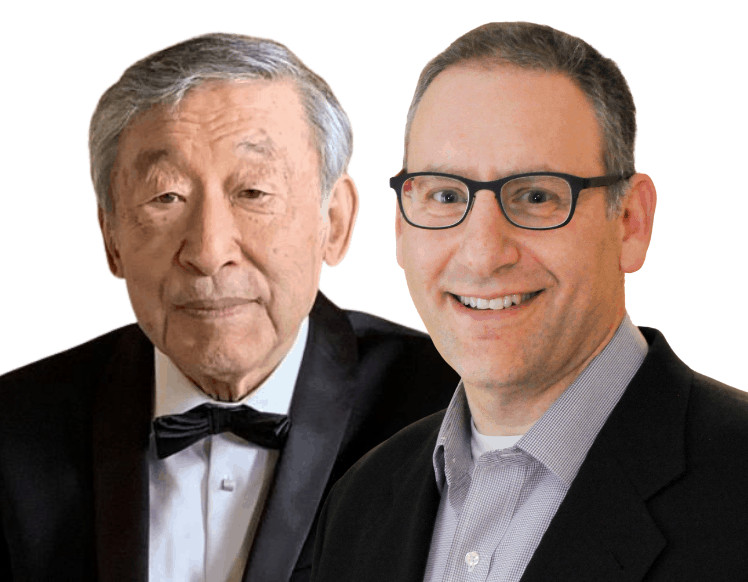
I never had the chance to learn directly from Mr. Oba, but he is legendary in Lean circles and I know many people who were deeply influenced by Mr. Oba. I hope to interview more of them in the near future. My deepest condolences go out to Mr. Oba's family, friends, and colleagues.
Here is a classic 2001 WSJ article that features him:
“How Does Toyota Maintain Quality? Mr. Oba's Hair Dryer Offers a Clue”
In today's episode, Steve talks about meeting Mr. Oba and how he learned from him as a doctoral student. One story that Steve shares was about sitting at his desk, thinking about a problem, and Mr. Oba told him:
“Don't think — do!”
Hajime Oba
You'll hear more from Steve talking about the need to learn by doing and to test changes in an experimental fashion. It's not just “do” — it's Plan Do Check Act (or Plan Do Study Adjust or even Plan Test Study Adjust).
I hope you enjoy the conversation like I did. You can listen to the audio or watch the video, below.

Video of the Episode:
For a link to this episode, refer people to www.leanblog.org/386.
Questions, Links, and More
- What are your recollections of meeting and working with Mr. Oba?
- How did Mr. Oba look at a process or a value stream?
- How did Mr. Oba look at learning?
- Spear's article “Decoding the DNA of the Toyota Production System“
- WSJ article about Mr. Oba “How Does Toyota Maintain Quality? Mr. Oba's Hair Dryer Offers a Clue“
- Why do rational and emotional justifications matter in the workplace?
- “Don't think, do.”
- TSSC.com — the group that Mr. Oba founded
Thanks for listening or watching!
Steve Spear on Lessons from Hajime Oba: How Toyota's Legendary Teacher Looked at Systems and Learning
Lean Blog Interviews: Episode 386 with Steve Spear
Mark Graban: Hi, this is Mark Graban. Welcome to episode 386 of the podcast. It is September 29th, 2020. Joining me today is Steve Spear. He had reached out and he wanted to share some recollections of one of his most influential teachers and mentors, Hajime Oba, often known as Mr. Oba in lean circles. He passed away earlier this month at age 75.
I never had the chance to learn directly from Mr. Oba. I wasn't able to meet him, unfortunately. But he is really legendary in lean circles, and I know many people who were deeply influenced very directly by Mr. Oba. I hope to interview more of them in the near future.
I want to express my deepest condolences to Mr. Oba's family, friends, and colleagues. If you go to the blog post for this episode at leanblog.org/386, I've linked to a classic Wall Street Journal article from 2004 that features Mr. Oba. It's called “How Does Toyota Maintain Quality? Mr. Oba's Hair Dryer Offers a Clue.”
In today's episode, Steve talks about meeting Mr. Oba and how he learned from him as a PhD student. There's one story that Steve shares about sitting at his desk, thinking about a problem, and Mr. Oba told him, “Don't think, do.” You'll hear about that and more from Steve talking about the need to learn by doing and to test changes in experimental fashion.
We're joined again by returning guest Steve Spear. Among other things, he's a principal at his company HVE LLC, the author of the outstanding book The High Velocity Edge, the founder and co-creator of software called See to Solve, and a senior lecturer at MIT. Steve, thanks for joining us.
Steve Spear: You're welcome. Thanks for having me back.
Mark Graban: As we've talked about before in various podcasts, you had the opportunity to learn very directly from Toyota through your studies and your PhD work. Which brings us to our topic today — reflections on the legendary Mr. Oba from Toyota. I'll really just give you the floor to share some memories and thoughts and recollections.
Mr. Oba and the Mission of TSSC
Steve Spear: Thank you. Just as background, for those who didn't know Mr. Oba, he was the first head of Toyota Supplier Support Center, or TSSC. That was created here in North America for the very simple reason that as Toyota tried to globally localize — make each of their markets more and more self-reliant — they became increasingly dependent on the North American auto supply network, which had very, very little familiarity with Toyota's approach around quality, just-in-time, pulse systems, employee engagement, and so on.
While Toyota was doing a ton of work on the really historic transformation at the NUMMI plant, which had been a General Motors facility, and the standup in Kentucky and then elsewhere, there was this need to help suppliers come to understand the basic thinking of Toyota. So Mr. Oba's organization, TSSC, became one of the sources for that much deeper understanding.
I think this reflects in part Toyota's values and in part Mr. Oba personally. Not only did Mr. Oba work with suppliers directly, he also took on unpaying clients — companies that did manufacturing outside the auto industry. In reflecting about Mr. Oba, his life was value-driven as much as it was manufacturing or business driven.
In part, I think he took on these other clients to expand the experience set for his colleagues — seeing products and processes and markets they hadn't seen before. You could say that's a little self-centered or selfish. But part of it is I think Mr. Oba felt that he had something really profound to share with North American manufacturers. And if he had bandwidth to engage with people who had nothing to do with the auto industry, it was a way to spread the effect of the Toyota Production System — which fundamentally is a way to tap deeply into the innate problem-solving potential of people so they can better meet society's needs. Mr. Oba saw this as an opportunity to expand the impact of that managerial mindset to have broader effect.
The reason I feel so convinced that a lot of what he did was for altruistic purposes is that TSSC over the years evolved from dealing with Toyota suppliers — because that was the pressing concern — to unaffiliated manufacturers, to organizations with purely social purpose: healthcare, feeding the hungry, putting up homes for the homeless, and so on.
One last thing I'll offer: when I was in contact with Mr. Oba's family, they said that he had had a very long and passionate concern about the quality of drinking water in Africa. They said if people really wanted to do something in honor of his memory, contributions in that direction would be very much appreciated.
There are a lot of dots we can connect that support the assertion that much of his life's work wasn't just about the business of cars and Toyota. It was really about taking this deep, profound thinking about how to make it far easier for people to collaborate towards common purpose and do that so much better. Tapping into human potential — that was really what was motivating him.
Mark Graban: Sure. He passed away on September 4th. I never had the good fortune to meet him. I've met and worked with a number of people who did work with him. You mentioned TSSC — they worked with Herman Miller, so I know some people from the Herman Miller lineage who had direct exposure to him. His passing has touched very directly a great number of people in the lean community. I'll link to his obituary and different articles in the show notes.
Bruce Hamilton and the Karate Kid Analogy
Steve Spear: Another guy who I've known since about '95 or '96 is Bruce Hamilton, now head of the Greater Boston Manufacturing Partnership, referred to affectionately within the lean community as the “Old Lean Dude.” He's done this really great video on toast kaizen.
Mark Graban: Right.
Steve Spear: To his credit, Bruce was way ahead of the wave. He was doing lean before it was even called that. When he was in his executive role at United Electric in Watertown, Massachusetts, he had created this library and training system, pulling in anything he could get from Norman Bodek and all the others who were doing that very early work to understand what was going on in Japan.
Bruce was another one of these — I would characterize it in terms of relationships. Not to diminish it, but in a Karate Kid analogy, maybe I was one of many Daniels to Mr. Oba's Mr. Miyagi.
Mark Graban: Yeah.
Steve Spear: And the reason I bring that up is because his way of teaching was very much a wax on, wax off, paint up, paint down — an inductive, immersive approach to learning what he was trying to teach. Certainly Bruce is another one of those Daniels, and there are many others who feel very appreciative of the opportunity to learn from Mr. Oba and quite in his debt because that experience was so mind-changing and so action-changing and life-changing as a consequence.
Mark Graban: Yeah. And about our friend Bruce, that's a name he's bestowed upon himself — “Old Lean Dude” — a self-deprecating…
Steve Spear: OLD becomes an acronym within Old.
Mark Graban: Right. I'm glad you called Bruce a Daniel. I didn't suspect he was the bully from Cobra Kai. I figured Bruce was another Daniel, not the bully figure.
Steve Spear: No, definitely not the bully.
Bruce's relation — so United Electric is one of those companies where Mr. Oba got interested because of Bruce and the people around Bruce who were really convinced that they needed a different way and committed to learning by doing to discover what that different way was. The work they were doing — it doesn't strike me as the byproduct or process or market being a real source of insight for Mr. Oba, but it was a chance to expand the population of his active, engaged, enthusiastic students. And Bruce certainly has been one for 30 years and counting.
Mark Graban: I'll reach out to Bruce. Maybe I can also do an interview with him with some of his reflections.
The Backwards Factory Tour: Starting at Shipping
Mark Graban: When you talk about that teaching style, did you have direct contact with Mr. Oba during your PhD studies?
Steve Spear: Yes. To this day, I've had some very important mentors in my life. Mr. Oba is one. Kent Bowen, who was my chief advisor when I was doing my dissertation. Clay Christensen, certainly. A lot of people were willing to make a huge investment in me, and the only way I could possibly reciprocate is to take what they taught me and try to reflect it forward, because I can never pay them back.
I still don't know if it was a deliberate setup. Kent and I had gone out west to visit a factory for a company, and ostensibly it was because it was an interesting company with a long history and an interesting product. It turned out also on that visit was Mr. Oba. In hindsight, Mr. Oba was far more interesting than the factory and the company. And I just don't know — and Kent won't tell me — whether the trip was really just to visit that factory or was a setup to see if I would grab the hook and be curious enough about Mr. Oba to do anything with it.
Anyway, I did grab the hook. Here's the first anecdote and sort of insight about Mr. Oba and the Toyota Production System management system when it's practiced at very, very high fidelity.
We're inside this factory and they're making a very sophisticated electronic product using very sophisticated industrial machinery. The normal way to take such a tour was to start in receiving and work your way step by step through shipping. You get to see nondescript raw materials take magnificent form through the interaction with these marvelous pieces of technology.
We started the tour and we saw this bell and that whistle and this chrome-plated gizmo. After about 15 or 20 minutes, Mr. Oba interrupted — in a polite way, but in a very certain way — that he was kind of tired of seeing things that way. He wanted to go to shipping.
We got to shipping, and of all the things in the factory, he started paying a tremendous amount of attention to the person who was actually loading boxes onto trucks. After he understood what they were shipping, where they were shipping, what the expectations were, how they were actually doing, and how they learned about what to ship, Mr. Oba's next question was, “And the stuff you ship, who gives it to you?”
The phrase — it didn't hit me at the time, it's only in hindsight — it wasn't “where did it come from?” It was “from whom did it come?”
“Oh, it came from Alice.” So we went back and met Alice. Then a similar thing: what work does Alice do? On behalf of whom does she do her work? From whom does she get the things she needs for her work, both material and information? We did this steady, progressive walk back through the factory.
A couple of things hit me. When we were done with this backwards tour, we went into a conference room and Mr. Oba did a schematic representation of the facility on a whiteboard — the flow of work, of material, of information, identifying where they would have problems of scrap, defects, delays, starving, blocking.
What was clearly impressive to his hosts was that even though he hadn't seen those problems occur, it had a huge amount of face validity. That's when they started taking out notepads and pens, trying to record and trying to guess how he could predict with such accuracy where they were having problems.
I saw Mr. Oba do sort of the same magic the following day and the day after. My first interpretation was: well, here's a guy with 20 or 30 years of experience at Toyota. He's probably seen best in class in so many different industries. He was comparing this in an analogy fashion to what he had seen as best practice and showing them how they were not best practice.
That thought balloon got popped soon thereafter when we started going to a place and Mr. Oba was clearly excited. I asked why. He said, because he'd never seen that type of product made with those types of processes. It would be a novel situation even for him. And yet using the same approach, it took him not more than 15 or 20 minutes to understand enough to generate the schematic and identify all the pain points.
It was out of that that I realized Mr. Oba really was the interesting thing on this trip, because he had a way of looking at systems — very complex ones — from a first-principles basis, rather than from an analogy, case-by-case basis. A lot of what I wrote in that first article, “Decoding the DNA of the Toyota Production System,” and then translated and updated in my book — I could have really called that “Decoding Mr. Oba's DNA,” not Toyota's.
“From Whom?” — Why Mr. Oba Always Wanted a Name
Steve Spear: But the thing that really grabbed me over the years is this: you start thinking about that act of going to shipping and finding the shipping clerk — who in most situations has probably the least glamorous job in any organization, putting brown boxes on brown trucks. Mr. Oba was really, genuinely interested in the experience of that person, because that person's ability to perform their job affected how the customer experienced the efforts of this collective called a factory.
From there, Mr. Oba's next concern was: if this person's ability to perform their work is representative of how the factory is behaving, then everything flowing into that person is the next most important thing in this entire system. That's why Mr. Oba said to the person in shipping, “From whom did you get the things you need?” Oh, Alice.
What became really evident is that the way he thought of systems, despite the sophistication of the product and the process, it was really about people doing things so that they could create value that someone else would appreciate.
That has really — once I got it, and I have to admit it didn't come immediately — been such a compelling message about how we think about organizations, how we think about systems: offices, factories, hospitals. If we're in a position to influence their design or their behavior or their dynamics, we always have to think in terms of — are we increasing or decreasing the ability of each individual to do something that will be valued by somebody else?
In that simple act of going to shipping and saying “who is dependent on you and on whom are you dependent,” he took all those KPIs and narrowed it down to a single focal point: what you're doing, does it count? And if we can change the system so what you're doing counts more, we're going in the right direction. If what we're doing takes what you're doing and makes it count less, we're going in the wrong direction. All those KPIs narrow down to: are we making your efforts more valued by somebody else? That was it.
Mark Graban: I'm curious — the way you were telling the story of looking back upstream and asking “who” — was he looking for a person's name like Alice, or would a lot of people say, “Well, final inspection sends that to me”? Was he really focusing on names and individuals?
Steve Spear: Mark, that is such a good question. Mr. Oba wanted a name, and I'll tell you why. Let me set up this contrast.
We often do this exercise when I teach — you have to build a little factory to make paper airplanes. One of the failure modes is that people don't ask the customer who's standing at the side of the simulation. And we all laugh about it.
Then you say, all right, let's think about this. The work you do — when you're done and you bundle it up and hand it off, who do you hand it off to? At best, they can name a department or a function. They can never name a person. And when you ask them on whom are they dependent, they can't come up with a name either. Have you ever had the conversation with that person about what you need from him or her to do your work effectively? More often than not, no.
Your listeners can do the test drive on this: on whom do you really depend? Who depends on you? And do you have a shared understanding?
Here's where that plays out. Think about why we work in organizations and not just as individual contractors. There's something about the collaboration that creates the magic of the finished product or service. We can't do it on our own. Collaboration implies dependencies, and dependencies mean there are relationships inside an organization with two-way expectations so that together we're more productive than we could possibly have imagined individually.
What Mr. Oba was doing by asking “from whom” was a quick pop quiz to see if people really understood the network of relationships in which they are embedded to more fully express their potential.
The Emotional Logic of Just-in-Time
Steve Spear: I'll give you one more observation that supports the assertion that Mr. Oba and his really thoughtful colleagues thought about relationships between people.
I remember asking the justification for pull systems versus push — for just-in-time versus scheduled. You get the very rational answer about how push is a very fragile system, because it's a schedule being confronted by reality, and reality always wins. And you get a very rational explanation that just-in-time creates a dynamically self-regulating system. All true.
But what I remember when I was talking to the Toyota people — there'd always be the rational explanation, but then there'd be the emotional one. When you asked about just-in-time and they talked about self-synchronization, they'd say, look — in order to build a car, someone at the start is physically removed in time and distance from the person who buys the car. But here's the thing: if we set up our system such that if someone wants a car, it triggers the generation of the car or the replacement of the thing that's been taken, someone could be working way upstream, generating spark plugs or some tiny component. Every time they're asked for another box of that little thing, they can say to themselves, “Isn't that great? I'm being asked for this box because the last box delighted someone enough that they bought it, and someone wants some more.”
Tying that back to Mr. Oba starting at shipping — it was very important to him and to the folks who really understand this management system that the work you do, you understand it's appreciated. It's not appreciated by a machine. It's not appreciated by a box. It's not appreciated by a building. It's appreciated by an individual. What he was demonstrating, even in that first interaction, was that you have to be really clear about the relationships, so you can see where the appreciation comes from and to whom appreciation is owed.
What This Means for Healthcare
Mark Graban: I can't help but think of flows through a hospital. You could do a similar exercise. You could ask the physician who's looking at a test result: from whom did that clinical lab result come? And the person in the lab could be asked: from whom did that specimen come? Do they have a name, or do they just say “phlebotomy”?
I've seen a lot of cases where people literally don't know the people in those functions. That's where the finger-pointing comes into play. It's easier to blame those anonymous jerks in some other department. When you know people and when you have an opportunity to do process walks with people in hospitals and they start to meet each other, learn their names, understand the process — it's not just understanding what happens, but the relationships amongst those people.
Steve Spear: And Mark, look, it is a beautiful thing. Once you start talking in terms of relationships, it changes the nature of how people view their work from being just a technical pursuit or a functional pursuit to something that someone else will appreciate.
You could have a technician working in a lab preparing a slide and putting stain on a sample, and they'll explain technically what they're doing. It's important they have pride in that work. But it's a little discouraging because they don't understand that work in terms of the value-creating experience.
We've been in some facilities — unfortunately too rare — where you ask that technician what he or she is doing, and she says, “I'm making the doctor smarter. That doctor has a patient, and I can actually see their name on the label. The reason that doctor ordered a test is because they don't know the condition of the patient. The work I'm doing now is to make the doctor smarter about the patient so the doctor can be better at making that patient well.”
This even occurred with Rick Shannon, who I first met in Pittsburgh and has since gone on to Philadelphia, Virginia, then to Duke. I remember when he was starting to really buy into this whole mindset — absorbed somewhat from Toyota, somewhat from Alcoa. He realized he had to start explaining infection prevention to everybody. They were worried about ventilator-associated pneumonia, surgical site infection, central line infections.
One day he walked into a room where they did various procedures and it looked way better organized. He asked around who had done the organization, and it turned out it was the housekeeping staff. For the first time someone had explained germ theory to them, and they saw all this stuff that was on the rack, fell on the floor, and got put back on the rack. This person — when you asked, “What does that person do?” — “Oh, they mop a floor, they empty waste baskets.” But now this person came out and said, “I didn't realize it till someone told me: my job is to keep the patient safe. That's why I do what I do. And I saw all these chains of transmission that I had the insight and the power and the creativity to break.”
That story from Rick is a really good reflection of Mr. Oba's idea that you're creating this network of relationships, and within each relationship and the network as a whole, the point is to do something that someone else will perceive as valuable.
Mark Graban: It's interesting to think through the different ways work could be described. “I slice this specimen that's encased in paraffin and I put it on a slide” versus “I'm helping a physician” or “I'm helping detect cancer” or “I'm helping rule out cancer.” I always appreciate organizations that have this mindset of everybody being a caregiver regardless of their role or function. Somebody would say, “Well, what do you do? Is your job to mop the floor?” Or: “Are you part of the infection control team? Are you part of the patient care team?”
One thing — sometimes hospitals want to replace lower-level jobs with robots, automated carts that drag materials throughout the hospital. But a robot can't stop and smile at a family member walking through the hospital. A robot isn't gonna stop and give directions if someone looks confused.
Steve Spear: Yeah. We saw something similar — I'm glad, it's a story I hadn't remembered in a long time. It was working with specialty nutrition and dietary functions, I think at Mass General. You can think about the people who prepare meals in a remote part of the hospital and deliver meals — they're just schlepping food, right?
But when the more senior leadership started explaining nutrition and diet and how it influenced patient wellbeing, the dietary aides — these young men and women who carry trays into rooms — all of a sudden they started recognizing foods that got eaten, foods that didn't, foods that got thrown away, foods that patient families were buying on the side to supplement or replace what had been ordered. And they became part of the treatment team.
Mark Graban: You use that word “appreciate” — it's one thing for a senior leader to say, “Oh, we're all caregivers.” It's one thing to say it, but you actually have to do the hard work to explain to everybody how their piece of work contributes to the care. It's more than just a phrase.
From a very personal perspective, my grandfather passed away a couple of years ago. He was 93. During some of his hospitalizations, the biggest risk to him came from errors in dietary services. He had trouble swallowing, and there are products called thickeners that are put into water to make it more viscous and easier to swallow. That would get forgotten. He had diabetes, and sometimes the food orders didn't properly reflect that. Family members were there playing defense — “No, that's wrong. No, that's inappropriate.” It's easy to think of it as just food, but there's real clinical purpose there, and risks.
Steve Spear: It's a funny story because it has no negative clinical consequence. But I do remember someone being hospitalized, and they had had an allergic reaction to eggs. It was the third day in a row that their breakfast included eggs. Like, what, are y'all trying to kill me here?
But anyway, back to Mr. Oba. A key theme of his work was that the work needs to be purposeful — creating perceived value — and that the person doing the work understands the appreciation that their effort warrants. You weren't just tightening a nut or a bolt. You were making a car safe for somebody, and you should understand that they knew that and they thanked you for it.
Akio Toyoda's Emphasis: Making Work Easier
Mark Graban: You talk about purpose. A couple weeks ago, Toyota put out an article through their own releases, from Japan in English, talking about Akio Toyoda as CEO — who no doubt was influenced by Mr. Oba and others in the lineage of thinkers there. One thing that was interesting is that Akio Toyoda is teaching classes internally to Toyota about the Toyota Production System to managers and people at different levels.
Part of my reaction is to look at it and say, well, why aren't they living that every day? Why does it have to be taught in a classroom? But the one thing Mr. Toyoda emphasized in terms of purpose for improvement work was this very, very strong prioritization on making work easier. Which is a different way of framing quality or efficiency or other things we might measure.
Steve Spear: Yeah, that's a great recollection. What Mr. Toyoda was doing was, not surprisingly, consistent with Mr. Oba's point of view: the reason you're coming to work is to do something valuable for somebody else. And if we want to measure our success in terms of kaizen, we can simply ask — was it easier for you to create value or not? If it was, fantastic. We moved in the right direction. If it wasn't easier for you to create value for somebody else, then we may not have moved in the right direction.
It makes far less complicated this whole idea of generating, recording, calculating, reporting KPIs. Just: “Hey, Mark, was that easier?” And to the person who depends on you: “Was that better?” Two questions. Yes and yes — good, today was a good day. No and no — today was a bad day. And knowing yes, then tomorrow we've gotta improve upon that.
Mark Graban: Sometimes it's a judgment call or a feeling. I know some people would cringe and say, “Well, what do you mean, it has to be measured?” Well, that's a measurement, right? You're sad — that's a measurement. Sometimes we can spend too much time trying to quantify something, and if we can't get to the quantification, we make the mistake of saying we can't measure it, and then we jump to “it's not worth measuring.”
Steve Spear: Good point. Yeah. There's a lot of important things we miss when we jump from “it's hard to measure” to “it's not worth measuring.”
Mark Graban: You talk about meaning and purpose. I've got a proof copy here, Steve — we're gonna send you a copy of this book that we put together of some of Mr. O'Neill's speeches. I'm just recalling his three questions. We've talked about this before. Everybody in the workplace should be able to say yes without reservation to: “Am I given the tools, training, resources, and encouragement needed to make a contribution to the organization” — that's not the end of the sentence — “that adds meaning to my life.” Those last words are really powerful. It's not just about making things more efficient for the organization.
Steve Spear: Yeah. Paul also was one of those rare, true believers about such principles.
“Don't Think, Do” — Mr. Oba on Learning by Doing
Mark Graban: One other thing, thinking back to Mr. Oba. You've talked about how he looked at processes. You also had some thoughts about how he looked at learning.
Steve Spear: Right. So again, back to the Mr. Miyagi, Daniel thing. Mr. Oba was very into the “learn by doing,” but also “learn while doing.”
I'll share a couple of stories. I interned inside his organization for an extended period — literally early Monday morning flying to Kentucky, where as part of a team we were trying to stand up a first-tier supplier. Then coming back Thursday evening after spending four days being really pulled through the keyhole of Mr. Oba's Karate Kid training method, only to then spend Friday getting a similar intellectual exertion with Kent Bowen, my advisor.
Mr. Oba, when he saw me sitting there thinking through a problem, admonished me not to think but to do. It didn't make sense, because here I was a graduate student — I thought my job was to think.
What I eventually appreciated is that what I was thinking about was a problem. And the reason we had a problem is because we had an understanding of a situation that was adequate only to have problems. If it was more adequate, we wouldn't have the problems to think about.
Mr. Oba's attitude was: you already had experiences, and those experiences have formed a mental model. Together, those experiences plus that mental model were good enough for a problem. If you sat there and thought, drawing upon those same experiences, employing those same mental models — guess what? You would keep getting a problem.
So why was Mr. Oba so much into “don't think, do”? In the act of doing, you have another experience and maybe it changes your mental model. And if you change the experiences you're drawing on and the mental models you're employing, you change the outcome. Maybe — if you do that well enough or often enough or are lucky enough — you change the outcome from problem to success.
Mr. Oba was advocating this “don't think, do” in 1995 or 1996. Now “don't think, do” — with different semantic labels — is all the rage in managerial literature. The lean startup stuff is also a “don't think, do” mindset: you've got an idea, you've got a potential market — well, go test your idea, because the more you think about it, the more you're stuck with it. It's just an idea. But if you test it and get feedback, eventually you can iterate and evolve towards something successful.
The folks in the agile community, in the IT world — it's a similar “don't think, do” mindset. You've got a program, you have to develop a product way downstream. You can think about it all you want, but you don't have the right answer. You're never gonna get the right answer because you don't have it now. Until you start generating more experience and more perspective, you can't get to the right answer. So a lot of their nomenclature — a minimally viable product, why? Because that's the smallest thing you can do. A sprint, why? Because you want to do as quickly as possible. A scrum, why? Because now that you've sprinted to the minimal thing, you want to reflect on what you've learned from the sprint and from the minimally viable product, so you can plan out the next minimal and the next sprint.
“Don't think, do” — with discipline, with thoughtfulness, with open-mindedness — is the way you discover.
Mark Graban: Right. And that's where the word “test” is really important. There's a difference between doing and testing. Testing implies some feedback loop and confirmation.
The final thing I'll share — I learned this from Pascal Dennis, who is a Toyota person in Ontario. Pascal really helped me understand the idea that we don't know the root cause because we talked about it in front of a whiteboard. We have a hypothesis. Go and test countermeasures, which may prove or disprove that you're somewhere near the root cause.
Steve Spear: Bingo.
Mark Graban: That's a totally different mindset.
Steve Spear: Yeah. If it's on a whiteboard, it's a guess. Until you go out and test the guess in practice and find out what's wrong with your guess, you don't get any smarter. You have a pretty whiteboard, but you don't have an answer.
Mark Graban: “Hypothesis” sounds so much smarter than “guess.”
Steve Spear: Yeah. I'm drawing on Richard Feynman, who said, “You know what scientists do? They guess, and then they go out and run experiments to find out what's wrong with the guess.”
Mark Graban: Well, Steve, thank you for sharing not only some personal reflections but some really important lessons that come from Mr. Oba. It's always a pleasure to hear from you and to talk with you.
Steve Spear: You're welcome. And Mark, thanks for the opportunity, because Mr. Oba was profoundly important in the trajectory that my life has taken since we met on the West Coast in 1996. I am completely and continuously grateful for that impact. To have this opportunity to reflect, personally, is a nice opportunity. And to share — maybe some pay it forward in a way — to share with your listeners some of the lessons I learned from him and how I learned them. That's certainly a nice tribute, so thanks for that opportunity.
Mark Graban: Thanks, Steve.