
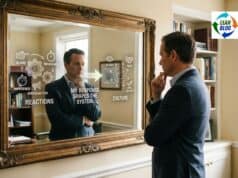
TL;DR: Toyota's real advantage isn't automation–it's how leaders design systems that support people, make problems visible, and create time for Kaizen. These same principles translate directly to healthcare and other complex organizations.
I had the chance to tour the San Antonio Toyota truck plant (otherwise known as TMMTX) back in 2010 (and I blogged about it here and here). I was able to go back yesterday, so I have some new tidbits to share.
Touring Toyota Through Healthcare Eyes
In 2010, I went with a group of software people from Austin. This time, I was there with a student and a professor from the Trinity University Masters of Healthcare Administration (MHA) program, doing some prep for a larger group tour.
I have been volunteering a bit with the Trinity program and the local IHI Open School chapter that they participate in (collaborating with local medical students, which I'm very glad to see). We have a group going in May and I am helping provide some pre-tour education and post-tour debriefing, since many (most?) of them have never been in a factory before – good, bad, or ugly. It's interesting to think about touring Toyota without a frame of reference. I have certainly seen what bad factories look like!
A Small Test Before a Bigger Learning Opportunity
The three of us visiting today was a bit of a pilot or dry run for the larger group tour… a small test of change incorporated into my volunteering. It was helpful to see what the MHA student found interesting and relevant from the tour… this will help in our prep for that next visit.
Lean Is Not About Robots — It's About the Management System
One key point will be helping the students understand that Lean is not about the robots or the technology — that Lean is about the management system, the culture, and the improvement process. The student was astute, as she was (like me) probably spending more time looking at the stuff posted on the walls as the tram drove by instead of looking at the actual assembly process and other work areas.
Respect for People Starts Before You Enter the Factory
The introductory video used an interesting phrase when she said, “400 robots work with our team members.” In describing the different painting processes (much of which is done by robots), the video said that some of the some of the work involved “detail only the human hand can apply.”
My previous understanding is that Toyota doesn't automate things for cost as a primary goal, but rather for safety or quality. If the work would be unsafe for a person or if the work can be done better by a robot, they will use a robot. They also have many many ergonomic assists for the line workers, where it's basically robots and humans working hand in hand.
“Respect for People” was discussed a lot (as we talked about the other day) by the guide and those words were literally the first words you saw in the visitor's center. Part of “Respect for humanity” is recognizing what types of work people are well suited for and what jobs are good for robots.
The video also talked about how workers weren't laid off in the slow times, as they worked on Kaizen, got training and new skills, or volunteered in the community. As the video said, “Now, that's respect for people!”
Visual Management as a Tool for Developing People
One thing I noticed about touring the plant… I often carry a notebook to scribble notes in (as I did when I toured the Toyota plant in Japan). Today, they encouraged people to not carry anything that might fall out of the tour tram. Of course, we had not bring phones or cameras, but I left my notepad behind. It means I am blogging from memory, but it was nice to just be able to watch and listen… I saw more than if I had been looking at my notepad half the time.
The plant has performance measures, safety crosses, Kaizen improvements, training schedules, team pictures, and all sorts of information posted everywhere. Our tour guide said, “We love visual management here” — and that includes information sharing. The boards were all labeled “FMDS” — or “Floor Management Development System” (see a quick description of it here from a book). That label seems to illustrate Toyota's focus on developing people… interesting thought that what some people might call “metrics boards” aren't just for managing and improving company performance, but they're also for improving people.
Frontline Team Members as Teachers and Leaders
Our tour guide was great, by the way. Until January, she was a production team member from the days the plant opened. She was very proud of her plant and co-workers and it showed. She said, “Who better to give tours than the team members who work the line?” I agree!
How Toyota Actually Creates Time for Kaizen
The introductory video showed a few examples of “team member kaizens” (or improvements). As the tram rolled through the plant, we could see boards with before-and-after Kaizen summaries, with pictures (basically like the formats we show in our book Healthcare Kaizen).
After the tour, I asked the guide about how they make time for Kaizen.
She said, for one, they use production downtime to work on a lot of improvements, such as the 2009 recession and other downtime (slow sales periods or supply disruptions) that might occur.
On an ongoing basis, they use (and pay for) overtime to work on Kaizen. Team members need to present their ideas and get approval from their managers, then the team leaders and group leaders work together with people in Kaizen, the guide said.
To those who would say, “We don't have time for Kaizen” — have you considered creating it? If people are working on helpful Kaizens, then there is bound to be a return on that overtime cost (especially if you include the people development that is taking place in the process).
What Healthcare Leaders Should Notice on a Toyota Tour
After the tour, we discussed what's relevant for healthcare people coming through on the tour:
- The work pace wasn't so frantic looking or stressful. Workers actually had the time in their cycle to smile and wave a bit at the tour tram, but people were clearly working hard… but not too hard.
- The plant does a great job of supporting the front-line workers — making sure parts are available at the point of use and tools and equipment are properly maintained. Toyota seems to have far more support staff (including a department that helps build things for Kaizen improvements, etc.)
- The andon cord — when a worker needs help, they have a way to ask for it and get it (a team leader immediately comes over). They aren't left on an island to fend for themselves. There's no shame in reporting a problem or asking for help.
- The transparency and information sharing about department and plant performance.
It will be interesting to see what the larger healthcare group sees next month… trying to see Toyota through their fresh eyes.
What Healthcare Leaders Still Miss When They Visit Toyota
Even in 2026, many visitors walk through a Toyota plant and come away focused on the visible artifacts–robots, automation, and tidy workstations–while missing the deeper lesson. What truly sets Toyota apart isn't the technology; it's the management system that creates stability, learning, and respect for people every day.
The most transferable insights for healthcare aren't about copying tools or layouts. They're about how Toyota designs work so people aren't rushed, how problems are surfaced without fear, how leaders show up to support front-line staff, and how time is intentionally created for improvement. These are leadership choices, not technical tricks.
For hospitals facing burnout, staffing shortages, and relentless pressure, the lesson is even more relevant now: performance improves when leaders invest in people, make problems visible, and treat improvement as part of daily work–not as an extra task or a side project. Toyota's example remains powerful because it shows what's possible when respect, learning, and improvement are built into the system itself.
Want to See This Firsthand? Join Me in Japan This October
If this Toyota tour resonates with you, there's no substitute for seeing these ideas in action at their source. This October, I'll be leading a Lean Healthcare Accelerator experience in Japan, designed specifically for healthcare leaders who want to deepen their understanding of Lean as a management system–not just a set of tools.
We'll visit organizations where continuous improvement, visual management, leader standard work, and respect for people aren't concepts on slides–they're practiced every day. Just as important, we'll spend time reflecting together on what does and does not translate to healthcare, and how leaders can apply these lessons thoughtfully rather than mechanically.
These trips are intentionally small, highly interactive, and focused on learning–not tourism. If you've ever thought, “I get the theory, but I want to really understand how this works in practice,” this is an opportunity to do exactly that, alongside peers who are facing similar challenges in healthcare today.
I'll share more details soon, but if Japan has been on your Lean learning list, this is a great next step.






Great blog Mark! Valuable points regarding respect, the tour guide, the work pace, creating time for kaizen and how TPS can help in healthcare.
Thanks for sharing this.
Dwight
Overtime for kaizen…there’s a paradigm shift!
The term “investment” (instead of “spending”) gets abused by politicians, but this is a case where that OT time, properly managed, truly is an investment in your people and your organization.
[…] See on http://www.leanblog.org […]
Hi Mark
You made several good points we should all keep in mind:
1. We need to focus on people first, because in reality everything we do in business is ultimately beening done to meet the needs of someone. When we show respect toward the workforce an organization will find it easier to show it to the customers.
2. Floor Management Development System changes dramatically the implied focus and use of the production data we display in our plants. It helps to keep people focused on getting better as opposed to being able to justify the numbers.
3. Kaizen efforts are an investment in getting better, thus it is worth while to invest some resources into those efforts.
4. Problems need to be dealt with quickly so a good system that brings them to attention immediately solves them much faster as well.
5. Work needs to be fairly designed so that people can do their best not just at the start of a shift but throughout the whole shift.
6. If people are going to help fix problems they need the information and support to actually do it. It surprises me how many companies demand employees contribute ideas yet supply them no information with which to work, these same emploers always then complain that their staff are lazy and do not care, and make nothing but lame suggestions. The ammount of information people have directly determines how good their ideas and suggestions will be.
Great summary! It’s good to see that overtime is paid for Kaizen. It’s difficult to balance time between sharpening your axe and cutting wood. Calculating available hours is difficult enough this will at least offer some stability.
[…] up on my recent post on the tour of the Toyota Motor Manufacturing Texas (TMMTX) plant in San Antonio, here are some pictures from the visitor […]
[…] what? You WANT employees using work time to come up with ideas that save your organization money. Toyota even pays OVERTIME for team members to do this. That’s why Toyota is successful with “Kaizen” and Louisiana will probably […]
Mark – I recently posted a new digital product for sale that describes in detail the Floor Management Development System. You can find it here:
http://www.shmula.com/manage-for-daily-improvement-lean-manufacturing-system/
Pete
[…] visit with healthcare professionals. I’ve done this a number of times here in San Antonio (as I wrote about here). Often, this is the first factory visit a healthcare person has ever made. It’s great to see […]