Starbucks Mobile Ordering Chaos: A System Problem, Not a Barista Problem
TL;DR: Starbucks mobile ordering fails when store processes don't match customer expectations. Inconsistent standards–especially for Nitro Cold Brew–create confusion, delays, and frustration. Lean thinking shows the real fix isn't harder work, but clearer standards, customer-defined quality, and better system design.
Why Starbucks Mobile Ordering Feels So Inconsistent
Starbucks has a new CEO who is talking about how the coffee shop experience is broken. Many aspects of the Starbucks mobile ordering process are broken. Well, the ordering process is fine… it's the fulfillment process that needs improving.
Most of the time, after I order from a location that's a few minutes away, Starbucks stores often make my Nitro Cold Brew before I arrive. It's based on the queue of other drinks, but if I'm a five minute walk or drive away, that usually works out.
Hear Mark read this post — subscribe to Lean Blog Audio
The Nitro Cold Brew Problem
Some stores claim they don't like to make the Nitro until they know the customer is there, so it “doesn't go flat” (which honestly isn't a concern, but they think it is).
I first noticed this variation across stores earlier in 2024, but the pattern kept repeating.
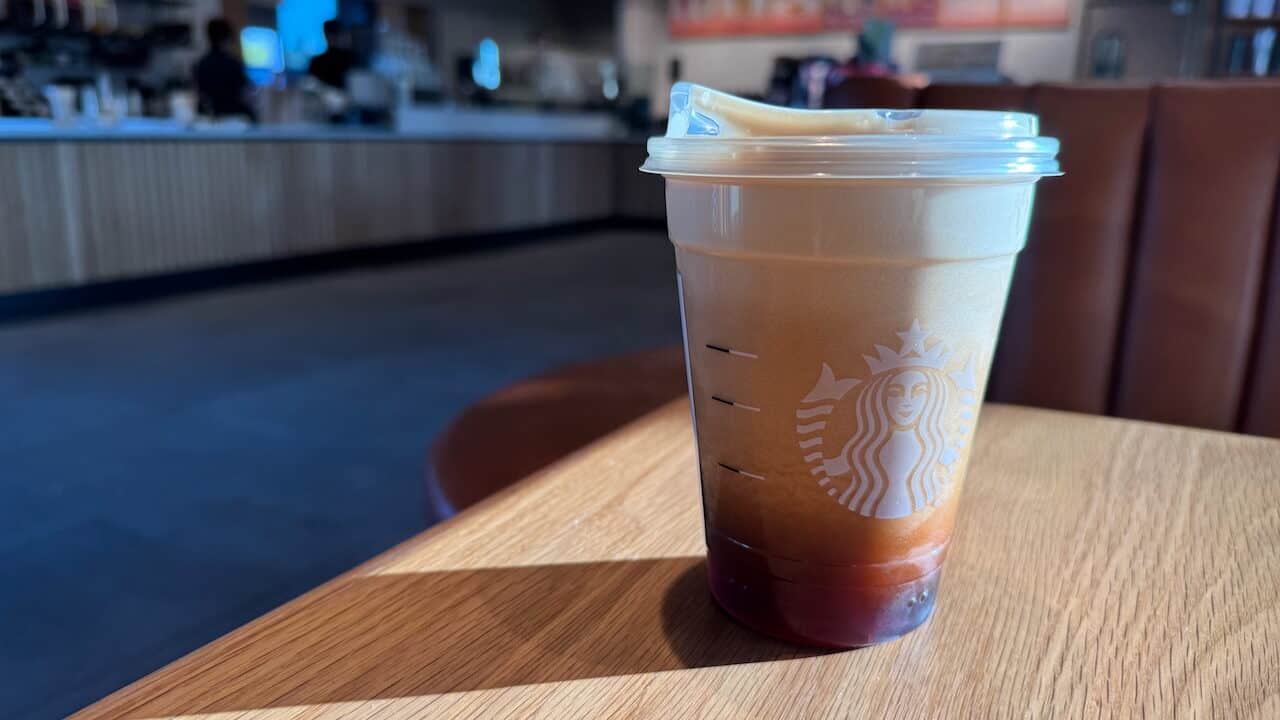
They think they're showing concern for quality, but they're talking about the initial Guinness-like cascading of the nitrogenation. That's cool to look at (as seen below), but the beverage is hardly flat when that's done. I sometimes nurse one of these beverages for an hour, and that foamy creaminess is still there. The drink gets warmer, but it doesn't go flat.
The other day, I went to my local store with a neighbor for a coffee chat. I was going to order in person, but the store was overwhelmed. Nobody behind the counter would make eye contact or greet us, let alone come take an order. I'd call that a staffing policy problem, not a barista problem.
So, I stood there and ordered through the mobile app — right there in the store. They were busy, so it took them about 10 minutes to make my neighbor's plain black coffee.
I was still waiting for my Nitro. A few minutes later, the app notified me that my drink was ready. But it wasn't on the counter.
So I asked about it. “We don't make that until you're here.”
I was there the whole time!
They have no way of knowing if or when I am there. That process decision makes no sense and it can't be executed. The Starbucks app and GPS don't ping them that I've arrived.
I asked the barista, only half-jokingly, “Am I supposed to come in and wave my arms and announce that I'm here for a Nitro??”
The answer was, “You could do that.”
The process doesn't make sense. The inconsistency at this store (and others) doesn't make sense.
Please don't criticize me for ordering a $6 coffee.
A Process That Can't Be Executed
I visited a few more Starbucks stores. Again, it's so inconsistent from store to store. At one, they made the Nitro for me without me having to ask or announce myself. At another, I saw them put the empty cup out on the counter. I guess that was my prompt to ask about it.
The store manager told me that it's supposed to be the standard process for stores to wait to make the Nitro “until we know you are here.” It's because “we care about quality.”
Again, they don't have a process for knowing that you're there.
And I don't think they are defining quality the way this customer (me, anyway) defines quality.
I still don't understand why they're willing to let a Frappuccino start to melt… or let a hot drink start to get cold… they'll make those drinks in advance, but not the Nitro?
I might have to stop drinking Nitros… it's not worth the hassle when I think about the overall experience.
I tried again with mobile ordering at a store in another city. This location put an empty Nitro cup out on the counter with my name on it.
That at least provided a visual signal that they were ready to make the beverage. I was there and happened to notice. So, I said something about being there, which led to the drink being made right away.
The manager was sitting nearby, and I asked him about this process and the inconsistency from store to store. He told me that the standard is supposed to be “wait until the customer arrives to make it… because of quality.”
They really seem hell bent on the customer seeing the cascading nitrogen effect. I still think they don't understand quality.
Why Drive-Thru Works Better
In another visit, I ordered using the mobile app, but specified that I would be coming through the drive-thru lane to get it.
When I pulled up to the order-taking box, I said, “Mark with a mobile order.” It makes sense to announce yourself there, but not when you enter the store. They probably used my prompt to pour the Nitro, and they had it ready for me when I got to the pickup window.
Or, who knows, maybe they had made it in advanc,e and it was just sitting there already!
What the App Could Do Better
My final thought on this is that the mobile app should give proper instructions about how to pick up a Nitro cold brew. After the order checkout has been confirmed, it should say something like “We prefer to not make the Nitro until you arrive, so please let a barista know when you are there.”
That would work better, but I still think the app should allow you to customize your preference to:
- Wait until I arrive to pour it
- Go ahead and pour it ASAP
Different customers define value and quality differently…
For more on what Starbucks customers actually value — and whether scripted greetings and Sharpie messages are the right priority — see Smiles, Sharpies, and Systems
What This Tells Us About Process Design
Starbucks doesn't have a barista problem. They have a system problem. The baristas are doing what they've been told — or what they think they've been told — and different stores have been told different things.
Quality should be defined by the customer, not by the company's internal assumptions. If I don't care about the nitrogen cascade effect and just want a cold, creamy drink ready when I walk in, then “waiting to pour” isn't a quality measure. It's a delay.
And a process that relies on information the system can't detect is a process that will fail. “Wait until the customer is here” requires knowing the customer is there. Without a check-in button, GPS integration, or some other signal, that standard is unexecutable. It shifts the burden to the customer instead of designing the problem out.
The fix isn't complicated — and it isn't hypothetical. Chick-fil-A and McDonald's already use geofencing to start making orders when the customer is approaching, not when the order is placed. I wrote about how that would work for Starbucks and why they haven't done it yet.
I see the same pattern in hospitals. A policy says “verify with the patient before administering medication,” but the system doesn't surface the right information at the right time, so nurses develop workarounds that vary by unit. The intent is good. The design doesn't support the intent. And the people closest to the work get blamed for inconsistency that's really a system design failure.
Baristas may recognize that some of these policies don't make practical sense. But when employees aren't sure which version of the “right way” applies — or when they've been corrected for using their own judgment — the system becomes harder to improve. That's a psychological safety issue dressed up as a process compliance issue.
For more on what Starbucks customers actually value — and whether scripted greetings and Sharpie messages are the right priority — see Smiles, Sharpies, and Systems.
What's your experience with Starbucks mobile ordering? Is it consistent where you live, or do you run into the same kind of variation?
Frequently Asked Questions
Does Starbucks mobile ordering work better through drive-thru?
In my experience, yes. The drive-thru process naturally solves the arrival detection problem — you announce yourself at the speaker, which signals the barista to pour the Nitro. In-store pickup has no equivalent signal, which is why drinks either get made too early or not at all until you track someone down.
Why does Starbucks mobile ordering vary from store to store?
Even corporate-owned Starbucks locations follow different local practices for drink timing, pickup organization, and how they handle items like Nitro Cold Brew. This suggests either the corporate standard is ambiguous, inconsistently communicated, or not being audited. For customers, the result is unpredictable service that changes depending on which store you visit.
How could Starbucks fix its mobile ordering process?
Three changes would help. First, define quality from the customer's perspective — if most customers want their drink ready when they arrive, don't hold it for an effect they didn't ask for. Second, give the app a way to detect or signal customer arrival, so stores that want to pour drinks fresh have the information they need. Third, standardize the pickup process across stores so customers don't have to relearn the system at every location.
More on Starbucks mobile ordering:
- Starbucks Mobile Ordering Chaos: Why Inconsistent Processes Frustrate Customers— what the new CEO is acknowledging
- Why Starbucks Mobile Orders Are So Inconsistent — the store-to-store variation problem
- The Starbucks Mobile Order Timing Problem That Chick-fil-A Already Solved— what geofencing fixes





See Mark, if you got a $2 black drip coffee from Dunkin, you wouldn’t have these process problems!
It’s just Design for Manufacturing—eliminate all of those “non-value added” steps in making your cuppa and those baristas could turn out way more product!
Or I have learned that the canned Starbucks nitro coffee is about the same price, it takes just a few seconds to pour, and I can do it at home.
Join the LinkedIn Discussion:
The previous CEO made a big deal about getting trained and certified as a barista, with the plan to work in the stores.
Maybe the new CEO should go on a tour of 100 stores to see how good, bad, or inconsistent the experience is.
Another location today… they made the Nitro in advance of my arrival (just as I would want it… but against Starbucks policy?).