Speaking at the Lean Institute Brazil Health Summit — How AI Translation Expanded Access
I had a great experience last week at the Lean Institute Brasil's annual Lean Healthcare Summit, where AI translation tools and live interpreters helped bridge language barriers and improve accessibility.
I had a great experience last week at the Lean Institute Brasil‘s annual Lean Healthcare Summit.
They had a live human interpreter translate my talk into Portuguese. Somebody estimated that about 70% of the audience would be listening in English.
One new experience for me was their use of AI to create a real-time Portuguese transcription that was projected as I spoke. This also improves accessibility for those who are hearing impaired.
Curious about the accuracy of the translation, I ran the photo through ChatGPT. It was smart enough to not only translate it back to English, but to also fill in gaps where my head blocked some words.

What I was saying (and this translation was pretty accurate — even after translating it from English to Portuguese and back to English):
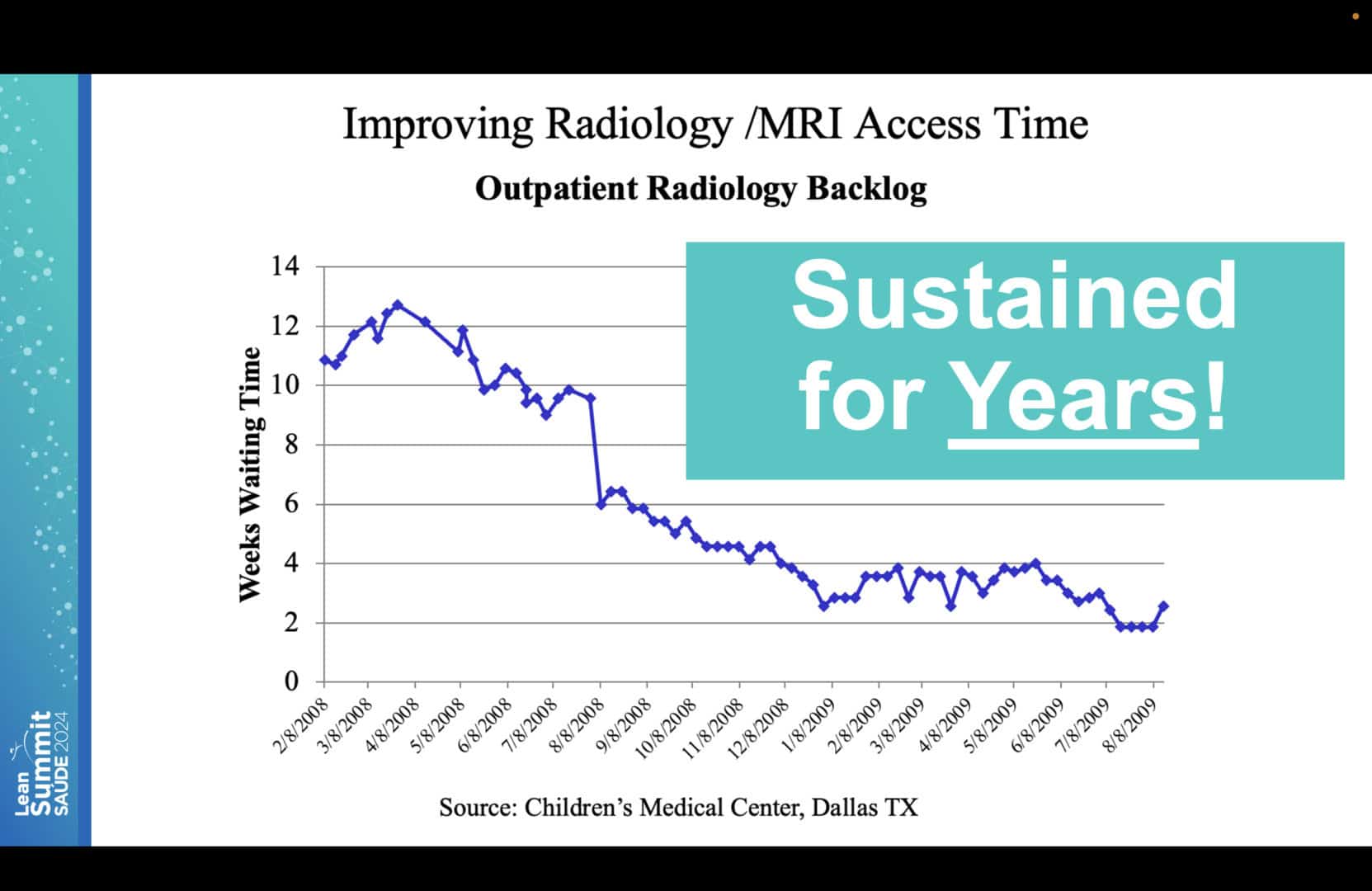
“I had the opportunity to work with hospitals where we were trying to drive sustainable changes. In this case, it was a children's hospital in Texas, where the challenge was long waiting times for children to get in for MRI scans. The waiting time went from 12 to 14 weeks. We had a united team working on some improvements.
Our first data point showed some Kaikaku (radical improvement), and then the question was: how do we sustain that? Over the years, there was continuous refinement, Kaizen continued, and sustainability was achieved. I had the opportunity, seven or eight years later, to return to the hospital, talk to people, and the chart showed…”
Here is the chart I was referring to, with a dramatic reduction in MRI waiting times for a children's hospital — a case where the change was sustainable because we focused on safety, quality, and patient flow throughput all together.
There were also times in my workshop day when individuals used a Microsoft translation app to read my English words translated into Portuguese on their phones.
It's amazing how these technologies can improve the way we communicate across languages and across borders, don't you think?
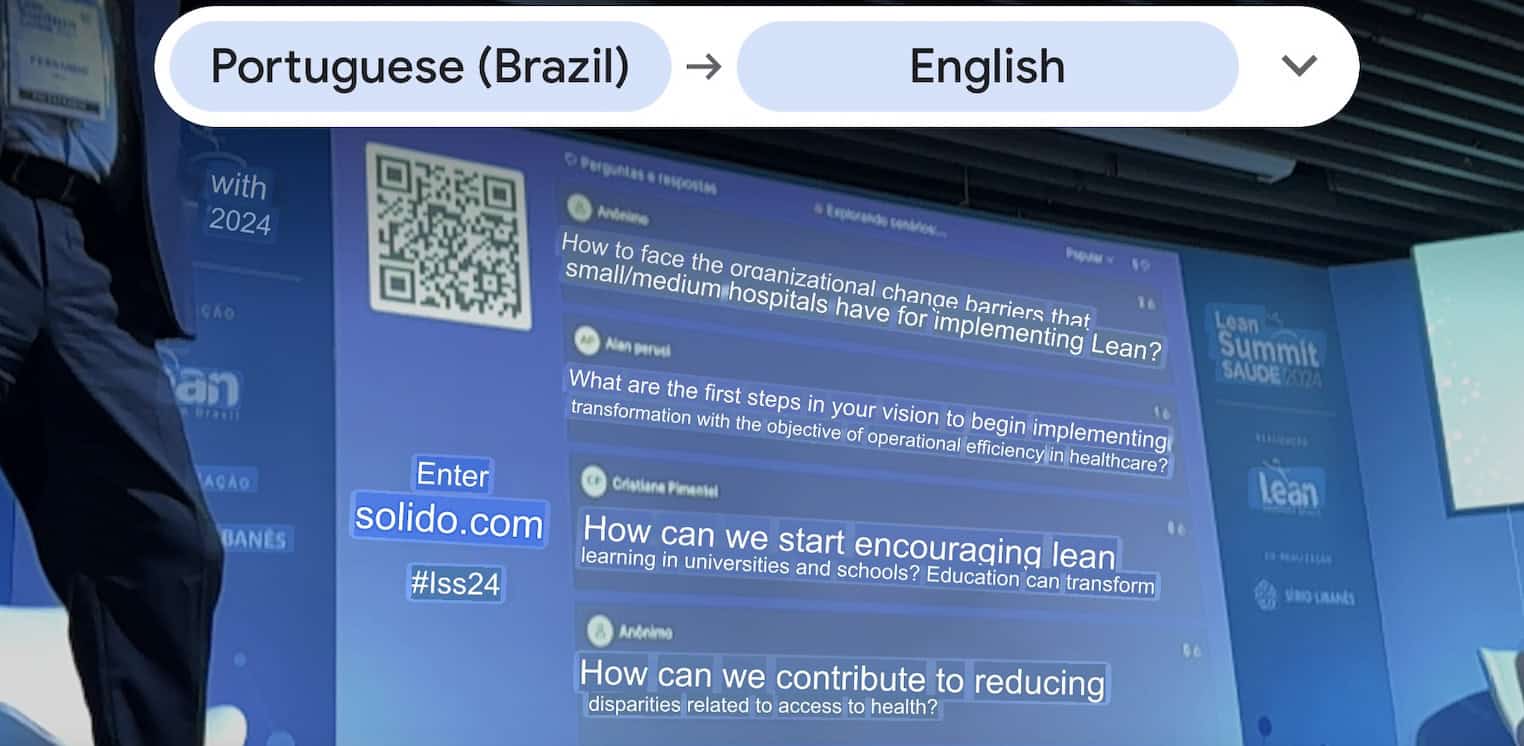
I also used the Google Translate app to read posters that were done in Portuguese. I also used it to translate and read questions that had been submitted to other speakers:
I'd love to hear your thoughts–how are you using technology, AI, or even simple tools like translation apps in your Lean work? Let's share ideas on how we can continue to innovate and improve together.