Toward a Lean Hospital: Culture, Engagement, and Continuous Improvement
This video explores what it really means to build a Lean hospital culture, drawing on lessons from Toyota, healthcare leaders, and real-world improvement examples.
Earlier this year, I was invited to give a recorded virtual presentation for a conference in Malaysia on the subject of Lean in healthcare. More specifically, they asked me to present on the theme of “Spearheading change toward a lean healthcare organization.”
I used this as an opportunity to experiment with a relatively new PowerPoint feature called “Cameo,” which allows you to insert your talking head video into the slides. I ended up recording this in a hotel room, as you can tell by the wallpaper, perhaps. That wasn't ideal, but it worked.
I'm sharing the recording here, broken up into shorter videos, but grouped together into this playlist. You can click the upper right icon with “1/8” below it if you want to see the eight component videos to select one. Or you can just press the Play icon below and the videos should run together seamlessly like it's a single video.
Below, you can find an AI-generated summary by Toasty.ai (and then edited by me). And a full transcript follows that.
Spearheading Change Toward a Lean Healthcare Organization
The increasing complexity and diverse needs of healthcare systems demand transformative methodologies to improve service efficiency, patient satisfaction, and positive health outcomes. One such methodology that has had profound effects since its integration in healthcare during the 1990s is Lean. Emerging from traditional manufacturing companies like Toyota, Lean has now transcended industries and continents to become an indispensable part of healthcare systems worldwide, especially with the recent support from automotive giants like General Motors and Ford.
The True Essence of Lean in Healthcare
Contrary to the conventional notion of Lean being a dispatch of tools or methods, it is, at its core, an adolescence of multifaceted systems and a cultural orientation. Lean within an organization signifies a cultural revolution that enables an environment for its employees to be innovatively involved in problem-solving, ultimately enhancing performance.
One significant contribution in elucidating the true concept of Lean comes from Jamie Bonini, an American senior leader at Toyota North America. His definition of Lean as an organizational culture of highly engaged individuals striving to problem-solve and drive performance could be applied to envision the idea of a Lean hospital.
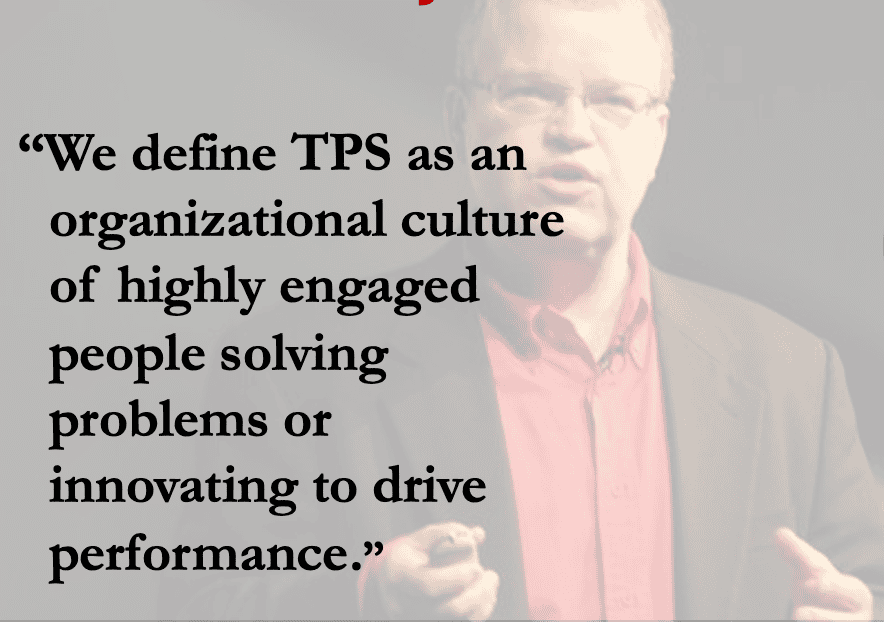
Thus, a Lean hospital can be seen as an institution that harnesses an organizational culture that thrives on engaging people in constant innovation and problem-solving.
Why Lean in Healthcare?
In addition to posing the question about ‘what' and ‘how', it's equally pivotal to address the ‘why'; why should healthcare transition towards Lean? This is where the acronym “SQDCM” comes in. In the Lean context, its common framework revolves around Safety, Quality, Delivery, Cost, and Morale; five key pillars that significantly influence the goals and performance of a healthcare organization. The prime emphasis within this framework is on ‘Safety,' placing patients and healthcare workers as the top priority, followed by Quality, Delivery, and Cost. These outcomes, combined with improved Employee Morale, cultivate a virtuous cycle of increased engagement and performance.
Engagement and Psychological Safety
While understanding the core principles and philosophy of Lean is integral for implementing it in healthcare, active engagement of the frontline staff in the Lean process is paramount for yielding significant improvements. This necessarily involves creating a psychologically safe environment where employees, including nurses, physicians, and administrative staff, can feel safe to challenge the status quo, ask questions, make suggestions, and openly express their concerns or mistakes without fear of retribution. Such an environment promotes innovation and continuous learning, leading to improved systems and processes.
Leadership's Role in Fostering Lean Culture
A successful transformation toward Lean healthcare lies in the hands of an organization's leadership. As per the views of respected leaders from Toyota, managers, and leaders should develop their teams to identify and solve problems within a supportive environment. Fostering this kind of culture and environment isn't about forcing change but engaging each individual in the process of continuous improvement, or Kaizen.
The leaders need to model and reward the vulnerable acts, align with organization values, and demonstrate the value of psychological safety. This will inspire the staff to learn from mistakes, improve, and ultimately contribute to the organization's success.
Examples of Lean Transformations in Healthcare
Organizations like UMass Memorial Health and those led by Dr. Rick Shannon have shown how embracing Lean can bring about dramatic improvements in health outcomes, patient experience, and financial performance. They demonstrate that Lean is not primarily a cost-cutting strategy, but a holistic approach to process improvement and organizational development that can lead to better results in all areas, including safety, quality, delivery, cost, and morale.
These practical examples reaffirm Lean's importance in healthcare and bust the myth surrounding Lean as a cost-cutting methodology. Instead, Lean is a comprehensive ideology focused on continuous improvement, collaboration, and high-performance culture that contributes significantly to the betterment of healthcare systems, positively impacting patient care and safety.
Embracing Lean Culture: Learning from Mistakes
Learning from mistakes forms an integral part of the Lean culture, a philosophy embedded in the Toyota models of operation.
In Lean healthcare, the focus is on constructive action towards the prevention of future mistakes. Transformational stories related to mistake learning experiences in organizations like Toyota introduce crucial insights on mistake handling practices. Whether the mistake occurred in Japan in the 1960s or in Kentucky in the 1980s, Toyota cultivates a culture that doesn't punish error makers, but rather empathizes and works collectively to foresee repeated errors.
The Mistakes That Make Us – A Guide to Learning from Mistakes
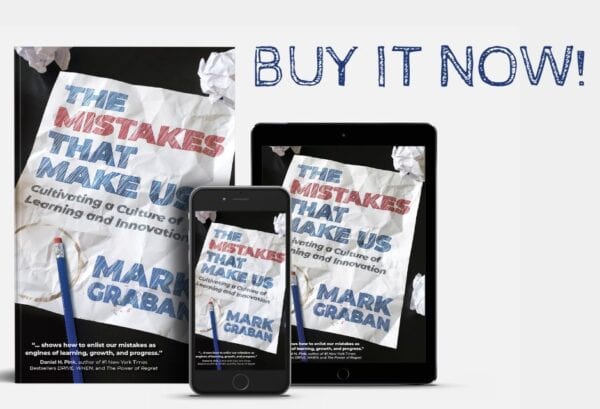
In his most recent book The Mistakes That Make Us, Mark Graban presents practical guidance on handling mistakes, leveraging them as learning opportunities. The book transitions through eight prescriptive chapter titles aimed at encouraging a positive mindset towards mistakes, admitting mistakes while ensuring safety, practicing constructive kindness in the face of mistakes, and suggesting systemic ways to prevent future ones. Additionally, it highlights the significance of giving everyone a voice and a choice in improving situations rather than facing punishment.
In the book, nurturing a supportive culture is compared to farming a garden. It's not an overnight process but requires constant upkeep and nurturing, much like plants or crops.
Learning from a Wrong Decision: A Key to Lean Transformation
We all make mistakes — even when we try to prevent them — so learning from them is key, and Lean culture speaks volumes about this transformative philosophy. Insights from “The Toyota Way 2001,” an internal document from Toyota, underscore errors as learning avenues, whether individually or as a team.
The practical scenario of a ‘wrong side surgery' provides concrete evidence of this learning approach. The admission of a mistake serves as the platform to various questions, the answers to which could reform operative processes, procedures, and methodologies, thus ensuring such errors don't recur.
The two broad categories of mistakes as decoded by Toyota include recurring errors – surgical and medication errors, for instance, that can effectively be prevented by strict adherence to procedures. The other category comprises failed attempts to enhance the patient experience–a room for innovative ideas that might not turn out as expected.
The book further emphasizes the importance of thoughtful analysis of mistakes, especially near misses, for a proactive approach to improving processes that could potentially give rise to grave errors in the future.
A Dynamic Shift in Perspective: Lean Culture in Healthcare
In his concluding reflections, Mark Graban invites readers to appreciate the growth potential provided by mistakes and urges individuals to ensure a safe environment for mistake admissions. This nurtures an organizational culture of continuous improvement coursing into Lean transformation.
Infusing kindness and constructive action in response to errors substantiates progress toward better operational systems. And the culture, much like a gardened plant, continues to be nurtured and cultivated for dynamic shift in healthcare systems propelling them towards the Lean model.
Mark Graban's multiple books, including Lean Hospitals and Healthcare Kaizen serve as a comprehensive trail to continuous improvement, providing monumental guidance to the enhancement of performance measures across various healthcare domains such as safety, quality, delivery, cost, and morale.
Introduction: Spearheading Change in Healthcare
Mark Graban: Hi, I'm Mark Graban. Thank you for the invitation to share some thoughts with you today about Lean in healthcare. My talk is titled “Spearheading Change toward a Lean Healthcare Organization.”
It's not just about using Lean methods–and Lean is certainly not an approach where we try to force change on people–but it's really more a matter of how we engage them and why they would choose to participate in Lean. People might ask, “What is Lean?” if they're not familiar with this methodology and its origins. It has been used in healthcare since the late 1990s in the United States.
Healthcare organizations in Michigan, in particular, received a lot of help and assistance from automakers, including companies like General Motors and Ford. Toyota has provided assistance to healthcare organizations in the United States, Japan, Brazil, and other countries. But one thing I want to emphasize–and I think this is an important point–is that Lean is not just a collection of tools. Sometimes people refer to Lean as a toolbox; I don't think that's a complete definition. Using Lean tools without the context of the broader system is unlikely to have the same benefits as those same tools would bring to an organization that's embracing more than just the tools.
Defining Lean: Culture Over Tools
It's really about culture. Not just the “right tools,” but what is the “right culture” that brings the results we are looking for and need in healthcare?
Pictured here is Jamie Benini. He's an American who is a senior leader in Toyota North America and the head of a group called TSSC, or the Toyota Production System Support Center. They work with not only Toyota suppliers but also do a lot of work for free for healthcare organizations and nonprofits in the United States. Lean has its origins in what Toyota calls the Toyota Production System (TPS). Jamie Benini defines TPS–and I would propose, therefore, we define Lean–as follows: It's an organizational culture of highly engaged people solving problems or innovating to drive performance.
If we want people to be highly engaged as leaders, change agents, Lean teachers, and facilitators, we need to actively engage them in the improvement process. That's a big part of Lean and the Toyota Production System. Jamie and Toyota further describe the Toyota Production System using this diagram. You see at the base of the diagram that Lean is first and foremost an integrated system. It is an organizational culture. When organizations try to copy one piece of an integrated system, we wouldn't expect to get the same benefits and results as we would by trying to embrace and adopt the full integrated system.
At Toyota, it took many decades for this integrated system to be initiated, evolve, and for the different pieces to fall into place. We can't install an integrated system with this level of complexity like a piece of equipment. It takes time. However, we cannot have this take decades in a healthcare organization. We can learn from the example of Toyota and other healthcare organizations that have used this methodology in their own context.
The Components of a Lean Hospital
This integrated system is built around three key interconnected concepts:
- People Development (The Core): Improving the way we do our work in a way that engages and develops people's problem-solving skills and improvement capabilities. This develops people for the benefit of their own job progression and career, not just for the benefit of the health system.
- Philosophy: Includes the idea of what Toyota described as “Customer First”–in healthcare, we say “Patient First.” This includes engaging everyone in improvement, being systems thinkers, and putting quality first.
- Managerial System & Technical Methods: These support the philosophy and people development.
So, if we were to talk about what a “Lean hospital” is, I would fall back on the same definitions from Toyota. It's not a binary case of Lean or not Lean; there are degrees of Leanness and degrees of results. A Lean hospital has an organizational culture of highly engaged people solving problems or innovating to drive performance.
The “Why” of Lean: SQDCM
If we want to engage people in healthcare, we need to shift quickly from the what to the why. Why is this important? How does this support the goals that the organization and healthcare professionals already have?
In Lean, there is a common framework used in various industries. I was exposed to it in the automotive industry more than 25 years ago. The goals that matter, including in healthcare, start with:
- Safety: First and foremost, priority number one. Some might call it a precondition rather than a priority, as a precondition must exist for anything else to happen. This includes safety for patients and the people working in the organization.
- Quality: The quality of care, outcomes, and the patient experience.
- Delivery: We can think of this as access–the timely delivery of needed care without delay.
- Cost: This is listed fourth very intentionally. Lean is not a “cost-cutting methodology” where cost is the primary objective. In Lean, cost is seen as the end result of doing everything else well. When we improve safety, quality, and delivery, lower costs follow.
- Morale: When we do all these things and emphasize all these goals, we find improvements in employee morale.
This creates a virtuous cycle: people participate in improvement, see positive results, feel good about their involvement, and want to do more.
Case Studies in Lean Success
We can see examples of dramatic improvements in solving problems people might otherwise say are sad but unsolvable.
Dr. Rick Shannon and Infection Reduction
Dr. Rick Shannon, currently the Chief Quality Officer at Duke Health, learned these methodologies from Toyota and applied them in hospitals in Pittsburgh and later repeated the results at the University of Virginia.
This chart shows the reduction of Central Line-Associated Bloodstream Infections (CLABSI). Dr. Shannon stated the number of infections, not a rate, which is easier for people to understand. Through the Lean methodology of studying how the work is done and making sure everyone has the right supplies to do central line insertion, maintenance, and removal correctly every time–an improvement to standardized work–they saw almost immediately a 90% reduction in these infections.
This led to a 17-day shorter length of stay per case and a $1.7 million reduction in cost. Better quality does not cost more when we improve the way the work is done.
UMass Memorial Health
At UMass Memorial Health, driven by CEO Dr. Eric Dickson, their goal is to have “Everybody, Everywhere, Every Day” involved in improvement. As their data shows, they achieved increases in patient experience scores while simultaneously seeing reductions in inpatient mortality.
Door-to-Balloon Time
Another organization in Wisconsin focused on “door-to-balloon time”–the time from a patient arriving at the ED with a suspected heart attack to having the blockage cleared in the cath lab.
Steadily, over four years of process improvements, they reduced the average time from 91 minutes to 37 minutes and sustained that for a five-year period. Engaging people in improvement leads to better sustainment because they are involved in the change rather than having it forced upon them.
Improving Workflow and Reducing Waste
I've been happy to see Lean applied in health systems worldwide, from Malaysia to Brazil. We are not trying to turn the hospital into a factory; we want to learn lessons we can apply to improve our work.
Henry Ford, who founded a hospital in 1922 (now Henry Ford Health System), observed: “In an ordinary hospital, the nurses must make useless steps. More of their time is spent in walking than in caring for the patient.”
Recent studies show nurses often only get about 30% of their time at the bedside. We don't blame the nurses; we ask why. Why do they not have the supplies, equipment, and medications they need readily available? Why are they spending time searching? Lean is not about telling nurses to work harder; it's about making work easier for them.
Dr. Don Berwick, founder of the Institute for Healthcare Improvement, has taught for decades that instead of blaming and punishing “bad apples,” we need to improve processes, communication, and silos. As my friend Daryl Wilburn, a former Toyota leader, says: “It's the responsibility of leaders to provide a system in which people can be successful.”
Kaizen: Continuous Improvement
How do we engage people in change? We use Kaizen. The word translates roughly to “good change” (Kai = Change, Zen = Good). Toyota describes Kaizen as the relentless pursuit of perfection through innovation that drives continuous improvement.
We can use methods like an Improvement Board.
The board progresses from left to right: New Ideas, To Do, Doing, and Completed. When I've worked with nursing units, some of the first things they write down are simple, and that's great.
- Example 1: A nurse wrote that patients asked for ginger ale when nauseous, but it wasn't available on the unit, requiring a walk to another floor. This was easily solved by stocking ginger ale on the unit.
- Example 2: “Two hand sanitizer dispensers are empty.” The idea was to “improve the process for quickly replacing an empty canister.” This required deeper problem solving, perhaps a root cause analysis.
The Three Levels of Kaizen:
- Large Projects: Strategic initiatives like new construction or Electronic Medical Records (EMR).
- Medium Kaizen: Projects involving teams, perhaps using Six Sigma or A3 problem solving.
- Small Kaizen: Daily improvements (like the ginger ale). Research shows 80% of improvement potential is found here.
All three levels share a common model: PDSA (Plan, Do, Study, Adjust). It is an iterative model. We might not solve a problem completely with one small improvement, but we make iterative changes.
Psychological Safety: The Foundation of Engagement
I believe people want to participate in improvement. The foundation for this is Psychological Safety.
Toyota's culture emphasizes the physical and psychological safety of each team member. Tim Clark, author of The Four Stages of Psychological Safety, defines it as “a culture of rewarded vulnerability.” Vulnerability means exposure to the risk of harm or loss, including punishment. A culture of improvement reduces the fear factor so people feel safe to participate.
When you feel psychological safety, you feel included, safe to learn, safe to contribute, and safe to challenge the status quo without fear of being embarrassed, marginalized, or punished. Without this, an improvement board will sit empty. The two main reasons people don't speak up are fear or futility (believing speaking up won't lead to action).
Leadership's Role:
Leaders must:
- Model vulnerable acts: Admit mistakes (“I could be wrong, let's test my idea”).
- Reward vulnerable acts: When people follow their lead, reward them.
This builds a cycle: Leaders model $\rightarrow$ People follow $\rightarrow$ Leaders reward $\rightarrow$ Higher safety $\rightarrow$ More speaking up $\rightarrow$ More improvement $\rightarrow$ Success.
Learning from Mistakes
Finally, I want to discuss learning from mistakes, the topic of my book The Mistakes That Make Us.
We must view errors as opportunities for learning. When a mistake occurs–a wrong decision or action–we can think through a set of questions:
- What decision did I make?
- What did I expect to happen?
- What actually happened?
- What do I learn from the gap?
- What would I do differently in the future?
Example: Wrong-Side Surgery
Dr. Rick Shannon shared a story of a wrong-side surgery early in his career. The decision was to make an incision; he expected to find a hernia; what actually happened was they realized it was the wrong side. The learning from this gap leads to practices like surgical timeouts and marking surgical sites.
Near Misses
We must also learn from “good catches.” If a nurse almost gives 800mg of Ibuprofen instead of 600mg but catches it at the last minute, many organizations consider that the end of the story. That is a lost opportunity. We need to ask why the near-miss occurred to prevent future errors that could be harmful.
Conclusion
Punitive reactions are counterproductive. “Nice” reactions (saying “it's okay”) are unhelpful. We need to be kind–which means being constructive and action-oriented toward preventing future mistakes.
Culture is like a garden; you don't install it, you cultivate it. Cultivating a culture of learning from mistakes is a key piece of continuous improvement.
If you have questions, please email me at mark@markgraban.com. You can also check out my podcast, “My Favorite Mistake,” and my book, The Mistakes That Make Us, at mistakesbook.com.
Thank you for the invitation. I hope this has been interesting and helpful to your future improvement work.