

A Bartending Mistake That Stuck: The Story of the Negroni Sbagliato
TL;DR: The Negroni shows how clear standards make variation visible–and how unnamed variation shuts down learning. The Negroni Sbagliato proves that when mistakes aren't blamed or hidden, they can become sources of insight, improvement, and even new standards.
The Negroni is a classic cocktail made with equal parts gin, sweet vermouth, and Campari.
What makes the Negroni interesting isn't just the flavor. It's how clearly defined the drink is. The proportions matter. The method matters. Change those too much, and you no longer have a Negroni — you have something else.
The Negroni Sbagliato is a cocktail that exists because of a mistake — one that wasn't corrected, wasn't blamed on anyone, and turned out to be surprisingly good. That makes it a perfect metaphor for learning, variation, and improvement.
It's a great aperitif cocktail, and I enjoy one occasionally. One is enough, and then it's time to move on to dinner (which might be accompanied by wine).
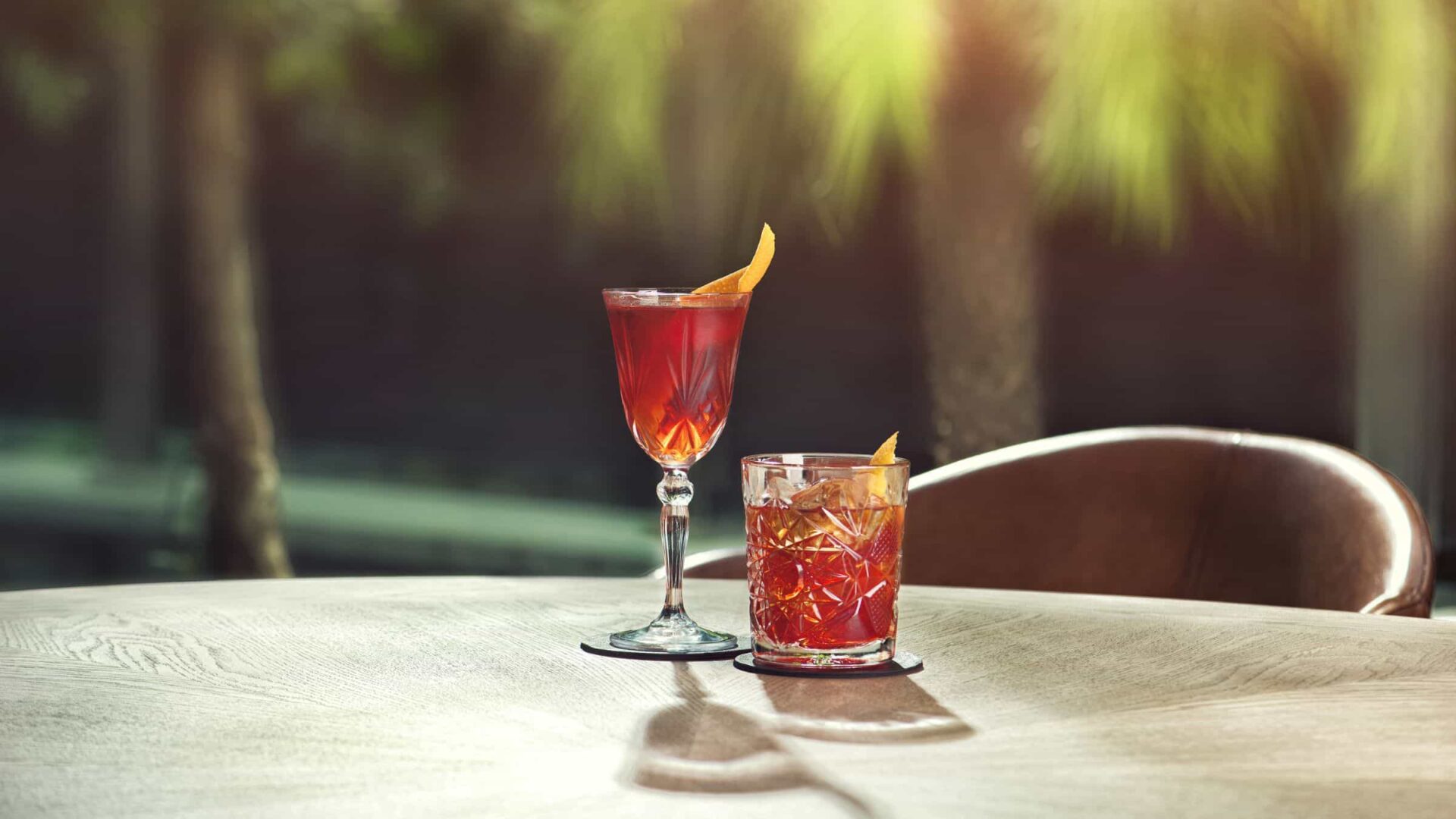
You can see a Negroni pictured on the right below. It's typically served in a rocks glass over ice or a large ice ball/cube.
Why the Negroni Is a Lesson in Standardized Work
The classic Negroni is a model of simplicity and standardization: equal parts gin, sweet vermouth, and Campari.
That ratio matters. It's what makes a Negroni a Negroni, just as standardized work defines what a process is supposed to produce — not to limit creativity, but to make meaningful variation visible.
As far as standardized work goes, the Negroni should be stirred with a bar spoon in a mixing glass partially filled with ice, then strained into the glass.
The Negroni shouldn't be shaken! Best practices say that you're only supposed to shake cocktails that have citrus, cream, or simple syrup (or a few other exceptions) — to make sure those ingredients are incorporated properly.
You should definitely shake a margarita (since it has lime and simple syrup or agave).
When Variation Isn't Named, Learning Breaks Down
In a pandemic-era video, Stanley Tucci demonstrated a drink he called a “perfect Negroni.” What he made might be enjoyable–but it isn't a Negroni in the technical sense.
- He said to use “a double shot” of gin — what's the measure exactly??
- His ratio turns out to be 2:1:1 (2 parts gin), which is surprising because every Negroni recipe is 1:1:1
- He said you could substitute vodka (you could but that's no longer a Negroni even if you add a splash of gin “for flavor”
- He shakes it (which will unnecessarily water it down compared to stirring)
- He adds a little “juice” from an orange (instead of garnishing with an orange peel)
None of this makes the drink bad. It just makes it different. When variation isn't named clearly, learning breaks down–whether in cocktails or in organizational processes.
He should call that libation a “Tucci” because it's a very wide variation, a new or different cocktail based on a Negroni. That's not “perfect,” that's different.
Not All Variation Is Bad–But It Must Be Named
Because I'm more of a whiskey drinker, I do enjoy the variation of the Negroni that's called a “Boulevardier.”
This cocktail replaces gin with whiskey — bourbon or rye (I prefer the latter).
Through my own PDSA cycles, I figured out that the ratio is better (to me) for the Boulevardier when it's 2 oz whiskey and 0.75 oz each of Campari and sweet vermouth (instead of 1:1:1:). Many bartenders agree, so I appreciate that validation and if I ever order one in a bar, I have to ask “what's your recipe?” because that drink is very non-standard in practice.
You can also use dry vermouth instead of sweet vermouth, but it's then called an “Old Pal.” It's again a different drink. Clear naming is what allows comparison, learning, and improvement–rather than arguments about what something “really” is.
OK, so after ripping Tucci for his deviations (as others did) from the accepted best practices, I'll settle on “you do you” and “drink what you like, how you like it.” But if you change a cocktail too much, it deserves a different name.
“Stanley Tucci's Negroni recipe is fatally flawed and riddled with abominations.”
The Negroni Sbagliato: A Mistake That Stuck

So what's that on the left in the photo?
It's hard to tell exactly. It could be a Negroni served “up” (no ice) in a stemmed glass (as Tucci demonstrated).
Or it could be the Negroni Sbagliato–which I half-jokingly call the official cocktail of the My Favorite Mistake podcast.
Unlike most variations, this one was born from a mistake.
Some variations of the Negroni were created intentionally, such as the Boulevardier, or the “White Negroni” (or “Negroni Bianco” might be more correct in Italian). This variation swaps out red sweet vermouth for white dry vermouth and it replaces the bright red Campari with a clear bitter liqueur (or one that's more yellow). The proportions of the drink might also be changed from the 1:1:1 ratio, depending on whose recipe you follow. Some people use mezcal instead of gin.
It's probably a mistake to call the drink a “White Negroni” since it's more yellow, but that's also true of “white” wine, so we'll let that slide.
How a Bartending Mistake Became a New Standard
So how did the Negroni Sbagliato come to be?
For one, the Italian word sbagliato is often translated to mean “bungled” or “mistaken.”
According to the most widely cited version of the story:
“The story goes that in 1972, bartender Mirko Stocchetto mistakenly mixed up a bottle of gin with a bottle of prosecco while making a Negroni at the historic Bar Basso in Milan. The resulting “mistake,” or “sbagliato” in Italian, became that bar's signature drink.”
Instead of discarding the drink or blaming the bartender, the customer tried it–and a new cocktail was born.
Allegedly, the customer liked the “wrong” cocktail and drank it instead of sending it back. As a customer, you'd definitely notice the lack of gin (a very distinctive spirit) and you'd notice the bubbles of the prosecco.
The Negroni Sbagliato is also a nice aperitif. It's a lighter drink than a Negroni, and it also has a lower ABV (alcohol by volume) since prosecco is about 12% ABV compared to gin at 40% ABV.
Human Error, System Conditions, and Small Slips
My wife and I made two Negroni Sbagliatos the other day (using some leftover California sparkling wine). In doing so, we wondered how a professional bartender could possibly mistakenly grab a prosecco bottle instead of a gin bottle.
They are VERY different in shape (a typical gin bottle on the left, with prosecco next to it in the photo below, followed by Campari and a half-bottle of a good sweet vermouth).
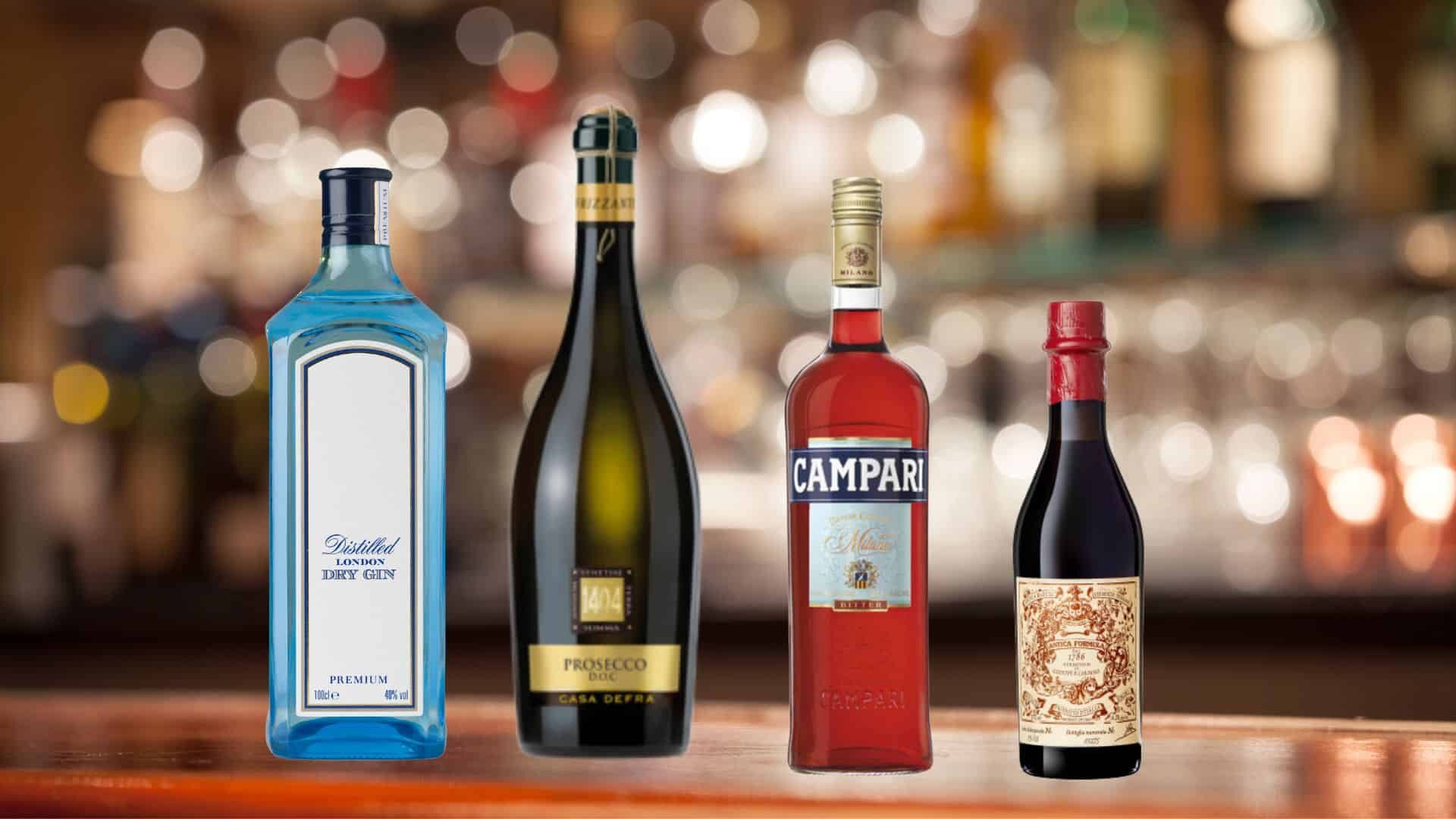
How would you grab the wrong bottle? The prosecco probably isn't stored anywhere near the gin since the former is refrigerated or iced down — stored with wines, not spirits.
That said, I'd guess the most likely mistake is intentionally grabbing the prosecco and then pouring it into the wrong mixing vessel.
This is a systems issue, not a personal failing. Time pressure, multitasking, and similar motions make small slips possible–even for skilled professionals.
Bartenders are often making multiple drinks at the same time, so I could see where that slip-up could occur. It's human error. It's bound to happen. Thankfully, this isn't a fatal mistake, unlike so many in healthcare.
Grabbing the prosecco is a mistake that's probably not likely to happen often, but I disagree with the article that says it would “never” happen.
There's another wrinkle worth noting in the history of these drinks:
- The “Americano” is Campari, sweet vermouth, and soda water – that existed first
- The Negroni is a variation where a customer asked for gin in place of soda water
- The Negroni Sbagliato is more of a variation on the Americano (replace soda water with prosecco) than it is a variation of the Negroni
It's a fun story, though, when a “mistake” leads to a good outcome.
Update: Ironically, the cocktail that was maybe born of a mistake is one of the most mispronounced words (on live TV) of 2022!
I Finally Had One! And Again…
Update: In December, I was at a restaurant with the cocktail on their menu, so I tried it (and it's pictured here).
It was a refreshing aperitif. It's probably more of a summer / warm-weather drink, but I enjoyed it.
Update: I also got to enjoy one in Naples in 2025:

Other Things We Enjoy Because Someone Didn't Hide a Mistake
Many foods we enjoy today began as mistakes–mistakes that weren't punished or hidden, but explored. See more in this video that I created last year.
Foods featured in this video include cheese, chocolate chip cookies, fudge, popsicles, potato chips, tea, tea bags — the source being the book Mistakes That Worked.
We could add the Negroni Sbagliato to that list.
What This Has to Do with Leadership and Learning
Most of the stories told by guests on the “My Favorite Mistake” podcast are about bad decisions that provided valuable learning opportunities. Sometimes, the success that comes from a mistake is that we learn from it in a way that allows us not to repeat it.
Zoologist Ron Magill told such a story — where being “careless” or “cocky” with a crocodile led to his hand being badly mangled. He learned to be more careful… and he also met his wife as a result of the physical therapy:
Cheers to Ron and his wife — toasting with a Negroni Sbagliato or otherwise!
Not every mistake turns into a happy accident. Most don't.
But every mistake contains information–if people feel safe enough to notice it, talk about it, and learn from it.






I had one of these in Italy today. The bartender says a regular Negroni is better to him. He told me how to say sbagliato and added, “It means wrong!” :-)