
Verschlimmbesserung: When an “Improvement” Makes Things Worse (Lean Lessons)
Verschlimmbesserung (noun)
A German term meaning an attempted improvement that makes a situation worse.
Pronounced: fer-shlim-bes-ser-oong
Ever rolled out a “fix” that backfired? That's verschlimmbesserung.
In Lean and continuous improvement, it's a powerful reminder that even well-intended changes can backfire if we don't test and study them first.
TL;DR: In Lean, even well-intended changes can backfire — what Germans call verschlimmbesserung. Avoid it by testing ideas through PDSA, using data, and adjusting before making changes permanent.
The Lean methodology uses many Japanese terms — such as kaizen — to describe its approach to continuous improvement.
When we learn words like this, they can draw us in to learn and understand more. Or, words like this can be off-putting to some, creating unnecessary barriers to engagement and agreement.
When we talk about takt time as a way of expressing the rate of customer demand, we're using a German word that we might remember from music studies. Sheet music that says tt=120 means the tempo, or takt time is 120 beats per minute.
Or, the music might simply say “tempo = 120” or show that a quarter note = 120.
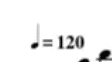
Using a phrase like “tempo” might be clearer to people over “takt time,” whether that's in music or in Lean.
Using the phrase “continuous improvement” instead of “kaizen” might provide clarity, or we might lose some nuance or detail by using a more generic term that might mean almost anything.
We might intend to use a clearer word or phrase, only to find we have made things worse.
What Is Verschlimmbesserung?
That brings me to the German word I recently learned (thanks to an “And finally…” segment in the ESPN Radio SportsCenter update on the Dan Le Batard Show).
That word is “verschlimmbesserung.”
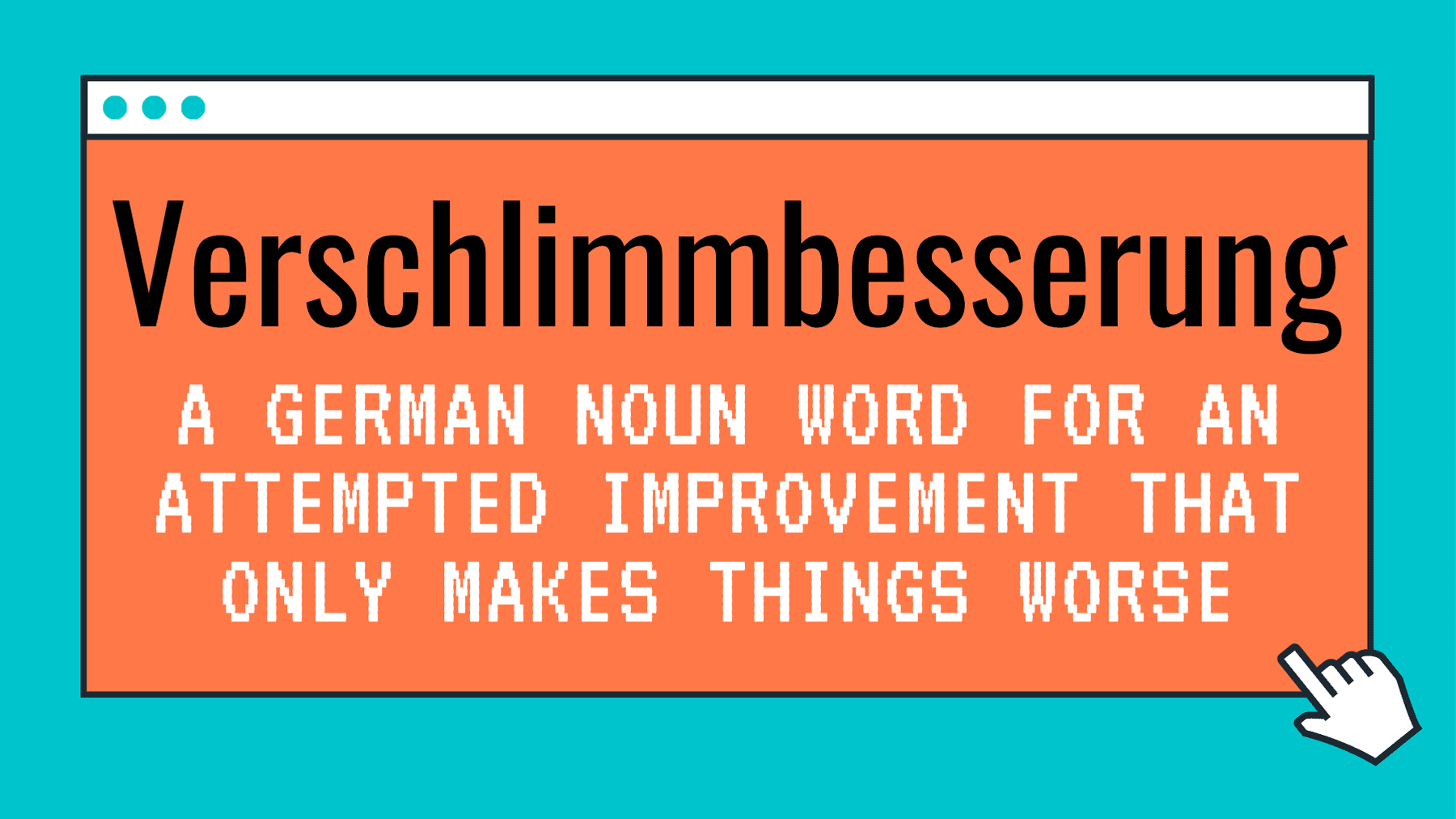
Wow.
Trying to use that word during a Rapid Improvement Event might only make things worse.
But, seriously, when we are practicing kaizen, we have to be open to the idea that we might try something that's thought out and well intended… but it only makes things worse.
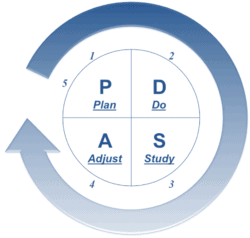
That's why Lean doesn't assume our ideas are correct. Instead, we test them through the Plan-Do-Study-Adjust (PDSA) cycle.
In the course of A3 problem-solving, we might think that a certain “countermeasure” (a change in how our work is done) will reduce patient waiting time. So, we go test that change.
A Process Behavior Chart might reveal that performance has actually worsened — even though the change was intended to help.
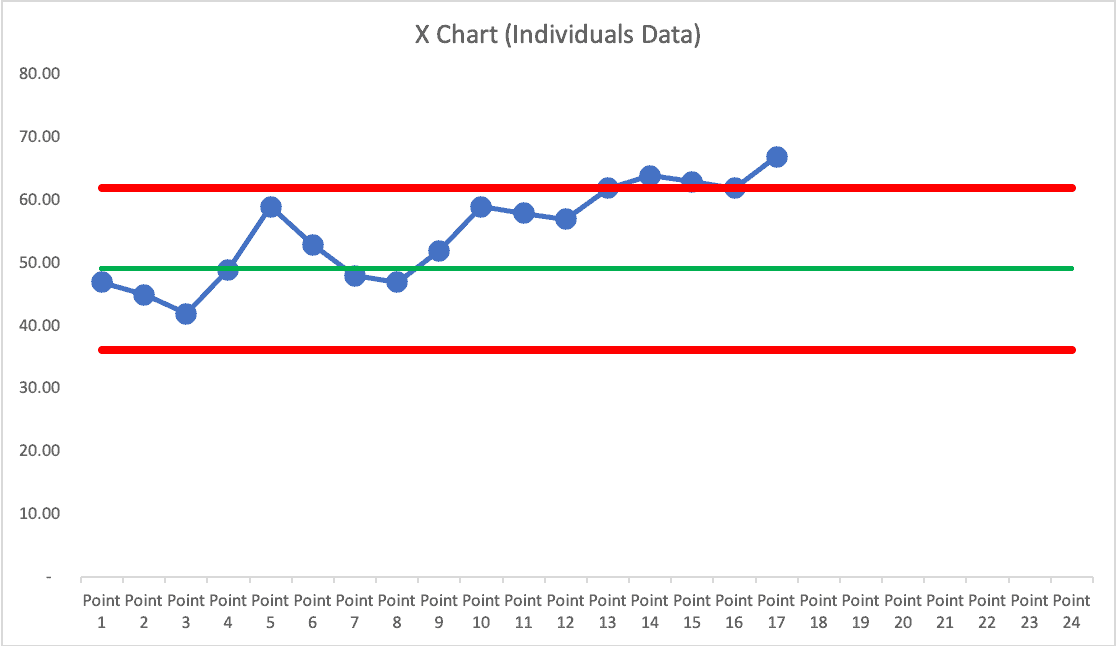
Oops. It's better to recognize that we made things worse, and then adjust accordingly. Why did our attempted improvement make things worse? What do you learn from that? What would we try next?
We have to be on guard for…. wait, what's that super long German word again?
Let's just say we should be careful with attempted improvements that just make things worse.
Trying to use the word “verschlimmbesserung” or forcing it into our “Lean lexicon” might actually make things worse.
In Lean and continuous improvement, good intentions aren't enough. Even thoughtful changes can backfire — and that's why we test, study, and adjust before locking in a new way of working.
The goal isn't to avoid mistakes entirely, but to catch and learn from them quickly.
Just as we might choose “tempo” over “takt time” to make an idea clearer, we can adjust our approach to make our improvements truly better. By staying curious, gathering evidence, and engaging the people closest to the work, we can keep moving toward meaningful progress — and steer clear of our own verschlimmbesserung moments.
Learning Faster to Avoid Making Things Worse
Verschlimmbesserung reminds us that not every change is an improvement–even in organizations committed to Lean and continuous improvement. Well-intended ideas can still make performance worse when they're implemented too quickly, without testing, data, or feedback from the people doing the work.
The antidote isn't avoiding change; it's learning faster. By using PDSA cycles, process behavior charts, and open dialogue, teams can spot when an improvement is backfiring and adjust before damage becomes permanent. Continuous improvement works best when curiosity beats certainty, evidence beats opinion, and leaders create space for people to say, “This didn't help–let's try something else.” That mindset helps organizations avoid verschlimmbesserung and turn mistakes into meaningful learning.
The Executive Lesson: Improvement Demands Discipline
Verschlimmbesserung isn't just a quirky German word.
It's a reminder that good intentions don't equal good results.
In Lean, the risk isn't change — it's unchecked change. The difference between improvement and damage is discipline: test before scaling, measure before declaring success, adjust before locking it in.
The goal isn't perfection. It's fast learning.
If teams can quickly say, “That didn't work,” and adjust without blame, setbacks stay small and learning stays fast.
Improvement isn't about moving quickly.
It's about learning quickly.
The Hard Truth: Good Intentions Can Still Make Things Worse
Most failed improvements don't fail because people didn't care.
They fail because leaders moved too fast, assumed too much, or skipped the learning step.
Verschlimmbesserung happens when confidence replaces curiosity.
Real Lean leadership requires restraint. Test first. Study the data. Listen to the people doing the work. Adjust before expanding.
If your culture punishes “this didn't work,” people will hide problems. And hidden problems only get larger.
The question isn't whether changes will backfire.
The question is whether your system catches them early — or amplifies them.
That's the difference between disciplined improvement and expensive regret.
Frequently Asked Questions
What is verschlimmbesserung?
Verschlimmbesserung is a German word meaning an attempted improvement that unintentionally makes a situation worse.
How is verschlimmbesserung used in Lean?
It describes changes that backfire when implemented without testing or data.
Here's a fun infographic:







The LInkedIn discussion:
A blog post by Dan Markvotiz on “Fixes that Fail”:
https://www.markovitzconsulting.com/blog/fixes-that-fail
[…] Mark’s post about verschlimmbesserung […]