
Kaizen, Culture Clash, and Whiskey: What Suntory & Jim Beam Teach Us About Lean Change
tl;dr: Suntory's acquisition of Jim Beam highlights a classic Kaizen culture clash–where well-intended continuous improvement meets pride, identity, and tradition. The lesson for Lean leaders: improvement starts with shared purpose, psychological safety, and respect, not with telling people what to change.

Kaizen, Whiskey, and Continuous Improvement
Last year, I wrote a blog post about the intersection of two things I like a lot: Kaizen and whiskey: “Why Kaizen is an Important Differentiator for Japanese Whisky.” Yeah, the spelling of whiskey/whisky isn't standardized :-)
The article discussed how the Japanese distiller Suntory practices “Kaizen” to continuously improve its products. I'd presume this also applies to the continuous improvement of their processes, too.
You might have seen my recent blog post about applying Kaizen to a process at Garrison Brothers distillery.
When Kaizen Meets Tradition: Suntory Acquires Jim Beam
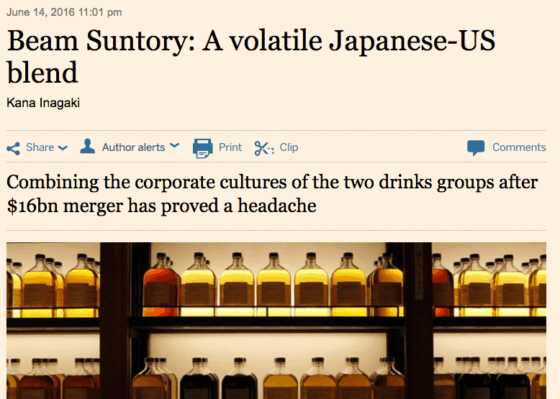
I recently saw an article in the Financial Times about some challenges that have popped up after Suntory purchased the famed American brand and distillery, Jim Beam:
“Beam Suntory: A volatile Japanese-US blend“
This story reminds me of fictional, comic tensions in the movie “Gung Ho” about a Japanese company buying an American car plant. That movie came out in 1984, the same year that Toyota & GM partnered together on the NUMMI plant in California.
There were real tensions in that plant when I visited in 2005 or so. I talked to a GM safety manager who was on assignment at NUMMI, and he really went out of his way to tell me that he thought Toyota wasn't as good as GM on safety, etc. I sensed a mix of GM/American pride and defensiveness about being sent out to learn from Toyota.
Is the same thing happening at Jim Beam?
From the FT article:
“Just months after Suntory's $16bn takeover of US spirits maker Beam in 2014, the chief executive of the Japanese whisky group dropped a bombshell. The quality of the Kentucky-made Jim Beam bourbon could be improved, he suggested, if its distillers employed a Japanese process called kaizen. Matt Shattock, the chief executive of Beam, cringed at the proposal made by his counterpart, Takeshi Niinami. It was seen as a direct affront to the formula perfected by the Jim Beam family over two centuries.”

Why “Everything Can Be Improved” Feels Like an Insult
It seems like a factual statement that everything can be improved. Nobody's perfect and no product is perfect.
Pointing out this fact led to tension and conflict:
“The Suntory chief was suggesting only minor tweaks to the water purification process, not a change to the Beam recipe. But the mere hint of meddling, raised during a board meeting, caused damage. It strained relations just as the two sides were wrestling with how to make a success of the collaboration between the US bourbon maker and its Japanese owner, known for its Yamazaki and Hakushu whiskies.”
Finding Common Purpose Across Cultures
It sounds like they have been working through that tension:
“For workers at Beam, this sounded like criticism of their long-established practices.
“Initially, the interactions were perceived as highly insulting, until we reached mutual understanding regarding culture and intention,” says Vincent Ambrosino, Beam's former chief financial officer who moved to Tokyo to serve as a senior adviser to Mr Niinami and Mr Hizuka. “Eventually, we figured out that we shared a common objective.“
What This Kaizen Culture Clash Teaches Us About Healthcare
There's always a risk of the same tension and conflict happening when I work with a hospital.
It's factually correct to point out that things could be improved in a hospital. Even when I'm very careful to say that we're looking at the process, not criticizing the people, it's not surprising when hospital employees or leaders take things very personally.
We can't control people's emotions and we can't say, “Don't be upset by us pointing out these problems.”
People get even more defensive and upset when we point out problems (huge problems) with patient safety.
Improvement Requires Psychological Safety
Pointing out problems is the first step in improvement. I wouldn't waste my time pointing out problems if I believed the patient safety crisis couldn't be significantly improved or that processes couldn't be improved.
Start With Why, Not “Let's Do Kaizen”
It's helpful to start with that “common objective.” Start with why, as Simon Sinek says.
I'm more interested in “improving healthcare workplaces and results” than I am in “implementing Lean.”
Focusing on the goal AND engaging everybody in defining and solving those problems makes all the difference. That's what moves people forward.
Is some amount of tension a natural part of the improvement process? Or could Suntory have handled this better? Or both?
Final Takeaway for Lean Leaders
Lean and Kaizen are not neutral tools. The way improvement is introduced matters just as much as what is being improved. Even well-intended suggestions can trigger defensiveness when they collide with identity, pride, or deeply held traditions–whether that's a 200-year-old bourbon recipe or a long-standing healthcare practice.
The lesson for Lean leaders is clear: start with shared purpose, not solutions. Improvement efforts gain traction when leaders anchor conversations in a common objective–better quality, safer outcomes, or a stronger organization–before naming problems or proposing changes. Without that foundation, Kaizen can feel like criticism instead of care.
This is where psychological safety becomes essential. People need to believe that surfacing problems won't threaten their competence, legacy, or livelihood. As I've written elsewhere, improvement only works when people feel safe enough to say,
“Here's what's not working–and here's what we could try.”
Kaizen doesn't fail because people “resist” improvement. It fails when leaders underestimate the human side of change. Respect for people means respecting history, emotions, and context–while still holding firm to the belief that tomorrow can be better than today.
For Lean leaders, the real work isn't just improving processes. It's creating the conditions where improvement conversations can happen at all.





Comments from LinkedIn:
Thomas Cox: Outstanding example of how human factors (ego, pride, fear, misunderstanding) can easily derail our efforts to improve.
Joe Thomas: hard to believe that there might be cultural friction between Kentucky and Tokyo!
Also from LinkedIn:
My reply:
I think that’s why the advice of Taiichi Ohno is still timeless and helpful. “Start from need.” Start from your most pressing need, as he said. As John Shook asks, “What problem are you trying to solve?” That’s always more effective than “let’s do kaizen” or “let’s implement Lean.”