

Reframing Failure: A Growth Mindset Lesson from Sports and Lean Leadership
Failure is one of the most misunderstood concepts in Lean and continuous improvement. Leaders talk about learning, experimentation, and growth mindset–but in practice, early mistakes are often treated as evidence that people or ideas aren't ready. That gap between intention and behavior shows up everywhere: in Kaizen, daily management, strategy deployment, and how leaders react in real time.
That's why a recent story shared by John Amaechi caught my attention. Amaechi–who I've long enjoyed hearing as a guest on Dan Le Batard‘s show–was recently featured on Le Batard's South Beach Sessions podcast series. The full conversation was excellent, but one short moment about failure stood out as especially relevant for Lean leaders.
Amaechi told a story about playing his very first organized basketball game as a tall 17-year-old in England. His first shot missed the basket by about six feet. What mattered wasn't the miss–it was how a teammate reframed it: “That was his first shot, and he only missed by six feet.”
That simple reframing changed how Amaechi saw failure, progress, and what was possible next. It's also a powerful reminder for leaders: early misses aren't signals to shut learning down–they're data points that tell us how close someone already is, and whether our culture turns effort into growth or fear.
Here, starting around 6:47 (the embedded video below should start there), he tells a story about playing his first-ever basketball game as a tall 17-year-old in England. His first shot missed the basket by about 6 feet.
Referencing the idea of a “growth mindset,” John recalls, “what was amazing” was the way one of his teammates reacted to his miss, saying:
“That was his first shot, and he only missed by six feet.”
John says:
“What an amazing re-framing of failure.
That's when I decided I would play in the NBA.”
And he did.
This idea shows up constantly in Lean work. In Practicing Lean, the authors and I share stories of early missteps–Kaizen events that didn't land, experiments that went sideways, and improvement efforts that taught us more through failure than success.
Imagine hearing comments like these:
- “That was their first Kaizen event. They were closer than it looked.”
- “That was their first 5S effort. The gaps showed us where to coach next.”
- “That was their first daily huddle. It wasn't smooth–but it was a start.”
Where in your organization could leaders respond to early misses as progress–not proof of failure?
You can hear some of the “favorite mistakes” from other members of the Dan Le Batard Show team.
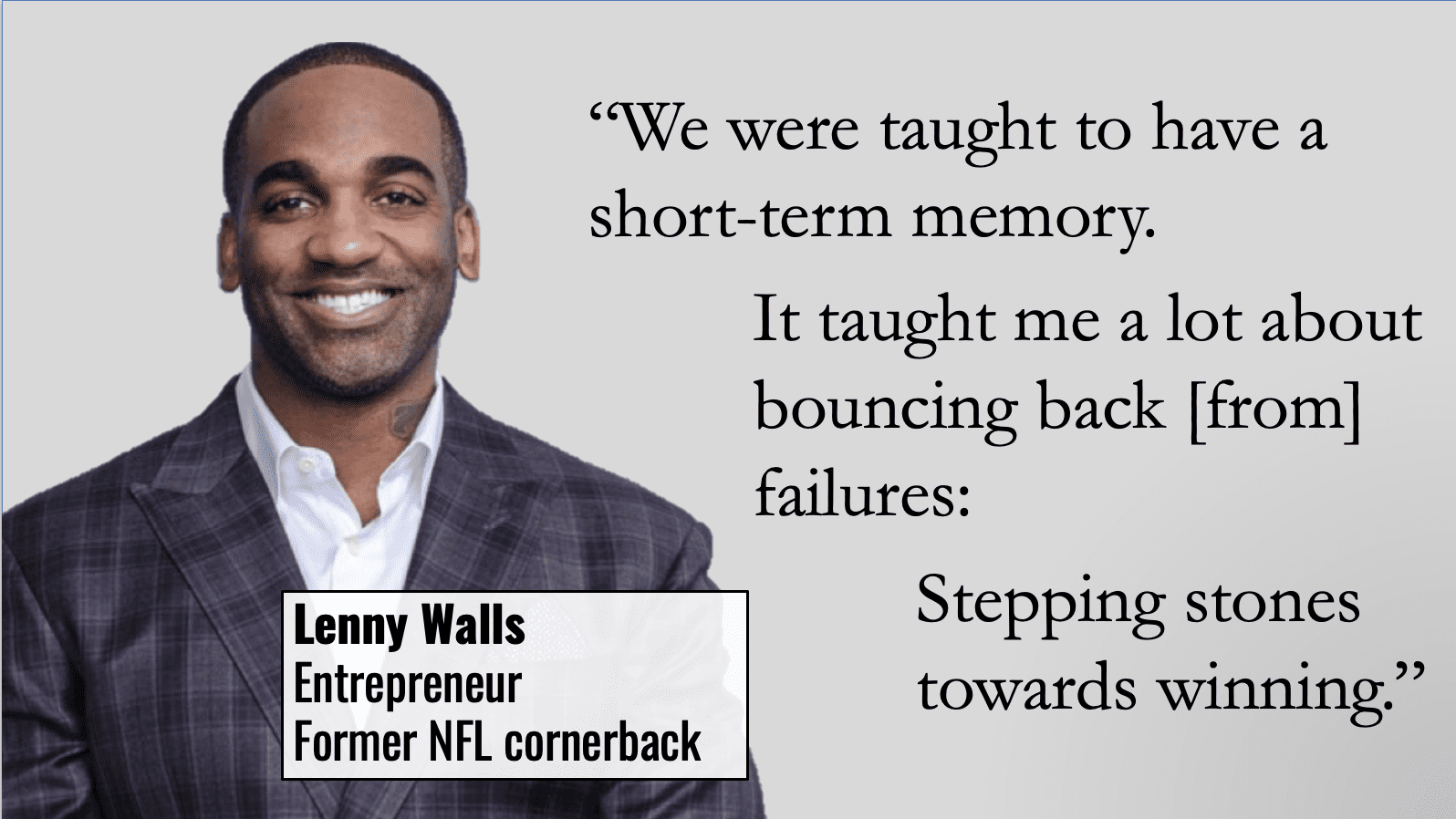
How can we re-frame failure or mistakes as “stepping stones toward winning,” as my friend and former NFL player Lenny Walls says? Listen to the “My Favorite Mistake” episode Lenny did with me.
Reframing Failure Is a Leadership Choice
Reframing failure isn't about being positive or lowering standards. It's about how leaders interpret early results–and what those interpretations signal to others. When a miss is treated as evidence that someone or something isn't capable, learning stops. When it's treated as information about where the system, coaching, or expectations need adjustment, improvement continues.
In Lean organizations, this distinction matters. Kaizen, experimentation, and daily problem-solving all depend on people believing that effort won't be punished when results aren't perfect the first time. Leaders don't create that belief through slogans or training sessions. They create it in moments like the one John Amaechi described–through what they say, what they reward, and what they choose to see in an early miss.
Reframing failure doesn't mean celebrating mistakes. It means recognizing progress, proximity, and potential–so people keep taking the next shot.