What Portlandia’s Order Grill Teaches Us About Waste and Bad Process Design
I love the show “Portlandia,” and I also love the “Toast Kaizen” video. I bet the latter is better known and more popular in my Lean circles.
“Toast Kaizen” is a great introduction to continuous improvement for individuals or teams. Please make sure to get it properly licensed for group use from GBMP if you're using it with a group or want to use it throughout your organization.
In the toast video, you can observe our pal Bruce Hamilton making toast and you can practice all sorts of Lean tools and mindsets:
- Observing a process
- Looking at product flow (bread becoming toast becoming buttered toast)
- Looking at operator flow
- Identifying waste
- Considering opportunities for improvement
- Proposing small “kaizen” improvements to test out
The only thing you can't do via this video is to interact with Bruce as the operator / owner of the process, as we'd want to do with process improvement in real life.
Seeing the Order Grill Through a Lean Lens
I showed this Portlandia video to a team of O.R. and instrument processing staff members the other day (a moment of levity in our serious improvement work) and they enjoyed identifying problems with the process and the physical layout that we see here.
What happens? What doesn't happen? What should be happening?
See below in the video, or my notes that follow.
When the Customer Can't Tell How the Process Works
A customer walks in and she's immediately looking around as if to figure out the place.
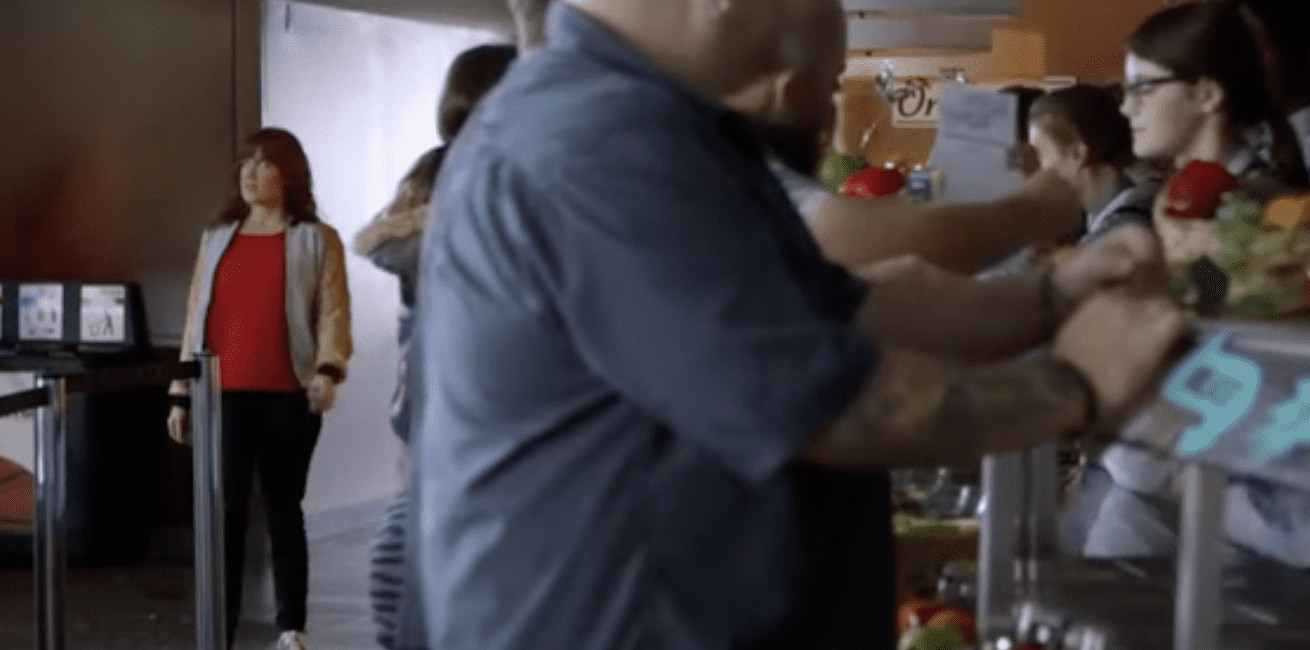
She walks up to an employee who is calling out that orders are ready (played by Fred Armisen). They just look at each other. She's flummoxed, as if he's supposed to welcome her and take her order.

She looks around, again trying to figure out what's going on.

The employee (I'll just say “Fred” since we don't know the character's name) finally says, “Hi, welcome to Order Grill. One?”
She's clearly alone and says, “Yeah” in a slightly annoyed or perplexed tone.
“Welcome to the Order Grill, where the ordering experience is tailored to your needs.”
I guess that sounds good — customer focus means treating each customer as a unique individual. But it takes a weird turn as the employee shuffles through different ordering slips or menus to possibly give her.
“First of all, how is your day today?” he asks.
“It was fine, thank you.”
Is that really relevant?
Fred says, “Fine… so you've got to fill this out” as he hands her a sheet that says “You Are What Your Order.”
He adds, “There's a new email that you make up just for here. Then you do your protein preference,” as he hands her another slip of paper.
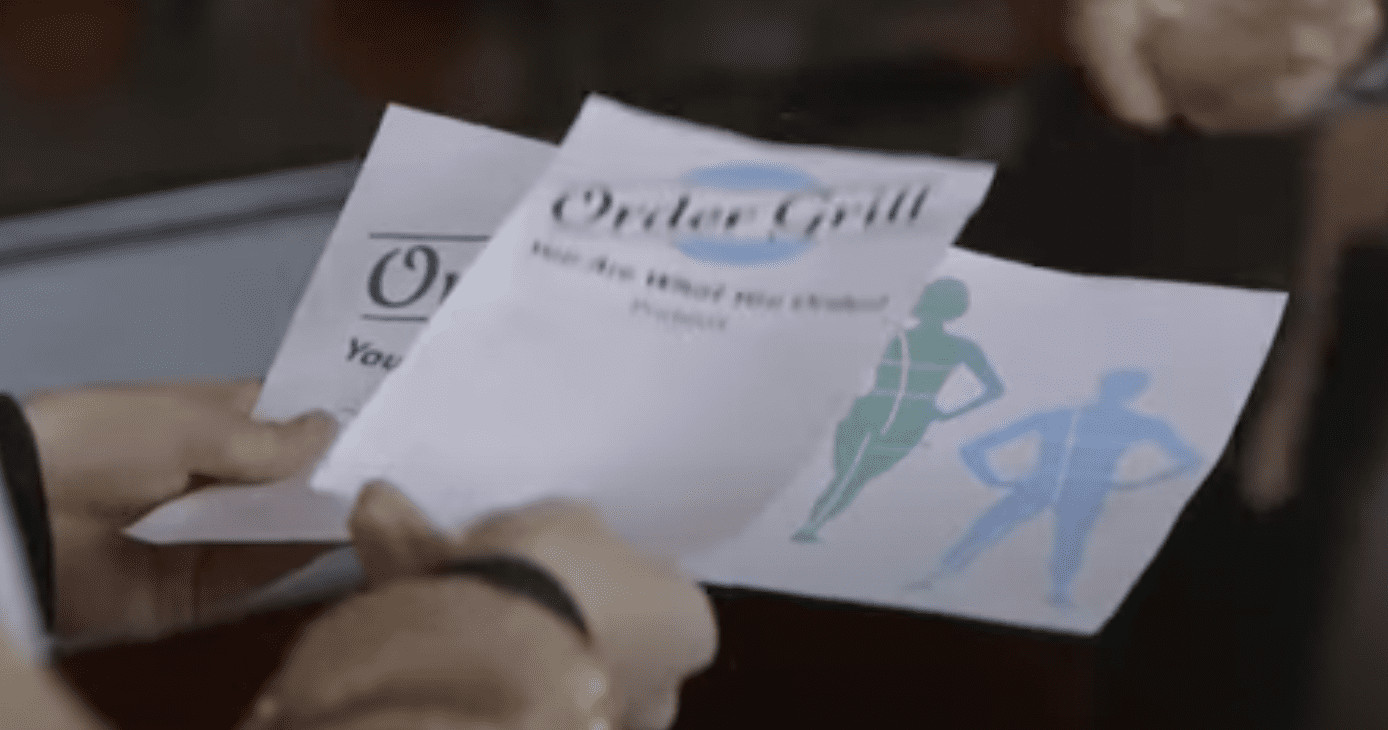
There's another sheet of paper for “veggies” and he lists off four types of tomato options.
“Then, beverage bonanza!”
He hands her another slip and, reading her reaction, he says, “OK, yeah, I know it seems like a lot.”
“It DOES seem like a lot,” she says.
“But it's not,” he says.
We shouldn't dismiss the voice of the customer. When an organization designs a process, what seems clear and obvious to those who are there everyday is not always obvious to a first-time user of that process.
I also think of, let's say, hospital wayfinding signage that seems to have been put up by people who already know their way around. I think you should always have an “outsider” take part in the design of signage or at least do an initial test of the signs to give you feedback.
Back to the scene, Fred says, “OK, you'll be number 18” and announces to the team that #18 will be putting in their order, as he hands her some sort of buzzer.
It's unclear what that announcement does to move the process along. How often do we do something because “that's just how we do it here”?
Complex Processes That Only Insiders Understand
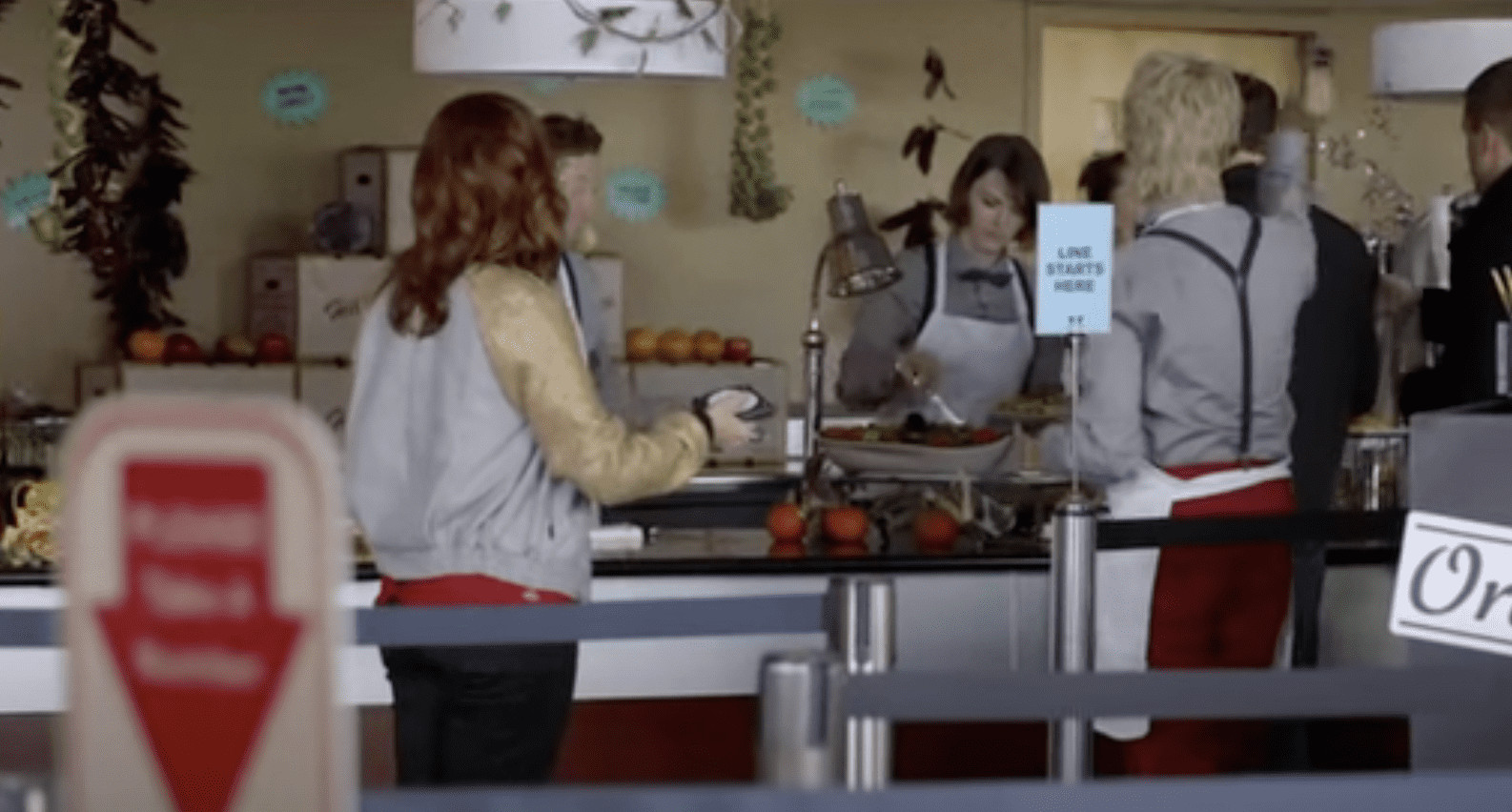
“Pastrami sandwich,” she says, trying to place her order finally.
Fred's eyes get wide and he replies, “No! Don't tell me your order. That's not me. Come on, let's go to the first station…” as he leads her away.
If your process is so complicated that you need a “navigator,” then you might want to rethink this process. Now that I think about it, maybe this Portlandia sketch is really about healthcare, not restaurants?
The customer says, “It seems complicated” as they run into the woman, Lillian, (played by Carrie Brownstein) who designed the restaurant.
“Complicated?” Lillian replies with a smile. “What are you talking about?”
Again, they're dismissing the customer feedback that could help them improve. But, they seem to have pride of ownership… let's not let that be a barrier to improvement.
She explains, “What I've done with this restaurant is I've changed the the form and, therefore, the entire essence of ordering. You're going to order WHATEVER you want.”
“Pastrami sandwich,” says the customer, trying again. But she's not the order taker, either.
Lillian offers her a map.
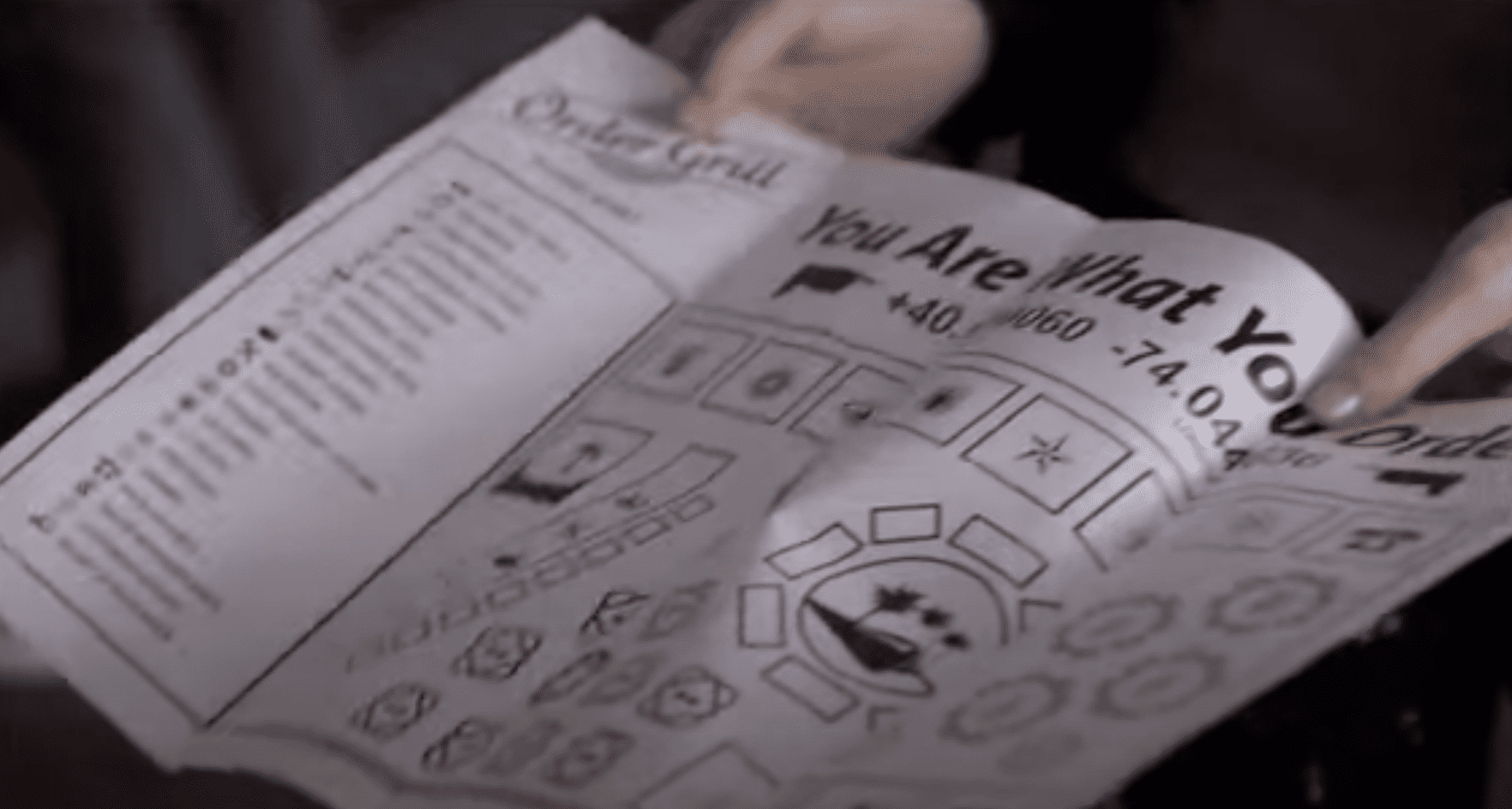
The customer now tries to navigate this on her own.
She hands an order slip to a woman across a counter.

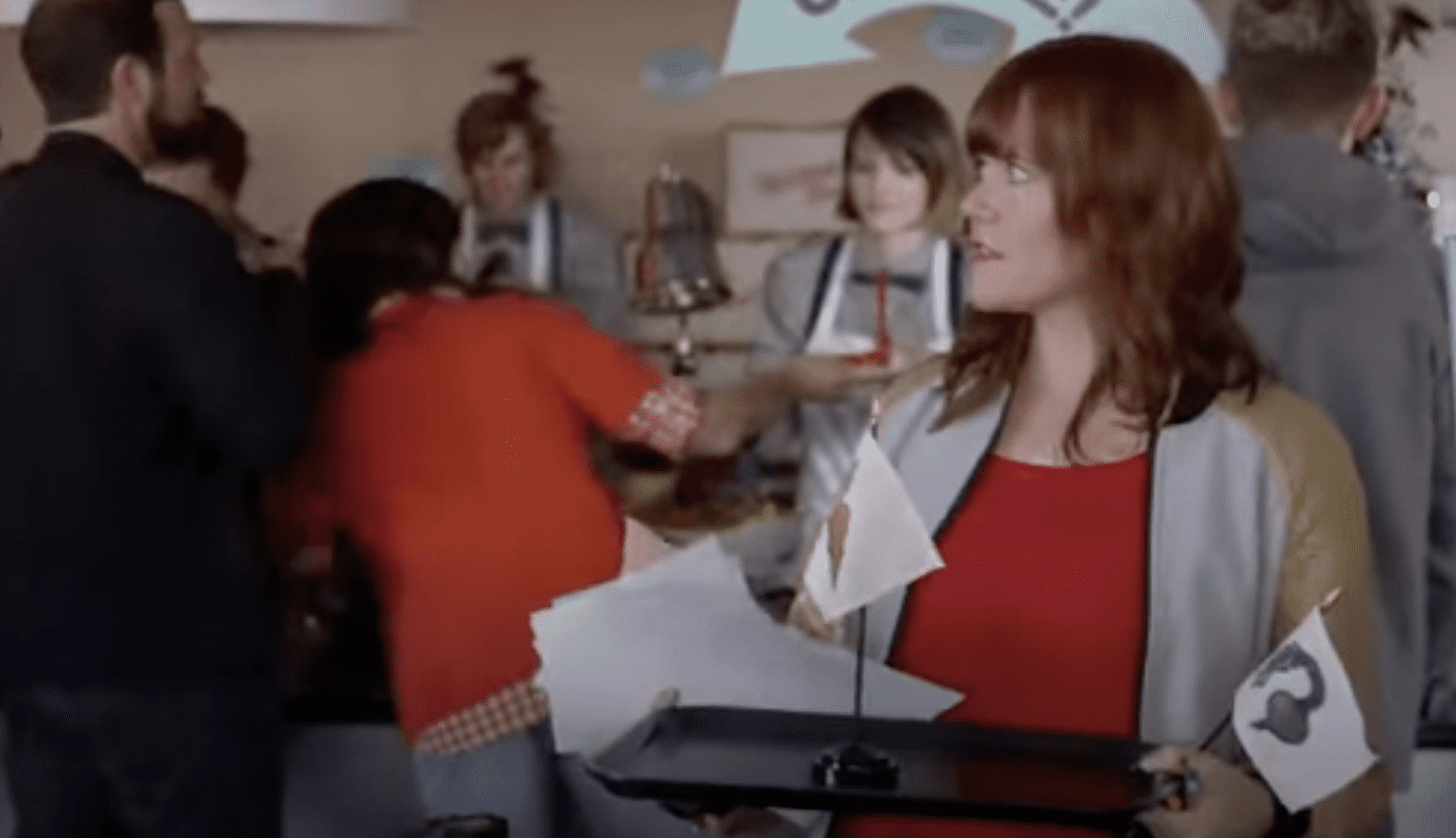
She's handed a tray with a flag on it by Fred Armisen's character.
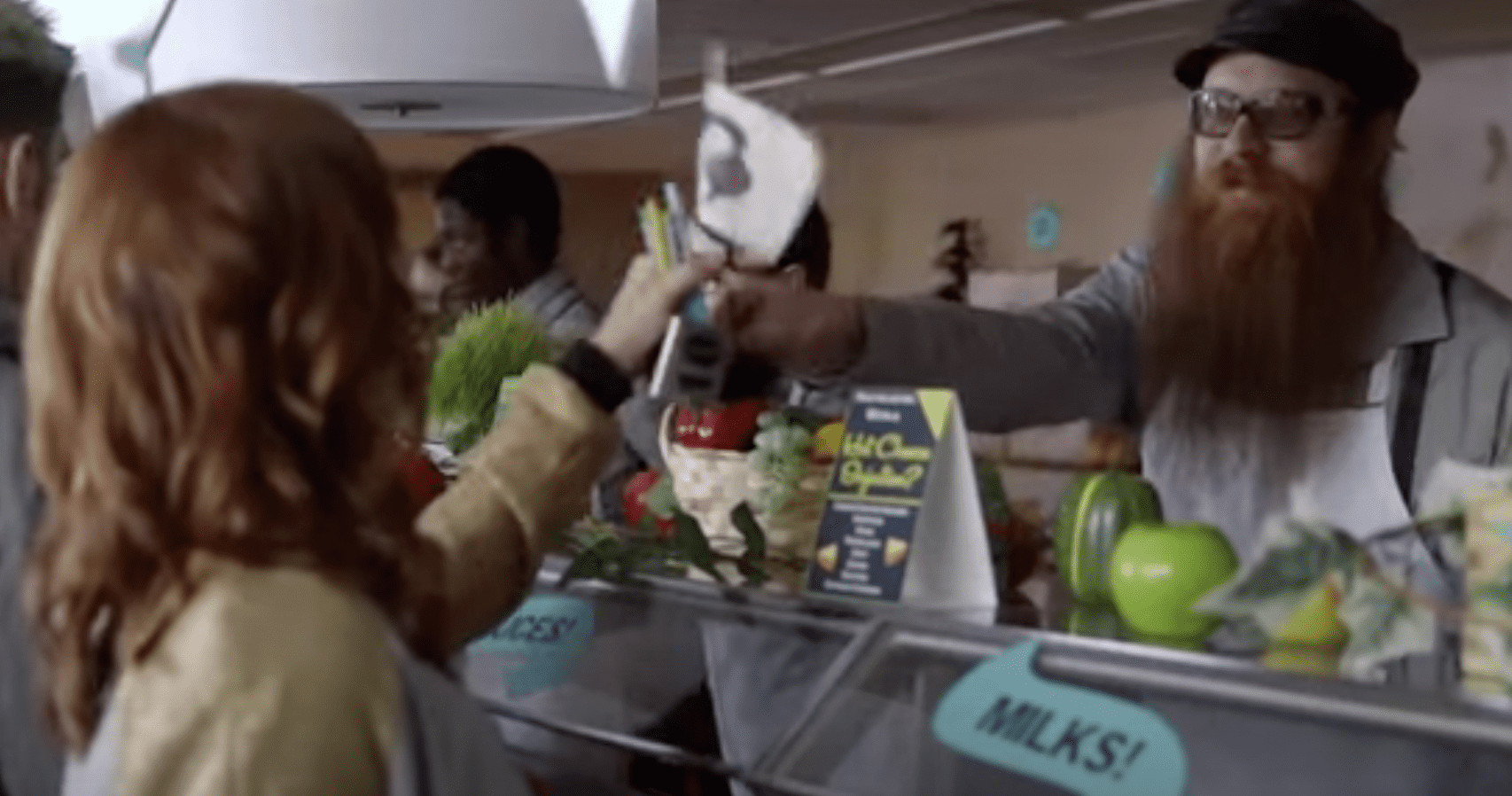
She's handed another flag by another employee:
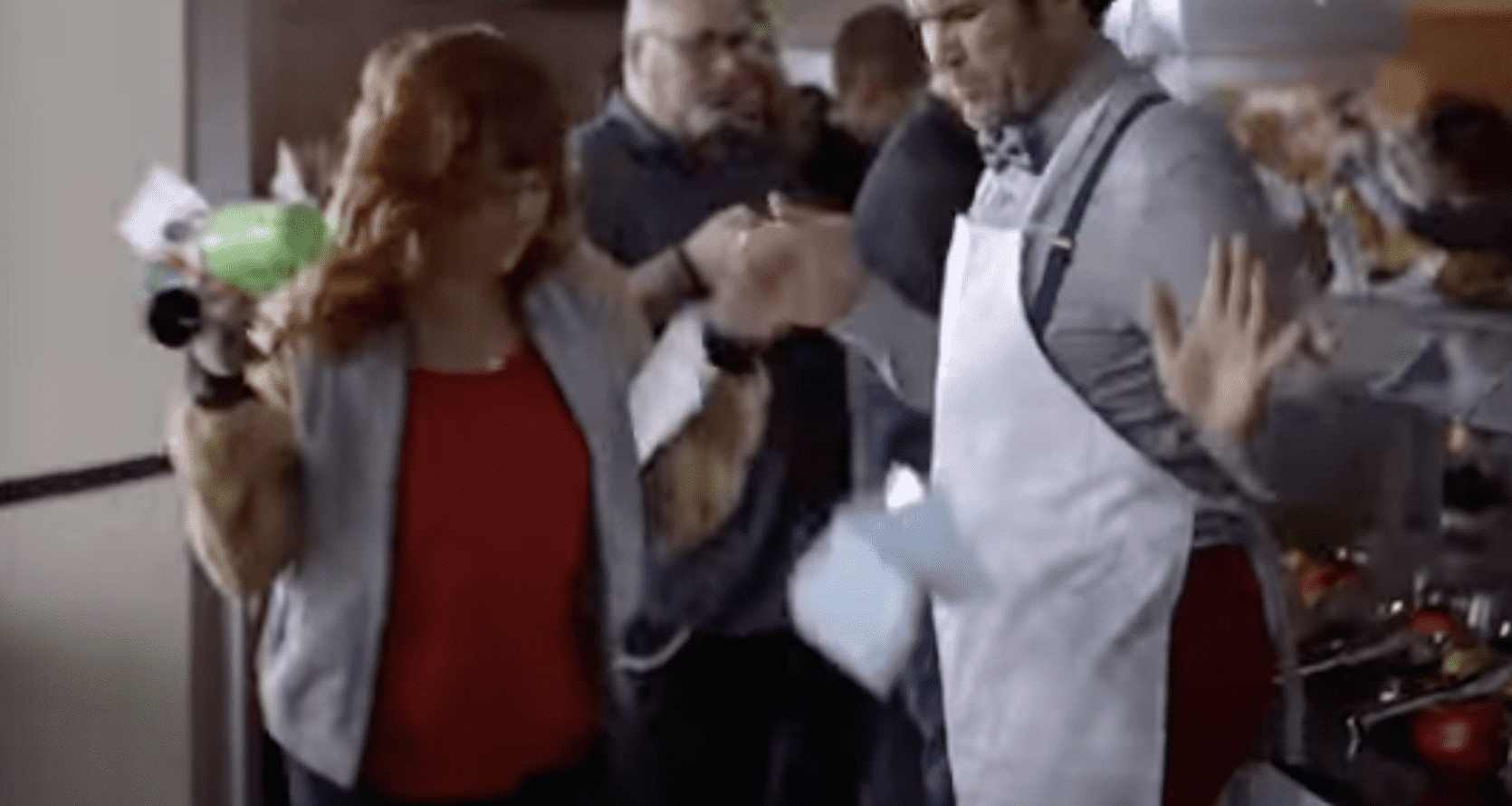
She crashes into another employee who drops all sorts of papers and slips.
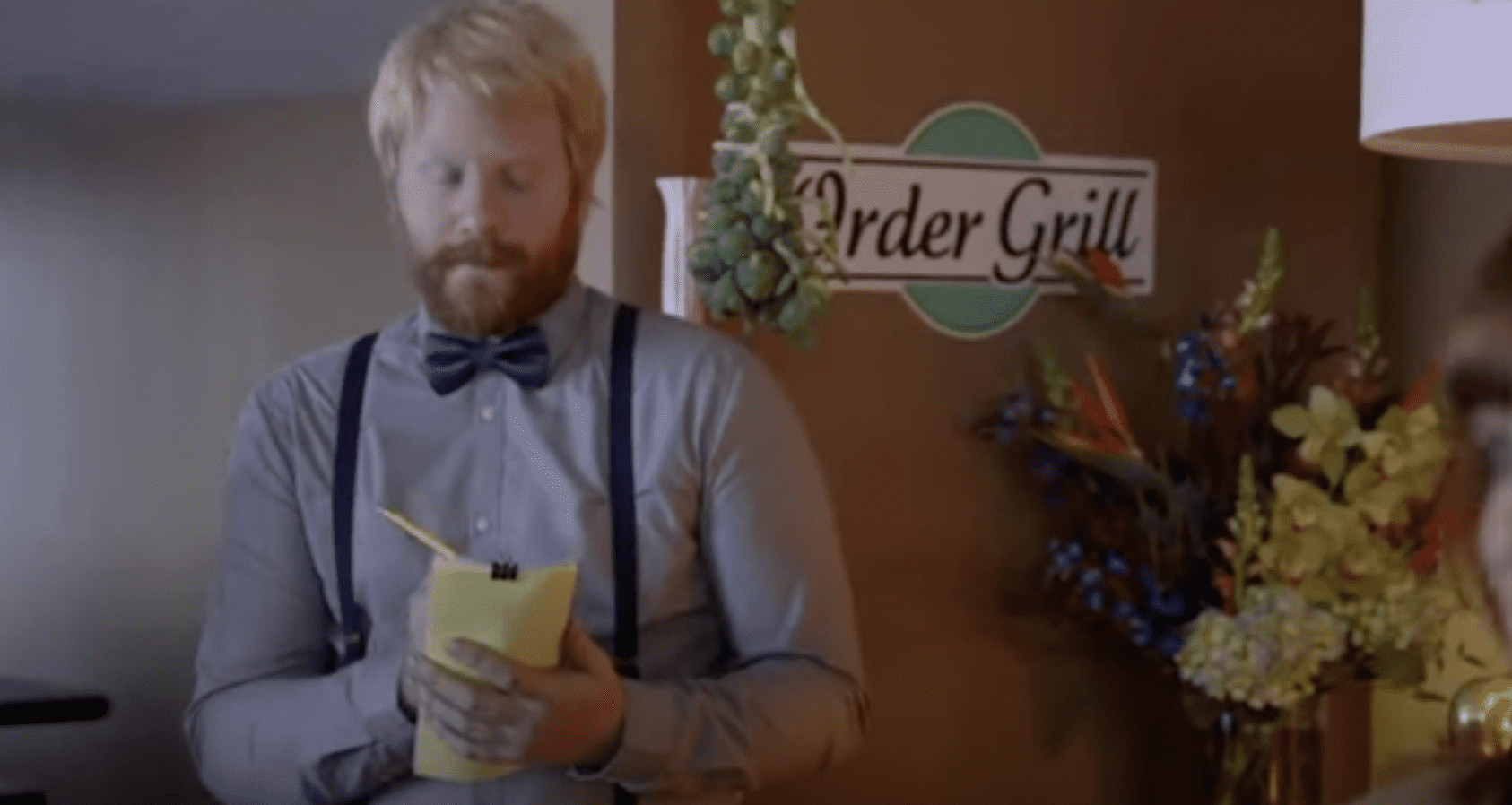
There's a mystery man observing and jotting down some notes. Is he the restaurant's process improvement specialist? A “Lean facilitator”?? Is the customer being judged for not understanding the process?
Poor Layout and Broken Flow Create Predictable Waste
Fred, now at a cash register, points out to the customer:
“The drink station is over there to the right, then to the left.”

And “The ice station is back over there,” pointing in the opposite direction.
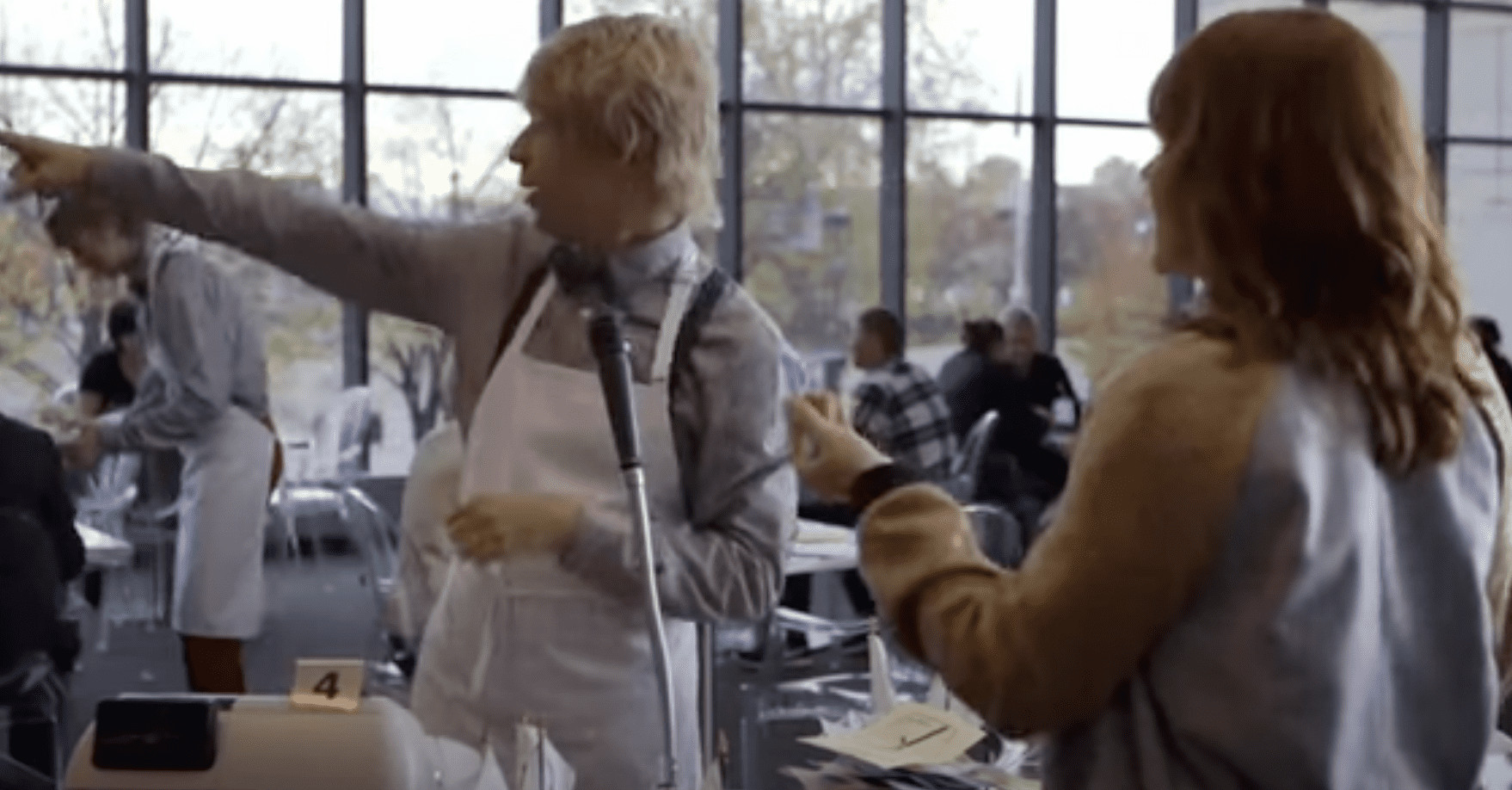
This is where my group at the hospital really lost it. Why isn't the ice machine near the drink station???
The customer gestures and asks why the ice machine and drink station are so far apart (Lean thinking isn't that complicated sometimes).
Fred replies, “I know… they” and then just chuckles awkwardly and tells her it's $14.28.
It's as if he started to explain something along the lines of, “I've pointed out that problem before… but I've given up because nothing ever happened.” How often does that happen in our workplaces?
“And when do I get my food?” the customer asks.
She sits at her table with a drink, two flags, and a number 7 (and her number 18?).
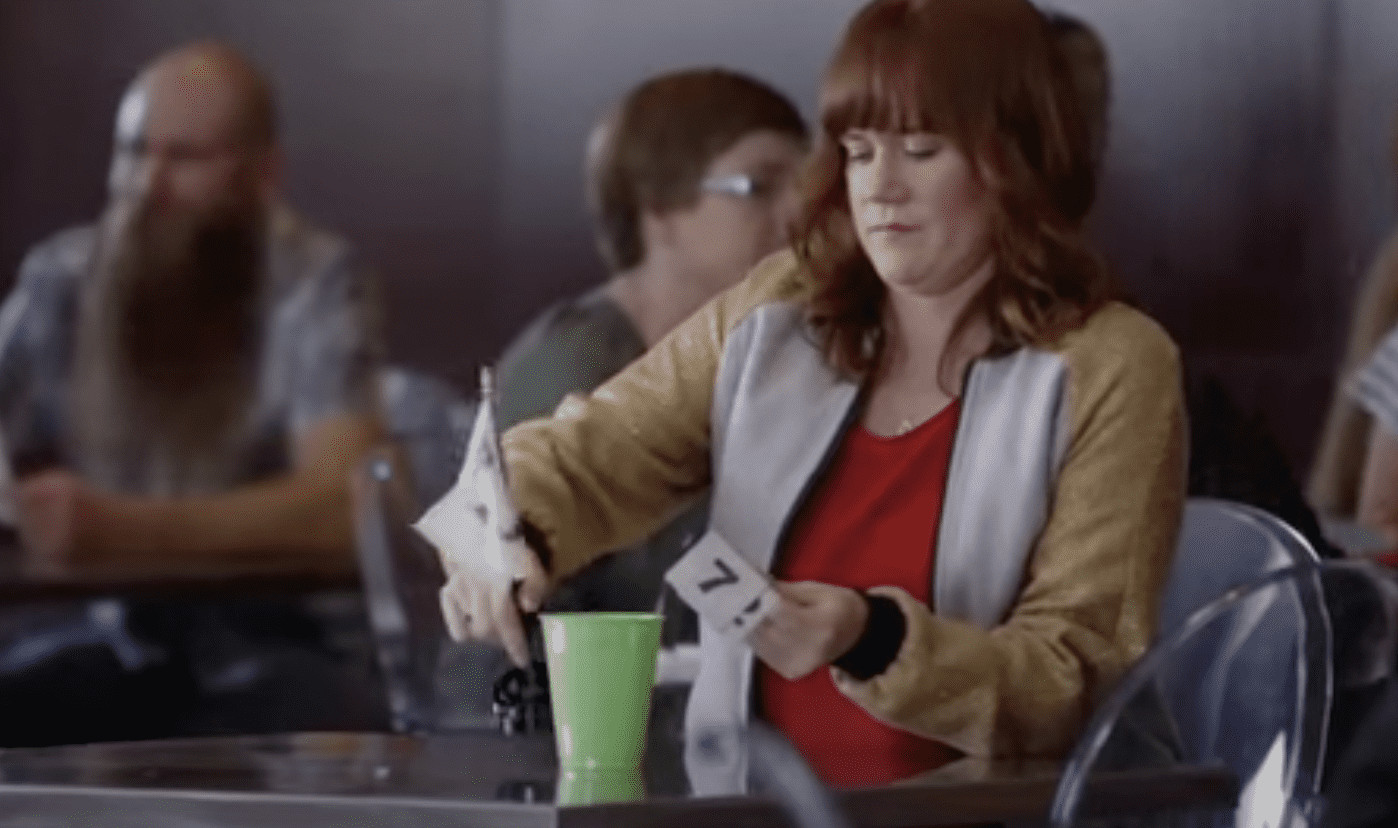
Fred holds a tray (with a flag on it) and calls out “pastrami sandwich” over the sound system.
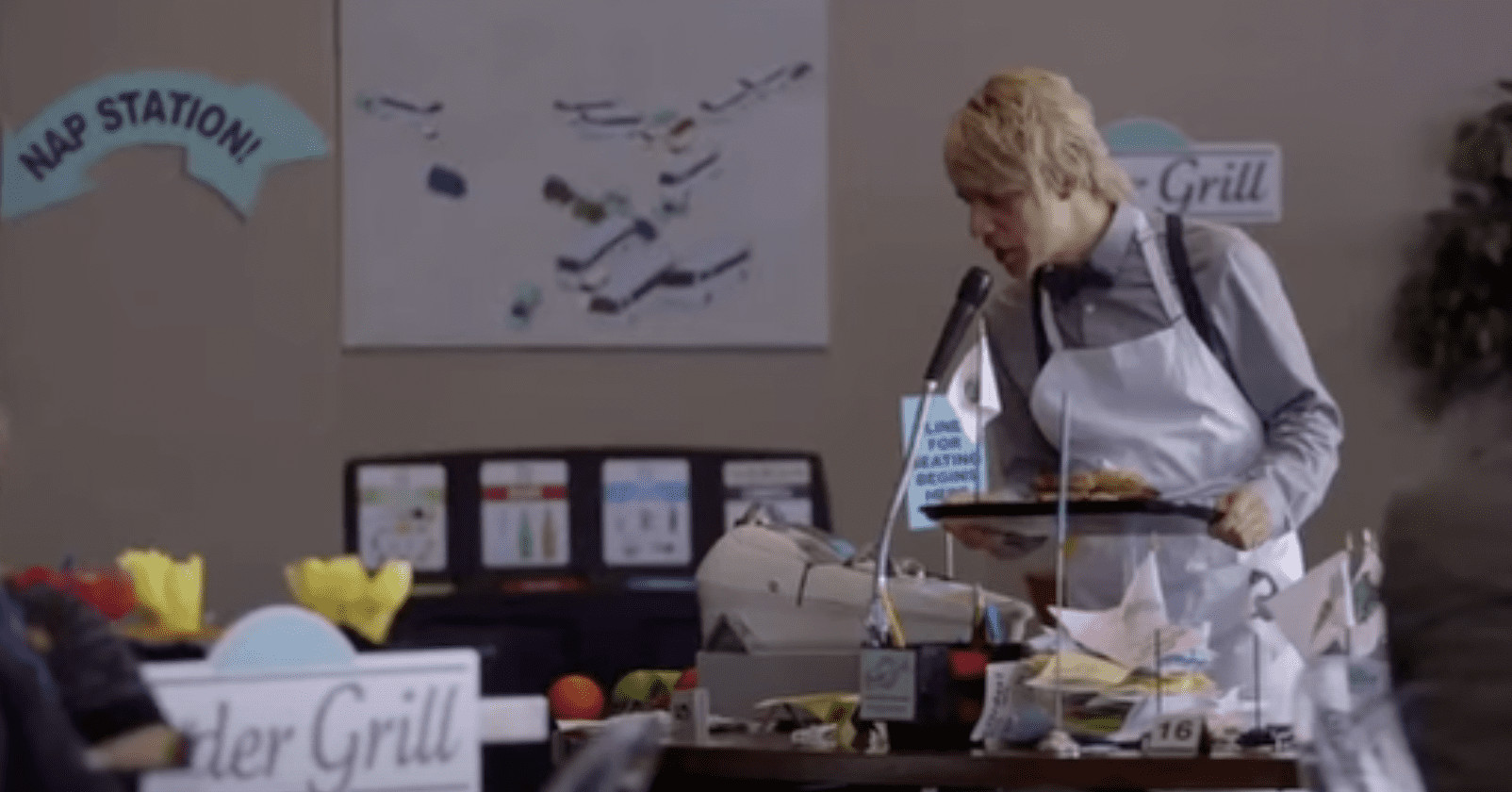
The customer looks over and asks, “Is that me?”
Fred ignores her. He thinks it's not her.
She says, “I have a potato flag, is that helpful?” and waves it. She has a number 12 for some reason.

“Is your name Pastrami?”
“NO.”
They go back and forth a bit about whether it's her sandwich. “It probably isn't,” he says.
And scene.
What Leaders Should Learn from the Order Grill
The humor in the Order Grill sketch lands because it reflects a familiar organizational failure: processes that make sense only to the people who designed them, defended by those who've learned to live with the dysfunction. From a Lean perspective, that's not a training gap or a motivation problem–it's a system design problem, reinforced by leadership behaviors.
In healthcare, this dynamic is especially visible in patient check-in processes that are confusing, fragmented, or filled with unspoken rules. When patients say, “I don't know where to go,” or “I'm not sure what happens next,” leaders face a choice.
- They can deny the problem, explain the process again, or quietly assume the issue lies with the patient.
- Or they can treat confusion as data–a signal that the process itself needs to be redesigned.
Psychological safety sits at the center of that choice. As I discuss in The Mistakes That Make Us: Cultivating a Culture of Learning and Innovation, organizations learn faster when leaders respond to mistakes and confusion with curiosity instead of defensiveness. That applies just as much to patients and families as it does to employees. When staff don't feel safe saying, “This process doesn't work,” or when patients feel dismissed for not understanding it, improvement stalls and trust erodes.
The deeper Lean lesson from the Order Grill isn't about finding more waste or generating more Kaizen ideas inside a broken flow. As I've written in Lean Hospitals and Healthcare Kaizen, Kaizen is most effective after the basic structure of the work makes sense. When flow is unclear and handoffs are broken, asking people to “just improve it” shifts the burden onto them instead of fixing the system. In those cases, redesign has to come first.
Whether it's a restaurant, a hospital, or a digital service, the leadership question is the same: are we designing processes that work for people, or asking people to adapt to processes that don't?
In healthcare, confusing processes aren't just frustrating–they increase the risk of delays, missed information, and preventable errors, which is why clear, well-designed systems are foundational not only to patient experience, but to patient safety itself.