Women in Lean: Raising Voices, Building Community, and Creating a Seat at the Table
With Founding Mothers Crystal Davis, Karyn Ross, and Dorsey Sherman
My guests for Episode #411 are the co-founders, or “founding mothers,” of the group “Women In Lean: Our Table.” They are Crystal Davis, Karyn Ross, and Dorsey Sherman. Crystal was my guest back in episode 363, and Karyn was my guest in episode 266. Dorsey, welcome as a first-time guest!
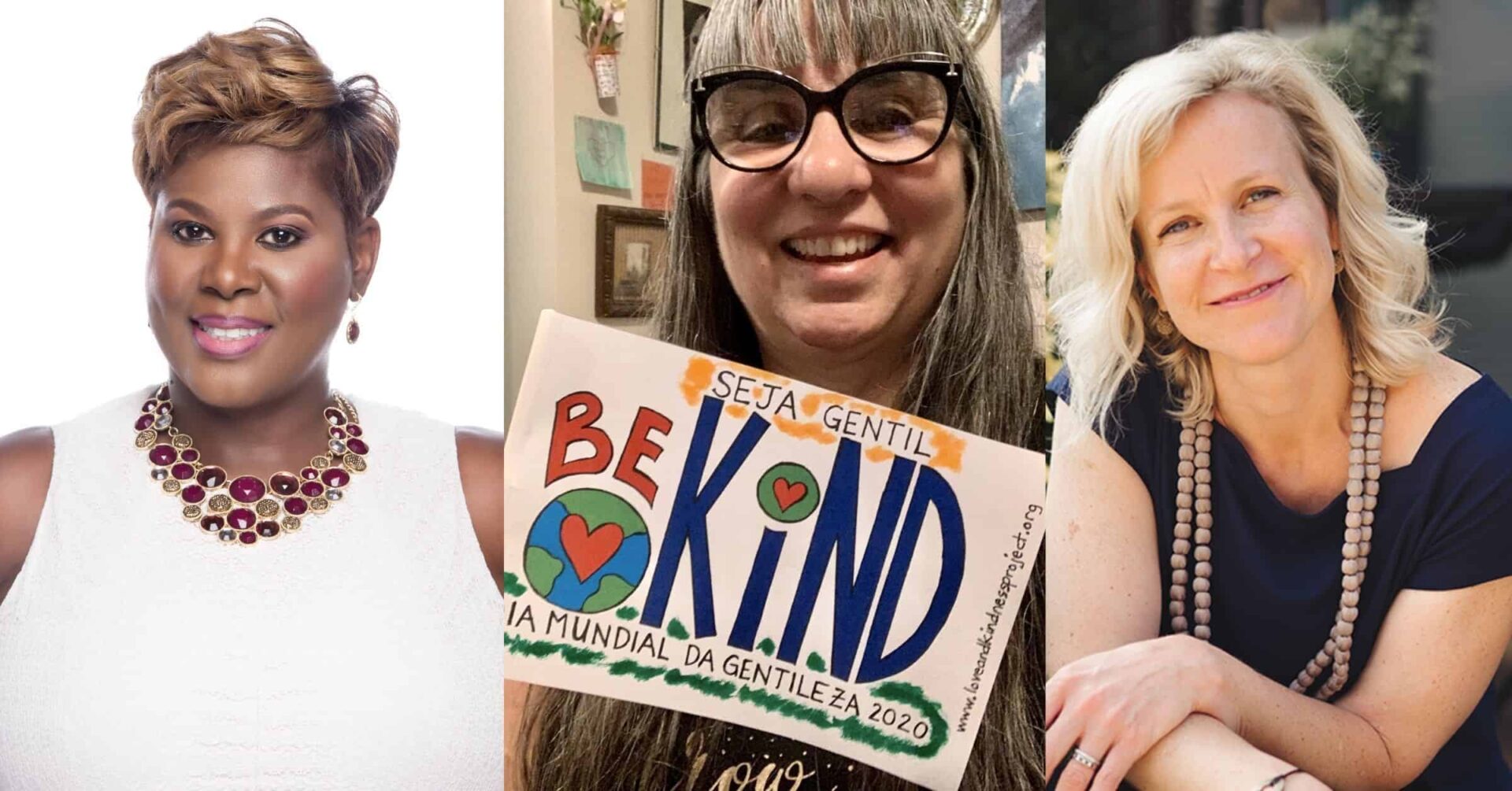
All three of them were part of this panel discussion webinar that I moderated last year. Crystal's company is The Lean Coach, Inc., Karyn's is Karyn Ross Consulting, and Dorsey's is Modele Consulting.
Topics and questions in today's episode (and related links):
- How did the Women in Lean group get started, and why?
- Why do they (and many women) feel like they don't have “a seat at the table”?
- Why can “creating your own table” be helpful?
- How can women get involved?
- What can we do about the lack of equal representation on stage at Lean conferences?
- How can men be better allies for women in the Lean community?
The podcast is sponsored by Stiles Associates, now in their 30th year of business. They are the go-to Lean recruiting firm serving the manufacturing, private equity, and healthcare industries. Learn more.
This podcast is part of the #LeanCommunicators network.

Thanks for listening or watching!
Automated Transcript (May Contain Defects):
Introduction
Mark Graban: Hi, this is Mark Graban and welcome to Episode 411 of the podcast. I'm joined today by the founding mothers of a group called Women in Lean. To learn more about the three of them, to get links and more, you can go to leanblog.org/411. Again, I want to thank our primary sponsor here, Stiles Associates.
We're joined today by three guests, so we're going to have a fun panel discussion. They are collectively the co-founders, or I should say the founding mothers, of a group called Women in Lean. First off, Crystal Davis, whom you might remember; she was the guest in Episode 363 of this podcast back in April 2020. So Crystal, welcome back. How are you?
Crystal Davis: I'm wonderful. Thank you so much for having me.
Mark Graban: Sure thing. And then we are also joined by Karyn Ross, who was a guest in Episode 266 in October of 2016, and she was also guest number three in my newer podcast series called My Favorite Mistake. So Karyn, thank you for being here.
Karyn Ross: You're so welcome. Thanks for inviting us.
Mark Graban: Sure. And I'm glad I've got all three of you here. We are joined by someone new to this podcast, Dorsey Sherman. Dorsey, how are you doing?
Dorsey Sherman: Great, thank you, Mark.
Mark Graban: So, I would maybe go back around and ask each of you to give a little bit of an introduction. Crystal, maybe I'll go back to you if you want to tell the listeners a little bit about yourself and your background.
Crystal Davis: Awesome. Thank you. So, Crystal Davis. I am the CEO and founder of The Lean Coach Incorporated, and been in business since 2014. Prior to that, I worked in industry, in manufacturing, in the automotive industry, in the food and beverage industry, and in the life sciences businesses, helping those companies to improve their operations and to develop their people as problem solvers.
Mark Graban: And you've been in a lot of different settings where they probably at some point say, “Hey, but we don't build cars.”
Crystal Davis: Of course, of course. That statement or question sure follows us around, right?
Mark Graban: It follows all of us around. All right, well thanks Crystal. Karyn, if you want to share a little bit more about your background. You have a different perspective and background, which is great. Go ahead.
Karyn Ross: Yes, actually, I'm Karyn Ross and you may know me from my books, How to Coach for Creativity and Service Excellence, and I'm also the co-author with Jeff Liker of The Toyota Way to Service Excellence. I do have a different background. I don't come from a business background or manufacturing or anything. I have a master's degree in sculpture, so I come to the lean world from the art world. For me, PDCA is actually the creative process as well as the scientific approach. It's how we create new and better ways to work.
I also have a foundation called The Love and Kindness Project Foundation, and we're a grassroots movement that spreads kindness, one act at a time. I have something new, which is The New School for Kind Leaders. So, I'm super excited about that as well. And I'm super happy to be here with my co-founding mothers.
Mark Graban: We'll make sure there's a link to everybody's websites and projects. And for those who are watching on YouTube, you can see Karyn's background. This is your primary art space, fair to say?
Karyn Ross: Absolutely. My primary art space sewing studio. I design and sell my own clothes now, so I'm wearing one of my own creations today.
Mark Graban: And I saw a photo on LinkedIn not long ago of one of your latest creations. I think, was it green?
Karyn Ross: Blue. Blue and fuchsia. Yes. And as you can see, I believe that all colors go together. All colors go together.
Mark Graban: Yes, that is true in so many ways. So thank you for that, Karyn. And then Dorsey Sherman, can you introduce yourself to this podcast audience? I'll turn it to you.
Dorsey Sherman: Yeah. Thanks, Mark. Dorsey Sherman, and my company is called Modèle Consulting, which means “pattern” in French. I'm a Toyota Kata coach and enthusiast and I work with companies. I also am certified as a coach, so I kind of do three different things. I work with individuals one-on-one for their own growth and development. I really bring that expertise and coaching to helping businesses improve their performance as well, but really do it from a perspective of helping with not the what, but kind of creating a structure of how to do it and letting organizations figure out the best solution for them. I also work with organizations that want to take on more of a coaching approach to their leadership style. So I do some “leaders as coaches” sorts of workshops as well.
Mark Graban: So letting them figure that out and evolve that is applying, in a way, PDCA or PDSA cycles or Kata cycles to figuring out their approach. Is that fair to say?
Dorsey Sherman: Yeah, exactly. I mean, I kind of teach the guardrails around how to do improvement–in terms of setting goals, connecting to strategy, understanding your current condition. But then, yeah, exactly. They're really taking the lead in terms of experimenting their way forward to where they want to be.
The Origin Story of Women in Lean
Mark Graban: Well thanks. So welcome and welcome back to all three of you. I think today we have a chance to hear first off maybe the origin story for the Women in Lean group. I'm sure you've told this story before in different settings, but I don't know who wants to go first to kick off that story.
Karyn Ross: Is it all right if I start, ladies?
Mark Graban: Absolutely.
Karyn Ross: So, after I wrote The Toyota Way to Service Excellence, I was asked to speak at many, many conferences. It was a wonderful opportunity. And you're going to see the theme of sharing and conferences and getting together come back through our story. As I stood on the stage at many of these conferences, I looked out into the audience and saw that more than 50% of the participants at these conferences were women. But then I would look at the program and I would see that I was the only woman speaker. Maybe there was one other woman speaker. I was certainly the only woman keynote speaker, and it really bothered me.
Then actually, I went on and took a look on the Shingo website to see how many Shingo award-winning lean books were there that were authored by women. Actually, it was shocking. The tiny percentage, maybe 3% at that time–so it was 2016. It's probably better now. And I really thought we need to raise the voices of women in Lean because I know so many women who are doing this work. When I see a problem, I always think somebody should do something about the problem, and that somebody is me.
So as I was at conferences, one of the things that I was doing is I was deliberately going to meet all of the different women that I saw speaking. So I was at a conference and Crystal Davis was speaking and I was like, “I have to go and meet her.” So I hustled my way right up to the front. As soon as she finished speaking, I was like, “Hello? How are you? I'm super interested in raising the voices of women in Lean. Would you like to do something with me?” And actually, I'm going to turn this over to Crystal now and the story is going to weave a little bit. So Crystal, do you want to tell the next part of the story?
Crystal Davis: Yeah. So then she and Leslie, they kind of bum-rushed me and I'm like, “Oh wow.” And they're super excited. So I'm super excited because I think that was one of my first times actually speaking at a lean conference. We ended up having this conversation about how do we get more women's voices out there and get involved and encourage them to speak. We actually started this evening talk show, very similar to this, right here on Blab. We did probably maybe six or seven shows. Nobody came. Nobody came except for one night Mark popped up and he was our first and only guest. I was like, “Oh my God, that's the guy that wrote the books. And he's here.” We were just fumbling over ourselves trying to make sure that Mark understood that even though the conversation was about women, he definitely was welcome and we were super excited to have him. So that's how we started our initial mission.
Mark Graban: That platform is one I'd kind of forgotten about. It didn't last very long. Blab IM. It was a platform for streaming conversations. I recorded a couple of podcasts on that platform and then poof.
Crystal Davis: Yeah, it was in beta back then.
Karyn Ross: Yeah, so then we were, now Crystal and I knew each other and Leslie Henckler and we were working on this. And then I went to another conference and still, our first PDCA did not work. So then I thought, okay, now I'm just going to go up to every woman and speak to them and say, “Hello, I'm working on raising the voices of women in Lean. Would you like some help to speak at conferences? Would you like some help to write?”
So I went to the Michigan Lean Consortium conference and who did I meet? Because she was speaking–I met Dorsey. And Dorsey and I became friends. Then I'm going to pass the ball over to you, Dorsey in a moment. We were invited to do a Women in Lean session at a Lean Frontiers conference about a year and a half ago. And Dorsey, I'm going to pass the ball over to you and you tell the story about what happened.
Dorsey Sherman: Well, yeah, I mean, we were sort of co-facilitating a group of probably not more than a dozen women–and Gary Cokins was there as well. Karyn suggested we do it as a World Cafe format and said, “What do women in lean want? What do women in lean need?” And we started brainstorming and came up with some ideas and that was it. What the people in the room wanted was connection and support and networking and relationships and connections and all of that. So that's what we tried to create.
Karyn Ross: Yes. And during the World Cafe, because we did it actually all by drawing, the theme that came out was that what women wanted in Lean was a seat at the table. And we didn't have a seat at the table. So that's why our full name is “Women in Lean – Our Table.”
And the wonderful serendipitous thing was that I didn't know Crystal was going to be at that conference. Dorsey and I knew we were going to be there and we planned to do this, and all of a sudden there's Crystal! We're like, “Crystal, come do this with us.” And at the moment that the session ended and women were just like, “We really want a seat at the table,” we three got together and we said, “We're going to create this thing ‘Women in Lean – Our Table.' We'll start it on LinkedIn and we'll see where it goes.” A year and a half later, we are at 765 women globally around the world. So if your first PDCA doesn't work, right? Only the first one.
Crystal Davis: If I could add to that story, one of the things that I found so beautiful about the experiment at the Lean Frontiers conference, Mark, is that we had two separate groups and they had to draw it. And to see–and they didn't talk to each other–they just had to draw and express what they wanted in a creative format. It was so mind-boggling that both the drawings were almost identical, and that spoke volumes to how we could show up and serve.
Mark Graban: The drawings in terms of wanting to see the goals?
Crystal Davis: Not really the goals, but what they felt they wanted and needed. Some of them wanted to know how to get on stages. Some of them wanted to know how to get published in publications or magazines or write for blogs. So it was just really, really interesting that two separate groups that weren't using verbal language expressed the same sentiment.
Mark Graban: Yeah. It's very interesting. It sounds like one of the goals is to help lift other women up and think of different things like blogging or being on a podcast or starting a podcast, maybe leads to a book and that gets you on stage at conferences and helping people through that progression.
Why Women Haven't Had a Seat at the Table
Mark Graban: What are your thoughts on why women haven't had the seat at the table as much as they should? I mean, trying to find causes or root causes of this is maybe complicated, but I'll turn it to any of the three of you for your perspectives.
Crystal Davis: I'll go first. So, Mark, it's one of those things where… I'll speak from my own personal perspective. I actually have been a practitioner of lean since around 1996 or 97. That is when I got my first formal introduction. And I'll say that there come certain perceptions when you work in an industry that is predominantly operated by men. Sometimes those perceptions are real, and other times they are not; they are your own biases that you walk into a room with.
I can say that when I first started, I didn't really see any other women in the industry. I started in Mexico. I didn't see any other women doing what I was doing. And I also had some experiences that were negative, as though the work that I was doing wasn't on par with the work of my male colleagues. That my voice didn't carry the same weight. When you have those experiences, a lot of times, whether you're confident or not, you shy away from going for some of those opportunities that will allow other people to judge your work or criticize your work.
I think that's one of the things I know for a fact that held me back. I can recall one time, I actually think I talked to Karyn about this because she was like, “You need to be saying more on LinkedIn.” And I said, “But you know, for us to be a community that prides ourselves in telling other leaders to show respect for people, we sure don't show a lot of respect in these comments on LinkedIn.”
Mark Graban: Can you say more about that Crystal? I mean, I sort of recognize some of what you're talking about, but please.
Crystal Davis: Yes. So a lot of what I was seeing was that, you know, one of the beautiful parts of what we do is we learn through our own experiences. There's a lot of ambiguity or perceptions about lean based on what you experienced or what you were taught. It leaves a lot of room for people to have different opinions.
I welcome comments that help us to expand the conversation or see a different perspective or grow from that. But when the comments become disrespectful around a post that someone made–one, it's their experience, it's their case study. It's what they've learned up to that point in their lean journey. So it's not wrong, it just is. And so for us to be a community that respects that and understands that lean and lean transformations are about a journey, not a destination… to see some of the comments come about from lean colleagues was disheartening.
Mark Graban: Well, and we can take a quick detour… I guess this is connected to that question of not having a seat at the table. Why would you come to a table where people might be aggressive or rude? And I do recognize some of that behavior. I hope I've never been guilty of it. But what I've recognized seems to be a pattern: When I see a comment that's rude, dismissive, aggressive, where I kind of go, “Ugh, whoa, that seems unprofessional,” it's always a man. And I know you're not asking me to speak for or apologize for all men, but that's my observation.
Crystal Davis: Yeah. Yeah.
Mark Graban: And by “always,” it might be 99% to be clear.
Crystal Davis: I have a lot of male advocates, so this is not about bashing men, but I would have to say that as I reflect, I do agree with that.
Creating a Supportive Community
Mark Graban: So you have a LinkedIn group, a Women in Lean group. Have you found that to be a more constructive subset of LinkedIn? Is the participation different? Karyn, it looks like you want to add.
Karyn Ross: So we have two rules as part of Women in Lean – Our Table, and there's only two. The first is be kind, and the second is we don't post anything that's about selling or ads for things. So it's all discussion. And in the year and a half, I don't think that we've ever had to say to anybody, “Hey, you're not acting in a kind way.” People think very carefully. They build each other up.
We have what we call Women in Lean Learning Interchanges, so 30 or 40 women get together and present for a whole entire day on Zoom in all different kinds of formats. And actually, we have a standard that there's no criticism, no negative feedback. Again, be kind. And so what's happened is that the fear that somebody is going to negate my experience, or my point of view or my perspective, has disappeared. We were able to learn so much because actually people talk about their experience. They talk about what didn't work, they talk about what they're afraid of, all of those things. So it's been absolutely unbelievably supportive. It's what I would really call and define as community–how to be in community with each other, to be at a table. We don't all have the same opinion. We don't all come from the same experiences. But we respect each other's experiences and differences and points of view.
Mark Graban: Yeah. I mean, Karyn… I'm curious if any of you have thoughts on this, but I'll throw this to Karyn because you used the word kindness. You are very kind. You have your project and your foundation. I mean, there are ways to disagree in a way that's kind.
Karyn Ross: Sure. And I think the way we do it is that we let the person speak and then we don't say, “No, you're wrong.” We don't say, “But…” right? The verbal erase. We don't say that. We say, “Oh, how interesting. My experience has led me to see this in this way.” So we're building on each other's experiences instead of trying to negate the other's experience. And I would say it's the difference between competing… I'm not trying to say I'm a better practitioner or I have more knowledge than you. I am not in competition with you. I am not trying to steal your clients. I'm not trying to say your way of doing this is wrong. There's no competition. It's community. What do you think, Dorsey?
Dorsey Sherman: Well, that's what I was going to say. We don't spend a lot of time talking about lean and like debating this method or whether or not you should do Kaizen events or, you know what I mean? It's really about we've created relationships in a community of support. So when we come… really the place where we talk about lean is the Learning Interchanges, of which we've had five. And that's when people share their experience and what they've learned. It's really a place, just like Karyn said, at that point we have this whole foundation that's about connection and relationships and kindness and support. And so at that point, it's really about listening and learning from each other and kind of like, “Oh wow, you know, I hadn't thought of that. That's cool to learn.” I mean, the one we just did last Friday was all about Hoshin Kanri and there were a lot of different perspectives on it, and it was really interesting. But to Crystal's point, I think there is this sense within the lean community–this is a generalization–of getting into these kinds of debates about the “right way” to do anything from measuring your current condition to how you're doing PDCA or anything else. And we don't do that.
Crystal Davis: No, I was just going to add, I think, just to kind of bring the point home, you know, Karyn mentioned that people are free to share their experiences because we don't have the fear of judgment or criticism. And when you think about biases and stereotypes, it's all around some type of fear of imposter syndrome or proving or validating your worthiness or you being that better practitioner. And competing. So we've taken all of those things out of the community and it just allows people to be open, to be transparent and to then learn from one another.
Karyn Ross: Yes. And I'd like to add that our stated mission is raising the voices of women in Lean. It's not raising my voice or your voice, it is collectively raising the voices of women in Lean. And we say for everything we do, the purpose is growth, and the answer is yes.
The Structure of “Tables”
Karyn Ross: So although Dorsey, Crystal and I, we're the founding mothers, anybody who participates in Women in Lean is welcome to start a “table,” which is just our word for a group of people who are interested in learning and talking about the same thing. Anybody is welcome to start a table. They don't have to ask our permission. They don't have to do anything. We ask that they find two people to do it because it's easier if you have a friend.
But in the fact that they don't have to ask us permission, they can just start. We've had the most amazing creative ideas. Just for Women's History Month, four women got together of their own volition and decided to create stories and profiles for anybody who wanted to participate, and we had 38 women featured every day. We learned all about different women. We didn't ask anybody to do this. Of their own volition they are giving of themselves because the purpose is growth, and the answer is yes, and there's no fear. You're part of a community in which we want to raise all of our voices. Lifting one up is lifting all of us up.
Mark Graban: So you talk about these tables, you're creating the table of Women in Lean, and then there are the tables within the group. One thing I know that you do is a daily check-in. I was wondering if one of you could share a little bit about what that is, how that works.
Dorsey Sherman: Yeah, it's a short explanation because there's no facilitator. We started after COVID, and everything was kind of going into shutdown and people were isolated–of course, a year ago now. We started having these daily check-ins as a way for people to stay connected and in touch. They're 30 minutes long and you can join never or every day or whatever you want. You never know who will be there. There's no agenda or facilitation, and it's just a chance to talk about literally anything. And that's where a lot of creativity has happened and a lot of ideas. I think that's where the Learning Interchange idea came from, and “let's do a magazine” and all that kind of stuff just comes from the small talk, if you will, that's taken place during that time.
Mark Graban: And Crystal or Karyn, what has your experience been with those daily check-ins? What have you learned or been inspired by?
Karyn Ross: When the pandemic started, we really… we applied a lot of our own lean principles in Women in Lean. We realized that people were disconnected and there was a lot of stress. We applied the principle: check in more frequently, right? Huddle more frequently.
What I have been most impressed with is when new members come, new people come, someone volunteers to help them out. We do actually have a whole new member process, but as soon as someone new is on the call, everybody is saying, “Hi, how are you? Let's introduce everybody and make sure that everybody knows who the other person is.” And if someone says, “I really am having this work problem and I want to ask this question,” everybody just stops whatever they were talking about and helps.
When George Floyd was killed, and really I've just been thinking about this so much because of the trial on TV, and we were all heartbroken and we knew that our BIPOC members were suffering. I remember Crystal, one day you came on and you hadn't been on in a while, but you just came on and we were there for you.
Crystal Davis: Yeah. So I don't get to be on as frequently as Dorsey and Karyn, but you know, to know that I have a community that I can go to and the energy is always perfect. It's always welcoming, it's always safe. It's always caring. It's always kind. And it's always about: you have a need, what do you want us to talk about?
And so when that happened, I was there and I didn't know what to expect. I just knew that I was in a safe space to express my anger, my hurt, my concern, my disbelief, my shock–whatever I was experiencing. I was just received with all of this love. And then I could in turn, at the right time, avail myself to really help people understand. If you saw it and you just saw someone get killed, okay, that impacts most human beings. But then to tack on being Black or African American, all of the things that come along with that that we carry, most professionals carry every day, but don't talk about. And so just to have a community of people that just wanted to be there for me, and then a community of people that wanted to know more…
Mark Graban: And without that fear of negating or dismissive or rude comments.
Crystal Davis: That's right. Yeah.
Karyn Ross: Yep. We have a member who's in Beirut, Lebanon, and after that huge explosion in Beirut, everybody got together and said, “What do we do? We need to reach out to Anastasia, right?” It's not just we're going to wait for her to… “What can we do?” And we made a video to send to her because we're a community. Isn't this how in the lean community we should treat each other, and in the world's community we should treat each other?
Crystal Davis: It is the most genuine, diverse, and inclusive organization that I've ever been a part of in my life. And you know, again, as I've mentioned, because we are Women in Lean, Gary is always right there, you know, you are always right there. And so it is, it's beautiful. It's very beautiful.
Mark Graban: Which includes allies. I've been able to attend a couple of meetings. But thinking to others in that table, our friend Deondra Wardell organized… the four of us have been on screen once together going back to last August when Deondra organized her first “Root Cause Racism” webinar. So I should mention that upfront. I'll link to that also in the show notes because Crystal, Karyn and Dorsey all had powerful, thoughtful things to share in that session.
Karyn Ross: Thank you. And we also have a Women in Lean Latinas table that is co-started by one of our members, Veronica Marquez in Montreal, Canada, and our friends in Colombia. So that table is in Spanish and Portuguese so that people can not worry that they have to only speak in English as well.
Examples of Tables
Mark Graban: I wanted to ask about some of the other tables that each of you organize or co-organize. Karyn, you and Jamie Parker lead a table called “Becoming an Influencer.” I was wondering if you could talk about the focus and the intent there.
Karyn Ross: Sure, the focus and intent is just really simple. It is what I was passionate about when I started this: how to gain the confidence and not only just gain the confidence, but also how to figure out how to speak at a conference, how to get an invitation to speak at a conference, to be a keynote speaker, to do a podcast, to be on a podcast, to start your own podcast. How can we actually influence the conversation in the wider lean community, in the wider world? And actually not just influence the conversation, but start different conversations. So that's what we're up to. Yeah. Super fun.
Mark Graban: And Dorsey, you're one of the leaders of a table for business owners. And maybe that's the case where it's not all lean all the time. There are other issues. What do you talk about there?
Dorsey Sherman: Well, we talk about… so Karen Martin just started a table for more experienced business owners, in response to the fact that the issues we talk about are more for probably new business owners, probably under five years. And so we talk about finding clients and pricing and the sales process–how to ask for your interest to work with someone and how to talk about money and all that stuff.
So it's great. I think you saw in the newsletter, Mark, at this last one we just talked about practicing your pitch, and that was really fun. And the hardest one of all, of course, was your mother-in-law. How do you explain what you do to your mother-in-law? That's the hardest thing. So we laughed and had a… How about your mom? Yeah, your mom. Exactly. Forget your mother-in-law. Yeah, your mom. I mean, that was the hardest one of all. Every single one of us had the experience of our mom being like, “Huh? Like what?” So, yeah. That's great.
Mark Graban: And then Crystal, one of the tables that you're involved in is a “Women at Work” table. So what are some of the topics there?
Crystal Davis: Yeah, so that table is focused around those women practitioners that are still in corporate, haven't started their own consultancy, and just some of the challenges that they run into. We talk about the gamut, from “they don't want to use certain lean lingo” all the way up to “how do I get my boss to understand the importance of X, Y, and Z or sell this into the organization.” So we talk about all of those topics and we also leave a whole space for any situation that a practitioner might be in at that moment to help support them through overcoming a challenge.
Mark Graban: So there are all these different tables, and like you've said, the opportunity to start new tables if somebody sees a need. As Karyn Martin told me recently she was going to be starting that.
Dorsey Sherman: Yeah. That was great. And that was a perfect example of how that was her idea. It was something that would benefit her. It was like, “Great, start a table. Fantastic.” And a lot of other people were interested. So it was great.
Karyn Ross: We term what we do as co-creative, right? So working together, adding our ideas together. Then if someone says, “I wish we had this,” we're like, “Great. Yeah. You need it.” And no, there's not a standard work for creating it. The tables don't look exactly the same. They suit the purpose of whatever it is. We have some tables in which people actually just sit down and work together. They turn on the Zoom screen. We have people who are writing books. We have Girl Geeks. It's co-creative. Whatever new things people want to do. The purpose is growth, and the answer is yes. Start and see what happens.
How to Join
Mark Graban: So for women who are listening, if they want to get involved, what is the best way for them to do that?
Dorsey Sherman: The best way is to message Karyn Ross, or really any of the three of us on LinkedIn.
Mark Graban: Okay. I'll put links to all three of your profiles in the show notes. Karyn, you have something to add?
Karyn Ross: Yeah. If you message us and say you'd like to join Women in Lean, what's going to happen is that I'm going to send you a note and I'm going to pass information on so Dorsey can send you a copy of our latest newsletter. So you'll be able to reach out for the tables you want to join. And Anne Fenn hosts a new member table. This was something she wanted to start. And so all new members are invited to a new member table so that we can make sure that they feel comfortable and welcome to join. We have our new member table once a month.
How Men Can Be Allies
Mark Graban: Maybe one other question we can delve into a little bit before wrapping up is what men can do to be better allies to women in the lean community?
Crystal Davis: Yeah, I'll start. I can just really share from personal examples.
- Do what's in your heart and do what's comfortable for you.
- Be a sponsor. If you have connections at conferences and so forth, don't only tell us how that's done, but be a sponsor. Make strategic introductions.
- Be a neutralizer. If you ever are in mixed company and you hear something that's not said properly or that could be taken as offensive, help neutralize the situation. There were several instances in my career where I had something to say and my male colleagues would say, “Crystal had something to say.” Just acknowledging that, not even having to do any more than that.
- Help to amplify our voices.
Mark Graban: Thanks Crystal. Dorsey, did you still want to add?
Dorsey Sherman: I guess the only thing I would add is… anytime you can highlight a voice of a woman in Lean, either through LinkedIn, through commenting, through sharing, through asking a question in a way that's supportive and not “Why are you saying that?” but like, “I'm curious. Tell me more about that.” I mean, I think all those things are really great ways to be supportive.
Mark Graban: Great. Karyn?
Karyn Ross: Be deliberate in what you're doing. So if you're having a conference… I can't tell you how many times I've been invited to speak at a conference and it's been followed with something like, “Oh, someone was reviewing the program and said you don't have any women speaking, so now I'm calling you to see if you want to be the woman speaker.”
Look out at the world, the world is changing. Be deliberate with what you are doing. Make sure that you are creating a program that actually reflects the way the world looks: women, people of color, people who are of different sexual orientations, transgender. We need to create the world as we want to see it. So be deliberate. Take a moment and stop and think, “How can I help someone else? How can I lift someone else?” Because when we lift women, when we lift people of color, when we lift people of different sexual orientations and preferences, we're simply lifting all of us.
Crystal Davis: And if I can add to that, don't be concerned that by elevating a woman's voice that that's going to push you out. There is enough room and enough pie for everyone. So there's no reason to fear.
Mark Graban: I see the abundance that is out there. Yeah. I thank you for those thoughts. I've tried challenging myself to do better and be better. Looking at my own track record as a publisher/gatekeeper in different ways, looking at the first 400 episodes of this podcast, I have not put in the work to find as many women to be guests as I should have. So I'm trying to make up for that.
The webinar series through KaiNexus… somebody in the Women in Lean community called out an opportunity–I'm not going to call it a problem, an opportunity–to make sure that the faces and voices in our webinar series more accurately reflect the lean community. So it's more of a mea culpa than looking for any pats on the back. It's being intentional. That would be my advice to white men who are listening or watching: Please make efforts to expand your network. If on LinkedIn you see it's a lot of faces that look like your own, make an effort to meet people and ask for an introduction or make a connection. And to Karyn's point, as she always recommends, be kind. And I challenge myself to do well in that dimension too. So, enough of the mea culpa, but it's something that I've certainly thought about and try to be more intentional. So thank you for raising those issues in a way that invites others to reflect and try to be helpful.
Final Thoughts
Mark Graban: So let's end on a different note. Maybe we just kind of go around the table here. My podcast table. Any final thoughts that any of you, Crystal, or Dorsey or Karyn, might want to share?
Dorsey Sherman: Final thoughts: That when people feel safe and supported and comfortable, so much is possible. You know, I think we really are raising the voices of women in Lean. At KataCon 7, there were maybe five or more speakers were women. And many of them were Women in Lean and I think it's a direct result of feeling like, “Hey, I've tried this. I can do it. I'm going to try it in this bigger venue.” And everyone did an amazing job. So I just think we're starting to show what's possible when people feel confident and comfortable.
Mark Graban: That's great. Thanks Dorsey. Crystal.
Crystal Davis: Yeah, I would say as a final thought, one of the things that we worked on over a year ago was getting women that wanted to be published in a publication. And so we did that through an ASQ Lean Six Sigma Review. And it was cover-to-cover all women. All women from Women in Lean. Several of the authors that were featured were just super excited and it was an opportunity for women not only to express their work, but to express how they approached their work. So my final thought would be that if the approach is a little bit different than what you're accustomed to, don't doubt that the work won't be as significant and the results won't be as valuable. Because they are.
Mark Graban: Thanks Crystal. Karyn.
Karyn Ross: I'm going to take us back to the beginning of our conversation. So we're going to come full circle on our PDCA wheel. So I'm going to say don't give up. There is something that you are unbelievably passionate about and you know that it is the right thing to do and the right change to make in the world. When your first PDCA cycle–like “Ladies of Lean” on Blab–doesn't work, and your next PDCA cycle–just going and talking to everybody you know–doesn't work, don't give up because that goal and the right thing to do in the world to be created is still there. Give it another go. It might take you 20 PDCA cycles, but eventually it's going to work. Don't give up. It's too important.
Mark Graban: Well, thank you Karyn. And as we close the podcast table for the day, I want to give a quick shout-out to a group I've mentioned on the podcast before, a group called Lean Communicators. A group of us, it's men and women, including women who are very involved in Women in Lean. Deondra Wardell has been part of that. Right now she's got a YouTube channel and she's going to be starting a podcast. Jamie Parker and her Lean Leadership for Ops Managers podcast participates. Bella Engelbach and her podcast The Edges of Lean. And then The Just In Time Cafe, Elizabeth Swan and Tracy O'Rourke are both also very active in Women in Lean, right?
Karyn Ross: Yeah.
Mark Graban: So I want to give a mention and invite people to check out their podcasts and listen and subscribe. Leancommunicators.com is the website. It seems like what you're describing with the Women in Lean group, it's not a group for people with the posture of “whose podcast is best” or “whose way of doing it is right.” We meet, we have a table every three or four weeks, and we get together: “What do you want to talk about? What do you want to share?” That's been a really nice thing to be a part of. And I think the women who are participating in that are probably bringing with them some of that spirit from the Women in Lean group, so I appreciate that very much.
So again, our guests today, the founding mothers, really happy to have all of them here: Crystal Davis, Karyn Ross, Dorsey Sherman. I will make sure in the show notes to put links to all their websites and books and projects and LinkedIn profiles. This has been really nice. So thank you for sharing not just the story, the origin story, but sharing a little bit about the approach. It's really interesting, really inspiring. Really nice to hear about. Thanks again.
Dorsey Sherman: Thanks, Mark.
Karyn Ross: Thank you so much.
Mark Graban: Well, again, big thanks to Crystal Davis, Karyn Ross and Dorsey Sherman for joining us today. For links to all of their websites and social media platforms and groups and projects, you can go to leanblog.org/411. I want to thank our presenting sponsor here on the podcast, Stiles Associates. Again, you can learn more about them and visit their website at leanexecs.com/podcast.
Announcer: Thanks for listening. This has been the Lean Blog podcast. For lean news and commentary updated daily, visit www.leanblog.org. If you have any questions or comments about this podcast, email mark at leanpodcast@gmail.com.Scroll down for info, transcript, how to subscribe, and more
This podcast is part of the Lean Communicators network… check it out!