
What We Learned from Touring Toyota’s San Antonio Plant
TL;DR: A tour of Toyota's San Antonio truck plant shows that Lean is less about tools and displays–and more about people, learning, and continuous improvement. The visitor experience reinforces Toyota's focus on respect for people, safety, and culture, while also raising thoughtful questions about metrics, leadership, and real-world tradeoffs.
Why We Visited Toyota: Learning Organizations in Practice
Last week was our first “Symposium on Learning Organizations” where we brought together 40 people with diverse backgrounds in manufacturing, healthcare, IT, government, and other industries or professions together to learn from each other in a “PowerPoint-free zone.”
This visit wasn't about copying Toyota's tools or layouts. It was about observing how Toyota thinks, teaches, and reinforces learning at every level of the organization. Seeing TPS in action helps separate what's foundational from what's merely visible or symbolic.
In this post, I'll share some photos and reflections on our tour of the Toyota truck plant in San Antonio (TMMTX). The visitor center has been completely revamped from my last visit, just as the one visitor center I saw in Japan back in March had been redone.
As I posted on LinkedIn, it was a wonderful day of sharing and networking.

Toyota's Visitor Center: History, Culture, and the Toyota Way
As I shared on Twitter, Toyota tries to “lead the way” in that “there is always a better way.”
Here are some more photos from the visitor center. The Toyota Production System used to be the very first focal point when you entered the display area. Now the first section is about the history of the plant and some historic Toyota pickup trucks. Then, later, they get to the TPS stuff that so many come to see.
The redesigned visitor center reflects a subtle but important shift. Instead of leading with tools or techniques, Toyota leads with history, purpose, and people. That sequencing reinforces an important lesson: systems and tools only make sense when they're grounded in shared values and long-term thinking.
Part of that Toyota history includes a small weaving loom, a part of Toyota's history (it was their primary product that they made before getting into the auto industry). I don't remember that being a part of the old display.

See my previous post on looms and TPS:
There is a display about Sakiichi Toyoda and the “five main principles of Toyoda:”

Respect for People and Continuous Improvement in Action
The display, as before, emphasizes that the Toyota Way consists of the pillars of “respect for people” and “continuous improvement” (although I respectfully point out the defect where the sign should say “principles” not “principals.”) It's a kaizen opportunity. We all make mistakes.

These aren't slogans or abstract ideals — they're management responsibilities. Respect for people shows up in how work is designed, how problems are surfaced, and how leaders respond when things go wrong. Continuous improvement depends on that respect; without it, improvement becomes compliance instead of learning.
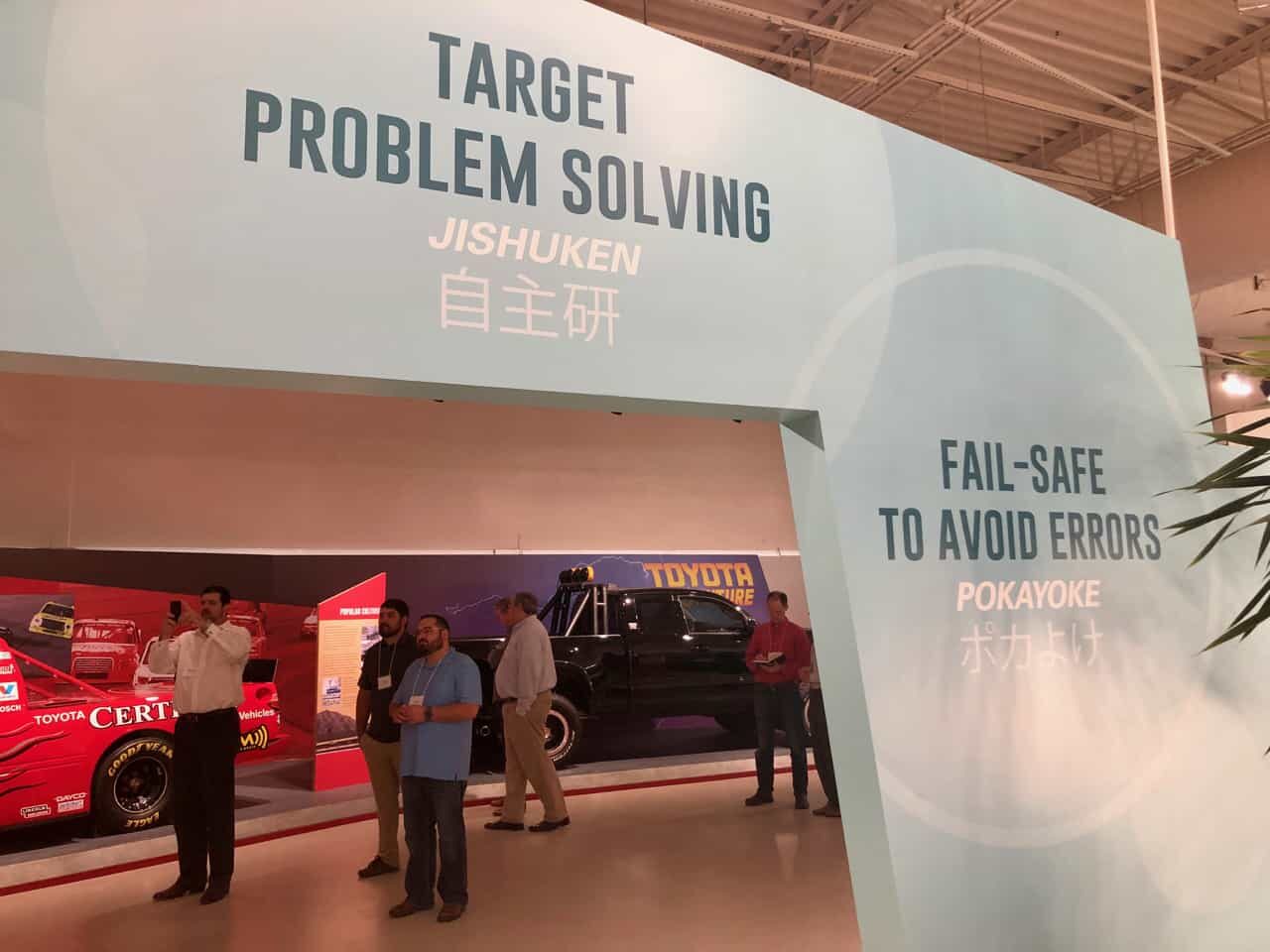
The visitor center has a new display on the “language of Toyota” and some of the Japanese words:

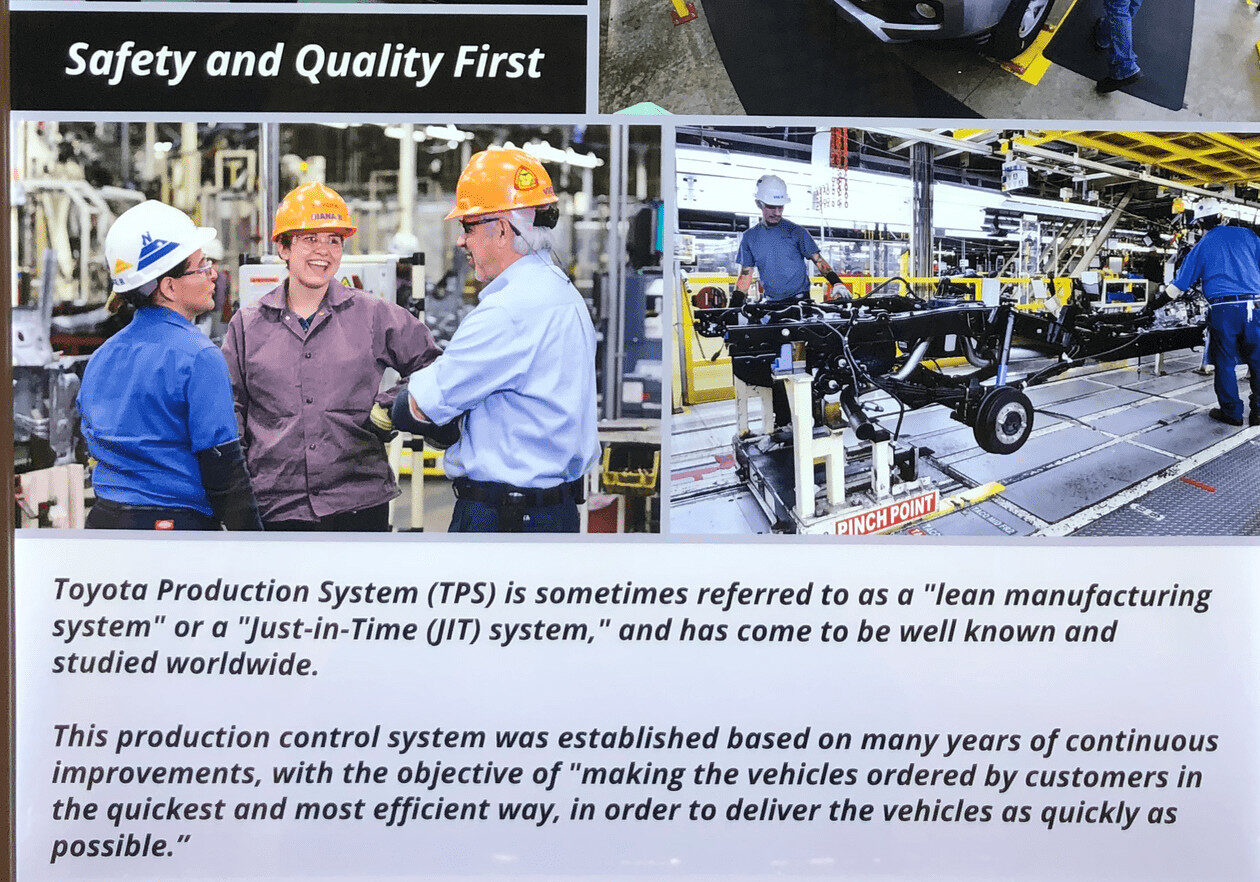
And Toyota continually emphasizes “safety and quality first” along with the idea that “lean manufacturing system” is another term for the Toyota Production System:
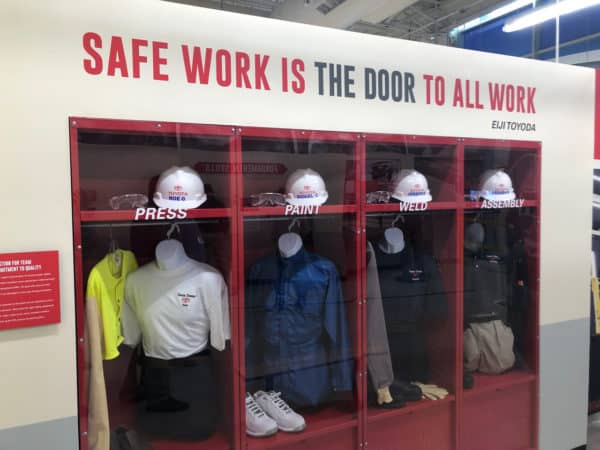
This display shows the clothing and PPE that have to be worn in different parts of the plant:
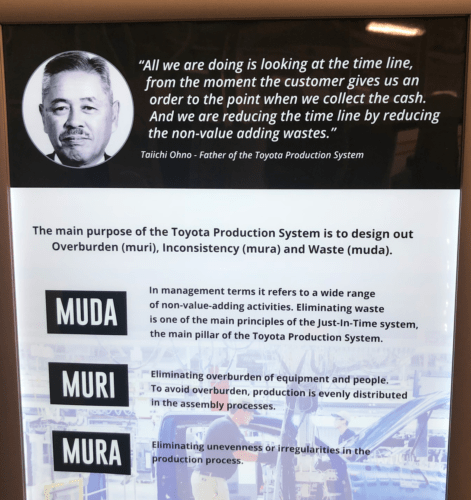
And there is an appearance by Taiichi Ohno with an explanation of muda, muri, and mura:
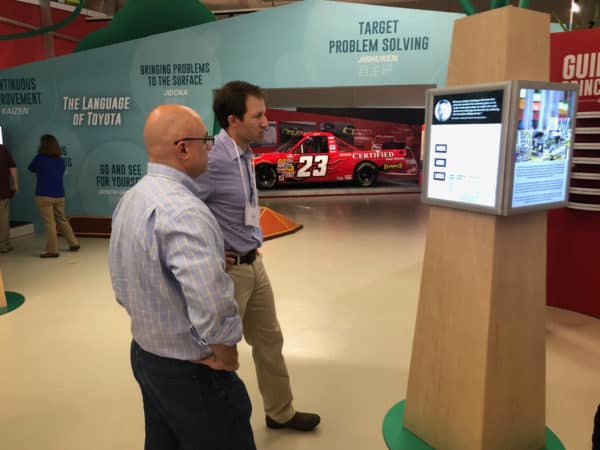
And here are my co-organizers Joel Tosi and Dion Stewart checking that out and talking about it:
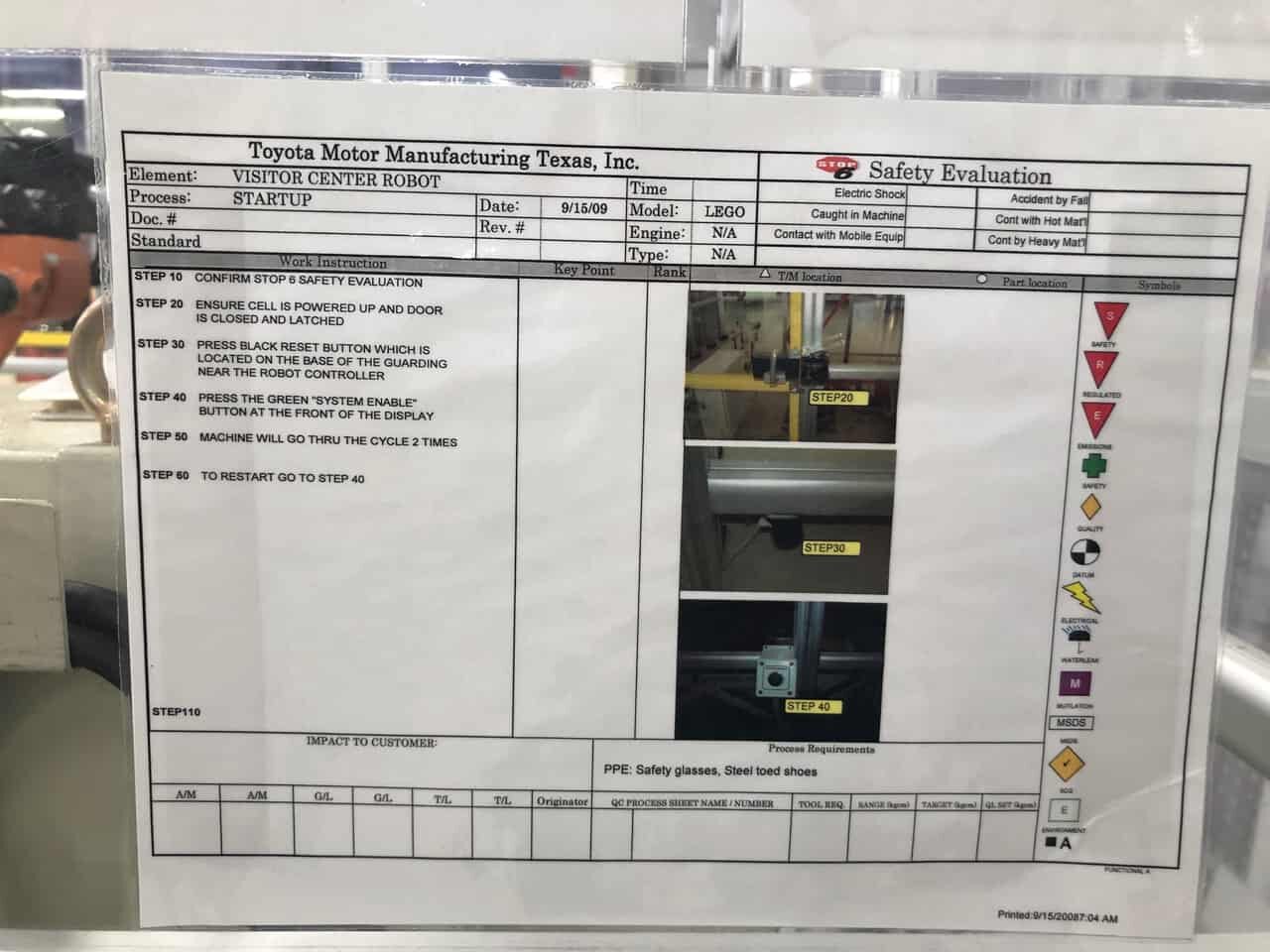
While the emphasis is on people, Toyota does have robots in the factory, of course. The visitor center's demonstration robot has a few work instruction documents posted, including this one (which I assume is their normal factory format):
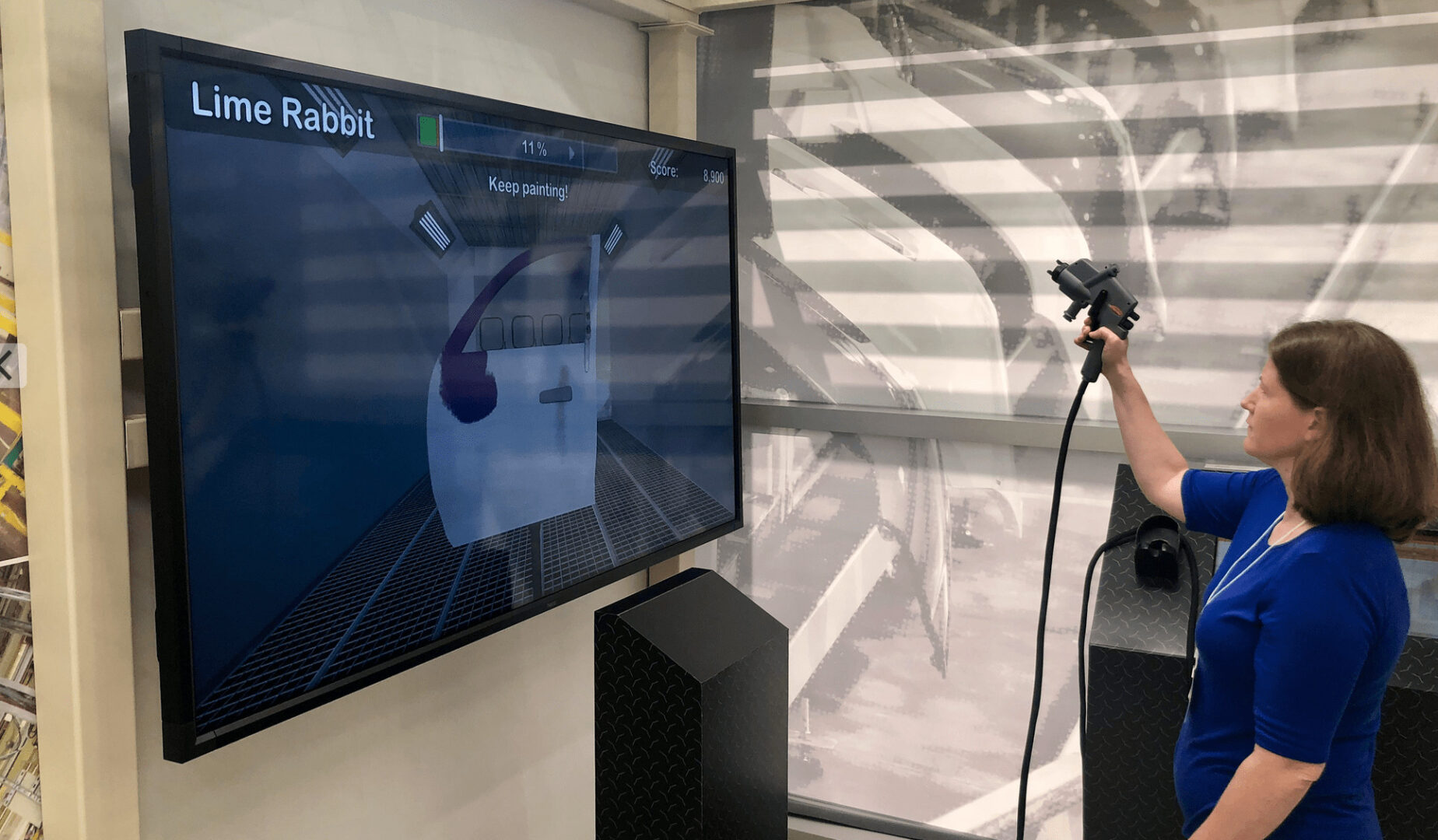
There was also a fun virtual paint shop simulation that visitors could try:
How Toyota Uses Metrics — and the Questions They Raise
When we first walked in, there were some key metrics on display, including safety and quality figures. They displayed what The Toyota Way Fieldbook called “trend charts” as I blogged about here:
Visual metrics are only helpful if they lead to better decisions. The risk, in any organization, is reacting emotionally to normal variation instead of improving the system that produces the results. This is where better statistical thinking — not more targets or pressure — can help leaders focus their time and energy more effectively.
Although Toyota says they teach everybody the “7 basic QC tools,” which includes control charts, I didn't see any evidence of SPC being applied to metrics, as I write about in my book Measures of Success.
That seems like a lost opportunity. The metrics I saw in the entryway looked like they were fluctuating around a non-zero average. I hope Toyota isn't overreacting to every up and down in those metrics. I'm sure they are focused on improving the system, but Process Behavior Charts would help with this.
Obeya, KPI Corrals, and Visual Management at Toyota
As we toured the factory, it again struck me that the plant has a room called the “KPI Corral” where Key Performance Indicators are tracked. Some call this a “War Room” (and I understand why many don't like that phrase). I also don't care for the word “Obeya” (or “Oobeya“) because it sounds like “obey” in English, which isn't the point of that approach or TPS, to get people to obey.
Language matters more than we often realize. Spaces meant to support learning and alignment can unintentionally reinforce fear or compliance if they feel punitive or command-and-control. At its best, visual management should invite questions, collaboration, and shared problem solving — not obedience.
At the end of the tour, our two guides allowed us to answer questions. I'm sure they occasionally get a group like ours, with 40 people who are curious about TPS and Lean. Our questions might have been a bit exhausting to them, but our guides held up well under the barrage of curious questions.
One change from previous tours is that the guides used to be full-time Toyota team members who were on assignment after working regular jobs, like in the paint shop. Now, the guides said they are not full Toyota employees — they seem to be contractors who are full-time guides. That made it more difficult for them to answer more detailed questions about working at Toyota. From a visitor experience, that was a bit of a disappointment.
Respect for People Doesn't Eliminate Hard Tradeoffs
One of the healthcare people in our group asked about the rotating shifts — two weeks on days and two weeks on nights — and asked why Toyota does that when, physiologically, that's not good for people (I didn't prompt her to ask that question… something I've blogged about before):
The guide said that Toyota management asked the team members and they voted to keep the rotating shifts. That's an interesting question to be about how you balance “respect for people” (listening to the employees) with safety and quality. I'd be curious to see data about how those metrics might be negatively affected by the shift rotations.
Respect for people doesn't mean avoiding difficult tradeoffs. It means engaging people honestly, listening to their perspectives, and being transparent about constraints and consequences. The harder question is how organizations test assumptions, review data, and revisit decisions over time instead of treating them as permanent.
Key Lean Lessons from Touring Toyota's San Antonio Plant
Either way, I appreciate that Toyota has the visitor's center and the tours. I'll blog next about our time at Garrison Brothers distillery and our event that we held there.
What stood out most wasn't any single practice or display, but the consistency of Toyota's learning mindset. Even the visitor experience reflects experimentation, reflection, and revision over time. That's a reminder that becoming a learning organization is never finished — it's practiced daily.
Thoughts from Joel and Dion
Here's their blog post with their reflections and thoughts:




Here are some reflections from David Skinner about Kaizen, incentives, and Toyota:
Here’s a link to a blog post by an attendee and a KaiNexus colleague, Matt Banna: