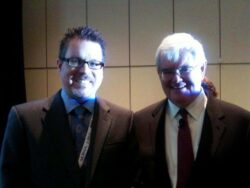

Maximizing Manufacturing Efficiency in China: A Discussion on Lean Principles with Jim Womack

LeanBlog Podcast #13 brings us part 2 of our discussion with James P. Womack of the Lean Enterprise Institute, the author of many books, including the classic (published 10 years ago) Lean Thinking and the more recent Lean Solutions. Part 1 can be found here.
In the second podcast, Jim Womack delves into the massive restructuring of China's state-owned enterprises, describing the dismantling of the “iron rice bowl”–the traditional system where employment guaranteed housing, healthcare, and education. Jim notes that managers are now incentivized to cut headcount and shed social obligations to reach minimum competitiveness, a stark reversal from the job-creation mandates of the past. He contrasts this with the approach of Western multinationals, suggesting that while some are building for the long-term domestic market, others are merely exploring low-cost options with plans to move to Vietnam if costs rise.
The conversation shifts to the working conditions within Chinese manufacturing, where Jim identifies a sharp divide between the clean, safe plants run by Western multinationals and the “stupid meanness” found in some independent Chinese operations. He argues that unsafe labor practices and poor environmental controls are ultimately detrimental to quality and cost, citing a pencil factory where open varnish vats wasted expensive materials and endangered workers. Jim also highlights the looming demographic crisis caused by the one-child policy and the severe environmental degradation that will force China to divert significant GDP toward cleanup and healthcare in the coming decade.
Finally, Jim offers strategic advice for companies considering outsourcing, warning that the “Lean math” has shifted significantly due to risks involving currency stability, intellectual property, and supply chain reliability. He advises companies to “think three times” before moving operations solely for export, suggesting that near-shoring locations like Mexico often make more sense for the North American market. Addressing the automotive sector, he predicts that a significant influx of Chinese-branded cars into the U.S. is still 10 to 15 years away, as major Chinese firms like SAIC remain focused on satisfying domestic demand.
Automated Transcript (Likely to Contain Defects)
Mark Graban: Hi, this is Mark Graban from the Lean Blog. This is episode number 13 of the podcast, December 17th, 2006. This is part two of our discussion with Jim Womack talking about the state of Lean in China. This week, we'll talk about more general manufacturing and business issues related to competing with China, doing business in China, and considering manufacturing in China either for export or the domestic market.
You talk about whether it is state-owned businesses or companies that are trying to be a little more market-driven. Do you get a sense that as companies are adopting Western management practices, there is a fanatical short-term focus? Or are some of the Chinese companies able to take more of a long-view sense of some of their decisions and priorities?
The End of the “Iron Rice Bowl”
Jim Womack: Well, it's interesting. The long view of the state industries is that they have to stop being state industries. Unknown to Americans, there's been a tremendous amount of job cutting in the state industries. When a job gets cut, you lose everything. You lose your health plan, you lose your education, you lose your housing. Last year I was talking to the chairman of one of the mid-size state industries–he only had 400,000 employees, so I thought he was hardly anything.
He told me, “I'm getting rid of the school, getting rid of the hospitals, getting rid of the ‘iron rice bowl.' I'm getting rid of headcount as fast as I can.” In the old days, that was the exact opposite of what any manager would think about doing because you were actually rewarded for finding anything for people to do. Now we have the whole system running backward. Looking at the long term comes after you get through the downsizing.
This guy had been making many of his own parts, and all of that is now being sold off and outsourced, the same sort of thing that has gone on in Western countries over the last 30 or 40 years. He was furiously trying to get to what he viewed as a minimum competitive condition in which his company looked like a modern mass producer. That was his idea of the long term: “I've got maybe two years to get from where I am to being a modern mass producer.”
Mark Graban: You used the phrase “iron rice bowl.” What do you mean, or is that a common phrase?
Jim Womack: That is a common phrase. It means your job, which is your source of income and food, came with housing, education, and medical care–such as it was. It all came as a package because the key to the social control mechanism was the workplace. If you had your papers that said you worked at Widget Factory Number Nine, everything came with that. By the way, if you are working at Widget Factory Number Nine, and they have a school and a hospital, the last thing you want to do is get anybody upset with you. It is the ultimate in social control, and that is now basically being turned upside down.
Working Conditions: “Stupid Meanness”
Mark Graban: You hear stories of people coming from the inland rural towns to the factory towns. There was a report in a London paper talking about what they described as sweatshop conditions at the iPod factory–concerns about people being forced to work really long hours. What do you see in your travels over there?
Jim Womack: First off, the plants that are directly run by the Western multinationals, in my experience, are very clean and very safe. That is partly because they don't know how to run a sweatshop. If you tell a manager from Bosch or Delphi to go to China and run a sweatshop, they literally wouldn't know how to do it. Do you mean take all the protection off the machinery? Throw away the mop? Turn the heat up in the summer?
Therefore, what you see in terms of abusive conditions are the worst in independent, Chinese-owned operations. You have a lot of contractor stuff. The folks who are making stuff for multinationals but are not actually directly under the control of multinationals are obviously tempted to cut corners. The thing I always find sad about the corner-cutting is that it doesn't actually save you any money because there is always a quality implication of trying to get people to work too hard in unsafe conditions. You really can't make a quality product.
I put it in the category of “stupid meanness,” in which, by virtue of being mean to your employees, those managers are just undercutting their own business for the long term. I was walking through a pencil factory and was staggered to see them varnishing pencils in big open vats with a dip rail running through. I thought if I had a lighter, I could have blown the whole thing away. Half the varnish, which is probably the most expensive thing in the operation, is evaporating. I just see a lot of stupid meanness.
Mark Graban: If anything, it sounds like you have to convince people running unsafe factories in China that it is in their own economic interest to turn that around. You believe quality is free; I guess you hope safety is free.
Jim Womack: Safety ought to be free. I look at this stuff and it makes me angry, but then I talk to the managers. They aren't evil ogres; they really don't know any better. What they tell you is, “Oh, this is better than the factory I used to work in.”
Environmental and Demographic Challenges
Jim Womack: Something that is going to slow down the train a little bit is the environmental conditions, specifically regarding air quality and water. In the north, they are running out of water because they have been tapping into the aquifer to run the agricultural system. Everywhere on the coast, the pollution is at a level that people in Europe, the States, and Japan just can't imagine. There was a recent report by the environmental ministry saying that of the 10% GNP growth they have every year, their belief was that 7% of that is required to deal with the environmental damage.
There is this realization that the free ride is over where they could have no emission controls and just let it rip. Over the next 10 years, they are going to have to spend a lot of money. The other thing about China is that because of the one-child policy, they are facing a demographic curve that's just like the boomers in the States, where you are going to end up with a retired generation that is actually much larger than the working generation. They have done all of us a favor by putting the clamp on population growth, but there is a one-time transitional problem that goes with that.
Outsourcing and the “Lean Math”
Mark Graban: The phrase “doing the Lean math” comes to mind as people are considering outsourcing to China. Is that math shifting at all?
Jim Womack: Anyone at this point who is going to China purely for the purpose of exporting back to the U.S. or Europe really ought to do some careful analysis of the risk factors. You have country stability, currency stability, and supplier stability. Anyone can reverse engineer–they don't have to be working for you to do it–but you are helping them along and reducing their time to market if they have direct firsthand experience making your product.
The risk factors have gone up. If I were thinking right now about moving operations entirely for export back to these markets, I would say that train has already left the station. If you are trying to run a global business and want a substantial presence in the Chinese market, then you probably ought to think about going to China. The math has shifted further in the direction of “think three times before you really do this.” For North America, what is wrong with Mexico? It is a truck location as opposed to a boat location.
Mark Graban: There were some reports that General Motors was considering building cars in China for export back to the U.S. Is that a precursor to a Chinese automaker pulling a Toyota and setting up shop here?
Jim Womack: GM does have joint ventures in China making very small cars. Phil Murtaugh, who was head of GM China and is now the strategy director for SAIC, announced that they are not coming to the States; they have concluded they will be very busy in China for some years to come. The Chinese are probably 10 to 15 years away from significantly challenging the market here. If you want to build cheap cars for the States, go to Mexico. I am just skeptical about the big Chinese invasion that a lot of people seem to be bracing themselves for.
Mark Graban: Well, I really appreciate your time and sharing your insights on what you've been seeing regarding Lean in China.
Jim Womack: We are equal opportunity educators here at the Lean Institute. We will teach anybody who wants to know. I truly think competition is good for people. I believe they will build a first-class economy, and for the most part, we will be better off for their doing so.
If you have feedback on the podcast, or any questions for me or my guests, you can email me at leanpodcast@gmail.com or you can call and leave a voicemail by calling the “Lean Line” at (817) 372-5682 or contact me via Skype id “mgraban”. Please give your location and your first name. Any comments (email or voicemail) might be used in follow ups to the podcast.