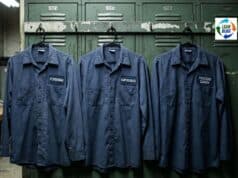


The End of the Line as They Know It – New York Times
The link above is an article about “Detroit Three” employees taking voluntary buyouts. There are some insights into the working world of the plants these employees leave behind.
One thing about the title for this post: I hate the word “workers,” as applied to just about anybody, when it implies “not thinking.” When we refer to people as “workers,” we often mean the Taylorist model where managers and engineers (or the educated) come up with plans and workers merely execute those plans. It comes back to a 35 year UAW veteran telling me once,
“Management told me to check by brain at the door.”
The Toyota Way “respect for people” notion is supposed to work against this. I stood eye to eye with an outwardly tough UAW “worker” (heck, “worker” is in the name of the UAW), who seemed broken down and devalued since management never wanted to hear his thoughts. It was very sad.
In the intro to the NY Times piece, a slice of GM life:
Talk to Kenneth Doolittle about General Motors, where he once supervised a team of assembly line workers, and he readily speaks with pride about his job and the self-esteem it provided. “I loved all of it — the people, the work,” he says. “I was in a position finally where people listened to me when I spoke. I wasn't just a Joe-Nobody. I contributed.”
Again, how sad that he was a “Joe Nobody” who wasn't listened to when he was just a “worker.” Faced with the prospect of becoming just a “worker” again (a different job at a local plant), Mr. Doolittle took the buyout — it sounds like it was a matter of dignity and respect for him.
Now if GM has been working on lean for such a long time, why are the production workers still treated like “nobodies?” Maybe this is why they aren't catching up to Toyota so quickly?
Mr. Doolittle, a stocky man with a narrow mustache, joined G.M. on the assembly line in Lansing in 1973 and rose to become a leader of one of the Japanese-style work teams that first became fashionable in the American auto industry in the 1980s.
These “work teams” were fashionable… and became just as unfashionable as managers and supervisors took control back. I'll write more about this some other time. In my archive of stuff, I have the signs and letters that talked about how my plant (circa 1995) was a “Deming Organization” based on teamwork and mutual respect. Ironically enough, the “Deming” approach had been reduced to meaningless signs and empty slogans. Not what Dr. Deming would have wanted.