29 Warning Signs and a Can Opener Bridge
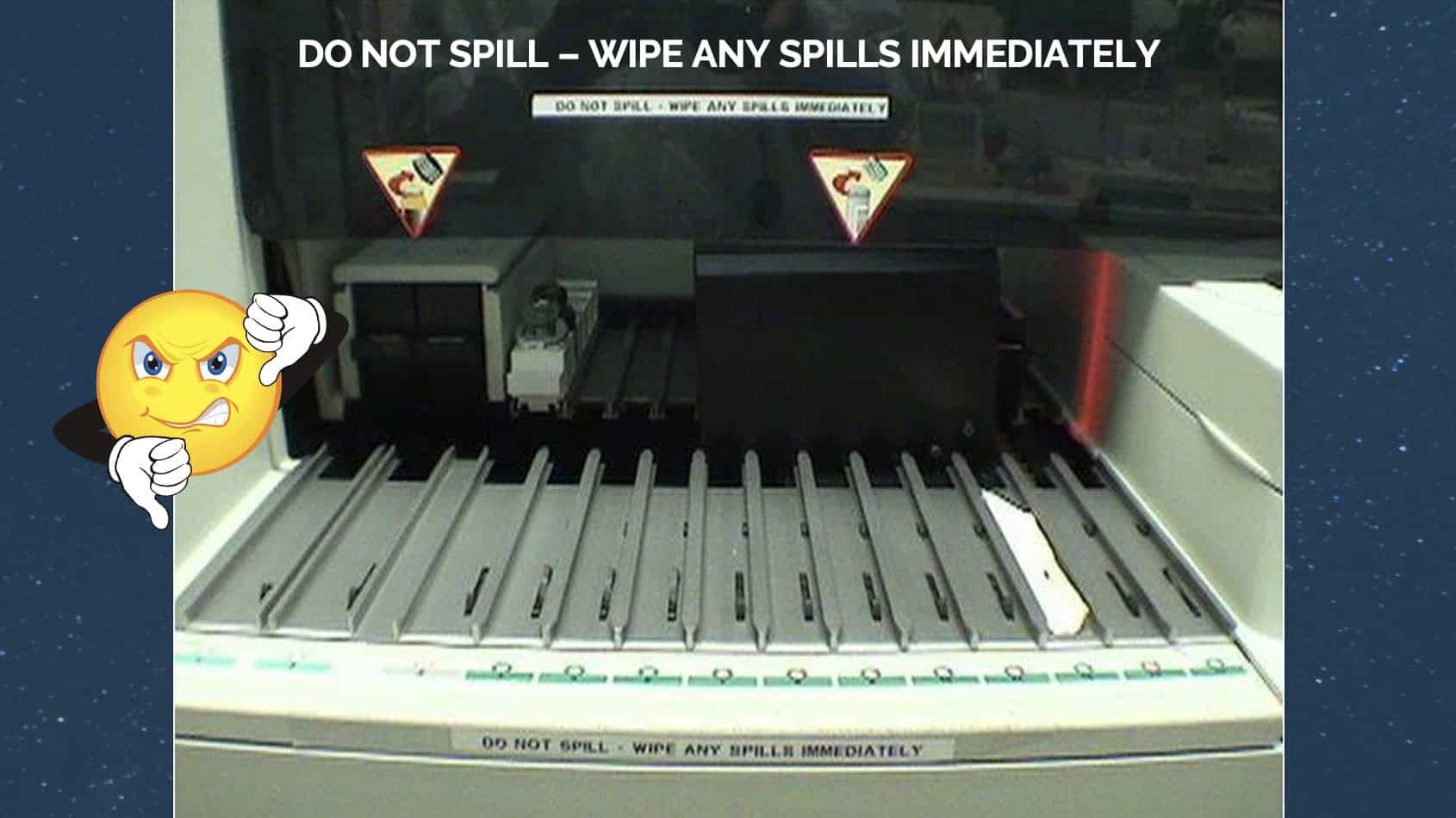
I've been photographing warning signs for years. It started as a running joke and turned into a whole category on my site. Signs that say “Be Careful.” Signs that say “Do Not Spill.” Signs that exist because something went wrong and nobody wanted to change anything else.
So when I read that Kentucky had 29 warning signs posted around one intersection in Louisville, my first thought was that I need to drive down there and photograph all 29. Louisville isn't that far from Cincinnati and going to drink Bourbon there (I mean “go to gemba” at a distillery) is always tempting.
I've known about the 11foot8 bridge in Durham for years, like everybody else who has watched a truck lose its roof on YouTube. I did not know until recently that Louisville has a “can-opener bridge” of its own, at the same height, with the same results. And what's happening there right now is a better teaching case than Durham, because something changed, and we can watch what it did.
Louisville Has a Can-Opener Bridge, Too
Third Street at Eastern Parkway, next to the University of Louisville. Two railroad bridges, owned by CSX and Norfolk Southern, cross the road there. The clearance is 11 feet 8 inches from the north and 12 feet even from the south. A standard tractor-trailer is 13 feet 6 inches.
On June 1, the state closed a five-mile stretch of the I-65 freeway to replace three aging bridges. It's a $150 million project, and they chose a full closure because it saves about a year over doing it in phases. That's a defensible engineering call. It's also the only thing that changed.
Brandon Shelley teaches civil engineering at UofL's Speed School and works as a traffic systems operations specialist for the Kentucky Transportation Cabinet. He told the school's news office that the bridges normally get struck about twice a month. That's a bad baseline.
Then, he said: “Last week we got into double digits in the first three days of the I-65 closure.“
That sounds like a statistical signal, even without having the data points on hand to back that up.
By June 24, WAVE counted 22 strikes since the closure. By mid-July, WDRB reported Suburban Towing had responded to more than 30 in a single month. Their operations manager, Jim Knight, said they normally get four or five. At one point, the city asked them to just park a truck nearby and wait.
Nobody's driving got worse on June 1. The routing changed.
Shelley said the navigation apps were a big part of it. They kept threading trucks onto surface streets to stay near the I-65 corridor instead of sending them the longer official way. “We found out late last week that the navigation apps have not been correctly updating themselves.” Drivers who got pulled over and asked confirmed it. Their apps were still telling them to go that way.
So one system was routing drivers into a place where another system had posted 29 signs telling them not to go.
Three days into the closure, KYTC added more signs. More signs!!!!!!
What makes one think that 28 signs weren't enough, but adding one more will somehow work?
To his credit, Shelley didn't pretend the signs were working.
“We can continue going in this direction,” he said. “But obviously it's not really working.”
So what's the countermeasure?
Eleven Years of Warnings in Durham
Jürgen Henn has been pointing cameras at the Gregson Street trestle since April 2008. His own FAQ gives the number that matters: 150 crashes in 140 months. A little more than one a month, for eleven years. That, to me, sounds like common cause performance.
Over those years, the bridge accumulated everything we tell ourselves works. Attempts at mistake-proofing. Low-clearance signs on each of the three blocks leading up to it. An overheight sensor. A red-light phase, added in 2016, that gives an over-height driver about 50 seconds sitting at a red light next to a flashing sign reading OVERHEIGHT MUST TURN. A steel crash beam.
And here's the part I think gets skipped. Henn writes that every day, he sees trucks trip the sensor, stop, and turn onto the side street.
“The vast majority of drivers heed the warnings.”
The signs aren't failing. They're working on almost everyone. That's the problem. A countermeasure that works on almost everyone isn't the most effective, let alone perfect, error-proofing. It's a filter, and a filter with enough volume behind it still produces a crash a month forever. Shigeo Shingo's point wasn't that warnings are useless. It was that asking people to perform as though they possessed divine infallibility is not a design.
Then, in October 2019, the North Carolina Railroad Company raised the Durham bridge eight inches, to 12 feet 4 inches. It cost $500,000. The actual lift took eight hours. The 9th Street Journal reported that the project was done to level the track above, not to spare the trucks. Eight inches was simply the most they could gain without putting a hump in the Duke Street crossing.
Twenty-two days later, a truck hit the bridge anyway. Because they're taller than 12 feet 4 inches.
But the number moved. Henn's log has run from crash 150 to crash 187 in the roughly six years since. Call it half the old rate. I'd hold that loosely, since Gregson Street was closed for construction for stretches and 2020 was 2020, so traffic volume is doing some of the work. Still, eleven years of signs, sensors, and a 50-second red light did not cut the rate in half, nor did it take it to zero. Eight inches of steel made a difference, of sorts. And the eight inches were essentially a byproduct of a railroad wanting its track level.
What's Actually on the Countermeasure List
Last year, the National Academies published NCHRP Report 1132, a guide for preventing bridge and tunnel strikes. It includes a table of every countermeasure they evaluated for low-clearance locations:
- Advance warning signs.
- Changeable message signs.
- Flashing beacons.
- Hanging chains and bells.
- Rumble strips.
- Crash beams.
- Detection systems.
- In-cab technology.
- Height placards.
- Route atlases.
- Commercial GPS policies.
- CDL training.
- Driver outreach.
That's quite a list.
Raising the bridge is not on the list. Neither is lowering the road.
That's not an oversight by the researchers, and it's not laziness by anybody's engineers. It's the honest picture.
In Louisville, you can't lower the road because a combined sewer holding tank sits directly underneath, and Shelley says redoing it runs deep into the double-digit millions, cost wise. You can't easily raise the bridge because railroads need a mile of track regraded in each direction. In Durham, it's a hundred-year-old sewer main a few feet under the pavement. Same constraint, 500 miles apart. Systemic problems!
The list does include restricting over-height vehicles, which is what everybody suggests once they hear the sewer main story. Boston already did it. Storrow Drive is a parkway with nine bridges at about 10 feet 6 inches (even shorter!!!), and trucks are not allowed on it at all. I wrote about Storrow last September, when the count for the year was already 36 by Labor Day. The locals made a verb out of it. Trillium Brewing named a beer “Storrowed,” and then a Trillium truck hit a low bridge. Oh the irony.
A ban is a sign. It asks the same driver to notice the same thing under the same distraction, and it fails the same way, just with a citation attached afterward.
So the hazard stays, and every party works the piece it owns. The railroad's concern, Henn notes, is the trestle. The crash beam solved that. It protects the bridge. It does not protect the truck. It is the thing that does the peeling of the roof off the truck.
Same Failure, Different Luck
In 2014, a Durham traffic study noted that only three injuries had ever been recorded at Gregson Street, which made rebuilding the bridge a low priority.
We're not always that lucky.
On September 11, 2010, a Megabus (about 13 feet tall) left I-81 by mistake and hit a 10-foot-9 railroad bridge over the Onondaga Lake Parkway outside Syracuse. Four people died. Deanna Armstrong, 18. Kevin Coffey, 19. Ashwani Mehta, 34. Benjamin Okorie, 35. The driver, John Tomaszewski, had passed 13 low-bridge warning signs (13!!!!), some with flashing lights, following a personal GPS to a stop he'd missed. He was charged with four counts of criminally negligent homicide and acquitted.
That bridge had been struck at least seven times since 2005. New York's 2011 report concluded that raising the bridge or lowering the road wasn't feasible. So the DOT went to 45 countermeasures (45!!!). Lasers, installed in 2011. Statewide, New York has spent close to $30 million teaching drivers about low bridges.
Education, or re-education, isn't usually a good countermeasure in any setting.
Durham and Syracuse ran the same failure hundreds of times. One of them ended with merchandise and a documentary. The other ended with four people dead. The difference wasn't the countermeasures. It was who happened to be driving under it.
Which means “only three injuries” wasn't a finding about the bridge. It was a finding about Durham's luck, and it went straight into a funding decision.
Then it got worse. In April 2023, New York closed the I-81 northbound ramp to the Parkway to keep trucks away from that bridge. The trucks went down Park Street instead, where there's a 12-foot-2 CSX train bridge. Syracuse recorded 12 strikes there in a year, the most ever. Mayor Ben Walsh was diplomatic about it: “We support New York State DOT's efforts to address their challenges, but this is leading us to address ours.” The Parkway bridge still gets hit.
The state optimized its part. The problem moved two miles and became the city's.
Syracuse's answer, now in the works, is a “clanker system” borrowed from Delaware. Heavy rubber buoys hung at bridge height, so an over-height truck hits something loud and soft before it hits something loud and hard. Newark, Delaware built theirs for $180,000. Boston has been testing rubber mats on Storrow Drive that slap the roof of a tall truck before it reaches the span. Same idea, worked out separately, in three states.
The rubber buoys are the only countermeasure in this story that a driver can't mistake for somebody else's warning. It's also the only one that doesn't require them to read anything, which matters more than it sounds. Kentucky's own research found that many of the drivers hitting the Third Street bridge don't speak English as a first language, and KYTC's answer is a project called viaSmart that would replace the words on the signs with pictures. That's a real improvement over 29 signs in a language you don't read. It is also, still, a sign.
So How Many Are There?
At exactly 11 feet 8 inches, I've four of those in the US: Durham before 2019, Louisville, Johnstown, and Davenport. Widen it to bridges famous enough for a Wikipedia entry or a fan page and you get roughly two dozen. Lansing's has its own website and a party in Old Town. Enid painted shark teeth on theirs.
Nationally, FHWA adds up around 15,000 bridge strikes a year, citing NHTSA. I don't fully trust that number, and neither, apparently, does anybody else. One of the deliverables of that 2025 NCHRP project was to build a national clearinghouse for bridge strike data. Better late than never.
We know about Durham because a guy who works nearby got tired of hearing the noise and bought a camera in 2008. We know Louisville's rate went from two a month to thirty because a tow company counts its own dispatches. We know Syracuse hit twelve because the city logs them in an incident system.
Every reliable number in this story exists because one person decided to count something nobody required them to count.
I'd still like to go photograph those 29 signs in Louisville. I think I want the pictures for roughly the same reason people watch the crash videos, and I'm not sure that reflects well on me. I'll report back to you on all of that.