


What Toyota Didn’t Write Down: Leadership Lessons from a 1992 Toyota Booklet
In April 1992, Toyota’s International Public Affairs Division published a booklet called The Toyota Production System. It was written for outsiders who wanted to understand what Toyota was actually doing. Someone handed me a copy years ago, and I honestly don’t remember who.
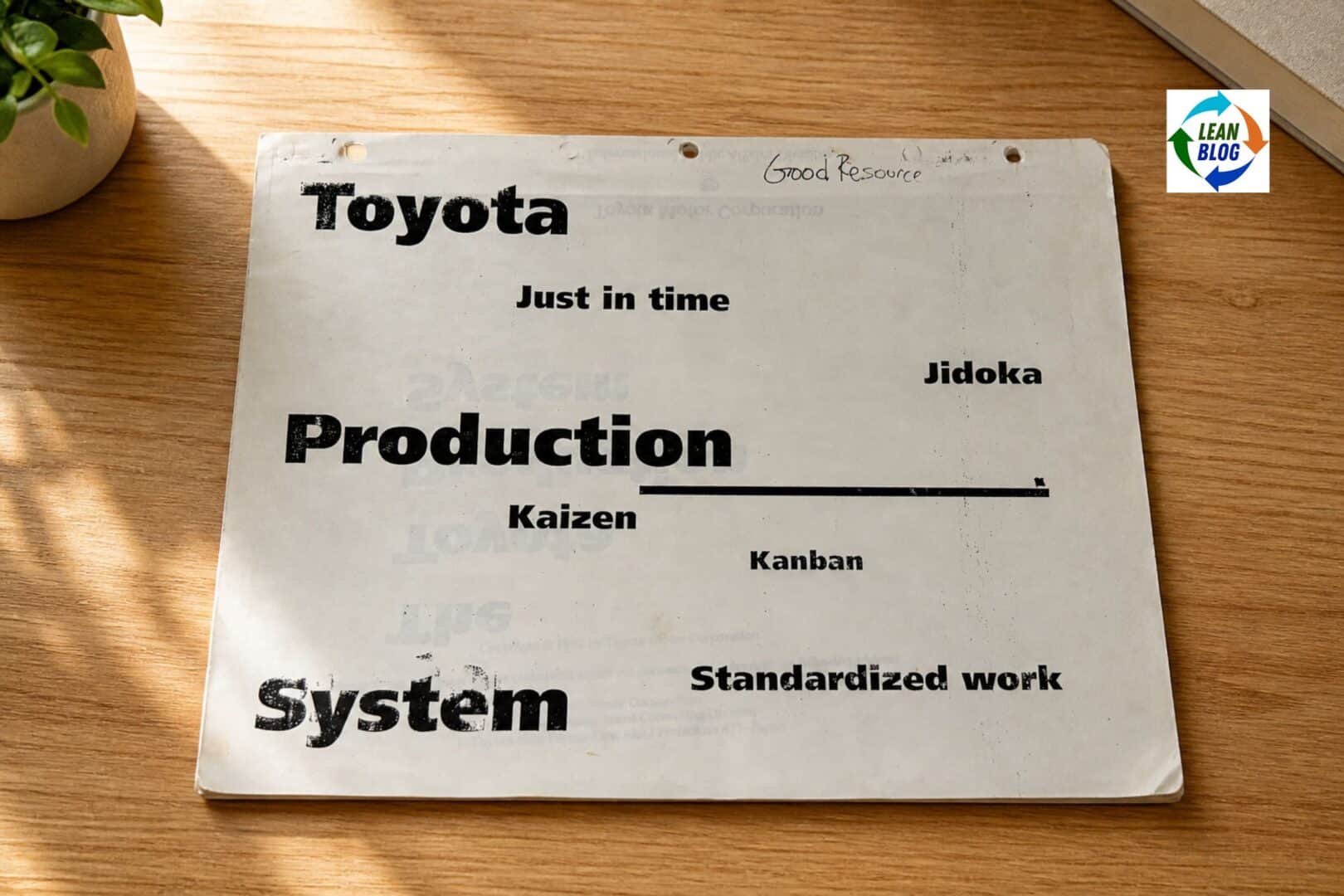
I reread it cover to cover this year and ended up writing a six-part series about it. The timing of the booklet matters. It came out after The Machine That Changed the World and before Lean Thinking, so it’s Toyota describing its own system in its own words, before most of the books, consultants, and case studies shaped how the West learned the story.
Free ebook
Get the series as one guide
I’ve turned the six posts into a 33-page ebook, What Toyota Didn’t Write Down, rewritten around a single argument: the booklet describes the mechanisms in detail and says almost nothing about the leadership behavior that made them work. My view, stated as an opinion, is that the people who built the system learned it by watching other leaders for years and never thought to write it down. Readers elsewhere copied the procedures and missed the behavior.
The ebook is not the posts pasted into a PDF. It adds an opening section that makes the argument, a one-page map of how andon, flow, kaizen, standardized work, and leader behavior fit together, and questions for a leadership team at the end of every section.
Here’s one idea from the guide: when workers don’t pull the cord, “that choice isn’t a culture problem. It’s arithmetic.” The personal cost of pulling is immediate. The cost of not pulling shows up later, somewhere else, attached to no one in particular.
About 40 minutes to read, with a one-page cut-out: “The First Five Minutes.”
What’s inside
- Why Toyota put employee judgment before any tool, and the “stimulating or stressful” admission most readers skip
- The line-stop cord as a procedure, and the arithmetic a worker does before pulling it
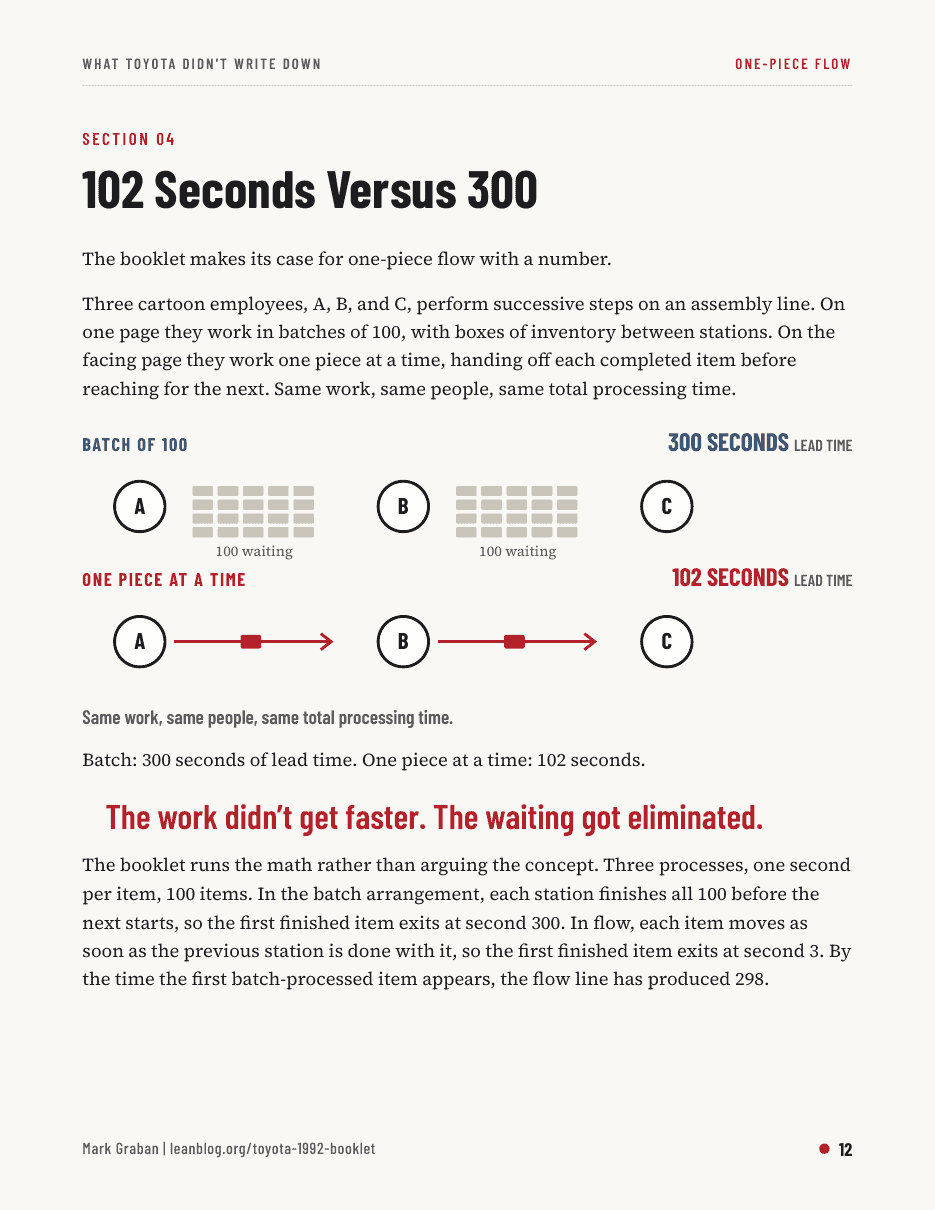
- 102 seconds versus 300: the booklet’s own math for one-piece flow, and why flow is what makes the cord worth pulling
- Two million proposals, 97% implemented, and why that describes authority to modify, not authority to suggest
- The two sentences about leaders, the thirty years of books that filled the gap, and the first-five-minutes test
- Standardized work and kaizen as one loop, owned by the people who do the work
- A one-page summary and six sets of questions to take into your next leadership meeting
Get the free ebook (PDF)
Enter your email. Your private download link appears right away, and we also email it to you. I’ll also send you a few short follow-up emails about the ebook. Unsubscribe anytime.
What surprised me first was how much of it is about people. The Foreword’s second sentence says the key to quality and productivity “lies in tapping the innate judgment and creativity of employees in the workplace.” Employees come before any tool gets named.
What surprised me more was what the booklet doesn’t say. It describes andon, kanban, and standardized work in detail. It says very little about how leaders behave.
The Series, in Order
1. What Toyota Said About Their Own Production System in 1992
Where the booklet came from, why its publication date matters, and why its Foreword starts with employees before it names a single tool.
2. What Toyota’s 1992 Booklet Says About Stopping the Line, and What It Leaves to You
The booklet describes the andon cord and the fixed-position stop in careful detail. Pulling the cord doesn’t automatically stop the line, and the procedure can’t carry everything that makes it work.
3. 102 Seconds vs. 300 Seconds: Toyota’s 1992 Case for One-Piece Flow
Same three workers, same work, same total processing time. Batching takes 300 seconds of lead time and one-piece flow takes 102. The work didn’t get faster. The waiting went away.
4. What Toyota’s 1992 Booklet Means by Kaizen and Job Ownership
Nearly two million improvement proposals in 1990, with 97% implemented. That number makes more sense once you see that “proposal” describes a different operating model than a suggestion box.
5. What Toyota’s 1992 Booklet Leaves Out About Leadership
A forty-page booklet about the system the world spent decades copying, and leadership gets two brief mentions. Why that might be, and why the first five minutes after a problem matter so much.
6. Toyota’s 1992 View: Standardized Work and Kaizen Are Two Sides of the Same Coin
The booklet treats standardized work and kaizen as one cycle, carried out by the same people who do the work. The final post also pulls the series together.
What Toyota Didn’t Write Down
The booklet mentions leadership twice: a Kiichiro Toyoda quote about engineers getting their hands dirty, and a short note about executives visiting the workplace and acting on what they see. That’s about it.
I don’t think Toyota was hiding anything. My guess is that the people who built the system learned it by watching other leaders for years, so it didn’t occur to them that it needed writing down. A Toyota reader in 1992 would have filled in the gaps. A reader at another company mostly couldn’t.
That gap matters for anyone trying to learn from Toyota. A procedure can tell a supervisor to go to the station when a lamp lights up. It can’t tell them what tone to use when they get there, or what happens next to the person who pulled the cord. In my experience, those are the parts organizations most often miss when they copy the tools.
Questions for Your Leadership Team
Each post ends with a practical question. Here they are together:
- When something goes wrong at the worksite, what happens in the first five minutes?
- When someone signals a problem, do they get help, or do they get questions about why they stopped?
- What percentage of improvement ideas get implemented, and who implements them?
- What was the smallest lot size your team ran last week?
- What standard did your team revise this month, and who decided it needed revising?
If you read the series, I’d be curious which of those questions was hardest to answer in your organization.
If you’d rather work through them with your team in one sitting, the free ebook above puts all six chapters and their questions in one place.
More Free Guides
- The Empty Suggestion Box: why staff ideas die in hospitals, and what leaders do instead
- Just PDSA It: how to make being wrong cheap enough that people test honestly