Ryan Weiss on Training Within Industry (TWI), Lean Leadership, and Performance
Scroll down for video, how to subscribe, video, transcript, and more
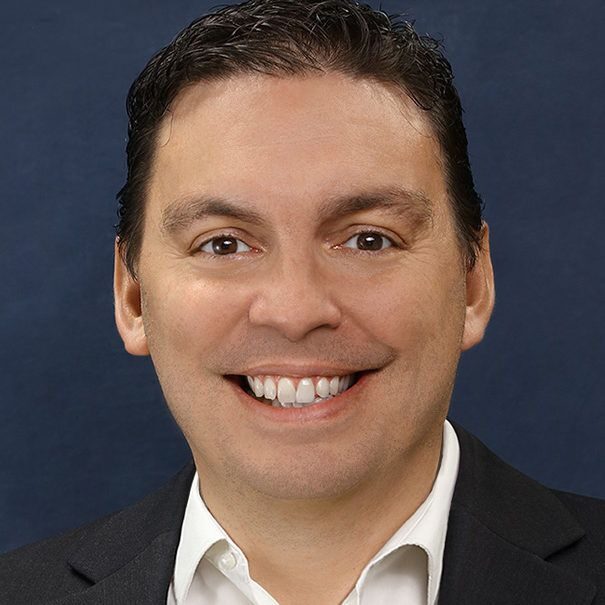
My guest for Episode #414 of the Lean Blog Interviews podcast is Ryan Weiss. He is president of his firm Effective Performance Strategies, based out of the Chicago area. We had a great discussion today about topics including Training Within Industry (TWI) and we chat just a little bit about BBQ (although it's not an episode of “Lean BBQ” ala “Lean Whiskey” (new episode coming Friday).
Topics, questions, and links related to today's episode include:
- How did you get introduced to Lean?
- Becoming a Certified Six Sigma Black Belt
- How do you engage people? What was your epiphany on people?
- Purpose + People + Process = Performance
- Taxation without representation :: kaizen without participation
- What is TWI?? How were you exposed to Training Within Industry?
- Other podcasts on TWI from this series
- Modernizing TWI — some sexist language /scenarios in the original
- What happens when you're promoted as a leader?
- Explaining WHY
- It's not just about manufacturing?
The podcast is sponsored by Stiles Associates, now in their 30th year of business. They are the go-to Lean recruiting firm serving the manufacturing, private equity, and healthcare industries. Learn more.
This podcast is part of the #LeanCommunicators network.
You can listen to the audio or watch the video, below. I hope you enjoy it like I did.

Video of the Episode:
Automated Transcript (Not Guaranteed to be Defect Free)Here is the cleaned-up transcript of the interview with Ryan Weiss.
Introduction
Mark Graban: Hi, it's Mark Graban and welcome to Episode 414 of the podcast. It is May 18th, 2021. My guest today is Ryan Weiss. He is the President of his firm, Effective Performance Strategies. We're going to be talking about a number of things including Training Within Industry (TWI) methodology, how he is modernizing TWI in different ways, and this equation of Purpose + People + Process = Performance. We're going to talk about training leaders. We're also going to talk a little bit about barbecue, but that's not the main thing. If you want to find links to everything that Ryan does, you can go to leanblog.org/414.
Please follow, rate and review. If you like the episode, please share it with a friend via email or social media, especially LinkedIn. That'll help spread the word about our great guests. Thanks again.
We're joined today by Ryan Weiss. He is the President of Effective Performance Strategies. Their website is epszone.com. So Ryan, thanks for being here. How are you doing?
Ryan Weiss: I'm doing great. Thanks for having me, Mark. It's really a pleasure to be on your show. We appreciate the opportunity.
Mark Graban: Sure thing. I'm excited about the conversation. Your web address makes me think of the old ESPN Zone restaurants.
Ryan Weiss: Yeah, some people have mentioned that before, like “That's pretty close to ESPN Zone.” I don't even think those are open anymore, are they?
Mark Graban: No, you have outlasted ESPN Zones. For being the worldwide leader in sports, they were not the worldwide leader in sports bars as it turned out.
Ryan Weiss: That's right. I'm pretty proud of the fact that we're gonna outlast them. That's a great accomplishment.
Barbecue and Team Building
Mark Graban: One other thing I wanted to ask you about: on the web, on LinkedIn, it says you are also the Pit Chief. So tell us about that.
Ryan Weiss: Actually, one of my business partners in all of this is a colleague going back probably 15 years ago now in the chemical industry. He told me that when he retired, his goal was to do barbecue team building events. So one of the things we did was I actually bought a big 24-foot barbecue trailer. We've got all these RecTeq smokers and Milwaukee tool chests with all the tools and seasonings.
Unfortunately, our timing on this was terrible. We did it about two years ago. We had some great events, some great publicity, things like that. But when COVID hit, people just kind of stopped wanting to do team building and getting together. But people tell me there's going to be some pent-up demand for this coming back out of this. So I have not sold the trailer. I'm still barbecuing on weekends.
But Denny, my colleague in this, he won the pork category at the Jim Beam Classic a couple years back. He's into barbecue. So when he retired, I bought this trailer and all this equipment and big party tents basically to do these things in a way that is engaging and fun. I think PowerPoint training–and of course we've all been doing Zoom training for the past year–can get a bit challenging. But when we bring some life into it, bring something interesting, that's what we try to do.
Mark Graban: Well, I do love barbecue. Between that and the ESPN Zone talk, it's before lunch for me, so I'm regretting bringing up any of this. But I was going to say though, as far as barbecue comments, being in Texas, when you order brisket, you get the choice: either they'll call it moist or fatty or lean. I like my organizations lean. I do not like my brisket lean.
Ryan Weiss: That's right. I would agree with you 100% on that. Absolutely. Life's too short. Got to eat. I'm not afraid of the fat. So barbecue is not the most lean activity of all, right? But there's value-added work that happens a day in advance and then there's value-added work that happens right before you eat, but there's a lot of waiting time in there. That's definitely one of the challenges of barbecue, but to make it really good, you gotta have some patience with it.
Mark Graban: Maybe there are lessons because you think of cooking “low and slow,” that is a very long value-adding process. If you were to try to speed it up, like, “Well, let me cook the brisket faster at a higher temperature…”
Ryan Weiss: Quality. There's no quality there. It just doesn't work. Absolutely. I mean, you've gotta give it time to break down the tissue and all that to get the texture right. And you know, there is an amount of… these new pellet smokers and things like that keep the consistency of the temperature so much better. There's still people who really love the stick burners and things like that, but you get more variation in temperature, you have more risk there. And thinking about the voice of your customer: what does your customer like? Spicy? Sweet? What do they like? There's a lot that goes into it. So we have a lot of fun with it when we can do it.
Lean Origin Story
Mark Graban: Well that's great. So our real intent today was to talk about more direct lean topics in the work that Ryan does and take a deeper dive into the TWI or Training Within Industry methodology. But before we get into that, maybe kind of step back more broadly. Ryan, I always like to ask guests: How did you get introduced to Lean? If you can tell us a little bit of your career story and where lean became part of that.
Ryan Weiss: Sure. I appreciate it. So yeah, going back over 20 years ago now, when I first started into the chemical industry, about a year and a half or two years into my role in a technical services type role where I was troubleshooting and doing things like that, the organization I was with selected me to come through what they were calling Lean Six Sigma training at the time.
So I went through the first round of that that they did, and I would say I kind of fell in love with it. The whole concept of how you take waste out of a system, how do you look at a process and really streamline it, but then how do you engage people in it? It became really fascinating to me.
On the front page of our website today, there's an equation that says: Purpose + People + Process = Performance.
If I think back on my journey, I got my degree in chemistry and finance, so I'm as process oriented as you can get. I mean, there's probably not that many people that have chemistry and finance degrees. So I'm very process oriented, and that's where I started my career was thinking the world's problems can be solved through process.
But as I got into that, as I got introduced to lean and started understanding more about the people part of it, it started to become more and more clear that yes, you can create an ideal process, but if people don't buy into it, if people aren't supportive, if people aren't engaged in it, if they don't have their voices heard, then you really can't drive performance.
And that's what led me to that final piece, the purpose part, which is: How do you explain to people why we need to change? Why do we need to do something different than they're doing it today? That's what really can change people's habits and behaviors. So that's really where that equation comes from, is my history with how I progressed through it. I tell people I progressed through it backwards. I didn't come to this aha moment of what Lean was all about until I started understanding that it's not just about process, it's about people, and it's about convincing and influencing people to change.
Mark Graban: Yeah. Well, I can see where any… I love that equation because if any of those parts are missing, you have a huge problem. I think of chemistry and finance; you could also describe those as being very analytical, technical fields. But for John Shook and others from their Toyota experiences who talk about sociotechnical systems and how that has to go hand in hand… so it's good that you had that. Was there a particular epiphany or was there more of an evolution?
Ryan Weiss: There actually was one time… it was after September 11th. I was on an airplane to Minneapolis, Minnesota. But for quite a while after that, I was driving everywhere. I was driving from Kansas City to Indianapolis, and I'm a little bit of a geek, so I was listening to some books on CD. I was listening to the story of the American Revolutionary War.
As I was listening to it and thinking about that rallying cry that we all learned about as youngsters–“Taxation without representation”–I started really thinking about how clear that was in any of the projects that I worked on. That if we changed a process without engaging the right people, without engaging the right stakeholders, what we were doing is basically putting a tax on them saying, “Hey, you're gonna do something a different way because I said so.” Because the data tells us to do this.
Mark Graban: It's kind of tyranny. The word tyranny comes to mind.
Ryan Weiss: That's right. And so that really stuck with me for 20 years now: Taxation without representation started the American Revolutionary War; it sure as life can kill any project that I'm working on. And so that's really where the people side started to hit home to me when I made that connection.
Mark Graban: So taxation without representation is a problem. You could also say “Kaizen without participation” is a problem if you're forcing change on people. So we focus on not just the process or the technical, we focus on the people and the social. Can you talk more about the Purpose part of that equation?
Ryan Weiss: Yeah. I appreciate that question because I think that becomes really the core of changing performance. People + Process is really about the habits that you have. If you think about that cue-action-reward sort of habit cycle that you're in, people plus process really defines that.
I sometimes give this example: At the beginning of COVID, if we go back almost a year ago today, I weighed almost 20 pounds more than I do today. It was when COVID first hit and I was sitting at home in my La-Z-Boy starting to do more virtual online stuff and not traveling so much. And my wife said, “You know, you need to get more healthy.” I've got some Type 2 diabetes in my family and things like that. And she said, “Yeah, so do I.”
That was a moment where… up until that point I just kept putting on more and more weight every year. I was traveling a lot for work and just going to restaurants and doing the things that I did and I was neglecting my health. There were times when I thought, “Yeah, you know what? I need to get healthier. I want to get healthier.” But I wasn't doing it.
So at the beginning of COVID, when my habit was disrupted… I was still the same person, my process had been disrupted, and I had sort of a choice to make. I could either sit in my La-Z-Boy and just keep eating as much as I wanted to–and that probably wouldn't have turned out so well–or I could look at sort of the bigger purpose of: Who am I as a person? How healthy do I want to be?
That's where Purpose comes in. When our habit gets disrupted, whether it's the people or the process that gets disrupted, people are no longer following their same routine. If you want to improve performance, you have to understand why, and you have to tie that together. So that's kind of a story I like to tell people about when habits get disrupted, it can get better or it can get worse. That's really: Why is it important to you? Why do you do the things you do? When you come back to that core, it can help make that decision for you about which direction you go.
Mark Graban: Yeah. And I appreciate you sharing that. We can all think about that from a personal perspective, but I think there are good parallels to an organization. We can ask an organization: How healthy do you want to be and for what reason? And what's that underlying purpose? I think there are strong parallels to the idea of lean for an organization is not a quick fix. It is not a pill. It is not a surgery. It's a time and a place for… I know somebody who had weight loss surgery and there was good benefit to that, but you can also think of Lean as adopting a new lifestyle.
Ryan Weiss: That's right. And I agree 100%. From the organizational perspective, I think this is becoming more important today than ever before in my career. The purpose of an organization and the vision and values of organizations has become increasingly important from the standpoint of everything from attracting and hiring good employees and retaining good employees, to whether or not people buy from you, to even in some cases whether or not suppliers will supply you.
As we look at society today, as we look at some of these challenges and social movements, people have their voices and they want to be heard. We're seeing organizations of all sizes really think about their core purpose: What are we here for? Sustainability, diversity, equity, inclusion, everything. They want to make sure that they're sending the right message to all of the stakeholders. And I think that purpose is really a foundational thing in terms of where people are going with that.
Mark Graban: Yeah. I think a lot of that we could also connect to the principle of Respect for People. And there's the purpose of the company for the long term. If it's not purpose, it's certainly an important part of the equation. So again, that comes back to people. Purpose plus People plus Process.
Training Within Industry (TWI)
Mark Graban: So Ryan, we're going to take a deeper dive today into some of the work you've done with and related to the TWI methodology–Training Within Industry. People who have been listening to the podcast for a long time going back 15 years and 400 plus episodes: I did an Episode 196 with Jim Huntzinger about what is TWI, did an Episode 202 with Patrick Graupp talking about TWI in healthcare, and then Episode 314 with Skip Steward and Brandon Brown talking about TWI and Toyota Kata in healthcare. So I invite people to go back and find those episodes.
So, a lot of people through their practice of Lean or Lean Six Sigma don't get taught about TWI. So I guess first question for you is: How did you get exposed to it? And maybe in answering that, if you can give your elevator pitch version of what is TWI?
Ryan Weiss: Yeah, well, I appreciate the question. So I actually got first exposed to it through a customer. There was a client of mine who asked me if I could help them to modernize TWI. And my first response was, “Of course. Let's… but what does that really mean?”
So as I started digging in and learning more about it–and you could sort of already tell I've enjoyed learning about history–I went into it sort of with my eyes open thinking, “What can I learn from the 1940s?” That's when TWI was really developed and created. I thought, “That's a long time ago. The world was very different then.”
But what I found was there were some really great fundamental, foundational things about what TWI taught that really lay a solid foundation for the lean stuff that I was learning about and implementing and engaging with clients on. So it was a client who asked me to think about modernization of it. The more that I dug in, the more intriguing parallels I found and the more foundational stuff that I found that I saw my clients struggling with.
By that I mean, so in the 1940s, women were first coming into the workforce. This was when Rosie the Riveter and diversity was starting to happen in the workforce. And some of the examples they provided back then really wouldn't fly today in organizations in terms of how they spoke and things like that. So there was some modernization of language that was needed.
But there was also an element of: How do we manage, how do we speak with diversity in our organization? And that was a core principle. There was this what they call Job Relations–and we call it Performance Leadership–but it's sort of the: How do you communicate? How do you lead? How do you interact? If we skip forward to 2020, we've got Generation Z coming into the workforce and they've got very different perspectives than most of the hiring managers do about how things are done.
So I started digging into those things and started learning about parallels and where we were going with it. And I found a lot of really fascinating fundamental stuff on:
- How to train (Job Instruction)
- How to engage people in improving (Job Methods)
- How to lead and communicate (Job Relations)
Those three pillars. I see a lot of organizations struggling even with those basic, fundamental things today.
Mark Graban: Yeah. When you look at the pillars–Job Instruction, Job Methods, Job Relations–there is a lot of really timeless, helpful practice there around, for example, how to define and write standard work and maybe more importantly, how to effectively train people. Hence Training Within Industry. It's not called “Documentation Within Industry”; there's more to be done there. So there's a lot that's timeless, but can you think of some examples of what needed updating? I can imagine there were a lot of references to “he.” But what are some of the examples that you were asked to help modernize?
Ryan Weiss: Yeah. So in the original 10-hour sessions, one of the examples was something along the lines of: Bob was called into his manager's office and told Susie is going to join your team. And he said, “Well, she can't join my team. She's a woman and she's emotional. And women are emotional and they can't lift heavy things.” Right?
I mean, it was a very different culture in the 1940s. So I'm not proposing we go back to the 1940s. But so some of that had to really be modernized and thought through: What does diversity, equity and inclusion look like today? How do you change some of those examples and do it in a more effective way that works for the culture of 2020? Because the principles that they were teaching… they were teaching that supervisor how to overcome some of that. That was the concept there. But you can't use that language today. You can't use that as a foundational example.
So going through and taking the fundamentals of how they were transforming to include that diversity back then and say, “All right, similar stuff still applies today.” There were a lot of interesting things that I learned along my journey. Reading Patrick Graupp's book and going through some of that was really eye-opening for me.
Mark Graban: Yeah. And Patrick's book is worth looking at. So in that scenario you talked about, the man's concern about the woman coming into the department could be updated where, let's say somebody has concern… the concern could be based off of, “Well, they don't have experience in our department,” or “We're bringing someone into…” It could be based on something that has nothing to do with gender or race or ability or disability. Come up with examples that aren't cringeworthy or worse, offensive.
Ryan Weiss: That's absolutely right. And thinking about how we do interact differently today. I remember when I started at my first job out of college, there was a gentleman who called a couple of us into his office and said, “Don't send me emails. I don't do emails. Come and talk to me.” And my kids say, “Well, you know, don't send me emails because that's so early 2000s.”
The world of communication has transformed immensely as well. So making sure we've got some of those new ways of communicating in there. But there's still also some real benefit of things like… I've included exercises with clients about having them handwrite a thank you card. If you think about when was the last time you received a handwritten thank you note from somebody… it doesn't happen that often.
It actually… I've seen it bring tears to people's eyes. We actually did this with a trucking company a few weeks ago and I saw some people's eyes getting a little bit moist when they handed that thank you card to the person next to them and thanked them for something. So we don't want to give up on the old school technology. In fact, you can leverage it in really useful ways that can have a real impact because it's different. Sending a text message thank you is very different in terms of what it's communicating as well as how it's received. So we've integrated some older techniques but also some newer things like videos as well to try to engage the different learning mindsets.
Mark Graban: Yeah. I've received a handwritten note card in the mail a couple of times recently and yeah, that does stand out. That does make an impression. At KaiNexus, a software company that I've been involved with for a decade now, we've started sending to our webinar presenters a handwritten note and kind of a gift pack of some KaiNexus branded t-shirt or pair of socks or a coffee mug. And yeah, I think that gesture of the handwritten note and physical objects is kind of a nice thing in this day and age.
Ryan Weiss: Well, and you mentioned the physical objects. I think I told you about this a while back, but one of the modernizations we did, we actually 3D print some little gear sets that we give out to all of our participants. And it's really meant to symbolize those three skills: Job Relations, Job Methods, Job Instruction. There's also the Knowledge of Work and the Knowledge of Responsibility. So if you think about kind of those five as gears that are spinning around. And then on the outside we've got what's called an internal gear… that outer gear is symbolizing safety and thinking about how do we keep all of these gears together and keep them spinning together.
The real idea of this fidget spinner, if you will–it's 3D printed so it's all printed as one piece–is these are the sort of foundational things that TWI was built on. And when you spin all the gears together, you see it sort of working well. But if you're off balance… right, sometimes you have a supervisor who got promoted because of their technical experience. For example, “They're the best equipment operator we've got, so let's make them a supervisor.”
If we don't give them the other tools that are needed–such as how to deal with people, how to train people, what is your responsibility, and are you concerned about the safety of your team–if we don't give them those tools and those skills as they get promoted, what happens is they kind of get off balance. If we center everything around the knowledge of work, the whole gear set goes off balance. We find that pretty often in organizations where people's technical ability promotes them to the next level–sometimes we hear “you get promoted to your level of incompetence.” And that's really what a lot of this is all about: How do you train people? How do you engage them in improving? How do you make sure they're safe and feel safe? How do you engage them and communicate with them?
Mark Graban: Yeah. And send me a picture of that gear set if you will, Ryan. I'll put that in the show notes.
That brings up a really important point of this question of what happens when you're promoted to a supervisor, manager, leader role. I've seen organizations, this happens a lot in healthcare, get really burned by this assumption of, “Well, if somebody's good at their job, they must know how to train others.” TWI and Job Instruction helps make very explicit that we can teach people how to do this. If somebody's really good at their job, would we assume they know how to engage people in continuous improvement? That's where Job Methods comes in. Can you talk about how TWI is helpful or just talk more broadly about the problems that are faced when people get promoted and they're not equipped to deal with it properly?
Ryan Weiss: Absolutely. That's a great question. And it's been a journey for me as well as a father… having four children and thinking about these types of things, I sometimes put the mirror on myself and say, “Am I practicing what I'm preaching?”
The idea of how to train somebody… sometimes we have a “curse of knowledge.” Sometimes we become so experienced in how to do something or what we know that we forget that not everybody else may have the foundation or the key steps to get to where we are.
So one of the questions I ask folks at the very beginning of what we call Performance Development (the “how to train other people” part) is:
- How many of you can say, “I've told that person a dozen times what to do, and they still don't do it right”?
- How many of you say, “I've shown that person a dozen times how to do it, and they still don't do it right”?
Almost everybody in the room will raise their hand. I've done it in my life as a manager. I used to manage a shared service center in the Philippines with 180 people. I'm sure looking back I could find times where I just kept telling somebody how to do something and it still didn't get done.
So there's a difference between knowing how to do something and teaching someone how to do something. The process that TWI teaches us is a very structured process of not just showing them how to do it, not just telling them how to do it, but actually engaging them in the process. It's not just that we engage somebody in doing something once, but we want to engage them in doing it, and then we've got to have them show us how to do it. And they need to explain to us step-by-step what they're doing and why they're doing it that way.
Actually, that was another key learning for me. The job breakdowns that they taught in the 1940s didn't just say what should be done and how should it be done. They also included Why. I started reflecting on why did they do that? Somewhere along the line we lost that. Most standard work today says what to do and how to do it, but it misses “Why should we do it that way?”.
So one of the things we've done is we've actually created a learning profile assessment, thinking about a person's individual senses and learning preferences. We've worked with a psychologist, Dr. Dave Hamp, and we've created a learning profile assessment to help the supervisors and managers take this assessment and look at their own personal learning style. And then we ask them to look around the room at the other managers and ask the question: What's different about how they all learn?
Some people prefer reading. Some people prefer watching a video. Some people prefer doing. Some people prefer different ways of listening or talking. And we want people to get to that recognition that the way you learn is not necessarily the way I learn. If you get a new employee coming into your office and you think, “Well, I love reading books, so I'm just going to give this new employee a bunch of books,” that could be a complete failure. They may be somebody who loves watching YouTube videos or just hands-on doing stuff. So that awareness brings you the next step of: How do you teach to people who learn with different styles than you might?
Mark Graban: Pointing to the differences in how people learn… to me, it goes back to W. Edwards Deming who talked about the need for leaders to understand psychology. Deming emphasized treating every employee as an individual. We don't all have the same motivations or learning styles.
Thinking of Job Methods or Kaizen practices, I think of the idea of giving recognition when people have participated. You would think, “Well, of course everybody loves to be celebrated in front of their teammates.” Some people hate that. They feel embarrassed. They want to participate in Kaizen, but if you make them get up in front of a group, they'll hate you for it. We can't just treat everybody as cogs in a 3D printed gear set. People are different. We gotta respect that. I think that comes to the Toyota principle of Respect for People.
Ryan Weiss: Absolutely. And that's where a lot of the lean principles, a lot of these lean concepts and ideas, were building off of some of the TWI stuff. The links are definitely there. And that's what really got me excited about this project, about the modernization. It made me do some soul searching of, you know, what are the things I've been teaching? Have I been falling into some of these traps?
Mark Graban: And I love how you emphasize this practice of explaining Why, what are the key points, what are the reasons why. I think to me, that connects back into Respect for People. We're not just telling you to do it because we said so, but you're treating people like adults who can internalize why they're doing something. And then I think when an organization has strong connections to purpose–for example in healthcare, that purpose you'd hope everyone would be aligned around is not hurting patients–when you can go through a step in a Job Instruction and remind people the Key Point, the reason for doing it this way is to avoid injury or infection, that's really powerful.
Ryan Weiss: That's right. And I think the other thing goes back to the learning styles. If you tell someone to make sure that every time you do this you tighten that bolt… we may have to tell them five or six times. If we tell them, “Every time you do this, you have to tighten that bolt, and the reason why is that a vibration of the machine can make that bolt fall off and it could cause a catastrophic injury,” all of a sudden you've engaged different parts of the person's brain.
In a healthcare example, if I just tell them, “You have to put on a gown every time you go into this person's room,” okay. Do I remember to do it next time? I don't know. When you explain why–that we need to reduce infection and take that gown off so when you go into the next patient's room you don't cross-contaminate–all of a sudden as an adult, we start thinking about it and recognizing, “You're right, I don't wanna cross contaminate.” When our brains make that connection, it becomes incredibly more likely that we'll remember that.
That kind of goes back to when I asked those questions of all the managers: “How many of you have said ‘I've told that person a dozen times and they still do it wrong'?” This is a big part of the reason why. If you haven't explained why, and you haven't had them explain back to you why are they doing this to make sure you validate that understanding, then they may not remember it next time.
Mark Graban: Yeah. And let's stop blaming the recipients of ineffective training.
Ryan Weiss: That's right. There's a slogan that kind of goes throughout all the TWI: “If the worker hasn't learned, then the trainer hasn't taught.” And that puts the responsibility, the ownership for training, on the person who's doing the training.
A lot of managers and supervisors don't want to take that ownership. They wanna blame, “Ah, this new generation, you can't even teach 'em how to sweep with a broom.” I've seen some young folks who've got some really talented abilities. Have we really engaged them and communicated with them in an effective way? That means the supervisor, and me as a trainer of Training Within Industry, I also have to think about that. At the end of every session, I reflect on myself and I think: Have the people that I just trained learned? Do they really understand what we just did and how to apply it? Because if they don't, that's on me. That's not on them.
Mark Graban: Well, and I love how TWI emphasizes the need to close the loop to test for confirmation of understanding, test for ability to actually do it. It frames training is not just this linear “I trained you.” It's not even a Plan-Do cycle. There's that Check and Adjust. Some people will learn certain things more quickly than others. We can't treat them all the same. So much opportunity again to change some of these mindsets of blaming the person who is trained badly. And then when there's some sort of failure… “Okay, we're not blaming them, we're blaming the training. What's the countermeasure? We're going to retrain them.” If the training was ineffective the first time, maybe repetition helps, but I don't know if I would really trust that hypothesis. Let's test for confirmation now.
Ryan Weiss: That's right. The confirmation piece, it's uncomfortable for people. One of the things that I've observed in facilitating these training sessions is that the people in the room will often be very comfortable talking about how to do the job, telling somebody how to do it. But getting that next step of getting them to say, “Okay, now you tell me. Now I've trained you how to do it. Now you show me how to do it and why to do it that way.”
It's a very uncomfortable thing. Even in the training room. So we have to repeat it a few times and get people comfortable doing it because when they go back out to the shop floor or the hospital, they then have to do the same procedure. If they really want people to learn as effectively as they can, that means they need to teach and then have that validation, have that confirmation. If they're not comfortable doing that in a classroom, they're probably not gonna do it in real life.
And I would say even to the point, sometimes people say, “Well, I don't really have time to do that. I just have time to show them how to do it.” Well, yeah. But you just raised your hand saying, “I told them how to do it 10 times and they're still not doing it.” What that means is you've done the work 10 times. You don't have time to do it once right. You've got time to do it 10 times the wrong way though. Making that connection becomes really important.
Mark Graban: Maybe final question for you, Ryan. I know you've had the opportunity to work outside of healthcare with TWI. TWI even going back to World War II was being used in healthcare. There are nursing journal articles from just after the war talking about how they used TWI to quickly ramp up different sectors of the health system. Like today as we're trying to ramp up COVID vaccination, I think there's absolutely an application of TWI methodology. I know we're in agreement that TWI is not just for industry or manufacturing, but what are some of your experiences and thoughts on that?
Ryan Weiss: Yeah, it's a great question. Going back five, six years ago when I left industry to start the consulting business, I thought that almost all of my clients were gonna be in manufacturing. I thought, “This is the type of industry that I know the most about.” And the thing that I find today is that actually the largest percentage of my clients are not manufacturing anything.
People have this perception of TWI that it was manufacturing. But just for example, some of the customers I've been working with in just the past couple of months: they're an e-commerce company, a general contractor/construction company, a trucking company has been one of our greatest successes recently. Most of my clients today are outside of that industry. So to your point that TWI was used in healthcare, I've seen it be successful in a wide variety of industries now. It's a lot of fun to approach things with a new set of eyes and a new way of looking at things.
Mark Graban: And ironically, that “new way” of looking at things dates back 75-plus years.
Ryan Weiss: 75 years old. And that's what I think we can learn from history, right? Those who fail to learn from history are doomed to repeat it.
Mark Graban: We can respect the history and learn from it. And I also think of a phrase I've heard from Toyota people: “Adopt and Adapt.” We can adopt TWI and we can adapt it to the year 2021. We can adopt it and adapt it to trucking, healthcare, fast food organization, whatever that setting is. Just because something is old… well, in some ways, yes. The fact that it's old doesn't mean it's all bad. You can look and say, “Elements of this are proven. So let's adopt and adapt.” I appreciate you doing that work and kind of raising that point that your client brought up of: Let's be careful. Let's modernize some of this and not just teleport people back to the year 1944.
Ryan Weiss: That's right.
Mark Graban: So our guest again today has been Ryan Weiss. He is the President of his firm, Effective Performance Strategies. You can find them online at epszone.com. And if people at some point will hopefully be able to have you come out and do barbecue…
Ryan Weiss: That's right. Absolutely. We love barbecue, we love process and we love people. So with the combination of all three, we have a lot of fun.
Mark Graban: All right, well, I'm gonna go find some barbecue.
Ryan Weiss: Sounds good. You made me hungry now.
Mark Graban: But Ryan, thank you so much for having the conversation today. You brought up a lot of great topics, made a lot of great points. So thank you again for doing that.
Ryan Weiss: Thanks for having me on, Mark. It was my pleasure. I appreciate it.
Mark Graban: Well, again, thanks to Ryan Weiss for being our guest today. You can find links and show notes online at leanblog.org/414. Please follow, rate and review the podcast on Apple Podcasts or wherever you might be listening. Also want to remind you that this podcast is part of a network that we call the Lean Communicators. You can find more, lots of great listening at leancommunicators.com.
Announcer: Thanks for listening. This has been the Lean Blog podcast. For lean news and commentary updated daily, visit www.leanblog.org. If you have any questions or comments about this podcast, email mark at leanpodcast@gmail.com.
Thanks for listening or watching!
This podcast is part of the Lean Communicators network… check it out!