How Cleveland Clinic Uses Daily Tiered Huddles to Drive Lean, Accountability, and Learning
Cleveland Clinic's daily tiered huddles are not just short meetings–they're a Lean management system that connects front-line realities to executive decision-making in real time. By combining visual management, clear escalation rules, and psychological safety, these huddles help teams solve problems locally when possible, escalate risks quickly when needed, and learn from performance every day. The result is greater alignment, healthier accountability, faster problem-solving, and leaders who truly understand what's happening across the organization.
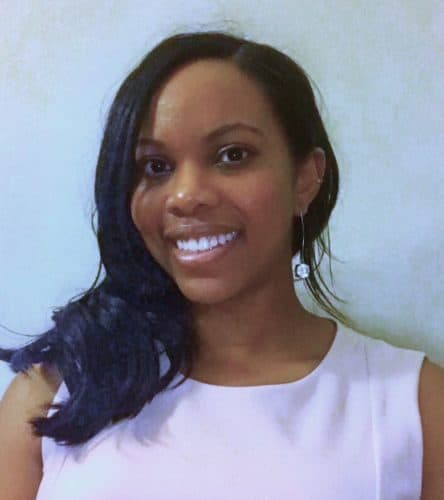
Our guest today for Episode 348 is Cinnamon Dixon, Director Of Continuous Improvement at Cleveland Clinic. I interviewed her for the KaiNexus Continuous Improvement Podcast series, and I'm cross-posting that interview here to give it more exposure.
Our KaiNexus team members who were at the Lean Healthcare Transformation Summit in June were really impressed with Cinnamon's presentation on their “tiered huddle” process that's part of their Lean methodology. So, we asked her to do the podcast.
You can get a full transcript via the KaiNexus blog.
I recently had a chance to visit Cleveland Clinic. I spent the morning observing their tiered huddles, so I'll be writing a blog post about that soon. Thanks to Cinnamon and Cleveland Clinic for being so willing to share!

For a link to this episode, refer people to www.leanblog.org/348.
For earlier episodes of my podcast, visit the main Podcast page, which includes information on how to subscribe via RSS, through Android apps, or via Apple Podcasts. You can also subscribe and listen via Stitcher or Spotify.
New! Subscribe and listen with Spotify:

What We Discussed
Getting to Know Cinnamon Dixon
- Cinnamon, please introduce yourself and share a bit about your professional background.
- When and how were you first introduced to continuous improvement? Was it under the banner of Lean, or another methodology?
Cleveland Clinic's Improvement System
- Can you give us a high-level overview of the Cleveland Clinic Improvement Model (CCIM)?
- What role does visual management play within CCIM?
Understanding Tiered Huddles in Practice
- What are “tiered huddles,” and how do they work at Cleveland Clinic?
- Let's start at the front line:
- What topics are typically discussed in front-line huddles?
- What actions or responses are expected to come out of those meetings?
- How do issues and information flow upward through the different leadership tiers?
Escalation, Ownership, and Problem Solving
- What kinds of issues are handled locally, and which ones get escalated?
- How do you decide the appropriate level for escalation without overloading leadership?
Implementation and Learning Over Time
- How were tiered huddles initially rolled out across the organization?
- What have you learned along the way, and what adjustments have you made based on experience?
Advice for Other Organizations
- What advice would you offer healthcare organizations that are considering daily tiered huddles or are early in their journey?
- What are the most common pitfalls or misunderstandings you see when others try to adopt this practice?
Why Tiered Huddles Matter More Than the Mechanics
What stands out most about Cleveland Clinic's tiered huddles isn't the mechanics, the templates, or even the escalation structure–it's the way daily management reinforces learning, respect for people, and shared responsibility. When people have a reliable way to surface problems, ask for help, and see issues addressed quickly, accountability becomes something that's enabled, not imposed.
Tiered huddles work when they're more than meetings–when they're a daily habit that connects purpose, data, and people across the organization. Done well, they strengthen psychological safety, improve communication flow, and help leaders stay grounded in what's really happening at the front lines.
As healthcare organizations continue to face uncertainty, staffing pressures, and increasing complexity, systems like this matter more than ever. Cleveland Clinic's experience is a reminder that sustainable improvement doesn't come from heroics or dashboards alone–it comes from creating simple, consistent ways for people to learn and improve together every day.
If you're exploring tiered huddles or other Lean daily management practices, the real question isn't whether you can copy the structure–it's whether you're building the culture that allows those structures to work.
Transcript
Episode 348: Cinnamon Dixon, Cleveland Clinic
Hi, this is Mark Graban, and welcome to episode 348 of the podcast for September 18th, 2019. My guest today is Cinnamon Dixon. She is Director of Continuous Improvement at the Cleveland Clinic. I interviewed her for the KaiNexus Continuous Improvement Podcast series, and I'm cross-posting that episode here to give all the great stuff that she's sharing a little more exposure.
If you haven't already done so, I'd invite you to go and subscribe to the KaiNexus podcast. You can find it in all the usual places, including wherever you find and subscribe to this podcast series. Our KaiNexus team members who were at the Lean Healthcare Transformation Summit in June were really impressed with Cinnamon's presentation on their tiered huddle process that's part of their lean methodology. They call it the Cleveland Clinic Improvement Model. So we asked her to do this podcast. You can find a full transcript via the KaiNexus blog, and I'll link to that if you go to the page for this episode, leanblog.org/348. Also, I recently had a chance to visit Cleveland Clinic, and I spent the morning observing their tiered huddles, and I was really impressed, so I'll be writing a blog post about what I observed sometime soon. You can find that at leanblog.org. I want to thank Cinnamon and Cleveland Clinic for, as always, being so willing to share the great work that they're doing.
About Our Guest
Our guest, Cinnamon Dixon, is the Director of Continuous Improvement at the Cleveland Clinic. She has over 15 years of experience in organizational effectiveness and continuous improvement. Cinnamon started her career at the Cleveland Clinic as an organizational effectiveness consultant. In that role, she led the development of teams and leaders. Her work included leading system-wide initiatives such as the implementation of the Employee Engagement Survey, which focuses on how to create and sustain an engaged culture. She was also instrumental in developing and facilitating the Cleveland Clinic Experience, which was an interactive exploration for over 50,000 caregivers on how each person contributes to the mission and values of the organization.
During this time, her curiosity for continuous improvement was piqued. She shifted her focus toward creating and sustaining systems that support the great behaviors that we want to see in our leaders and teams. This led her to join the continuous improvement team. In her current role, she leads a dedicated group of continuous improvement specialists who execute projects, programs, and apply the Lean methodology as they work to advance the foundation for a continuous improvement culture enterprise-wide.
Cinnamon is also an adjunct professor for Tri-C Corporate College in Cleveland, Ohio. There, she teaches a variety of courses centered on organizational effectiveness and continuous improvement. Cinnamon earned her MA in Diversity Management Psychology at Cleveland State University, with an emphasis on leadership development, group processes, and adult learning.
Now, here's our conversation.
Background and Path to Continuous Improvement
Mark Graban: We are joined by our guest, Cinnamon Dixon, coming to us from Cleveland Clinic. How are you today?
Cinnamon Dixon: I'm doing well. Thank you.
Mark Graban: Can you start off introducing yourself for the listeners? What's your professional background within healthcare?
Cinnamon Dixon: Sure. Like you said, Mark, my name is Cinnamon Dixon, and I'm the Director of Continuous Improvement here at the Cleveland Clinic for our main campus central team. My background is actually industrial psychology, so I have a bachelor's and master's in psychology with a focus in industrial organizational psychology, where really my love and passion is around studying how we think and behave in the workplace.
Mark Graban: And there are lots of opportunities to think about those and study those topics in the course of continuous improvement, right?
Cinnamon Dixon: Absolutely. Absolutely.
Mark Graban: When did you first get introduced to process improvement, continuous improvement? Was it under the header, the banner of Lean, or what were your introductions? Everyone's always got a different path into this.
Cinnamon Dixon: Yes. I think I do have kind of a unique path. I've been with the clinic for about 12 years now, and I first started out as an organizational effectiveness consultant. I loved my work, and my work was truly around leadership and team development, and running pretty large-scale projects across the enterprise. Along the way, one of the things that always stood out to me is there's only so much the leader and his team can do. It was actually a Deming quote that steered me in the direction of continuous improvement, where he talks about the eighty-five percent of the reasons for failure are deficiencies in systems and processes. So I would see that come up over and over again where I said to myself, “This isn't the leader,” or, “This isn't the employee. There's something more to this. Let's take a look at what are the systems and processes that are really keeping the team from being at their best.” It was around that same time that truly our continuous improvement team and department at the clinic was forming. They started probably about a couple years before I started at the clinic, so it was fairly new. It was around that time that I joined the continuous improvement department and really started that journey. I do have a background in Lean Six Sigma as well, but we really are on the Lean journey here at the clinic.
Psychology and Continuous Improvement
Mark Graban: You mentioned one of my favorite people, Dr. Deming, and I chuckle sometimes. He sometimes gets labeled as a statistician, but he's always said psychology is the most important thing for managers to understand. So this is a bit of a detour, but my background is engineering. What can we learn about psychology that would be helpful for people whose background is, say, engineering or nursing or business? Are there some key lessons that you keep coming back to?
Cinnamon Dixon: Yes, I think so, and it comes up all the time because we have a team of engineers as well. The number one tip that I always give is first look at yourself and start with yourself. What would cause you to change? What would cause you to do something different? How do you respond to things? Because if you understand you better, then that will help you understand others and what they may be going through as well. So that's my number one tip, is to start with yourself.
Mark Graban: That's great advice. You mentioned you've got engineers, you've got clinicians. I've always found that when we've got a continuous improvement team, it really helps to have a mix of different backgrounds and professions and educations within a team. How important would you say that is, that mix and diversity of backgrounds?
Cinnamon Dixon: We've definitely found the benefit of having a very diverse team here. There have been times over the years, and I've been with the clinic for 12 years, but with the continuous improvement department for eight years, and in that timeframe I've seen the ebbs and flows of us hiring one type of skill set, and we've always just gone right back to, no, let's truly open up and understand what else would help bring value to our team. So now we have a whole huge mix of team members. We have those with MBAs and engineering degrees, myself with psychology, you name it. We do have a wide variety on the team who bring such rich experience to continuous improvement. So we appreciate the diversity.
The Cleveland Clinic Improvement Model
Mark Graban: We're going to drill a little bit deeper into the Cleveland Clinic Improvement Model. We're going to spend most of the time here talking about tiered huddles, and I've got the benefit of a document I'm going to ask you to send to me to give kind of the high-level overview of. It's called the Cleveland Clinic Improvement Model, and we'll link to this file in the blog post for the episode. It's great that Cleveland Clinic shares this publicly. How would you describe the Cleveland Clinic Improvement Model at a high level?
Cinnamon Dixon: Sure. Our Cleveland Clinic Improvement Model, or what we call the CCIM, is truly our way or our roadmap for how we achieve our goals. This document was put together by multiple disciplines across the entire enterprise coming together to say what matters most for us and how can we achieve our goals. There are four systems that make up the CCIM. The first is organizational alignment, where we're really taking a look at identifying and communicating what matters most. The second system is our visual management system, where we're taking a look at managing what matters most. Then we have problem-solving, where we're improving what matters most. And then standardization, which is sustaining what matters most, which can sometimes be one of the most difficult parts of improvement.
Those four systems really make up the improvement model. In the model, there's a role for everyone. There's a role for senior leaders and what's expected of them. Let's just say that for a senior leader, they're working through problem-solving. What does that mean for them? There's a role for managers. For managers, for example, if they're looking at organizational alignment, what's their part of that? What do they have to do to bring that to life? Then there's a role for all caregivers across the system. We have that broken out, and we also have tools that we recommend our caregivers use. You'll hear me say the word caregivers frequently because we think of everyone, all of our employees, as caregivers. So you'll hear me say that throughout this entire podcast.
Patients First
Mark Graban: When I've had a chance to visit Cleveland Clinic, that's one thing that stands out, the idea that everybody is a caregiver. One of the other things that I think really stands out and is another great foundation for Lean is the patients-first philosophy. Can you talk a little bit about how the CCIM aligns and supports that philosophy that's been there at Cleveland Clinic for a while now?
Cinnamon Dixon: Our patients are wholeheartedly at the center of every single thing we do. When it comes to improvement work, the number one question we ask is always starting out with, how does this affect the patient? Or with the patient in mind, making sure that in every way we are giving the best possible care. I always like to personalize things, and we oftentimes say this at the clinic too. If this was your mother or your father or your niece, nephew, name your family member or friend, how would you want them to be treated? What kind of care would you want provided to them? At the heart of every single thing we do, we always have our patients first.
Introducing Tiered Huddles
Mark Graban: When we look within the different pillars and approaches, there's behaviors from senior leaders, managers, and caregivers, and there's tools. The second pillar in the model is visual management. Down in the tool section, it says, “Use tiered huddles to identify, improve, and share issues.” Before we get into some of the behaviors at the different levels, can you talk a little bit about what the tiered huddles are and how that developed there at Cleveland Clinic?
Cinnamon Dixon: Sure. The tiered huddles are our way of really getting daily insight into our performance. One of our mantras here is every caregiver capable, expected, and empowered to make improvements every day, and we do believe that that is achievable, and our daily huddles really help us bring that to life. With the tiered huddles, every day we're taking a look at what's important to us, what matters to us most, and how are we doing with that, and are we making improvements? What barriers or hurdles do we need to have removed, and who can help with that? Our tiered huddles help us really solve all of those things together every single day. That's just a quick five-second glimpse of the tiered huddles.
Mark Graban: Before we dig a little bit deeper into that, I see behaviors here in the model. All caregivers should huddle often. Then managers, it talks about fostering team participation. Can you talk a little bit about that dynamic? Try to help paint a picture of, let's say, the frontline level huddle. That's really where the tiered huddles start each day, right?
Cinnamon Dixon: Right. Let me just say this. When we started our tiered huddle probably about a year and a half, almost two years ago now, we had huddles in place. When I've talked to different caregivers and different people from different organizations, I always hear, “Yes, well, we have a huddle.” We had a huddle before we started our tiered huddles, and we had different things in place across the system, but they weren't together. We didn't act as one, where we were a culture, really a system-ness approach to our huddles and understanding our enterprise as a whole, as opposed to a unit maybe doing something on their own.
When it comes to what you're calling our frontline huddles, we really take a look at what are those standard behaviors, what's the standard agenda, and what are the standard tools that we want to use to communicate with each other every single day. Our agenda goes all the way from our tier one through our tier six, and we have six tiers of huddles here at the clinic. We're talking about the same things in each and every single one of those levels of the huddles. On the agenda, we have things like our metrics, and we have other things that we talk about as well. But really, what are the quality and safety items that we want to make sure we're talking about? What do we have in terms of patient and caregiver experience? Things like the falls or reducing serious infections or whatever that may be. We have our standard agenda. We also have standard tools that we use. All caregivers are expected to use our same agenda.
Action Logs and Accountability
We also have what we call our action log. For example, before the tiered huddles, one common thing that I always heard in different workshops or just working with different teams in different avenues, we always hear the term accountability. I always, always ask and probe for what does that mean for you? But our tiered huddles, yes, that's been a whole other way to just really bring the accountability piece to life. One of the ways we do that is by using our daily action log. As caregivers are bringing up issues and items to discuss, we are jotting down and writing down, and that's part of the standard behaviors, what is it that is the issue? Who brought it up? Who's responsible for helping to resolve this? When do we expect this to be resolved by? And truly, what's your next step? That's written down so that when we have a huddle the next day, we're able to follow up and see if these items have been resolved. I want to say that this has brought a whole other level of accountability and action to our daily experience that we truly just didn't have before.
Mark Graban: Before we talk a little bit more about following up on items, how long are those huddles typically? Is that real consistent across different areas?
Cinnamon Dixon: Yes, it's consistent. One of the things that we really want to make sure is in place is that these huddles are fifteen minutes or less. Anything more than that just truly ends up being a staff meeting, and so that's not the goal of this. We want to make sure our huddles are fifteen minutes or less. I will say that when we get to about our tier five, and I'm sure we'll talk about what's at the different tiers and who's at the different tiers, but our tier five is really an enterprise look. That is longer, but even that huddle is thirty minutes or less, talking about the entire enterprise, all of our hospitals.
The Six Tiers
Mark Graban: Could you elaborate on that piece? Could you give an example of where tier one starts in whatever unit or team you might choose, and how that traces up to different levels within the organization?
Cinnamon Dixon: Yeah. Like I said before, we have six tiers here at the clinic. Our tier one is our caregivers meeting with their managers. I will say that you can liken this to nursing change-of-shift huddles that have gone on forever. Our caregivers meet with their managers, but before, the information would just stay right there in that unit. Now we actually have the managers then going up to tier two, where we have the managers meeting with their director. This is happening both on the nursing side and on the operations side. All across the clinic, we have these huddles going on, tier one all the way up.
Tier two is managers with directors. Tier three is the directors then with their hospital leaders. On the nursing side, for us, we'll have our nursing directors meeting with their chief nursing officer, and on the operations side, you have your operations directors meeting with their chief operating officer. At tier four, if you just imagine all of the information that's just come up through nursing at a hospital and all of the information that's just come up through the operations side, that is discussed at the hospital executive team level, where you have the president, the CNO, and the COO coming together to talk about what's happening in their hospital.
Then what do they want to share outside of the hospital at the enterprise level? Tier five is that enterprise view, where we have all of our hospitals sharing their information. Tier six is where we bring in our executive team with our CEO and our enterprise council leaders. That's where we have the six different tiers.
Mark Graban: There are a number of hospitals in the Cleveland area. You've got hospitals in Florida. There are international hospitals. Is that right?
Cinnamon Dixon: Correct. We have 17 hospitals that are involved in our tiered huddles, and like you said, both in Ohio, and we have our Florida hospitals that are involved. We also have our outpatient areas as well. There are over 40 outpatient areas involved in the huddles that go on daily as well. We are always continuously improving and adding different sites and locations, so we hope to add in our international teams very soon as well.
Mark Graban: There are some time zone issues where Ohio and Florida, you're all in the Eastern Time zone, so that'll be something to figure out, right?
Cinnamon Dixon: Yes, but there still should be a way to represent their information at some point, so we are looking into that.
Mark Graban: I was trying to make sure I wasn't guessing, so I just Googled. Yes, there's a 364-bed Cleveland Clinic Hospital in Abu Dhabi, which is, who knows, nine or 10 hours ahead. I should've Googled that instead of guessing, but…
Cinnamon Dixon: Right. And then yes, we also have our London site that's coming aboard next, and our Canada team as well.
Mark Graban: Wow, okay.
Cinnamon Dixon: International presence.
Learning from Metrics
Mark Graban: Back to starting with a frontline department team huddle. Issues are raised, things are recorded on the action log, there's follow-up, and the CCIM document talks about caregivers tracking progress for all to see. Here's a quick detour. I think this is such a great point where it says, “Learn from the metrics and improve your work.” Unfortunately, in too many organizations, metrics are just used as sort of like, this green is good, red is bad. A lot of times that breaks down, and then people say, “Well, I want the metric to be green.” Once it hits green, they might stop learning and they might stop improving. That's one thing I like about the model. Is there anything else you want to add about that dynamic of learning from the metrics?
Cinnamon Dixon: Yeah. When we first started our huddles, it truly was around getting the mechanics down pat. As we've now matured and really gotten comfortable with having these huddles on a daily basis, we now shifted our focus to really probing and really having that experience of understanding what the issues are and what we can do about them. What has come out of the tiered huddle experience is better leaders, better coaches, better caregivers who are really asking really good questions of each other to find out why is this happening, what can we do to resolve this? Do we take this to another level where we need an A3 project, or is this something that we can just resolve in real time? We've been able to have these great discussions and solve a lot of issues and problems, whereas before, things would just come up regularly, and we didn't have a great venue to talk about these things on a daily basis where we see improvement happening.
Triaging Local vs. Escalated Issues
Mark Graban: What I hear you saying is that problems or ideas in a way sort of get triaged or sorted, what can be done locally versus what has to be escalated?
Cinnamon Dixon: Yes. We definitely have that going on. We take a look at what are those things that can be handled at the local level versus asking for help at a different level of tiers. Part of the tiered huddles has just been a huge learning along the way. Starting out, our teams in different areas, they ask the question, “What should I roll up?” Or, “Is this appropriate to roll up, or do I keep this to myself?” That's part of what each area, each team has to learn as they go along and truly mature in the process. We erred on the side of share as much as you can to start out with, and we do have our standard template, our standard agenda that we're following, but really share the information. We also learned along the way that it's helpful to just add in simple cues like, “Here's the issue we're experiencing, but we're handling this at the local level,” or, “Here's an experience that we're having, and we need help. So please help us.” The one thing that's really been huge for us is that when a team asks for help, it's all hands on deck, and they get the help. So we had to be very careful that we didn't have people helping where truly the help wasn't necessarily called for at that time. Having just some parameters and rules of engagement along the way really start to form as your tiered huddle grows.
Mark Graban: Going back to the document, it says that managers should be ensuring the process drives improvement and fostering team participation. For senior leaders, one of the things here is removing obstacles. Maybe you can elaborate, because what I think I heard you saying was something that's really common in other organizations, this tendency to jump in and help, or maybe there's pressure that more senior leaders put on themselves, saying, “Well, I'm going to be a good servant leader. I'm going to jump in and do it for the staff.” What I hear you saying is within this model, the intent is pulling for help instead of having help pushed on you. Is that fair to say?
Cinnamon Dixon: Yes, that's very fair to say. That was part of our learning, too, because everyone had the best of intentions in mind, especially starting out, where our teams were swarmed with help when they brought something up on a tiered huddle phone call. We really want to give that opportunity. Now we err more on the side of, it's going to be resolved at the team level. It's just a matter of sharing for others what's happening within this unit or within this hospital. Definitely just taking the time to understand what's needed, what's going on, has been really important for us as we're communicating with each other every day.
Kaizen and A3 Process
Mark Graban: That seems like there's another kind of level of triage. Maybe you can try to help paint a picture. I've had the benefit of seeing this, that in different areas there are boards on the wall where there are little cards and templates for relatively small issues or ideas, and then there are A3s that are visible and they're posted. Could you talk a little bit more about some of that sorting? You mentioned A3s earlier. How does a team know or get guidance around, hmm, does this need to be an A3, or is this something that's relatively small?
Cinnamon Dixon: At our huddles, one of the things that we have in place is our problem-solving standard. When is something truly just-do-it? For our huddle rooms, and I call them our huddle rooms because it's usually not at tier one or two, it can be, but for sure at our hospital level, one of the things that we encourage is having a Kaizen process where we're looking at, if this is something that can be resolved in less than forty-eight hours, then we just jot it down and we come back to see if it's resolved. But if it's something that we know is going to take more time and effort than forty-eight hours, then that truly becomes part of our Kaizen process, and we put it on a Kaizen card and put it on our Kaizen board, and it may become an A3 project for us. We work through that by really just looking at the timeframe and giving a quick judgment, because our tiered huddles, of course, are less than fifteen minutes. Just from what someone's sharing and from what they know about what's happening, we can quickly just ask, “Do you think this is going to be resolved in forty-eight hours or less?” Yes, then we just jot it down. If no, then we're going to take you through the whole Kaizen process on that one.
Mark Graban: Do you have a sense of even rough proportions, or maybe you have data on this? What proportion of ideas get handled within the level one team versus how many get escalated upward?
Cinnamon Dixon: I would say the majority of things that come up are truly handled at the local level. We have really three parameters around what's escalated and going up through the tiers, and there's more. The one threshold is just, if you want to share something up the tier, please feel free to share up the tier. Another one is, if we know that there's going to be a risk to the patient or a risk to the organization, then that's something that we want to make sure we're escalating so that others are aware and we're problem-solving around that. If someone needs help, then that's something that we know we're escalating and looking to get help on for that team. The third one that we take up through the tiers is if we feel as though others will benefit from hearing what's happened in the area, then that's something that we want to share and escalate to the next tier level. Those are really the three things around what do we take up, what do we escalate. But I would say, going back to the original question, the majority of issues truly are handled at that local level. A lot of the sharing that we do, especially enterprise-wide, is more so of, “Here's our twenty-four-hour snapshot of what's happened at our different hospitals, and here's what we're doing about them, and here's where we need help.” That's truly what the conversation looks like, sounds like.
Speed of Communication
Mark Graban: One of the benefits I've heard from other organizations that are also doing tiered huddles is that it just really speeds up the flow of information, whether it's good or bad, something that's worth celebrating and sharing versus something that's an issue or a problem that needs response. Just having that speed. You mentioned earlier, kind of paraphrasing, leaders getting a better sense of what's going on, learning about the organization. Do you have any examples that you can share about where that speed of communication was really beneficial?
Cinnamon Dixon: I want to comment on something you actually just said. With leaders really understanding their work, I would say that really early on, literally within the first week to two weeks that we rolled out tiered huddles at the hospitals, I heard our presidents, our COOs really saying, “You know what? I feel like I have such a great grasp of what's happening within my hospital. I now feel way more confident about knowing what are the issues, what's the good, what's the bad. If something's happening on a certain unit, or if I need to go check in on a caregiver, I know in real time what's happening versus hearing about something a month or two later.” I would say that has been really big for us here at the clinic, our leaders being very confident in knowing what's happening within the walls of their hospital. So that's been a big one for us.
Mark Graban: And then the other question was about the advantages of that speed of communication. Are there any examples that you can share?
Cinnamon Dixon: Every day there's something coming up or something going on across the system. You'll be amazed at what you hear on the tiered huddle phone calls when you hear from the enterprise view. Some of the things that we hear are when there's something that's really affecting one hospital, you feel like you're alone in this, and that it's only affecting your hospital. I'll give one example where we had a laundry issue, and we thought it was just the one hospital having this issue, when it turned out, no, it actually was the facility that serviced a number of our different sites that had the same laundry issue going on. We wouldn't have known that in that kind of real time, besides the fact that we took it up through the tiers and we learned that it truly was a problem that they were having at their warehouse, and that we had to go out to another vendor to get our laundry things or something like that. That was just one example of what happened a while ago, that instantly we knew what was happening, that we would've been scrambling the entire day to figure out what's going on, why do we have this happening. We have things like that go on every single day where we'll have a shortage in supplies or a shortage in a pharmaceutical need where there's really a bigger shortage than just what's just happening at a hospital. It could be enterprise-wide, or it could even be a national emergency that's happening that we hear about through our tiered huddles. One of the great things is that we now look to our huddles every day to get that real-time information of what's affecting us, what should we know about. We can point to our tiered huddles and our leaders to really give us that on-time view of what we can expect.
Rolling Out the Tiered Huddles
Mark Graban: One other question. You mentioned these have been happening for 18 months. Can you talk a little bit about some of the design of the rollout here, whether there were some initial pilots or what was sort of the timeframe? From my past understanding and visits, it wasn't all at once, big bang, everybody start doing these tomorrow. There was kind of an intentional approach, if you can talk about that for us.
Cinnamon Dixon: Yeah. We didn't know until we tried, but one of the good things that we had along the way was our continuous improvement team. Our team partnered with every single hospital and our family health centers to help roll out their facility. We did it on pretty much a one-by-one basis. We probably had a new hospital or a new FHC joining on a daily basis for a period of about three to four weeks. That's how we did our rapid rollout, and it was a good team effort. Truly, we had huddles around the huddles. So what's working, what's not, what do we want to change. Some of the other things we did at first, and these are kind of some of our learnings along the way, is, do we want to do batch changes or do we want to do single changes as they come up? For us, one of the big learnings was, let's do batch changes instead of the single learnings, because there's just so many people involved in the huddles every day, that if we change things too regularly, we get frustrated. I myself rolled out at one of the hospitals, and we felt that effect when there were changes coming every so often. We changed the cadence of changes to only happen once a month versus once a week even. We had a lot of different learnings as we went on.
Mark Graban: The reason for batching up those changes, is that just so there wasn't kind of a constant stream of changes, that it made more sense to sort of say, “Here's a couple of changes, and let's experiment with that going forward”?
Cinnamon Dixon: Absolutely. We had a little bit of change fatigue at first going through this. It was a big change just to start the tier huddles. That was a huge change, and to clear out our mornings to make time for huddles to happen every day. That was big for our leaders. But then, on top of that, to now say, “Okay, instead of sharing your information this way, I want you to share this way,” or, “Instead of focusing on this metric, we're going to focus on that metric.” So we had to stop all of the changes from happening all at once and then just go to, “All right, you can expect this change in the next two weeks on this date to come about. If you have questions, then in the meanwhile you can ask your continuous improvement person to get further clarification.” We learned along the way that we had to slow down in order to really speed it up, if you will.
Mark Graban: It's kind of classic Toyota advice. Sometimes you need to slow down to go fast. Go slow to go fast.
Cinnamon Dixon: Yeah.
Final Advice
Mark Graban: Thank you, Cinnamon, for sharing not just about the huddles, but I also really appreciate hearing about the process of testing and improving the huddles. Kind of applying that continuous improvement mindset to these tools that are supposed to help, and that do help encourage and facilitate continuous improvement. Are there any final thoughts, any other advice that you would give for others? Let's say they want to get started with daily huddles. You've already shared a lot of great advice, but is there any other last tip that comes to mind?
Cinnamon Dixon: Yes, and thank you for having me as well. I love talking about the tiered huddle because it's been an amazing journey for us here at the clinic. Some of the things I would share in terms of advice or tips to get started is first just starting out with understanding what matters most for your organization. I think that's really important. What would tell you if you're winning or losing the day? Start out with just a few, not with a whole list of items that you're looking to gauge, but what are just those few things that would really help you out in knowing that.
Another thing is finding out, how do you make it meaningful for every single level when we're talking about tiered huddles? This isn't about, and it can very easily turn into, an exercise for executive leaders. So we're just getting this information through the huddle so that our executive leaders know what's going on. That's not the purpose of the tiered huddles. We really want to understand at each level what's happening within your view. What's happening for you at your level, and how can you really affect the patient experience in a positive way? How do you bring it to life and make it meaningful for every single level, and not just the exercise about how to get information to senior leaders? Because quite frankly, we have dashboards, we have information, we have data, but this is truly how do we bring to life the things that are on these dashboards and the information that the data does contain? How do we learn more about the story behind it?
The last tip I would leave with is really taking the time to ensure that caregivers or employees really feel safe and secure with sharing and bringing up issues, and creating that environment where they feel like they can share and talk about things. Because this could lead to a point of, “Well, I really don't want to share, because that would show that I may not know something about the work that I'm doing, something I should know.” We did have to, for ourselves, work on, how do we create an environment where it is okay to share problems, it is okay to learn, it's okay to problem solve, and we're all in this together. I think that's really important for teams to work through. That would be my tip.
Mark Graban: I agree. If people want to learn more, again, the CCIM, Cleveland Clinic Improvement Model, is available to look at online. You can go to ccf.org/improve. Cinnamon, you were going to mention that you've got some workshops coming up, if you want to tell people about that.
Cinnamon Dixon: Yes, we are really excited. We've actually had a lot of people contact us about our tiered huddles and about some of the other ways in which we do our improvement work. So for the first time, we're really offering now our workshop series to external visitors. If you go on our site, which is www.ccfcme.org/ccim, then you can find that. Or you can just follow me on Twitter, which is @cinnamondixon1, and the link is posted there. Those workshops will be offered for the first time in December, and then hopefully we'll have some more coming up next year as well, where we're sharing especially our tiered huddles. You can actually go visit our tiered huddles and experience what we experience every day, which I think is a phenomenal learning experience.
Mark Graban: It sure looks like it. I would certainly guess that that'll be a fantastic experience, just based on my own couple opportunities to come visit Cleveland Clinic. Looking at the website here, first glance, this looks like it's going to be really helpful for people. So I'll encourage people to check that out. We'll put a link to that in the show notes for this episode. Cinnamon, thank you again for taking time and sharing so much good stuff here with us today. Really appreciate it.
Cinnamon Dixon: Well, thank you for having me. I appreciate it.