Everyday Innovators in Healthcare: How UMass Memorial’s CEO Engages Teams in Continuous Improvement
In this interview, UMass Memorial Health CEO Dr. Eric Dickson shares how Lean thinking, leadership behaviors, and frontline-driven Kaizen helped build a culture of “Everyday Innovators” across a complex healthcare system.
My guest today for Episode #331 is Eric W. Dickson, MD, MHCM, FACEP, a Professor of Emergency Medicine at UMass Medical School and Chief Executive Officer of the UMass Memorial Health Care system.
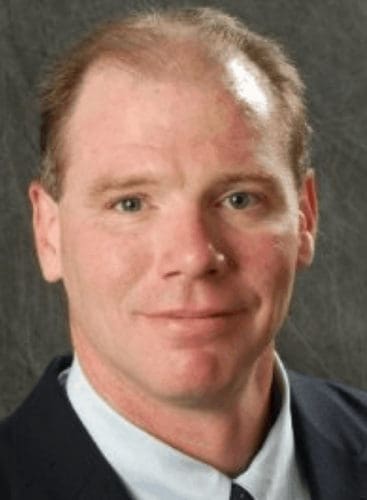
You might have heard Dr. Dickson speak in Episode #231 of the podcast, which was audio from the CEO panel at the 2015 Lean Healthcare Transformation Summit. In that audio, Dr. Dickson talked about the beginning of what has been quite an impressive turnaround at UMass Memorial Health Care.
I invited him to formally be a guest on the podcast to talk about their progress, and what it means for him to be creating a culture of “Everyday Innovators: Everywhere, Every Day,” which has led to over 65,000 ideas being implemented in five years. This is also a topic he blogs about quite a bit.
Update: It's now over 200,000 ideas!
In this episode, we explore what Everyday Innovators in healthcare really means–and how leadership behaviors make continuous improvement possible at scale.
We also discuss how he found Lean originally “almost out of desperation.” How can we shift from “knowing the answer” to “continuous experiments?” Why is it important that he, as CEO, not be “throwing solutions out” when working with people? Does it help that he works a few shifts a month as an emergency medicine doc? We talk about that and more.

For a link to this episode, refer people to www.leanblog.org/331.
For earlier episodes of my podcast, visit the main Podcast page, which includes information on how to subscribe via RSS, through Android apps, or via Apple Podcasts. You can also subscribe and listen via Stitcher or Spotify.
Questions, Topics, and Links
Finding Lean: Early Exposure and Mindset Shift
- How were you first introduced to Lean, and what problem were you trying to solve at the time?
- What aspects of Lean immediately resonated with you?
- Were there elements you were skeptical of–or that felt counterintuitive–early on?
Lean as a CEO Strategy at UMass Memorial
- When you became CEO of UMass Memorial Health Care in 2013, why did you decide Lean needed to be central to the strategy?
- What conditions made change both necessary and possible at that moment?
- What were some of the early moves or decisions that signaled this was a different approach to leadership and improvement?
Results and What Actually Made the Difference
- What tangible results did you see in the early years–financially, operationally, and culturally?
- Looking back, what were the most important success factors?
- What didn't work as expected, and what did you have to adjust along the way?
“Everyday Innovators: Everywhere, Every Day”
- Can you explain what “Everyday Innovators: Everywhere, Every Day” means in practice?
- Why is it so important to engage everyone, not just leaders or improvement specialists, in continuous improvement?
- How does this philosophy change the role of leaders at every level?
Leadership Behaviors and Culture
- As CEO, what specific behaviors do you try to model to create an environment where people feel safe to speak up and experiment?
- How do you reinforce psychological safety while still holding people accountable for improvement?
- What role do visibility, huddles, and leader presence in the gemba play in sustaining this culture?
Spreading and Sustaining Improvement Across the System
- How did you work to spread continuous improvement across a large, complex health system?
- How consistent has adoption been among managers and leaders?
- What do you do when leaders struggle–or resist–leading in a Kaizen-centered way?
- How do you coach leaders to move from “having the answers” to running experiments?
The Elevator Pitch
- If you were in an elevator with another hospital CEO, how would you explain why Lean matters–especially in today's healthcare environment?
Memorable Quotes
- “Improve quality and flow and take the waste out. Life gets better for everyone.” — Eric Dickson
- “We saw marked improvements in terms of the performance of the emergency department and really getting people through the emergency department.” — Eric Dickson
- “Celebrating the red. I'm glad we know there's a problem now because once we know there's a problem, we can deal with it.” — Eric Dickson
- “You want to hold someone accountable to their analysis and executing the plan, not to the measure.” — Eric Dickson
Blog post about their Kaizen approach:
Video of Dr. Dickson:
Thanks for listening!
Automated Transcript:
Here is the edited transcript, organized for readability and SEO, with disfluencies removed and text clarifications applied.
Mark Graban: Hi, this is Mark Graban. Welcome to episode 331 of the podcast. It is February 5th, 2019. My guest today is Dr. Eric Dickson. He's a professor of emergency medicine at UMass Medical School, and he's also the chief executive officer of the UMass Memorial Healthcare System.
You might have heard Dr. Dickson speak in episode 231, which featured audio from the CEO panel at the 2015 Lean Healthcare Transformation Summit. By the way, I hope you can join me at this year's Summit in Washington, D.C. this June.
In episode 231–coincidentally exactly 100 episodes ago–Dr. Dickson talked about the beginning of what has been quite an impressive turnaround at UMass Memorial Healthcare. He touches on that at the beginning of this episode, but I invited him to be a formal guest to discuss their progress over the last couple of years.
We discuss what it means to create a culture of “Everyday Innovators”–engaging people in improvement everywhere, every day. It has led to over 65,000 ideas being implemented over five years. We also discuss how he found Lean out of desperation, how leaders can shift from “knowing the answer” to continuous experiments, and why a CEO shouldn't throw out solutions when working with people.
To find the link to the episode and subscribe, go to leanblog.org/331.
Eric, hi. Thank you so much for taking time out of your schedule to join us on the podcast. How are you?
Eric Dickson: I'm doing great, Mark, and I really appreciate the opportunity.
Dr. Dickson's Early Journey with Lean
Mark Graban: You've got so many aspects of your story to tell. Let's jump in. Can you talk about your first exposure to Lean as an emergency medicine physician? When, where, and how did that happen?
Eric Dickson: My first exposure to Lean was in 2003. I had just left the University of Massachusetts Medical School, where I went to med school and residency. I was working primarily in the basic science lab doing research and practicing emergency medicine.
I got an opportunity very early in my career to become an academic department chair at the University of Iowa, which is an absolutely wonderful place. Six years after graduating residency, I found myself in a job that most people do 10 to 30 years into their career. I found Lean almost out of desperation because I had taken on too much too early.
Instead of just running a research lab, I had to run a 24/7 operation–a very busy emergency department and high-acuity trauma center. I had to get a residency up and running while trying to keep my science going. I needed help. I asked the CEO of the healthcare system for help, and she got me a coach. That coach, a man named Sabi Singh, was very proficient in Lean and won me over to the methodology.
Mark Graban: What was appealing about Lean as a way of fixing those problems compared to other strategies?
Eric Dickson: I was naive at the time regarding what management was. I thought you built up expertise over a few years and would eventually have the answer to all the questions. That was my idea of management. They picked me to be chair because I had some knowledge, but you quickly find out you don't have the knowledge needed to run what you were put in charge of.
What appealed to me about Lean, as Sabi described it, is this method of continuous experimentation towards a predefined goal.\\
Explore
This concept came naturally to me because I spent about 75% of my time as an academic physician in research. The idea that we would try to stabilize a process and then do an experiment to see if the process change improved results was exactly what I did all day in the research lab.
The most important thing Sabi taught me is that you want the people doing the work to pick the experiment. If the leader picks the experiment, there is no buy-in from the people who have to execute it. In fact, the leader often won't pick the best experiment.
Through continuous experimentation and learning to lead by asking questions, we saw marked improvements in the performance of the emergency department. That concept has stuck with me 15 or 16 years later. The people doing the work know what to try next, as long as you put it into a structure where they are empowered to try something different and measure the results.
By the time I left five years later, they had made me Chief Operating Officer of the hospital because they thought, as a physician executive, I could help spread that across other departments.
Mark Graban: What were some of the measurable results within the emergency department?
Eric Dickson: In emergency medicine, there are time-sensitive illnesses: stroke, myocardial infarction, trauma, and severe infections. The time from the person arriving at the emergency department to the time the physician sees them is critical. We call that “Door-to-Doc” time.
We had a very long Door-to-Doc time, and people would deteriorate during that wait. The biggest improvement we saw was shortening that time and improving outcomes for patients with acute, life-threatening illnesses. We went from an average wait of about two and a half hours for a walk-in patient to going weeks without a patient ever having to be put in the waiting room.
We actually talked about designing the emergency department to get rid of the waiting room. When we built the new ED, we built it with a much smaller waiting room than typical places.
Shifting from Knowing the Answer to Continuous Experimentation
Mark Graban: That's a great example where flow and quality go hand in hand. It's great that you had exposure early on to the idea of engaging the people who do the work. The “expert trap” is common for doctors or engineers. Did you face pressure to increase utilization versus ensuring smooth flow?
Eric Dickson: I think in emergency medicine especially, improvement of flow is an improvement in the quality of care. But it's also an important way to increase productivity. As you take waste out, we saw physician productivity go up significantly. We tried to keep the physicians doing physician-oriented work and make things flow smoothly around them.
One of the big revelations for me was that when you listen to the people doing the work and let them pick their experiments, there is automatic buy-in. If I say, “I want you to do your job this way starting tomorrow,” there is an automatic rejection.
For example, a triage nurse asked, “Could you put three chairs right in front of me for the next patients I have to see? That way patients don't have to walk to the waiting room, I don't have to find them, and if they start getting sicker, I can pull them out of order.”
As a doctor running the department who has never done triage, I am not coming up with that idea. If I told the triage nurse to do that without their input, there would be very little buy-in. When they generate the idea, you get immediate buy-in. You take the waste–the walking and looking for the patient–out of their day. Life gets better for everyone.
The skill I started to develop there is facilitating a group to come up with a new way to do things towards a predefined goal. Single ideas are great, but when you get five people adding to an idea, you get five people who have bought in.
I still know emergency medicine, but regarding 99% of what we do at UMass Memorial Healthcare, I am not an expert. However, I feel I am an expert in facilitating a conversation about how to get better towards a predefined goal. That's the most fun thing I do.
Visual Management and “Celebrating the Red”
Mark Graban: What were some key learnings as you progressed from department chair to COO to CEO?
Eric Dickson: Two big ones were process stabilization/standardization and making it visual.
You have to have a stable control set before you can do an experiment. Steven Spear once told me that Toyota makes information available and visual so people can see waste easily. It took me a long time to understand that, but making problems visual is the only way we've been able to make progress.
If you can't make the problem visual, it remains hidden. You won't know if it gets worse or if your experiment is working. As you move further away from where value is created–my office is a car drive away from the hospitals–you have to find ways to ensure people can see the problems.
Mark Graban: Sometimes people have trouble seeing waste because it has become “normal.” Other times, people hide problems because they fear blame. How do you create an environment where it's safe to identify problems?
Eric Dickson: That is a journey. We talk about “celebrating the red.” Every one of our key metrics–our True North metrics–is posted on every wall in the executive suite. These include observed versus expected mortality and safety measures.
In the early days, my board of trustees said, “I'm seeing a lot of red on the wall, and I'm concerned.” I told them, “I can change the metrics or the goals so you see green, and you can be comfortable. But the problems will still exist.”
Celebrating the red means I'm glad we know there is a problem because now we can deal with it. We had horrible observed versus expected mortality numbers in 2013. Why? Because the data wasn't anywhere people could see it, and when they did talk about it, people were beaten up for it, so they buried the data.
We try to create a safe environment by standardizing the reporting process. If there is a gap in a metric, the owner presents the root cause analysis and the specific actions (countermeasures) they will take to get back on track.
If the senior leadership team buys into the analysis and the plan, we don't hold that person accountable for the metric turning red; we hold them accountable for executing the plan. If the metric gets worse after the plan is executed, the answer is always: do another experiment.
Mark Graban: It sounds like the senior leadership team has team accountability, similar to how a sports team wins or loses together.
Eric Dickson: Exactly. As long as that person is truly working to understand the problem and executing what we agreed on, they don't own the performance failure alone. We hold people to doing what they promise the team they are going to do.
The Value of Executive Gemba Walks
Mark Graban: You still work a few shifts a month as an emergency medicine doc. How important is that time in the Gemba to your success as a Lean leader?
Eric Dickson: I don't think it's critical that I practice medicine specifically–I do that because I love being a physician. However, time spent in the Gemba–on the shop floor–is absolutely critical.
Going to Labor and Delivery when they are stressed, huddling with the team, and listening to their problems rather than hearing about it through three layers of management is one of the most valuable things we do.
I have to be careful not to throw solutions out. If I go down, listen, and say, “We're going to do X, Y, and Z” without talking to the managers, that undermines them. But if I listen, learn, and then talk to the managers about what I heard, it's a positive thing.
We have surveyed our staff about executive rounding. They tell us the best part is senior executives listening to the problems they face daily.
Mark Graban: It takes time to build trust. People might feel threatened by the CEO showing up until they understand your mindset.
Eric Dickson: Yes. If you are humble and say, “I don't know how this works, teach me,” it helps. I ask the same questions everywhere:
- What measure would I follow to know if things are going well?
- Where is the biggest waste of your time?
- What frustrates you the most?
People love teaching you about their job. It helps me make better decisions later.
UMass Memorial's Turnaround Story
Mark Graban: Can you give us the high-level story arc of the UMass turnaround since 2013?
Eric Dickson: When I became CEO in 2013, we were losing about $8 million a month on a $2.5 billion base. We lost $55 million that year. Our major nursing union went on strike a month after I started. Quality scores, patient satisfaction, and engagement scores were all very low.
The first thing I did came right from the book of Lean: stabilize the process. We needed to stabilize how we managed the organization–how we set goals, strategy, and handled results. We created version one of our “Framework for Performance Excellence.”
We are on version 10 of that process now. With each PDCA cycle, our management process has improved. Almost all our numbers have headed in the right direction for the past five years. We went from the bottom percentile in mortality to the top quartile.
The key has been writing down how we run the place. It's a standardized approach to management. We review it every six months. If a new leader comes in, I hand them the framework and say, “If you can't follow this management structure, please don't come here. When you get here, you have to follow the standard work.”
Everyday Innovators: Engaging the Frontline
Mark Graban: One thing I love is your “Everyday Innovators” concept. How important has that been?
Eric Dickson: Our goal is to engage every person every day in perfecting the customer and caregiver experience.
At my first retreat with managers, I said, “We lost $55 million. We need 5,500 ideas worth $10,000 each to get back on track. What percentage of ideas currently get implemented?” The consensus was 5% to 10%. I told them that was fundamentally why we were having problems.
In a recent survey, our people told us that if they have an idea to improve, it gets implemented about 75% of the time. We have implemented about 65,000 registered ideas in the last five years.
For example, a nursing assistant on a transplant floor suggested marking the floor with distance markers (10 feet, 20 feet) so patients could track how far they walked. The Chief of Transplant Surgery loved it. Now, every time she walks by those numbers, she swells with pride because she was listened to.
This capability gives us hope. We know we can solve problems faster than in the past. Recently, we took a $40 million hit in Medicaid payments, and the team said, “We'll find a way.” That confidence comes from having solved thousands of problems.
It takes time–you can't replicate the journey. As the saying goes in Iowa, “It takes 21 days for a chicken to hatch an egg. 21 chickens can't hatch the egg in one day.” You have to go through the learning cycles to become a better problem solver.
Mark Graban: That spirit of Kaizen is special to hear about. Eric, thank you so much for sharing your thoughts and reflections with us.
Eric Dickson: It's my pleasure, Mark. Thank you for all you do to help us get better faster.