Change Management Starts Before the Solution: Three Practical Lessons
I was honored that Daniel Lock Consulting asked for my thoughts on change management, which they included in this article alongside those of the esteemed John Kotter and others.
Check it out:
13 Change Management Experts Share their 3 tips on implementing fast, dramatic and powerful change
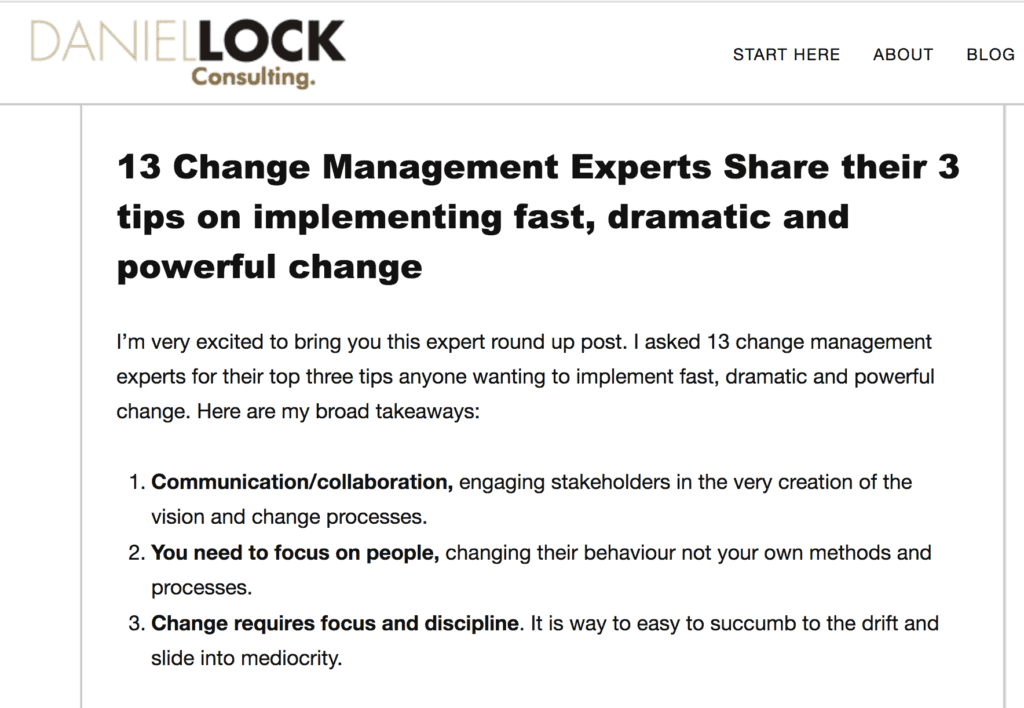
What I said…. these ideas align closely with Lean thinking and psychological safety: change works best when people are involved in understanding problems, not just handed solutions.
Far too often, it seems “change management” is an exercise in convincing people to accept our solution. I think effective change management starts earlier than the solution phase.
- Make sure there is agreement that there is a problem to solve or something that can be made better. If you can't get alignment at this level, pushing a solution is probably going to be fruitless.
- Ensure there is a general consensus that things can be made better. If a majority of people think “that's the way it's always going to be,” they aren't likely to engage in discussion about any solution.
- Engage people early in the solution creation process. Better yet, get them involved in understanding the current state or the “before” picture. The earlier you can engage people, the better. It might not be realistic to get everybody's input, but be sure to select a core team that's representative of the larger group.
Why This Still Matters in 2026
Nearly a decade later, most “change management” efforts still fail for the same reason:
leaders move too quickly from deciding what they want to change to persuading people to accept it.
Despite more toolkits, playbooks, and AI-generated transformation plans, the human dynamics haven't changed. People are more likely to engage when there is shared agreement about the problem, confidence that improvement is possible, and real involvement early in the process.
Without that foundation, change becomes performative compliance rather than learning–and the results rarely last.