
Why “Pilot Error” Feels So Satisfying – And Costs So Much
In March 2024, an 18-year-old student pilot named Aliya Applin was hanging upside-down in a Cessna 172S, in the dirt beneath a stand of trees in suburban Alabama. The engine had lost power moments after takeoff. She kicked out a window and crawled free.
The first theory, according to a Wall Street Journal article by Benjamin Katz, published November 28, was pilot error.
Think about how tidy that answer is. A student, early in her training, alone in the cockpit. The engine was tested afterward and ran smoothly. Case closed. Nobody has to redesign anything, ground anything, or call the manufacturer. Everybody else gets to keep flying.
That’s what makes blame so attractive. It feels like an answer. Often it’s just the place where the investigation got tired.
The relief comes now. The bill comes later.
Filmmaker Mike Eisenberg made a point on my podcast that I think about often. When we can pin a bad outcome on one person, we feel better, because it means the system is fine. Remove the person, and the problem goes away.
That relief is real, and it’s immediate. The cost is delayed, and it’s usually paid by someone else.
At Auburn, the bill arrived that summer. The school’s Cessna 172S fleet had 48 similar engine failures. Most were brief stutters or a few seconds of lost power. When the planes got back to the hangar, mechanics couldn’t make the problem happen again.
On September 19, one plane lost power for 30 seconds before recovering. That evening, another lost power near a busy highway. Jim Dozer, who ran Auburn’s maintenance team, grounded all 44 planes within two hours – normally the FAA’s call, not a flight school’s.
If the March crash had stayed filed under “pilot error,” everything that happened that summer would have looked like a string of unrelated bad days.
“It tested fine” is the most dangerous reassurance there is
Steven Brandon, a recently hired mechanic, had a theory he’d picked up from an older mechanic. When Cessna brought back the 172 in the 1990s with a fuel-injected Lycoming engine, the engine didn’t quite fit. Instead of redesigning the nose, engineers moved a part called the fuel servo to the bottom of the engine. After shutdown, leftover fuel can drain into it. If certain seals fail, fuel gets into chambers meant to hold only air, and the engine can suddenly lose power.
Dozer and Brandon estimated the leaked fuel could evaporate in as little as half an hour. On a busy day, planes often sat 20 minutes or less between flights. By the time anyone tested an engine, the evidence had evaporated.
So “the engine ran fine” didn’t mean the engine was fine. It meant the problem had left the building before the investigators arrived.
I’d reframe it this way: a clean test after a failure isn’t evidence that a person caused it. It might only be evidence that your test can’t see the problem.
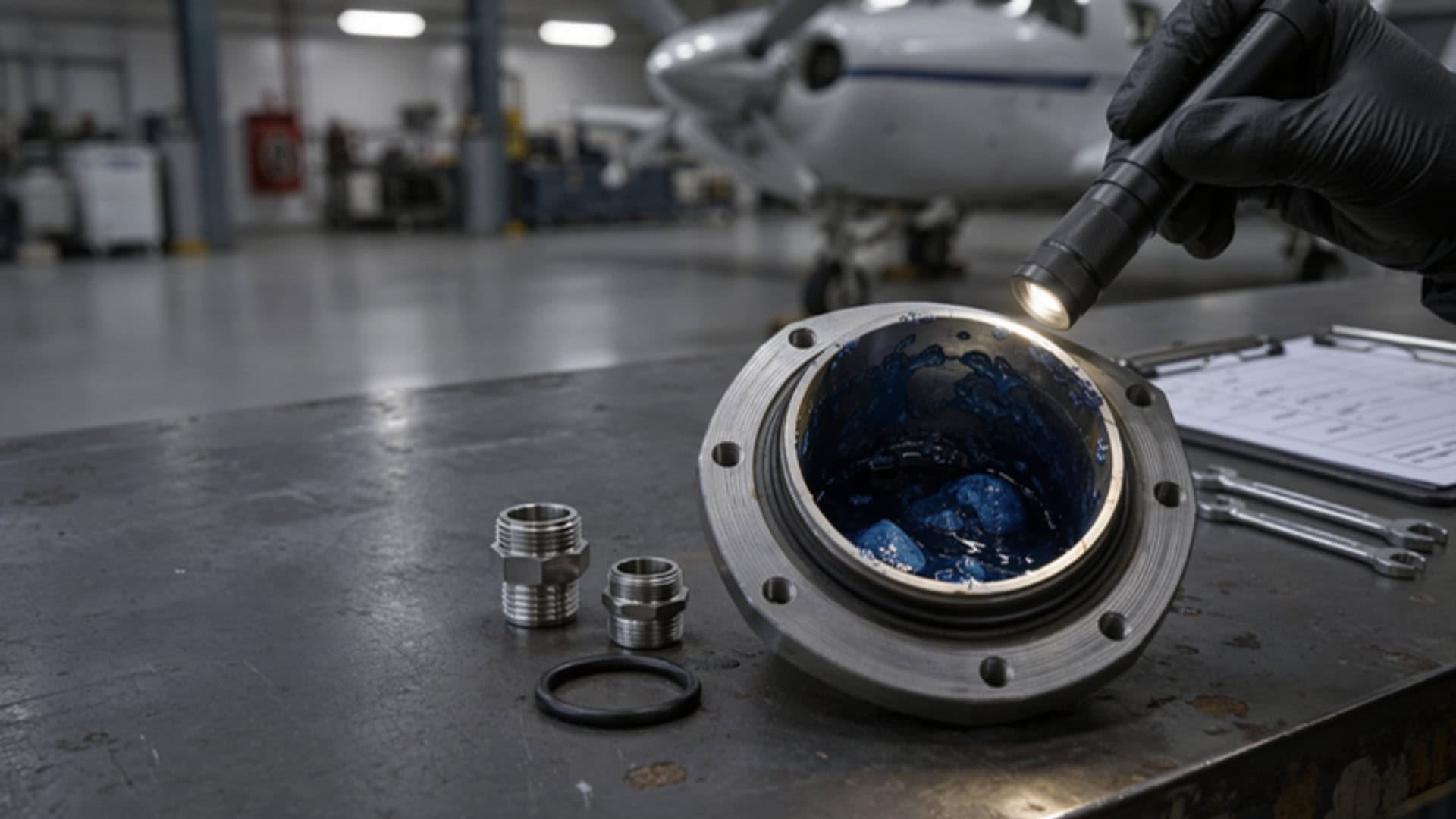
Aviation fuel is dyed blue, and the dye stays behind. Auburn found blue, gelatinous residue in 40 of its 44 planes. A second, independent inspection of Applin’s engine found the same thing. The NTSB’s final report attributed her accident to fuel/oil contamination in the fuel injector assembly.
The NTSB told the Journal it can’t confirm whether investigators considered pilot error the likely cause before that report, and that contamination was identified in the initial examination. The Auburn team remembers it differently. Either way, the final answer was a design problem, not the pilot.
Blame moves downhill
Even after the cause was clear, blame went looking for a new home.
On a call with the FAA, Lycoming, and the servo maker AVStar, an AVStar engineer said the root cause was where the servo had been installed. AVStar’s CEO said contamination had been going on as long as he’d been in the business. “You’ve got to maintain these things,” he said.
So the finger moved from the pilot to the mechanics – the people closest to the work. Meanwhile, Embry-Riddle told Dozer it had been tracking the issue for more than two years and had filed reports with the FAA without a response. Brandon said mechanics had been talking about it since the 2000s.
The warnings were there. They were coming from people nobody felt obligated to listen to.
The person you blame is your best sensor
Here’s the reframe I’d offer leaders. The pilot, the nurse, or the operator at the center of an event isn’t the problem to be removed. They’re usually the person who knows the most about what actually happened.
Applin was a sensor, in a way. So were the 48 engine failures. So were the Embry-Riddle reports. Blame doesn’t just punish the person. It switches off the sensor, and it teaches every other sensor in the organization to stay quiet.
Healthcare pays the same bill, with less chance of a refund
Aviation, for all its delays, had a way out of the first answer. An independent agency investigated. A second inspection happened. The final report cleared the pilot in writing. Applin is flying again and building hours toward a job with Delta.
Healthcare rarely offers that second look.
In December 2017, at Vanderbilt University Medical Center, nurse RaDonda Vaught was supposed to give a patient, Charlene Murphey, the sedative Versed. She couldn’t find it in the patient’s profile in the automated dispensing cabinet. She used the override, typed “VE,” and selected the first drug listed: vecuronium, a paralytic. Murphey died.
Vaught made mistakes, and she said so. Prosecutors argued she missed multiple warning signs. But reporting on the case also described a hospital in the middle of a software switch, where overrides had become routine for nurses just trying to get medications to patients. A cabinet that offers a paralytic after two typed letters, in a building where overrides are normal, deserved at least as much scrutiny as the nurse.
In 2022, she was convicted of criminally negligent homicide and abuse of an impaired adult. She got three years of probation with judicial diversion and lost her nursing license. The district attorney’s office framed it as a case about one careless nurse.
That’s the most satisfying closure there is. It’s also expensive. After the verdict, some nurses told reporters they’d stop using overrides they used to rely on. Others drew the lesson that reporting a mistake is a career risk. The hospital gets a quieter workforce, and the next nurse at the next cabinet works in a system nobody had to redesign.
Healthcare has no NTSB. Hospitals usually investigate their own events, often with their own liability in view, and findings rarely become public. Once a report says “human error” or “failure to follow policy,” the investigation usually stops. A national patient safety board modeled on the NTSB has been proposed in Congress.
A cheaper habit
A second look is cheap. Dozer’s request for an independent engine inspection cost far less than a grounded fleet – and much less than another crash. In healthcare, the equivalent might just be asking:
- If the equipment or process “checked out fine” afterward, could the problem be intermittent?
- How many near misses like this have we had, and how many went unreported?
- Who has already been raising this, and what happened when they did?
- Would another competent nurse or pilot in the same spot have done the same thing?
- Did our investigation stop at the first person in the chain?
Applin got a second inspection that changed the answer. When something goes wrong in your organization, who gets one?
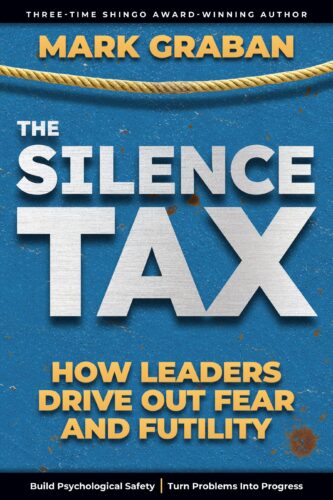
The Silence Tax: read a free sample or pre-order
My new book, The Silence Tax: How Leaders Drive Out Fear and Futility, is about why people stay quiet at work and what leaders can do about both causes. It comes out February 9, 2027. The Kindle, paperback and hardcover editions are available for pre-order now.
"An essential guide for leaders who want to turn employee voice into organizational learning and improvement."
Amy C. Edmondson, Harvard Business School; author of The Fearless Organization
Pre-order on KindleGet the free sampleEarly edition on Leanpub