
Warning: Signs! Mistake-Proofing Is More Effective Than Warnings
At the 2024 KaiNexicon (the KaiNexus user conference), I gave a talk called “Warning: Signs! From Cautionary Commands to Proactive Prevention” — a tour through the world of warning signs, why they don't work very well, and what we can do instead.
The talk was meant to be fun. I collected photos of signs from hospitals, gas stations, hotels, and even the banks of the Ohio River. But the underlying point is serious: when we see a warning sign in the workplace, we're looking at a symptom, not a solution.
Here's a highlights video covering the four types of mistake-proofing with examples from the talk:
Signs Are a Symptom not a Solution
We've been relying on warning signs for a long time. I joked in the talk that archeologists found the first warning sign at the base of Mount Vesuvius in Pompeii. It didn't help.

Signs that say “Caution,” “Warning,” “Please remember,” or “Don't forget” are all telling us the same thing: somebody knows there's a problem, and the best they've come up with so far is asking people to be more careful. As Shigeo Shingo put it, that's asking workers to operate as if they “possessed divine infallibility.”
The thing is, we're human. We forget things. We get distracted. We're tired. And no sign changes that.
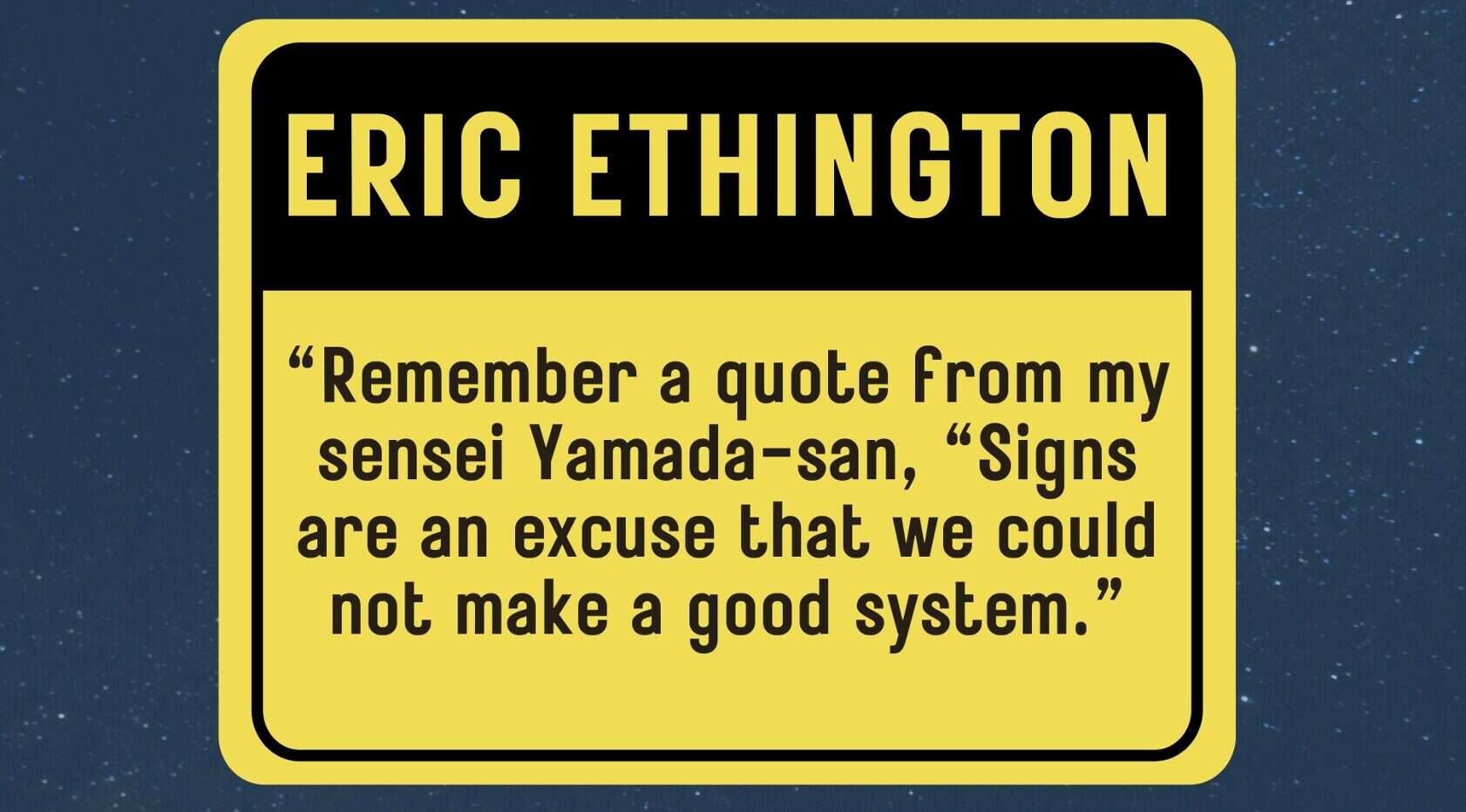
I shared a quote from my friend Eric Ethington in the Lean world, who recalled his sensei Yamada saying that signs are an excuse that we could not make a good system. That's a pretty good way to frame it.
What I Saw in Hospitals
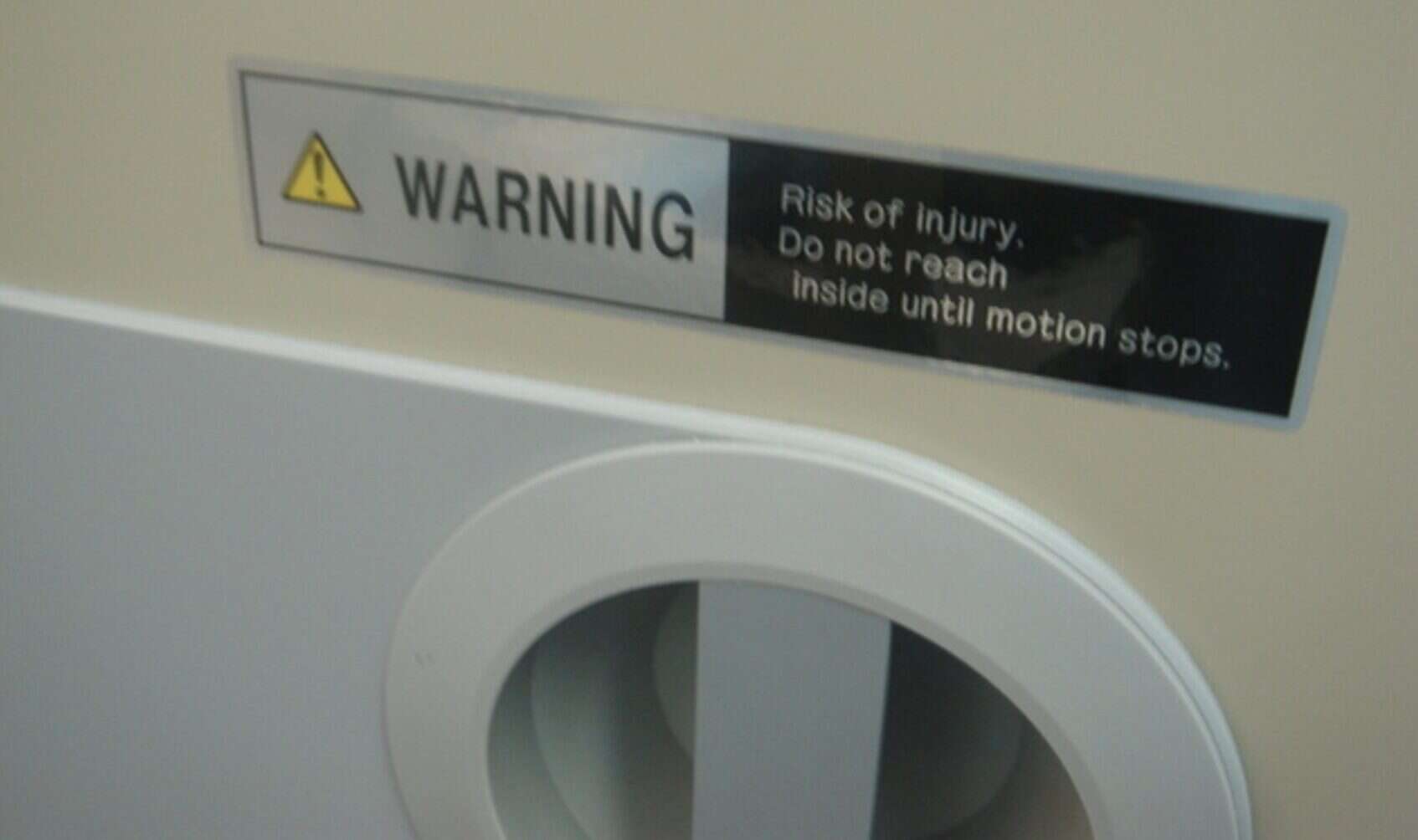
I've collected a lot of sign photos over the years, and hospitals are full of them. A pharmacy robot with multiple warnings about not being inside when the arm is swinging — when lockout/tagout should make it impossible to start the machine with someone inside. A piece of equipment that says “Warning: risk of injury. Do not reach inside until motion stops” — when the machine should lock until it stops.
One of my favorites was a hospital lab where a piece of equipment had two separate “Do not spill” warnings right where you load specimens with liquid. They'd blown three electronic circuit boards in a few weeks because the board was exposed directly below the loading area. That's a design problem, not a people problem. The equipment designer didn't anticipate how people would actually use their product.

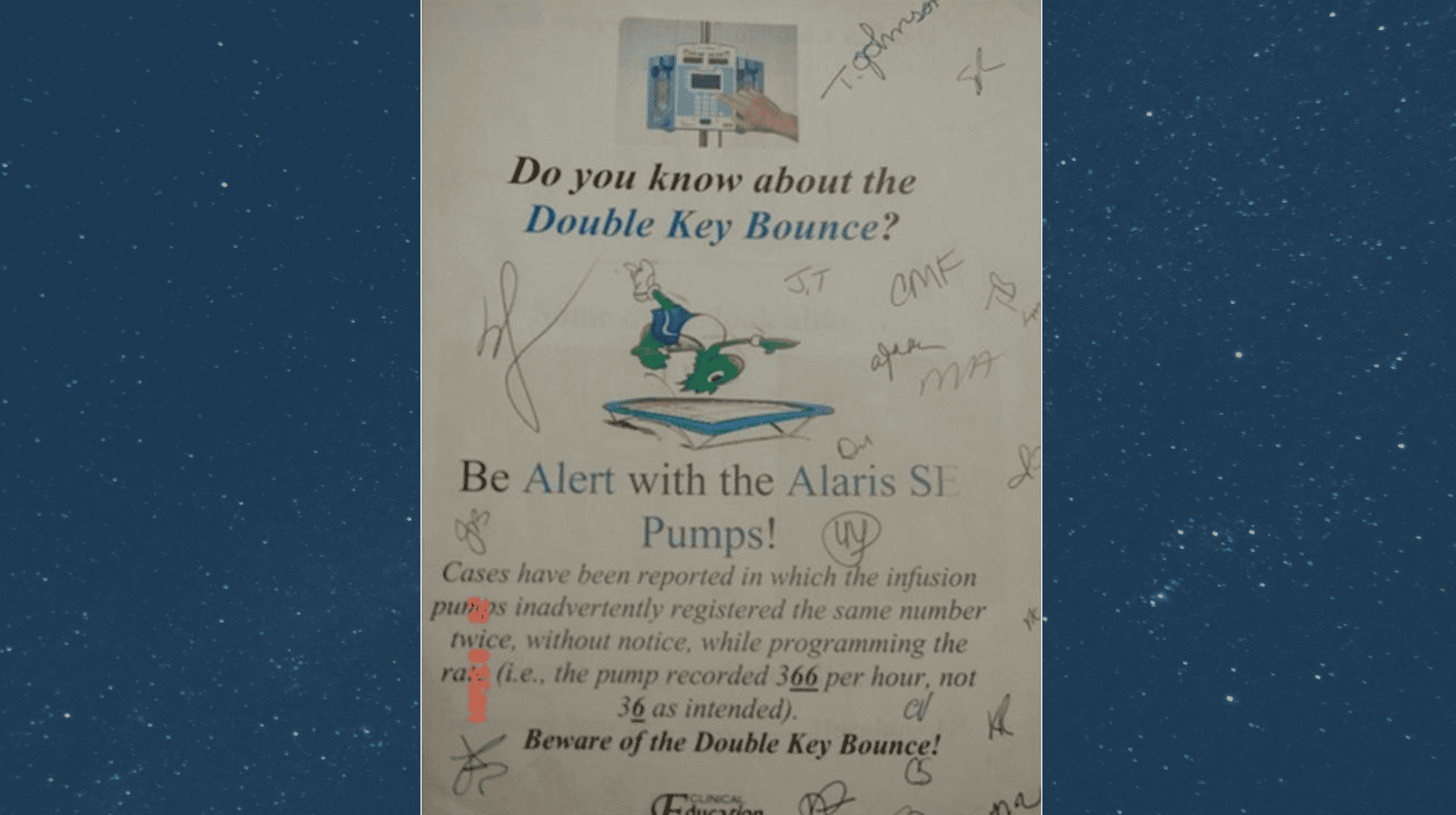
And then there was the infusion pump with a “double key bounce” problem — nurses would type 36 as a rate and the pump would record 366. The hospital's response was to put up a sign and have nurses initial it, promising not to make the mistake. That's not fair to the nurses. We can do better. We MUST do better.
Four Types of Mistake-Proofing
I walked through four types, roughly from most effective to least:
Prevention — making the error physically impossible. The diesel fuel nozzle is too big to fit into an unleaded car's tank. You literally cannot make that mistake. Some hotel Keurig machines won't dispense coffee unless they detect a cup on the tray — a sensor that costs $150-$200 more than the home version, but apparently worth it when you add up housekeeping and rug replacement costs.
Detection — catching the error before it causes harm. Website forms that flag an invalid email address before you submit. You can't easily prevent a typo, but you can catch one.
Mitigation — reducing the impact when the error happens. The Apple MagSafe power adapter pops off with a little nudge instead of sending your laptop to the floor. Gas pump breakaway valves let the hose separate cleanly when someone drives off with the nozzle still attached — which apparently happens about once a week at the average gas station.
Warnings — the least effective option. Grilled salmon contains fish. Good to know.
Sometimes a Sign Is the Best You Can Do Right Now
I don't want to be too harsh about signs. Sometimes they really are the best countermeasure available in the moment. One children's hospital had a sign in the MRI waiting area that said “No food or drinks.” Kids who couldn't eat before sedation were in the same room with people eating McDonald's, and little kids being little kids, they'd grab someone's fries. The team improved the sign — made it bilingual, explained the why, and moved it to the door so people would see it before entering. Short of posting a security guard, a better sign was actually the right answer there.
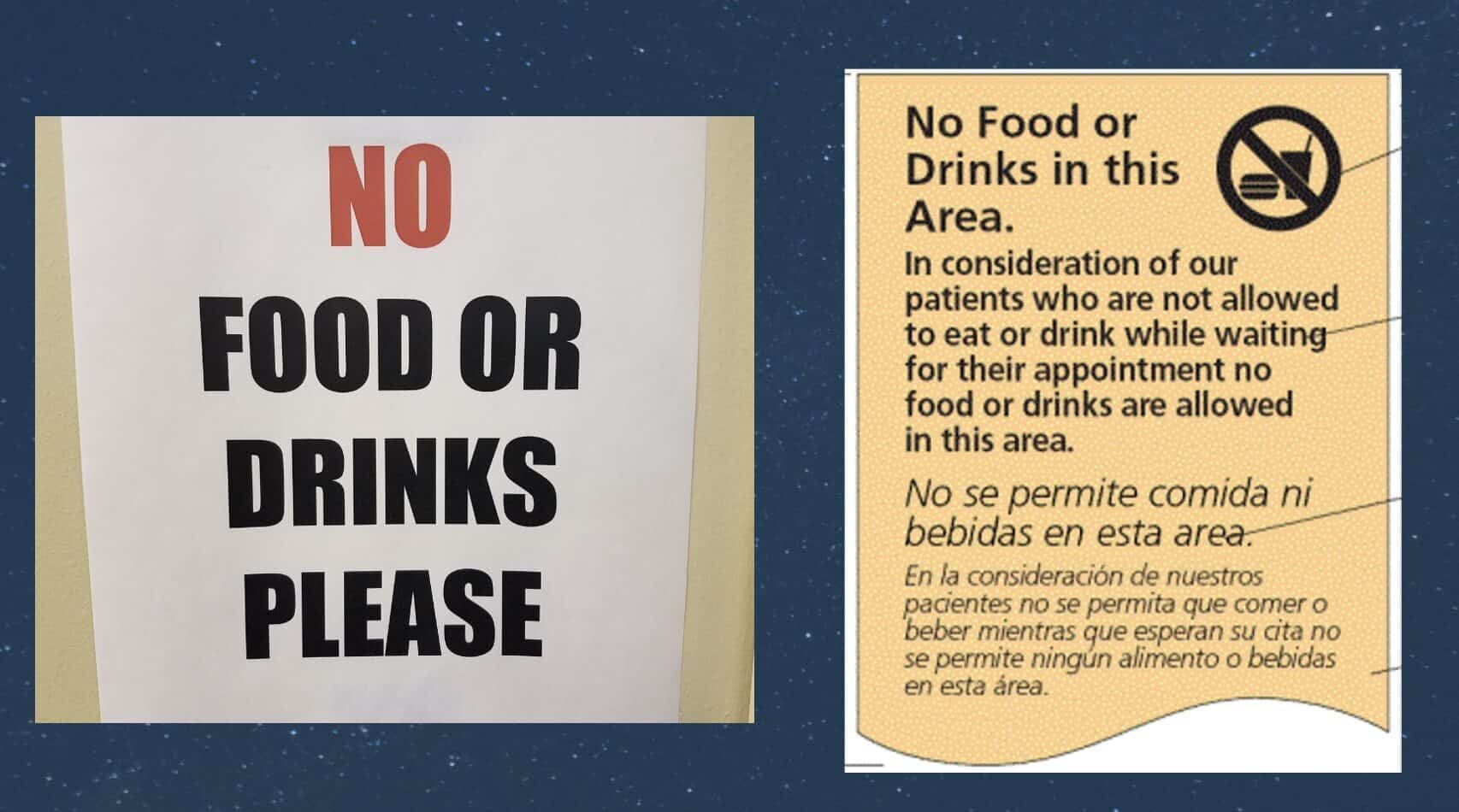
The key is to treat the sign as a starting point. The sign is the best we can do right now — so let's challenge ourselves to not need the sign.
The Homework
Find signs in your workplace. Don't tear them down. Use them as a starting point for improvement. PDSA it. Try some mistake-proofing. If it doesn't work, try something else. Or go to your equipment vendors and tell them their product needs to be designed so people aren't put at risk.
And if you'd like to bring this talk — or a customized version of it — to your organization or event, I'd love to hear from you. You can reach me online anytime.