
Ryan McCormack’s Operational Excellence Mixtape: March 20, 2026
Thanks, as always, to Ryan McCormack for this. He always shares so much good reading, listening, and viewing here! Subscribe to get these directly from Ryan via email.
News, articles, books, podcasts, and videos about how to make the workplace better.
This week's collection covers AI's real-world impact on work and improvement, the case for applying process discipline to meetings, what happened to the “management without managers” movement, why younger workers are less interested in leadership roles, and habits that distinguish great thinkers.
Operational Excellence, Improvement, and Innovation
So far, AI seems to intensify, rather than eliminate, work
AI dominates the conversation about operational improvement across industries, but consensus is elusive. Some proclaim the death of traditional methods for doing and improving work; others hail a new era. My view: we're past the peak of the GenAI hype cycle and much remains unresolved. For as long as people do the work, the fundamentals of operational excellence still matter.
Executives are already forecasting radical productivity gains, and whisper networks and research labs push doomsday timelines for white-collar jobs. Yet those of us deploying AI at the process level aren't seeing mass job elimination, just shifts in how tasks are done and intensified demands on judgment, oversight, and change management. Are we moving toward a trough of disillusionment, or simply through the messy phase of large-scale adoption?
In manufacturing, reports vary on whether big gains to the bottom line are currently being realized. In the near term, it's more likely that the big gains will come from cross-functional AI in enabling value streams, like Order to Cash.
What does AI mean for the future of business process management? Not surprisingly, BPM leaders appear skeptical about AI as a panacea for process improvement, and advocate for “human in the loop” for decision-making for the time-being.
For now at least, AI seems to intensify work, rather than reduce it.
How do we win in an AI World?
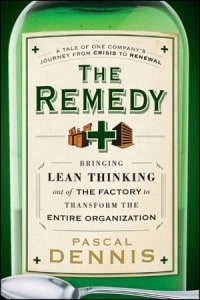
Boards and executives are demanding returns on AI, pressuring organizations to show value right away. We've all seen this before: jump to a tools-first approach, unleash chaos, and leave a path of disillusionment across your teams. So how do we win in an AI world? Pascal Dennis reminds us to do what should always be done to improve a process:
- Define the problem rather than diving in with a solution
- Take out process waste before automating
- Don't forget about the people
Meetings: the wasteful process that may need the most improvement
Meetings. We hate them. They're ubiquitous and expensive, yet remain largely unexamined. A meeting is a process that can be conjured out of thin air with the click of a button, usually without any specific standard in mind. What if we applied improvement discipline to meetings?
Even novice improvement practitioners know that measurement is essential. But how do we measure the effectiveness of a meeting? Rebecca Hinds, author of Your Best Meeting Ever: 7 Principles for Designing Meetings That Get Things Done (book review coming next month), recommends using Return on Time Invested (ROTI) as a KPI for meeting effectiveness. Hinds breaks down exactly how to do this on “How to Measure Your Meeting's Success on Coaching for Leaders.”
Creating a Culture of Improvement
The “management without managers” moonshot that missed
I was one of the hopeful readers almost 20 years ago who, after reading Gary Hamel's The Future of Management, expected a revolution in a field that had long resisted change. The idea of empowered teams freed from stifling control, bureaucracy, and Weberian hierarchies felt attainable, especially as bold, experimental organizations in Silicon Valley seemed to prove it.
So what happened? Some adopters, like Google, rose to global dominance, but the promised widespread upheaval never fully arrived. Steve Denning urges us not to abandon the vision: in volatile markets, he argues, “management without managers isn't chaos–it's competitive edge.“
Younger people don't want leadership roles
Denning and Hamel make a compelling case for a world without management, and perhaps this helps explain in part why Gen Zs and millennials are far less likely to aspire to climb the corporate ladder than those before them. But if no one wants to lead, where will leaders come from? Here's what leaders must do in an age of uncertainty to address the leadership aspiration gap.
Coaching – Developing Self & Others
3 things great thinkers do that most people don't
Follow Ryan & Subscribe:
LinkedIn: https://www.linkedin.com/in/rjmccormack/
Subscribe to receive these via email