Kaizen in Healthcare: Common-Sense Continuous Improvement, Not a Japanese Mystery
TL;DR: Kaizen isn't a Japanese buzzword or a suggestion box–it's a practical, scientific way for healthcare teams to solve problems, reduce frustration, and improve patient care every day, with leaders acting as coaches instead of gatekeepers.
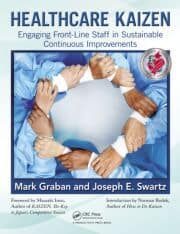
We're coming up on the 10th anniversary of the publication of the book I co-authored with Joe Swartz, Healthcare Kaizen: Engaging Front-Line Staff in Sustainable Continuous Improvements.
I'll share more reflections about the book, what we would have done differently, and what we've learned since.
Today, I'm sharing an article that I wrote, originally published ten years ago by Texas Healthcare News (and I don't think it's online anymore… until now).
Why Kaizen Sounds Exotic–and Why It Really Isn't
Kaizen. It is a strange-looking word. It might seem a little difficult to pronounce. Said out loud, it sounds a lot like “try-zen,” and we can equate the word with making things more zen-like in the healthcare workplace. Kaizen is a Japanese word that means “good change” or “change for the better.” Kaizen, as a management concept, leads to a calmer, better organized, more productive workplace where healthcare professionals provide improved patient care.
Shortly after Masaaki Imai introduced the principles in this 1986 book “KAIZEN,” Dr. Don Berwick published a piece in the New England Journal of Medicine promoting these principles, citing Imai, and defining Kaizen as “the continuous search for opportunities for all processes to get better.” But, more than 20 years later, it's easier for a health system to say they want a “culture of continuous improvement” than it is for them to make this a reality.
Kaizen Uses the Scientific Method, Not Suggestion Boxes
Suggestion boxes, committees, and endless meetings are not the path to continuous improvement. The Kaizen model is not very complicated – it is just different than the methods that health systems have tried in recent decades. What should be familiar, however, to healthcare professionals is that the Kaizen model utilizes the scientific method – in particular, the “Deming Cycle” of Plan-Do-Study-Adjust.
The Five Practical Steps of Kaizen in Healthcare
The basic Kaizen model has five steps:
1) Find
Staff and managers work together to identify waste or problems that interfere with providing ideal care. They can also identify opportunities that reduce frustrations for staff or provide a better patient experience. In the Kaizen model, no idea is too small to be worked on, as we see that lots of little small improvements add up to make a big impact. My Healthcare Kaizen co-author's organization, Franciscan St. Francis Health (Indianapolis) implemented more than 4,000 improvements in 2011 alone.
2) Discuss
Kaizen is not a solo activity. When an employee has an idea, they should have a discussion with their supervisor and, more often than not, with their co-workers. The manager's role is not to simply approve or reject each idea, as might happen in a typical suggestion box process. Rather, the manager serves a coach and collaborator, asking questions and making sure the idea is neither suboptimizing nor creates any risks or problems. The back and forth often leads to a better idea than the one that was originally suggested.
3) Implement
Even if potentially applicable to the entire organization, Kaizen ideas are put in place using small tests of change using the PDSA model. Rather than just assuming all changes are improvements, we test the change for hours or days, looking at data where we can to rationally evaluate the results. If we do not get the results we expected, or if there are unintended side effects, we can learn from that (instead of viewing this as a failure) and go back to the drawing board. If we do get our expected positive results, then we can spread that improvement.
4) Document
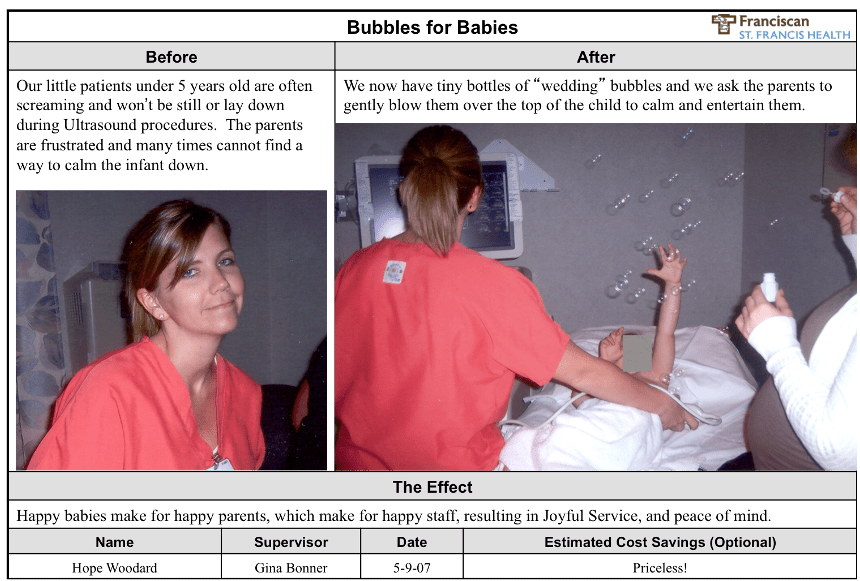
It's tempting to skip this step, but doing a simple write up of each completed Kaizen can allow for reflection about the change (what did we learn?) and recognition for those involved. An example from Franciscan St. Francis is pictured here. As with many small Kaizens, it is difficult to calculate a specific Return on Investment (ROI) for each and every improvement. The benefits to patients, in terms of clinical outcomes and their experience, and to staff are indeed priceless.
5) Share
Documented ideas then get shared via:
- Department bulletin boards
- Hospital-wide display boards in public areas
- Home-grown databases (as done at Franciscan St. Francis)
- Commercial web software (like KaiNexus)
As this sharing occurs, ideas tend to spread naturally through the organization as they are adopted by others. Note this is different than a “roll out” where ideas are forced upon others who are forced to comply. In the Kaizen approach, we share improvements in a way that engages others without stifling their creativity.
What Kaizen Requires From Leaders (and What It Doesn't)
This Kaizen style of improvement does require a different leadership model. Instead of being “the boss” who makes every decision, managers are coaches, facilitators, and partners in improvement. At Franciscan St. Francis, the CEO and COO are supportive of this culture change – and this has led to millions in direct financial benefit over the past five years. That's in addition to improvements to quality, safety, service, and morale that are more difficult to measure. Kaizen works in healthcare – for the benefit of all involved.
Why Kaizen Still Matters in Healthcare in 2026
In 2026, healthcare leaders are under sustained pressure from staffing shortages, burnout, financial constraints, and rising expectations. Kaizen remains relevant because it addresses these challenges at their source–by enabling the people closest to the work to improve it every day, rather than relying on top-down fixes or episodic improvement projects.
The lasting value of Kaizen isn't the mechanics; it's the leadership behavior it requires. Organizations that treat improvement as a management responsibility–not an initiative–build problem-solving capability, reinforce psychological safety, and reduce dependence on heroic effort. That shift is increasingly critical as healthcare systems become more complex and less predictable.
As I revisit Healthcare Kaizen with the benefit of a decade of experience, future posts will examine what still works, what needs rethinking, and how organizations are adapting these principles today. The core idea endures: sustainable improvement happens when leaders create conditions where people can see problems, speak up, and act.
FAQ: Kaizen in Healthcare
What Is Kaizen in Healthcare?
Kaizen in healthcare is a continuous improvement approach where frontline staff and leaders work together to identify problems, test small changes, and improve patient care, safety, and working conditions every day.
Why Is Kaizen Still Relevant in Healthcare in 2026?
Kaizen remains relevant because healthcare continues to face rising complexity, staffing shortages, burnout, and cost pressure–and sustainable improvement depends on engaging the people closest to the work, not relying on top-down initiatives.
Is Kaizen Just About Small Improvements, or Can It Drive Real Results?
While Kaizen focuses on small, frequent improvements, the cumulative effect leads to significant gains in quality, safety, efficiency, staff engagement, and financial performance.
How Is Kaizen Different From Suggestion Boxes or Improvement Committees?
Unlike suggestion boxes, Kaizen requires active leadership involvement, rapid testing of ideas, and feedback loops that turn ideas into action instead of letting them stall.
What Role Do Leaders Play in a Kaizen Culture?
Leaders act as coaches and enablers–not approvers–by creating psychological safety, removing barriers, and helping teams learn from both successful and unsuccessful improvement efforts.
Does Kaizen Require Large Investments or New Technology?
No. Kaizen relies primarily on leadership behavior, structured problem-solving, and disciplined follow-up; technology can help but is not required to begin.
How Is Psychological Safety the Foundation of Kaizen?
Kaizen depends on psychological safety because people must feel safe to speak up about problems, admit mistakes, and test ideas without fear of blame. When leaders respond with curiosity instead of punishment, mistakes become learning and trust enables continuous improvement.
Can Kaizen Work in Today's High-Pressure Healthcare Environments?
Yes. Kaizen is especially effective under pressure because it reduces wasted effort, improves workflows, and helps teams solve problems faster instead of working around broken processes.