
Paul O’Neill on Safety, Leadership, and Habitual Excellence: Revisiting My 2011 Interview
It's been almost ten years, and I've wanted to revisit and re-share the interview I was honored to do with Paul O'Neill back in 2011, years before I was affiliated with the firm Value Capture. O'Neill was the non-executive chairman of the firm until his passing in 2020.
He was, of course, also the CEO and Chairman of Alcoa before becoming the United States Treasury Secretary.
I've shared this interview again, with a new introduction and some slightly remastered audio (doing the best I can, considering it was originally recorded as a phone conference call).
I hope you'll check out the episode and some of the quotes/highlights here at the Value Capture website:
Revisiting an Interview of Paul O'Neill, Sr. From 2011
You can also read more quotes and highlights here, and there's a full (albeit automated and edited) transcript available on the Value Capture page for this episode.
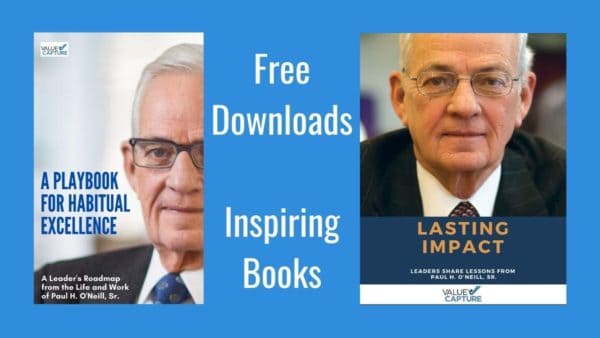
If you enjoy and/or appreciate what Mr. O'Neill has to say, please check out the free eBooks about the work and wisdom of Mr. O'Neill.
Thanks for checking this out. What stands out to you? What are the implications for leaders in healthcare, manufacturing, or other settings?
What does “habitual excellence” mean to you?
Revisiting this conversation more than a decade later reinforces how consistent and uncompromising Paul O'Neill was about the fundamentals: zero harm as a moral obligation, leadership defined by behavior rather than title, and the discipline to learn from every defect without blame. These ideas weren't designed for a moment in time. They were designed to guide leaders who want to create organizations where people flourish and outcomes continually improve.
The interview also makes something else clear. The gap O'Neill described–between what's possible and what we routinely accept–still exists. But the path forward hasn't changed: clarity of purpose, theoretical-limit goals, transparency, and leaders who model the curiosity and courage required for habitual excellence. His principles remain a reliable compass for any leader committed to safety, dignity, and organizational learning.
For those working today to build cultures of excellence in healthcare or any other industry, O'Neill's voice is a reminder that meaningful progress starts with leadership choices made daily–and that the opportunity for improvement is as urgent and attainable now as it was when this interview was first recorded.