
What Japan Taught Me About Lean, Standardized Work, and Following the Rules
TL;DR: Lean leaders outside Japan don't need to copy Japanese rules–they need to copy the intent. Standardized work creates stability and trust, but Kaizen only thrives when leaders make it safe to question and improve those standards. Discipline plus psychological safety is what turns rules into learning and continuous improvement.

During my third trip to Japan, I saw firsthand how Lean, standardized work, and cultural discipline come together–from hospitals and Toyota to sushi chefs and everyday service interactions.
Last week, I got back from my third trip to Japan. We visited three hospitals, Toyota, and another manufacturer, and heard from a cafeteria services company leader about their Lean and continuous improvement journeys.
As I've blogged about before, some of these organizations have been practicing TQM for 30 years and are adding elements of Lean methods on top of that foundation.
I'm hardly an expert on Japan. I still feel like I view the country with fresh eyes.
Standardized Work and Cultural Discipline in Japan
During this trip, I heard many people talk about the cultural imperative to follow rules and laws. In the workplace, we might call these rules “standardized work.”
But, standardized work in a Lean culture doesn't mean being too rigid, as I blogged about after my first trip in 2012:
Lean Culture vs. Japanese Business Culture
Sometimes, I hear people say things like,
“Lean would be easier if we were Japanese.”
I don't think that's necessarily true. Yes, there's a strong sense of discipline and customer service, but many Japanese people say it's difficult to speak up in general. Harmony, if not conformity, is the expectation. Speaking up about Kaizen or improvement ideas is difficult since “the tallest blade of grass gets cut first” is one variation of an expression I've heard there.
“Lean culture” is not exactly the same as “Japanese business culture.” The Japanese national culture is a strong contributor to the success of organizations that practice Lean and TQM diligently. But American culture can be a strong contributor, too, including our generally high willingness to stick our necks out and speak our minds (even if organizations have generally trained people NOT to speak up).
In an American organization, it can be a struggle to get people to follow a standard process rather than “what works for me.” In Japan, it might be a struggle to encourage people to take risks and to do Kaizen. Kaizen is perhaps more common in Japanese workplaces, but it's not the default… It's a culture you have to create.
Lean, TQM, improvement, whatever you want to call it, is something that Japanese organizations have to create, nurture, and sustain.
Everyday Examples of Following Rules in Japan
One example of following the rules is that you rarely see somebody in Japan jaywalking or crossing on red, even if there's no traffic coming:
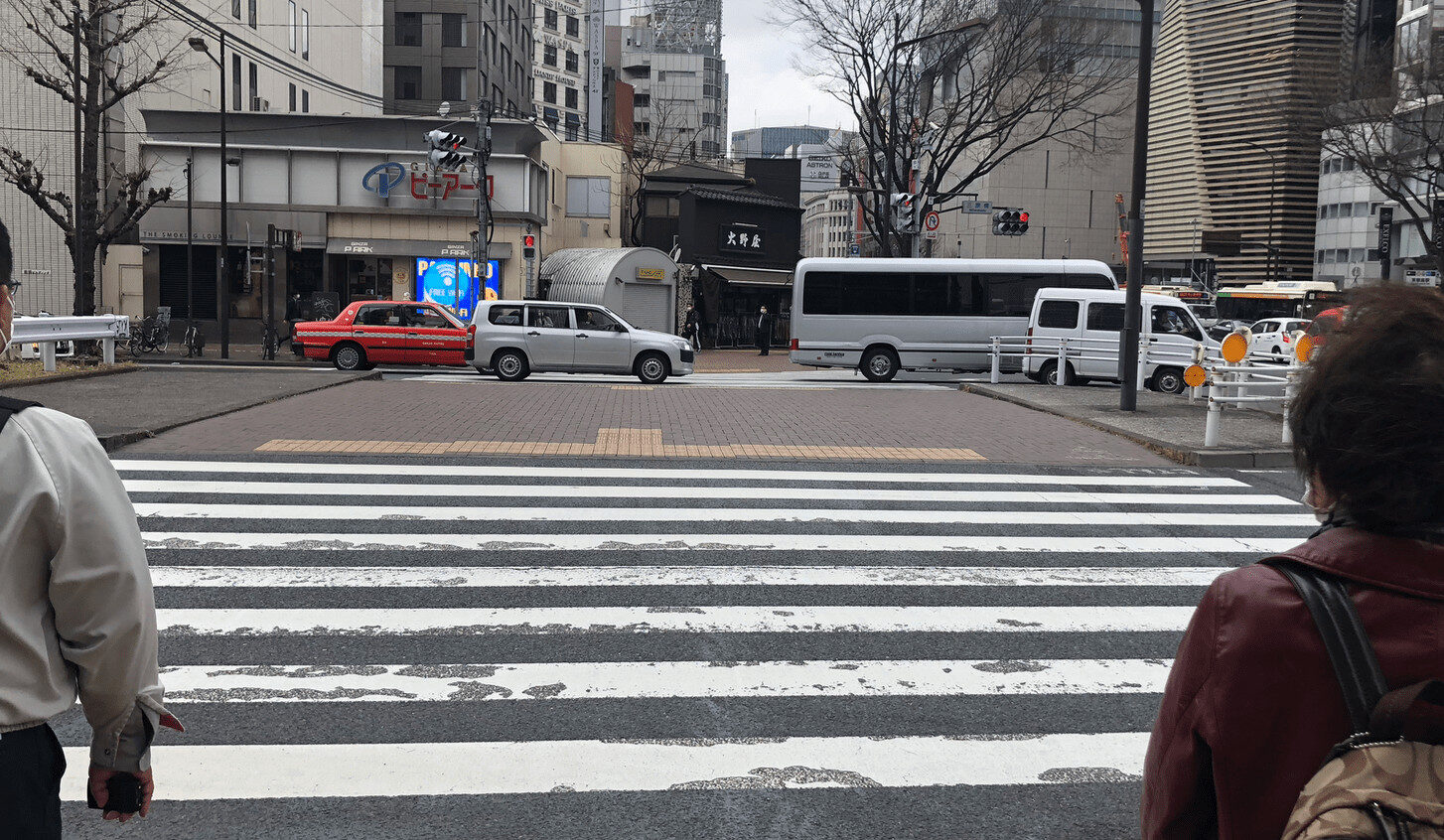
There was no traffic going from right to left, on the near side of the street. In America, we'd generally be impatient and cross, at least over to the center median. And, we'd probably go the rest of the way if we could.
As I blogged about before, people in Japan usually follow the rules about walking on the correct side of a staircase or walkway.
Another example of following the rules includes not just taking off your shoes, but lining them up neatly or in the exact designated space on the shelf.
At the one electronics manufacturer, I didn't get a photo of it, but when we returned to get our shoes, they had been lined up as neatly as the slippers were when we arrived (I think our group hadn't been orderly enough with our shoes… my apologies).
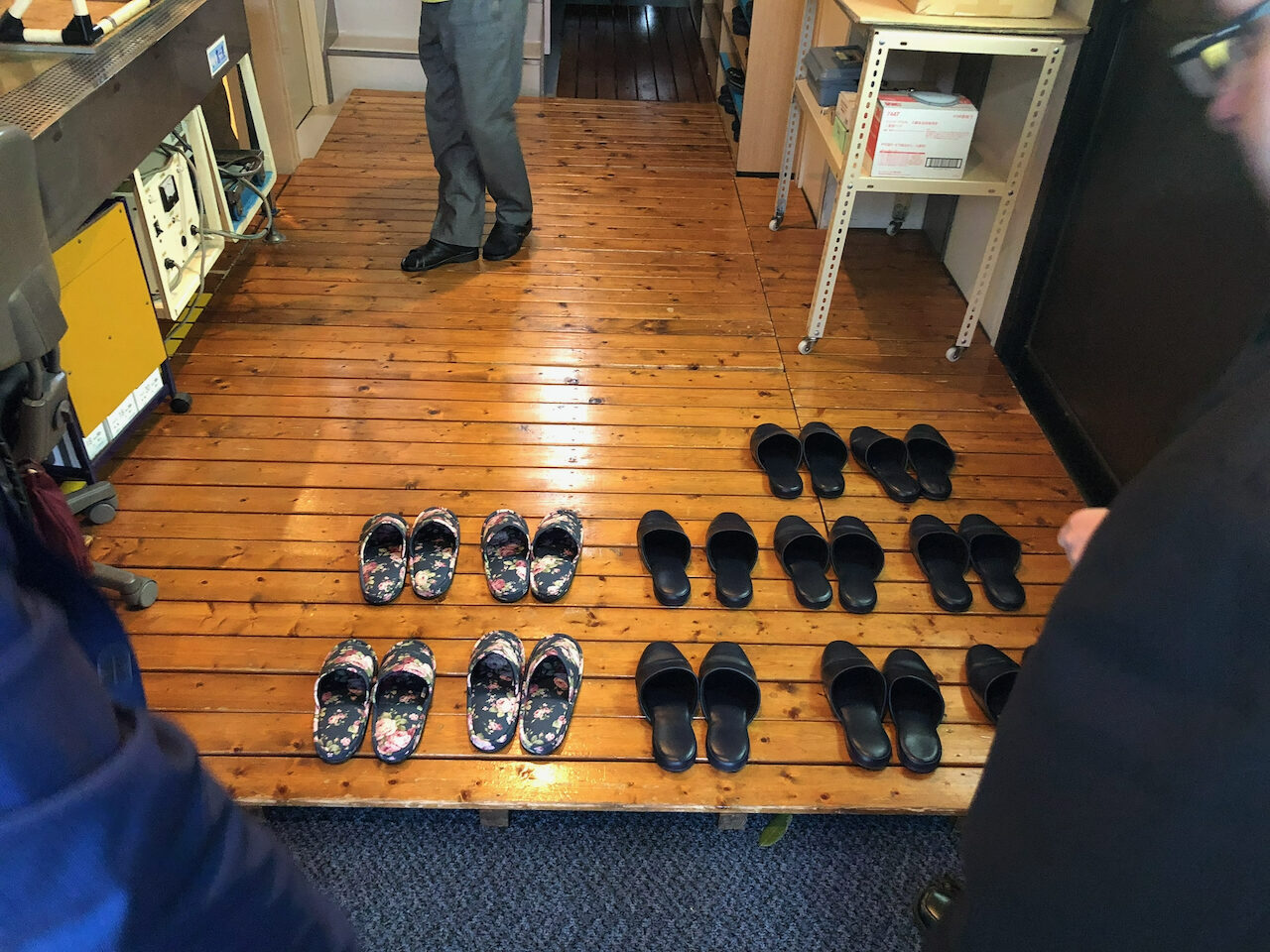
One man in our group accidentally took a pair of flowered women's slippers and, with a smile, was reminded to follow the rules as they handed him a pair of black men's slippers.
Sushi Making as Standardized Work and Training
I took a sushi-making class while taking a few extra days in Tokyo. We, of course, left our shoes at Chef Nori's door as he offered us slippers. Chef Nori taught us many rules about making sushi (and eating it).
Before he let us touch rice and fish, we practiced for a while using some clay. Chef Nori is explaining some of the “key points” for making the rice base for Nigiri sushi, including the size of the ball.

The standard is flexible and customized. The rice base should be made so it's the size of each customer's mouth… smaller sushi for women or others with smaller mouths. You can only do that, of course, if you're making sushi across the sushi bar from each customer (and it might lead to a gender discrimination lawsuit with an American sushi restaurant.
Here's what I made from clay:
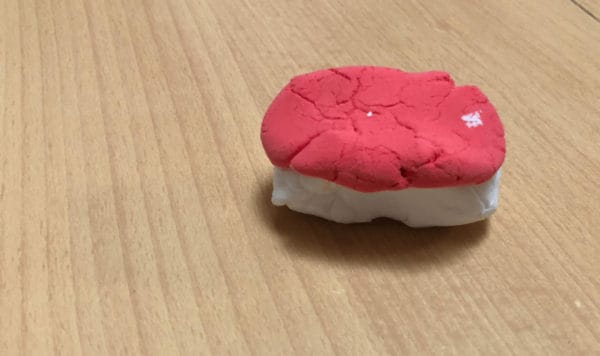
Chef Nori said that, when he learned sushi making, he practiced for three years with a towel (I think before he was allowed to work with real food). As you practice and learn, you “have to let the fingers memorize the movements.” Eventually, the sushi should be made in three seconds or less.
Chef Nori walked through specific instructions (printed on a whiteboard, given verbally, and then demonstrated by him). He then coached us as we each tried (the four of us in our class).
Some of these rules, as I remember, include:
- Detailed instructions about how to slice the fish
- Rice is supposed to be served at body temperature
- How to dip your hands into water, to avoid rice sticking to you
- How to place any rice that sticks to you back in the pot (use the wet cloth to wipe it off… don't waste a single grain!)
- How and where to place the sliced fish on your left hand's fingers (palm side)
- How to grab rice and initially form the rice base
- How to use your left thumb to make a large indent in the bottom of the rice (something I never knew existed) – an “air pocket” as it's called
- The multiple steps of how to squeeze the rice and fish (including a VERY specific instruction to always flip the Nigiri over by rolling it AWAY from you, not toward you)
Here is a short video of him working with the clay:
Many of these steps included a good “reason why” explanation as we'd see in a good Lean training approach. He wasn't formally following the Training Within Industry methodology, but it was close. He wasn't just telling us to do things a certain way because he said so.
Standardized Work for Customers, Too
Oh, and the standardized work for eating included:
- Always take the entire piece into your mouth, don't bite off of it
- Don't dip the rice in your soy sauce… if anything, dip the fish side… dipping rice makes it break apart and/or absorb too much soy sauce… creating a “small Mt. Fuji” in the plate
- Don't mix wasabi into your soy sauce (all of these things above are considered rude)
- You can use fingers or chopsticks for rolls and nigiri… use chopsticks for sashimi
I'll do my best to follow the rules.
Here's a photo of me working and what I made (with the chef's great coaching):
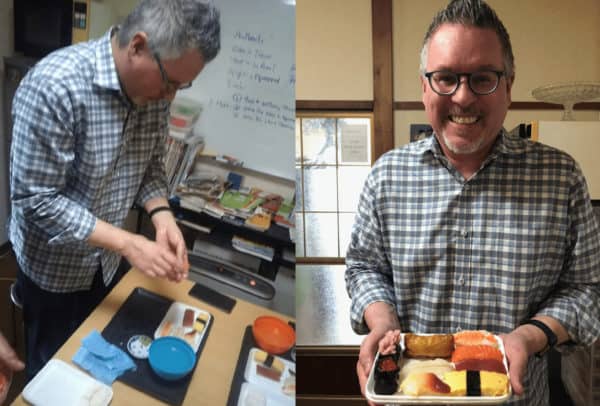
He said “good job” even when my roll turned out pretty badly (see that upper left piece below).
I cut the tuna and salmon… formed the rice… assembled the pieces. What fun!
A more properly plated final product that was delicious:

Here is a post I did in 2016 about a famed sushi chef and his work toward mastery of a craft:
It might be the “I'm working to improve my own craft over time” style of Kaizen, but it's possible neither chef would be open to “Kaizen” ideas from their employees… I'd be curious to find out.
Honesty, Integrity, and Following the Rules
Japan is not a tipping culture. You don't tip in taxis or at restaurants, as everything is included in the price. It can be considered an insult to give a tip.
Back in 2014, our tour group had a great dinner at a traditional Japanese restaurant where the kimono-clad waitresses were really charming. One European in our group wanted to leave a tip. It might have been a $10 or $20 note. Somebody in the group encouraged him not to leave it, but he insisted.
We got outside and down to the end of the block, waiting for the walk sign to change so we could cross.
The waitress came running after us. She said, “You forgot this.”
The rules wouldn't allow her to keep it… Honesty and integrity demanded she give it back.
When I was in the Tsukiji fish market area to eat last Monday before heading home, I saw a stand that was selling uni where you could eat it right out of the cut sea urchin. I discovered in 2012 that I absolutely LOVE uni. I had never gotten to eat it that way, in that presentation, where you just scoop it out with a spoon.
So, here I am enjoying the uni this way (with a close-up):

I had gotten a bit or two in… I was standing right in front of the stand, as the standardized work would say to not eat on the run. If you stand and eat it there, they have a trash can for their customers (since there aren't many public trash cans to be found).
One of the guys working at the stand came running out from around the back of the counter:
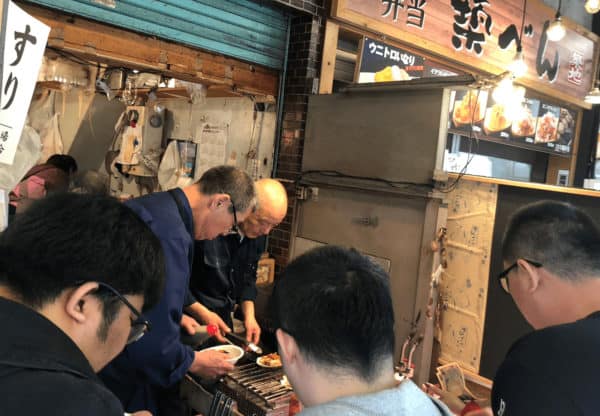
The price was JP¥1000 (just under $10), and I thought I handed him a 1000 yen note. The standardized work in Japan involves mainly paying in cash (see this post Katie Anderson wrote).
It turns out I had mistakenly given him a JP¥10000, worth about $100. Oops! The notes are different colors and I'm not color blind. I think I was excited about the uni and wasn't paying attention.
So he came after me to give me change. He joked, “Unless you want me to keep it.”
I was amazed. How many businesses in other parts of the world would have just kept the larger mistaken bill? I mean, it was my mistake after all, since I turned and walked away without waiting for change.
I appreciate the service culture and the attitudes in Japan. I can't wait to go back!
Reflections on Standardized Work, Culture, and Kaizen
My time in Japan reinforced that following rules and standards isn't about blind obedience–it's about creating the foundation for excellence, safety, and trust. Whether it's the precision of sushi-making, the discipline of standardized work, or the honesty of returning a mistaken payment, these habits enable a culture where improvement can flourish.
But discipline alone isn't enough–just as in Lean, we also need the courage to speak up, suggest changes, and refine the standards over time. The real magic happens when respect for rules meets a willingness to improve them.
Takeaway: Follow the rules… but remember, Kaizen means making the rules better tomorrow than they are today. Even sushi chefs would agree.
Takeaway for Lean Leaders Outside Japan
For Lean leaders outside Japan, the most important lesson isn't copy the rules — it's understand the purpose behind them.
What I observed repeatedly in Japan is that standardized work creates clarity, safety, and trust. People know what's expected. Customers know how the experience works. And when something goes wrong, the focus naturally shifts to the process, not the person. That foundation makes improvement possible.
At the same time, Japan's national culture doesn't automatically produce Lean thinking. Just as in the U.S. or elsewhere, Kaizen has to be intentionally created, encouraged, and sustained. Discipline without learning leads to stagnation. Learning without discipline leads to chaos. Lean lives in the balance between the two.
For leaders outside Japan, the opportunity is actually an advantage:
- We can adopt the rigor of standardized work without importing the fear of speaking up.
- We can pair clear standards with psychological safety, encouraging people to improve the rules — not just follow them.
- We can teach that standards are not constraints on creativity, but the starting point for better ideas.
The takeaway is simple but challenging:
Follow the rules — and make it safe to improve them.
That's true whether you're running a hospital, a factory, a restaurant, or a sushi bar. Standards create stability. Leadership behavior creates learning. Kaizen happens when you commit to both, every day.