

Toyota Quotes That Reveal the Real Toyota Way (Not What Most People Think)
TL;DR: Toyota's leadership philosophy isn't about control — it's about confirming processes, supporting people, and solving problems without blame. This quote from The Toyota Way 2001 shows how “thoughtful leaders” build quality and psychological safety into the system.
A Powerful Toyota Quote on Leadership
Below is an excerpt from Toyota Culture: The Heart and Soul of the Toyota Way describing what Toyota calls “thoughtful leaders.”
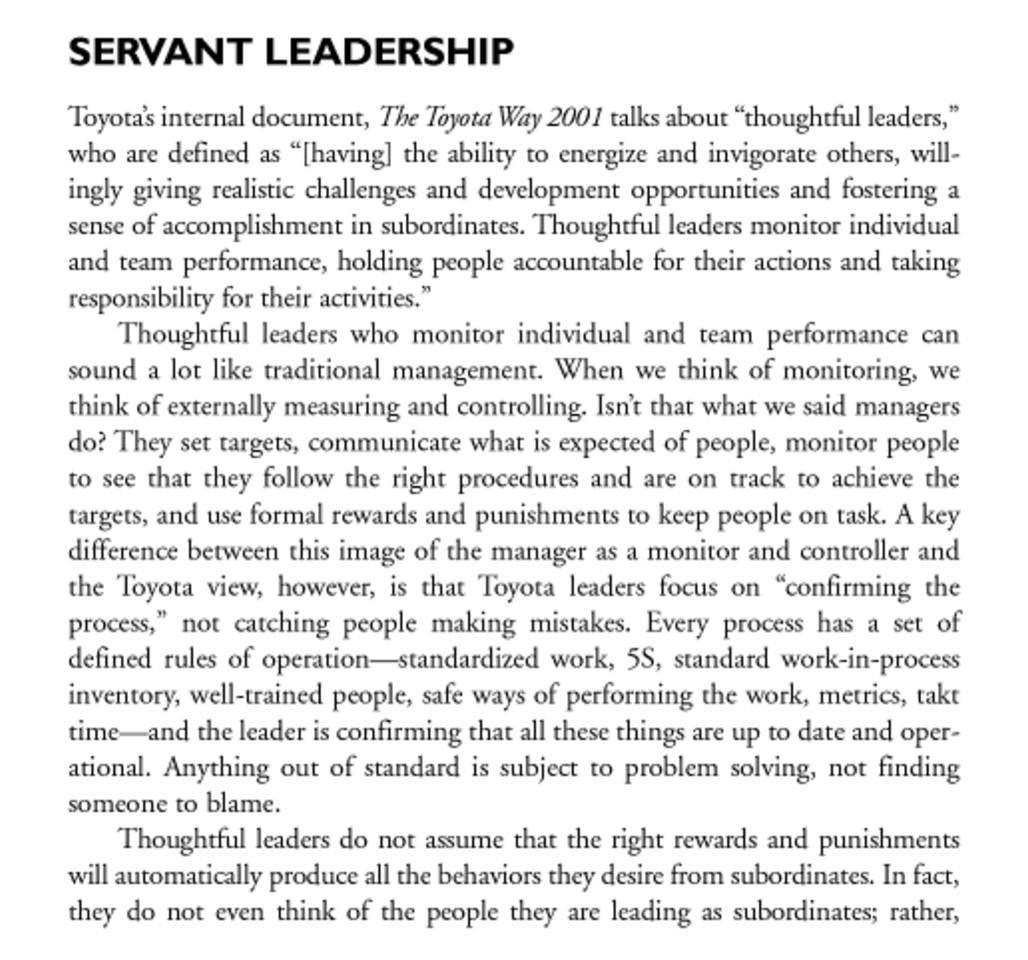
The Toyota Quotes
“Thoughtful leaders… monitor individual and team performance, holding people accountable for their actions and taking responsibility for their activities.”
“Toyota leaders focus on confirming the process, not catching people making mistakes… Anything out of standard is subject to problem solving, not finding someone to blame.”
Why These Toyota Quote Matters
Many people search for “Toyota quotes” expecting short, motivational lines.
But Toyota's philosophy isn't built on slogans. It's built on systems.
This quote highlights a crucial difference:
- Traditional managers monitor people.
- Toyota leaders confirm processes.
That's a profound shift.
Instead of asking:
“Who made the mistake?”
Toyota leaders ask:
“What in the process allowed this to happen?”
That mindset builds:
- Quality at the source
- Rapid problem solving
- Accountability without blame
- Psychological safety
And that's why the andon cord exists — not just as a tool, but as a leadership system.
Toyota Leadership: Confirming the Process
The quote also references standardized work, 5S, metrics, and takt time.
These aren't control mechanisms.
They are safeguards.
When something falls outside the standard, the response isn't punishment — it's structured problem solving.
That's not “soft.”
It's disciplined.
And it's one reason Toyota has sustained operational excellence for decades.
More Toyota and Lean Quotes
If you're looking for additional Lean and Toyota quotes, I've compiled a larger collection here:
That page includes quotes from Toyota leaders, W. Edwards Deming, and others who shaped Lean thinking.
Key Takeaway
The most important Toyota quotes aren't motivational — they're operational.
They describe a system where:
- Leaders serve the process
- Problems are surfaced immediately
- Standards protect people
- Blame is replaced by improvement
That's not just philosophy.
That's leadership discipline.






Easy to do – BUT you don’t get the credit.
Implementing something such as Kanban, 5S, SMED (just the tools) can be fully measured and you will get the credit.
That is how management of people in organizations all too often work nowadays.
What is your experience?
Best,
Ralf
This is, without question IMHO, the hard part. Or, as Michael Hammer said years ago, “The soft stuff is the hard stuff.” It’s easy for a leader to say “go try it for awhile, and let me know how it works.” It’s hard to say “I plan to change the way I work with you so we can improve our organization together.” It goes against what many of us learned in business school, and it’s hard to demonstrate how to do it. And it’s hard for the leaders to let go. If we can figure out a way to make this part easier, we’re going to be able to take perfromace improvement and Lean to an unprecedented place.
I think a big problem is in the way people define success here in the West which is often influenced by our individualistic nature.
I’ve been to Japan many times as my wife is Japanese and it is true when people speak of their “group orientated” outlook.
The book “The Art of Japanese Management” by Pascal and Atmos do a good job in illustrating the difference in management styles between the Japanese and the West and though dated now is still of value – I recommend it.
Basically the Toyota approach to HR is not unique in Japan and many of the large organisations follow a similar route. This has come about largely because of their lifetime employment system.
However let’s not also forget that the Japanese expect, or rather demand, their pound of flesh in return. For the Japanese salaryman the company comes first, and the company’s concerns are higher than ones own family.
A friend I have in Japan gets really good perks and is well look after by his employer but boy what does he have to give up for that! In the West we would basically die. Its the same at the Toyota plants in Japan. They look after you but boy do you have to work for them, I talking 14 hour days here.
We’ve got to keep things in perspective.
Read this post about the Toyota philosophy:
http://investorsconundrum.com/english_edition/2008/05/toyota-philosophy-there-is-only-one-way-to-be-the-best/