
Norman Bodek Remembers Taiichi Ohno: “You Don’t Understand Just-in-Time”
Norman Bodek recorded this conversation with me in early 2012, on what would have been Taiichi Ohno's 100th birthday. Having first met Ohno in 1981 and gone on to publish the English translation of Toyota Production System: Beyond Large-Scale Production, Norman shares stories from Toyota and Toyota Gosei that you won't find in the books — including the line Ohno used on him again and again: “Norman, you don't understand just-in-time.”
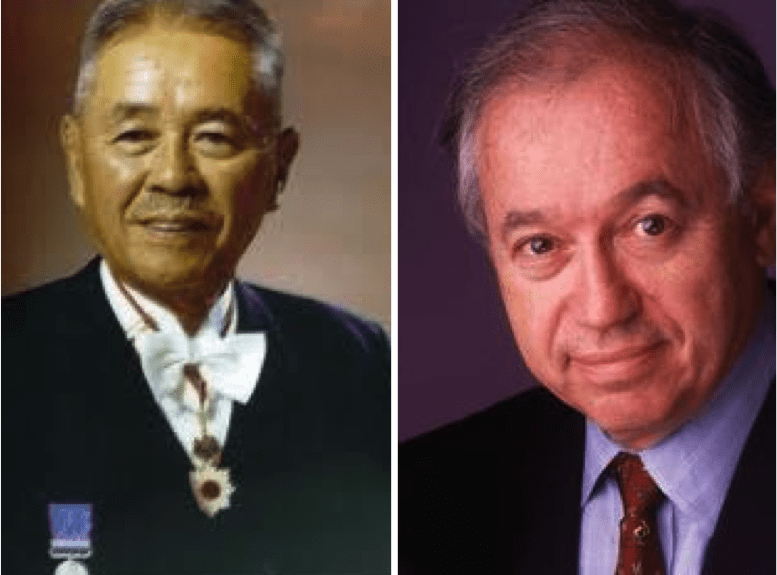
Episode #141 is a chat with Norman Bodek, as he shares his recollections of working with Taiichi Ohno, one of the creators of the Toyota Production System. Norman met and worked with Ohno in Japan and then published the translation of Ohno's classic book Toyota Production System: Beyond Large-Scale Production in 1988.
For a link to this episode, refer people to www.leanblog.org/141.
For earlier episodes, visit the main Podcast page, which includes information on how to subscribe via RSS or via Apple Podcasts.
If you have feedback on the podcast, or any questions for me or my guests, you can email me at leanpodcast@gmail.com or you can call and leave a voicemail by calling the “Lean Line” at (817) 372-5682 or contact me via Skype id “mgraban”. Please give your location and your first name. Any comments (email or voicemail) might be used in follow ups to the podcast.
Podcast #141 — Norman Bodek Remembers Taiichi Ohno of Toyota Production System Fame
Recorded early March 2012, published March 8, 2012
Intro
Mark Graban: Hi, this is Mark Graban with episode 141 for March 8th, 2012. Today's audio podcast is from a Skype video discussion that I did with Norman Bodek last week, in commemoration of what would have been the 100th birthday of Toyota and lean — Toyota Production System legend — Taiichi Ohno.
I'm going to publish that video when I can, so you can see Norman talking about his experiences and recollections of Mr. Ohno. But I wanted to go ahead and get the audio out there to be part of the conversation and commemoration. So for links, you can go to leanblog.org/141. When I have the video available, I'll post a link to it there, or you can find it through my YouTube channel at youtube.com/mgraban, or you can go into the iTunes store and subscribe to the video podcast series, which is separate from the audio podcast that you're listening to here.
So, as always, I want to thank you for listening. And again, happy anniversary — what would have been 100th birthday to Taiichi Ohno. Somebody I've learned so much from, and I'm sure a lot of you have as well.
Hi, I'm Mark Graban. We're going to be talking again today with Norman Bodek. And we remember Mr. Taiichi Ohno on the 100th anniversary of his birth. He passed away some years ago, but it would have been his 100th birthday. I can't think of anyone better to talk about his memories of Mr. Ohno than Norman Bodek.
Norman first met Taiichi Ohno in 1981 and published this book of Taiichi Ohno's, Toyota Production System: Beyond Large-Scale Production, which I have in hardcover. I have it on the Kindle version now. I was going to show it — there it is. It was showing Jules Verne. So it's on Kindle. Mr. Ohno's work is still reaching people today in many industries, and so that's why we're going to talk to Norman.
But Norman went on to publish 250 books about lean and quality and productivity. He's of course very well known for Quick and Easy Kaizen, and Norman also has the honor of being a member of the Industry Week Manufacturing Hall of Fame.
So Norman, as always, it's great to talk to you. Thanks for joining us today.
Norman Bodek: Mark, thank you very much. It's always my pleasure. And I hope that you'll enjoy our conversation today. I always do. I also published Ohno's Workplace Management book.
Mark Graban: Ah, that's right.
Norman Bodek: And had the privilege of meeting him many times. And I'll share some of the wonderful stories about Ohno.
Finding Shingo First, Then Meeting Ohno in 1981
I first met Dr. Shingo. Shingo introduced me really to the Toyota Production System, just-in-time, when I found Shingo's green book, A Study of the Toyota Production System from an Industrial Engineering Viewpoint. I became fascinated when I found the book and I ordered 500 copies to sell to my newsletter subscribers.
I owned a company called Productivity — Productivity Press — and had a newsletter called Productivity, and I was writing about the Toyota system starting in late 1980. The first thing I wrote about in 1980 was quality circles. I thought that was the Japanese management secret. It still is a secret, because we don't apply it very well in America.
But I met Shingo first and became fascinated with him. And then I went to Japan in November of 1981, and both Shingo and Ohno spoke at a conference organized by the Japan Productivity Association, the Japan Management Association. And of course Shingo spoke, Ohno spoke, and I was fascinated with the whole subject. At that moment I met Shingo personally, and I invited Shingo to come to America. And I became his publisher about a year later or less. I met Ohno on a study mission to Toyota.
“We Don't Write Things Down”
And I said to Ohno — I don't remember the exact date, but I remember it was before I published this book — I said to Ohno, I'm really fascinated with the Toyota Production System. I'd love to get more information that I could read so that I could write about it in my newsletter. And I said, what do you have available for me?
And Mr. Ohno said, we don't have anything.
I said, why not? He said, well, at Toyota we don't write things down.
I said, why don't you write things down? Is it a secret, for others, that they can't — you can't share? And he said, no, Norman, we don't write it down because we are always changing the production system.
Now, I liked that concept number one, because we talk about continuous improvement. Everybody's on a continuous improvement bandwagon.
Mark Graban: Right.
Norman Bodek: But what does that mean? You improve every single day. This is funny, because prior to this, my exposure to manufacturing is when people would write down procedures or standards about their system, they would put it in a file cabinet and nobody would look at it.
Mark Graban: Right.
Norman Bodek: And now Ohno was saying that the standardization concept is a living system that we are continually changing.
That was probably my first conversation with him. And then he was very kind to me when he did publish the book. He gave it to — I think it was Japan Management Association that published it. Well, you have it in front of you. I think that they published the book. I'm not sure. There were two different publishers, so I'm not sure which one that was with. That might have been another one.
Mark Graban: Mm-hmm.
Norman Bodek: Which company published that book, Mark? Can you see? That would be inside, title page.
Mark Graban: Right, now this is a Productivity Press in 1988.
Norman Bodek: It would tell where I did the translation. Slice. It means I got the book in Japanese, and then gave it to a translator to put into English.
Mark Graban: It says published by Diamond Inc., Tokyo, 1978.
Norman Bodek: That's good?
Mark Graban: Yeah.
Norman Bodek: So Diamond published his first book, and then I got the book, I guess a couple years later, translated it from Japanese into English. And of course, when I became his publisher, that gave me a wonderful opportunity to meet him on all of my trips.
Fifty Study Missions and the Old, Dirty Plant
At that time, I was conducting at least two study missions to Japan every year. In fact, at Productivity, we had 50 study missions to Japan. I probably did at least half of those. And on every trip to Japan after I met Ohno, he was gracious enough to let me visit Toyota with my group. And he would speak to my group very often.
I remember one visit I go to a factory, and it was old and it was pretty dirty. And boy, I was surprised to see a Toyota factory in that shape with that old equipment. Because we were studying Toyota as the best production system — and best means not just the best cars. To me it also meant the best environment, the best place for people to work, the best kind of work. And I was shocked. And I went to Ohno and I said, you're very nice to me, but you always let me only visit an old plant.
And he laughed and he said, Norman, you don't understand just-in-time.
Those are very famous words to me. Because almost every time I met Ohno, he would say to me, Bodek-san, you don't understand just-in-time. And it was probably very true. Back then I didn't understand just-in-time.
Sent Sideways to Toyota Gosei
Another time, later on, when he left Toyota — he didn't go up the ladder. And that was very surprising, because he, more than anyone, made Toyota successful. His production system really separated Toyota from all the other manufacturers. Still does today. And normally when you are great in a company, when you are a great manager, you go up the ladder. So he was vice president of production, which means he should have gone upwards. He was on the board of directors, I'm pretty sure, because all the plant managers at that time were on the board. They didn't have outside board members the way we do in America. And so he would have gone up the ladder, but he didn't. They shunted him, and they sent him and made him the chairman of Toyota Gosei.
Toyota Gosei was, and still is, one of the major suppliers to Toyota. They made the steering wheels and most of the rubber products and dashboards and a lot of the plastic products that went into the Toyota car. It's another very large company. And so when he went to Toyota Gosei, he let me come and visit him there.
“Why Don't You Get Rid of the Warehouse?”
At every one of my visits, he was kind enough to come and greet the travelers. Normally 20 people traveled with me at a time. And he would teach. When he would teach, he would use the same slides — only one set of slides with them. And the slide was pretty much — I remember — the river. The famous example of the river that Ohno created, that the river is inventory. And inventory is the worst waste because it covers up all the other waste.
And so in the talk, which was an hour or less, he would describe the Toyota Production System to us, and then we would visit the plant.
On one visit there we were standing in front of the factory, and he tells me a story. About one day, he's standing there with the plant manager, and he looks at the plant and he says, this is a warehouse. He said, you know what? At Toyota, we don't have any warehouses. And he looked at the manager and he said, why don't you get rid of the warehouse?
This is the way he worked. He'd never tell you how to do it. Never tell you how to do it. So many managers I meet, they're how-to-do managers. They tell you how to do it. They take away your creativity. But not Ohno. Ohno would tell you what he wanted done. He said, I would like you to get rid of that warehouse, and I'll give you a year to do it. And then he said, I want you to retrain everybody in that warehouse and make them into a mechanic.
And he walked away. And then a year later, of course, the warehouse was gone and everybody was retrained. It shows you what is possible. It shows you what people are capable of doing when you have leadership that's going to challenge them and demand it.
“Can You Do It With Less People?”
Another thing that Ohno did very often and communicated to me is whenever he went over to a place in a factory and talked to the manager of that area, he pretty much said, can you run your department with less people?
That was pretty much what he would say. Can you do it with less people? If you had eight people, he would challenge and say, can you do it with four? And then he would leave. And then sure enough, three, four months later, he would come back and the manager would be all excited. He would be elated. He'd have a big smile on his face, and he'd say, Ohno-san, I'm now running my department with four people.
And what do you think Ohno said?
Mark Graban: He probably said, can you reduce it again?
Norman Bodek: Can you reduce it again? That's it. Ohno's main focal point that I believe, from my contact with him, was on reducing labor content.
Mark Graban: Right. But let me ask about that, because Toyota was very much in a growth mode at that point, right? So people were given other roles and other jobs, I would imagine.
Norman Bodek: Yes. But you see, this was brilliant. Because first of all, Japan had lifetime employment, and at that time when I went there, there were virtually no part-time employees at Toyota. Or very, very few. I'm sure 90, 95% of the people were full-time employees. So if Ohno went into a department and he said, reduce your staff in half, he's not saving the company any money at that moment.
Mark Graban: So you're saying Toyota was expanding?
Norman Bodek: Well, Toyota was expanding because they were forced to expand, because they couldn't lay the people off. And what are we going to do with these people? Well, they trained them. They continually train people. Something that we are missing in the West, because we don't put in the kind of training and investment in people we should do. It's a crime in our society. It really is a crime. Because we send so much work to the Orient today. And we're sending work to the Orient today because people are doing repetitive, boring, unskilled work. They're unskilled because we don't train them and develop them.
Mark Graban: Yeah. It's interesting to think, in that environment, like you said, with lifetime employment, that could very easily have led to a lot of complacency. Why bother to try to improve productivity? But it seemed like Mr. Ohno was driven. From your experience with him, was it just an internal drive that he had to make things better?
Norman Bodek: Well, this is what he was. Ohno was one of the best managers in the world in the last hundred years, because he's the one who primarily transformed Toyota. I'm sure they had many other creative managers and financial managers et cetera. They weren't known for designing great cars, but they sure were known for manufacturing great cars.
Sixty Hoses: “You Don't Understand Just-in-Time”
I remember another incident. I was at Toyota Gosei, and I was watching — two things I noticed, which fascinated me. One, I saw 60 hoses being worked on at the same time. Now I didn't fully understand just-in-time back then. This was early eighties. And I'm seeing these 60 hoses being done. I go to Ohno and I said, Ohno, you are teaching me one-piece flow. I'm looking at 60 hoses. Could you explain it to me?
And Ohno said, once again, Norman Bodek-san, you don't understand just-in-time.
I said, what do you mean? He said, look, the first thing that we're trying to do is to make money. That's the first thing. Yeah, we want one-piece flow, but not if it's going to cost us more money.
That was a big, big learning experience for me. So we don't make one hose at a time. If we could do it 60 at a time and save money, we'll still try. The next thing that Ohno taught me is when he would see a batch of 60, he would only say to the manager, could you reduce it down to 15? See what happens.
So this was his second area. One was labor reduction, and the second thing was inventory reduction.
The Board in Front of the Worker
Also on that trip, which was interesting, I was watching a woman putting a clamp on these hoses, some hose for the car. She was putting clamps on, and in front of her, Mark, she had a very large board. Very large board. Quite large, maybe two feet, three feet. It was right in front of her. And on that board was all of her instructions on what she was doing, number one. It had on it all of the measurements for her to calibrate that the products that she was working on. It had places for her to write notes, to write down her improvement ideas. It had a copy of perfect clamps and hoses, and it had copies of defects right in front of her.
I thought that was brilliant. And I rarely see that in any other plant that I go to, that they had that in front of them.
The Ohno Circle
The other thing, of course, most of the other things are in his books. You know, the great thing of course is you go to the gemba, you go to see with your own eyes. Which was another Ohno technique. In fact, one of the famous ones that's in one of my books was the Ohno Circle.
He'd take a piece of chalk and he'd make a circle, and he would tell the plant manager — especially at a supplier — if you want to work with Toyota, or if you want me to teach you anything, you stand here all day. And then a man would say, can I go to the bathroom? He said, yeah, quickly you can go to the bathroom. And you can have lunch, but you've got to get back here. But you stay here the whole day. And then I'll come back and quiz you to see what you saw.
It's a great learning experience.
Stand There 30 Minutes and Ask the Human Question
Now, something came to me recently, which I recommend to every one of our listeners, is that you go to the gemba and you look at people working. Just stand there and look. At least for 30 minutes. Just stand there and look. And then say to yourself, is this the kind of job that human beings should be doing?
Because Mark, I'm astounded as I continually visit plants — and I've done close to 300, and last year I probably saw 25. I went to Lexus last year. Saw many new things at Lexus. But I still see people doing very boring, very repetitive work. Tightening — I saw one man at Lexus tightening eight bolts on every car. He had a takt time of about one minute. 500 cars during the day. He tightened eight bolts on 500 cars. And that was his job.
Mark Graban: They didn't have job rotation?
Norman Bodek: No.
Mark Graban: Hmm.
Norman Bodek: Some of the plants do. They did job rotation, I believe first in America before they did it in Japan. They used to have, when I first went, at the end of every week, you could post your job and you could take another job and switch jobs, but it was pretty much your job for at least a week.
So what I'm really asking the people there is to look at the way people work. That's the Ford system. That's the Taylor system. That's not the system for the 21st century.
Canon, Yokogawa, and Cells Instead of Lines
Now, I have seen two other companies. One is Canon. One is Yokogawa. Yokogawa Electric. When I went to Singapore in November, they have no assembly lines. Toyota still has assembly lines. They have the final assembly lines. Not everything is in cells. But at Yokogawa and Canon, everything is in cells. There are no more conveyor belts, no more assembly lines. What does that mean to the worker? It means that every single worker is multi-skilled. Every single worker is multi-skilled, and every worker is challenged to be multi-skilled.
The Two Pillars: Just-in-Time and Respect for People
The last thing I thought I would talk about is, Toyota has two pillars for their success. I'm not sure where this came from. I don't know if this goes back to Ohno or not, these two pillars. But currently they have two pillars, and one pillar is called just-in-time — the Toyota Production System, or what we might call lean — and the other pillar is called Respect for People. That's my side.
Even though I've been involved with both sides for 30 years, I'm not an engineer. I'm not an engineer by my background. But I like the Respect for People side. But my question is, what do we mean by that?
Mark Graban: Yeah. But first, I mean, I think it's all lean. When they say the two pillars of the Toyota Production System — I mean, Respect for People isn't separate from lean. It might be separate from what people call JIT.
Norman Bodek: Okay. Yeah, it depends which chart you're looking at. That's right. One could be called the Toyota Way, which has two pillars, and one is the Toyota Production System. And then I've seen what you just said — another graphic using Toyota Production System with two pillars underneath it.
But Respect for People is a big question of mine. What do we do to give people respect? If these are two pillars, this is what balances the lean effort. It balances the structure. One is elimination of waste and the implementation of all of these tools that we're all familiar with. But the other side is respect, and what gives people respect? Not giving them repetitive work. Not putting them in a factory that smells and stinks and it's a drudgery in their life. But finding a way to make it a creative process for people — that's respect. Challenging people to grow and build their skills — that is respect. Giving them jidoka, the ability to stop the line — that's real power and respect.
The Mistake Board at Hino Motors
I saw another brilliant thing that I like, at Hino Motors, which is the Toyota bus company — they're 50% partners with them, making trucks and buses. And when I walked through the plant, I saw a large board, and it was a mistake board. And every time a worker makes a mistake, they run over to that board, and there's a sheet of paper with their picture on it, and they write down their mistake to share it with everybody in the plant.
That's brilliant. That's great respect. So many companies in America say, don't make mistakes. And that's criminal, because everybody makes mistakes. So if you don't want people to make mistakes, they're just going to hide it, because they're afraid that you're going to fire them for their mistakes. That's got to change.
Not Personal with Ohno, the Way I Was with Shingo
The only last thing that I'll mention about my relationship with Ohno — great privilege to know him for many years — I was not that sociable with Ohno. We did go out to lunch every time I visited him, which maybe was a dozen times. But I was never sociable with him. Never invited to his house, as I was with Dr. Shingo. Shingo was very personable, and I've been to Shingo's house many, many times. In fact, I visited Shingo's house just last year to visit Mrs. Shingo, who was 96 a month ago.
How the Kaizen Blitz Came to America
And the last thing I'll mention is that on my last visit to Ohno, a Mr. Iwata came over to me — he was Ohno's assistant at Toyota Gosei — and he said, Norman, I'm going to leave Toyota. I want to come to America. I want to start my own practice. Would you help me? And I said, of course.
And then he got a partner of his. His name was Nakao. And I knew Nakao too, because he worked with Ohno, and I would visit Taiichi often too. And the two of them came to America. And we brought the Kaizen Blitz here, which has swept the whole society.
Now, I don't know where the Kaizen Blitz came from. See, what Ohno did is he picked 10 people, one person from each of the top suppliers, to be responsible for training all the suppliers on just-in-time. The one that led that was Chihiro Nakao. He was an assistant to Ohno. He led that group. But Iwata and Nakao were part of that group. And somehow that group got together and created this very powerful training, which we call the Kaizen Blitz. Back then I called it “five days and one night.”
Mark Graban: Mm-hmm.
Norman Bodek: Because the way they trained, you worked five days and only slept one night.
So thank you for asking me.
Ohno Demanded You Learn — And You Grew
Mark Graban: Sure. Let me ask one other thing, because maybe it's just to tie up some of the discussion. You talk about the respect for people, the way we need to be developing people. And think back to the stories you told of Mr. Ohno about going in. In some ways, it sounds like very classic Western management behavior to just go in and demand: you need to do this with less people, you need to do this without a warehouse, you need to do smaller batches. But the results aren't always positive in the West. So Mr. Ohno — there was something different there than just going in and setting what we might call a stretch goal in the West. There was much more to it than that, right?
Norman Bodek: Well, by Ohno demanding you to do it — Shingo did the same thing. He would always say, do it. By them demanding you to do it and not telling you how, you grew enormously at Toyota. I've met so many dozens of managers and ex-Toyota managers, and they all know the system so well. So many of them are teaching now in the world, because Ohno demanded them to really learn. They knew just-in-time, because they implemented it all.
Ohno was very rough. Shingo had a really rough time with him. Shingo was his teacher, back in the early 1960s. Mr. Ohno called Dr. Shingo and said, I want you to come and teach me. So Shingo always felt that he was the one that created just-in-time, because he was Ohno's teacher. We've always had a debate on that.
Ohno was a very difficult man. Most of the suppliers called it kamikaze management. You know, kamikaze, the pilots that blew themselves up. He was a very rough man and very demanding. But from those challenges and demands, Toyota became a very incredible company.
Closing Turn to the Harada Method
Mark Graban: Right.
Norman Bodek: I just want to end on one thing, briefly, to tell you what I'm doing, which is part of this Respect for People side, which is building people. I've found a new technique, which to me is very explosive, and it's called the Harada Method. And in Japan, back at the same group where I started with the Japan Management Association, they called this the world's best technique in day-to-day management. And it's a privilege for me to be working on it and teaching it now. And I recommend everybody out there learn this Harada Method. It's dynamite.
Mark Graban: Hopefully we'll be able to talk more about that. We'll do that in a future podcast.
Norman Bodek: Oh, I'd love to. I keep learning every day on it. And, thrilling in — Mark, I'm pleased with what you've done. I'm going to look forward to your new book coming out. I can see your first book back there, Lean Hospitals, behind you.
Mark Graban: Yeah.
Norman Bodek: Well.
Mark Graban: This is the cover of the new one. And thank you again for writing the introductory material for that book. We're honored that you did that for me.
Norman Bodek: My pleasure. Yeah, thank you. Well, I feel that I'm your teacher. I taught you and your co-author Joe Swartz the Quick and Easy Kaizen system. And the two of you have brilliantly applied it in the medical field. And, Mark, thank you so much, and I look forward to our next blog together.
Mark Graban: Okay. Thanks, Norman.
Norman Bodek: Take care. Bye-bye.