Tag Quality

Quality: Leadership, Systems Thinking, and Continuous Improvement

Quality doesn’t come from inspection, pressure, or choosing between speed and accuracy. It comes from well-designed systems, capable processes, and leaders who focus on learning instead of blame. This archive brings together blog posts, podcasts, and reflections on quality through a Lean and Deming lens—covering psychological safety, metrics, variation, leadership behavior, healthcare quality, and why sustainable improvement depends on fixing systems rather than managing people harder.

Podcast #310 – Steve Shortell, The Impact of #Lean on Healthcare Quality

Joining me again for Episode 310 is Stephen M. Shortell Ph.D., MPH, MBA. He is Blue Cross of California Distinguished Professorship, HPM and is a Professor of Organizational Behavior at the University of California, Berkeley School of Public Health. 

He was previously a guest on Episode 267 talking about the establishment of the Center for Lean Engagement and Research (CLEAR) at the University of California, Berkeley, where he is the director. 

In this episode, we talk about some initial research that they released in a paper that was published in The Joint Commision Journal on Quality and Patient Safety:

"Use of Lean and Related Transformational Performance Improvement Systems in Hospitals in the United States: Results From a National Survey"

Quality Improvement Through Obfuscation?

Healthcare is full of terms that obfuscate things. Ironically, use of the word "obfuscate" can be an example of obfuscation.

Instead of saying, "Healthcare leaders often obfuscate a situation," we can say, "The language used in healthcare often makes things sound better or more complicated than they really are."

The GM Quality Death Spiral, Part 2: Production Pressure and the Memos That Blamed Workers

GM Quality Death Spiral 1996 Part 2

Recently, I blogged about a quality catastrophe that I lived through at GM just over 20 years ago, at the now-closed GM Livonia Engine Plant.

Bluntly, the quality problems were caused by poor management and the side effects of their decisions. Even though they constantly blamed workers, management directly interfered with workers and engineers being able to do the right thing for quality.

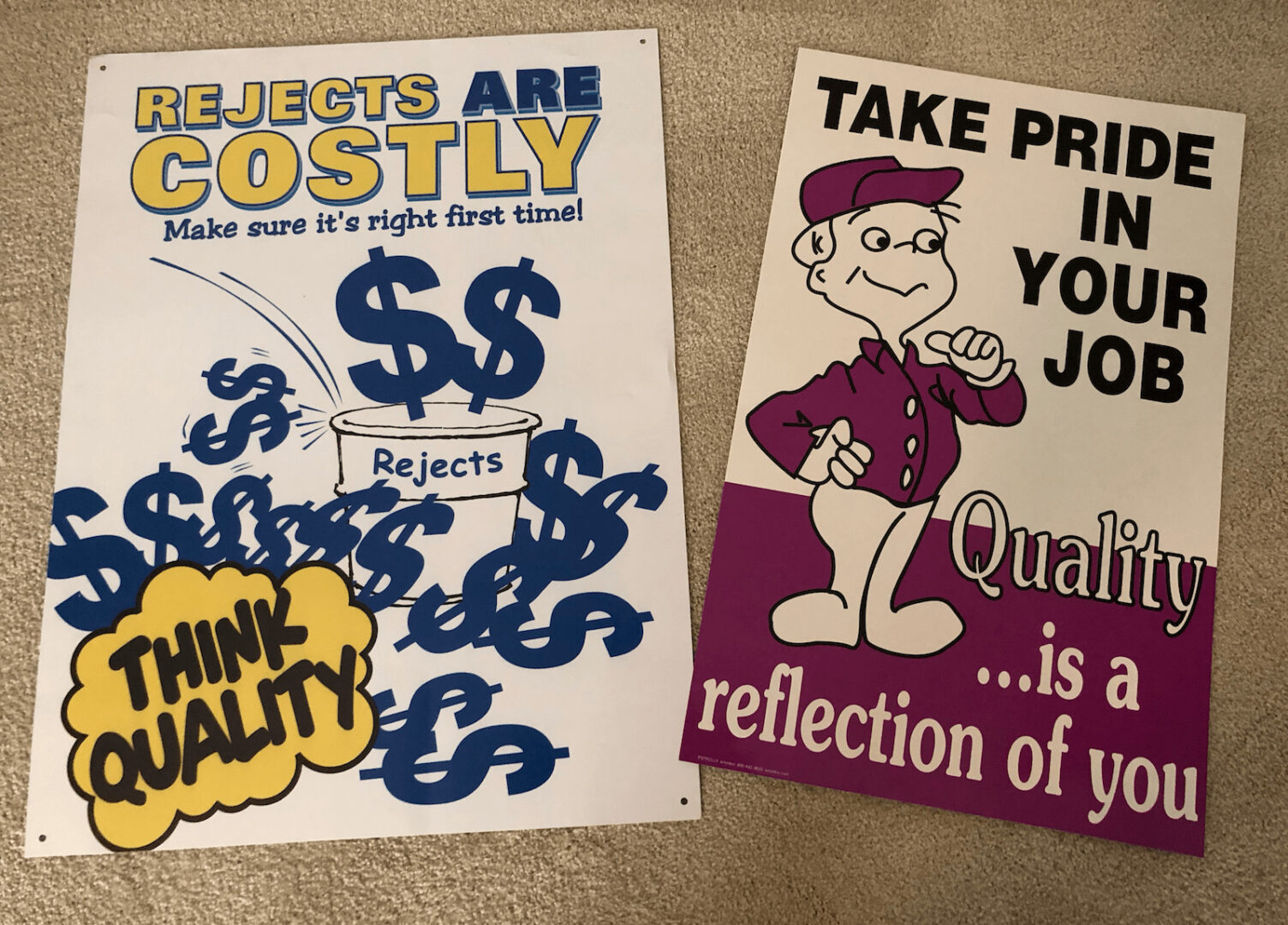
Here is Part 2 of that story... the first quality "spill" took place in April 1996. As I wrote about last time, Angry high-horse memos were sent out by management. Workers were told to have pride and to pay closer attention to quality (as if those had been the problems).

The GM Quality Death Spiral, Part 1: When Leaders Blame Workers for the System They Designed

GM Quality Death Spiral 1996 Part 1

My first job out of college was as an Industrial Engineer at the General Motors Livonia Engine Plant. Blogging didn't exist then (I didn't even have email or internet access at work) or I might have started my writing career then. Oh, the stories. I've shared some of them on this blog over time.

I've blogged about papers from the Don Ephlin files, a former UAW national leader. I have my own small collection of documents and artifacts from my days at GM that I thought to keep in a folder. I still have that folder today.

A few of these memos tell the story of a quality and productivity death spiral that eventually led to our plant manager being replaced. And, by "replaced," I don't mean fired or given an early retirement. He was, at least in title, PROMOTED to a role at GM Powertrain headquarters. Thankfully, the new plant manager, Larry Spiegel, was one of the original "NUMMI commandos" and he made a huge difference to the plant and to me, personally.