
Lockout/Tagout Failures Kill Workers: A Lean Leadership Wake-Up Call
TL;DR: Lockout/tagout failures kill workers every year–and they're not “operator errors.” This post explains why ignoring LOTO is a leadership and culture failure, why productivity pressure drives deadly shortcuts, and what Lean leaders must do to put safety truly first.
In the Lean management framework, we often emphasize “Respect for People” as a foundational principle–one that drives how we lead, how we improve, and how we solve problems. But there's one form of respect that stands above the rest: keeping people safe.
Because if people don't feel physically safe, there's no foundation for anything else–not improvement, not quality, not trust, not even basic operations.
A Wall Street Journal article made this reality painfully clear.
“Every year, an average of 85 people are killed and 364 suffer amputations,” due to violations of OSHA's lockout/tagout standard. Among manufacturers, it's the most common safety citation.
These are not numbers on a chart. They are names, families, lives. And these are preventable injuries, harms, and deaths.
“Fifteen Minutes of Lost Production” vs. a Life Lost
The WSJ article tells the story of Wayne Rothering, a 65-year-old furniture factory worker in Wisconsin who was crushed to death while fixing a laminator line. The powered rollers were still spinning when a board propelled into him from behind.
His company had designed a “lockout alternative” that, in theory, reduced downtime by avoiding a full machine shutdown. But as the WSJ reported, that workaround assumed perfect adherence to the protocol. And when shortcuts became the norm–when “boards were left on the conveyor a large majority of the time”–the risk wasn't hypothetical anymore. It was fatal.
That's not a process problem. That's a leadership problem and a culture problem.
Lockout/Tagout: Seen in Bourbon, Missing in Healthcare?
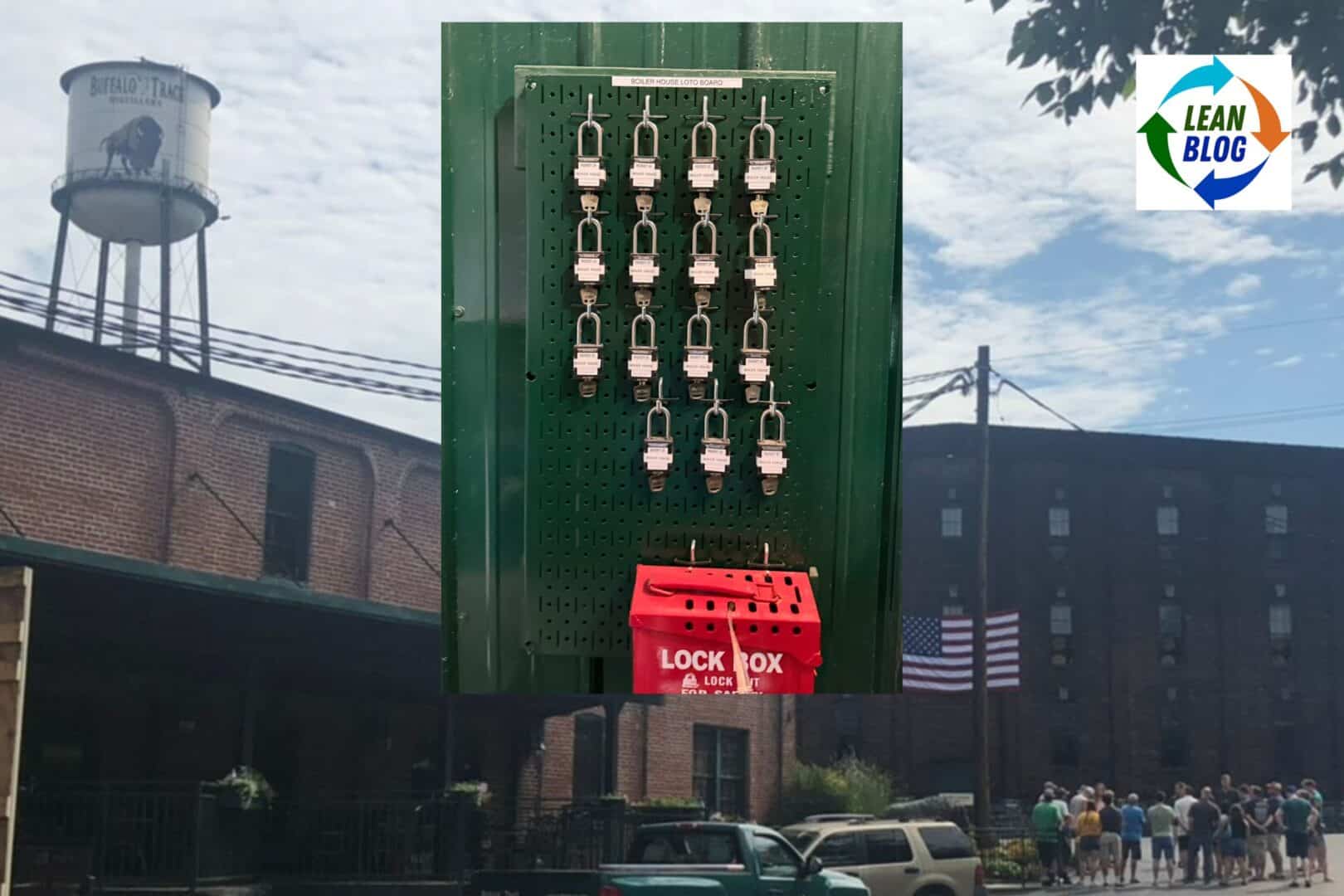
This issue hit me personally not long ago. While touring a bourbon distillery in Kentucky–an industry known for balancing craftsmanship with safety–I noticed a clear, well-maintained Lockout/Tagout (LOTO) board. Every lock had a name. Every procedure had a visual. The guide even explained the process for shutting down equipment before cleaning or servicing it. It was simple, standardized, and visible.
See a photo I took at a world-famous distillery below — the green LO/TO board with locks laid on top of a photo of part of the distillery.
Now, contrast that with what I haven't seen in healthcare–an industry where I've spent the past 20 years of my career. I can't recall ever seeing a LOTO board in a hospital. In one case, I remember a large, caged pharmacy robot with a posted sign that read something like:
“Do not start machine when people are inside.”
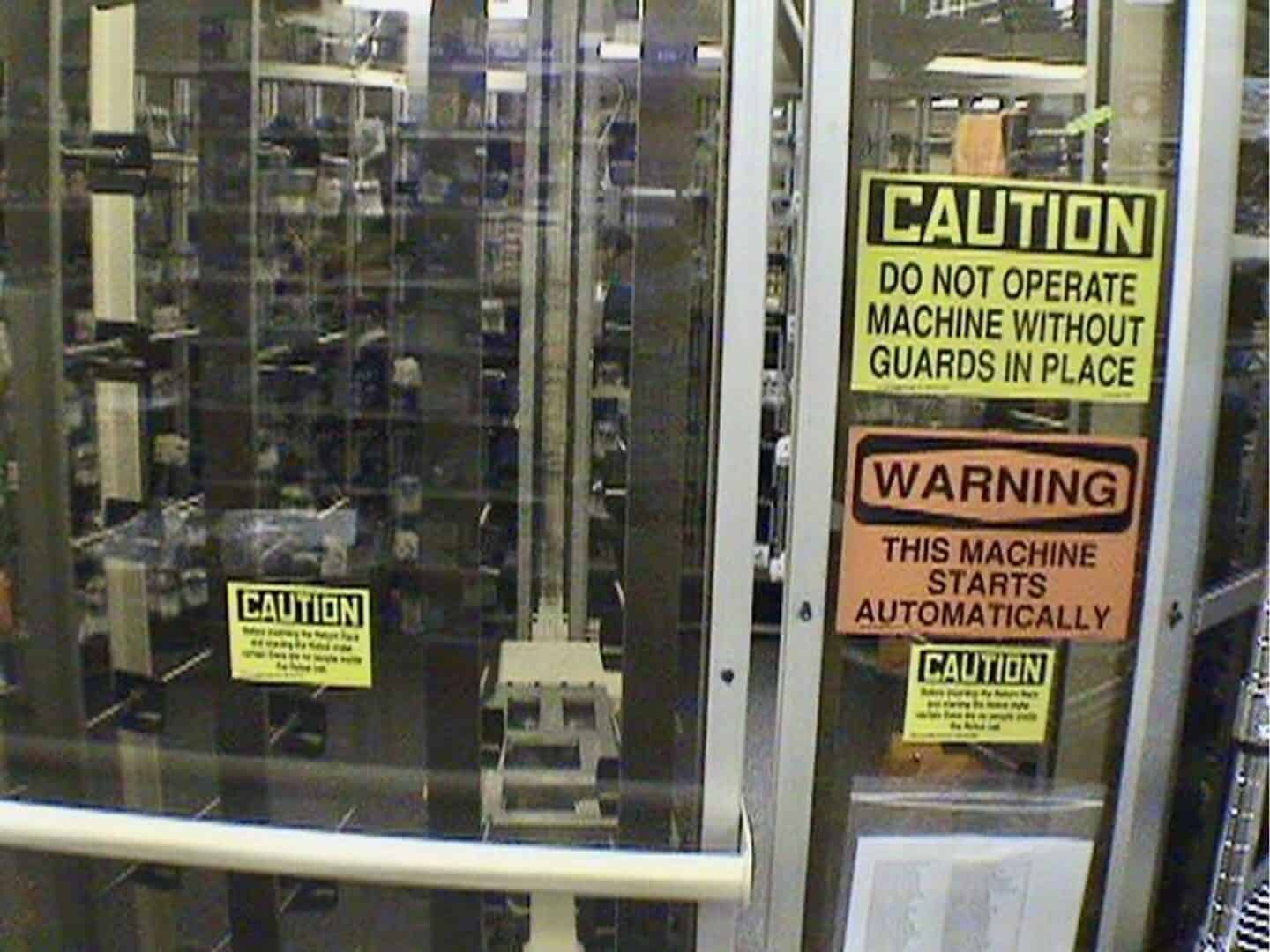
That was the extent of the safety protocol, apparently. No lock, no tag, just… a sign. Many signs.
Yikes.
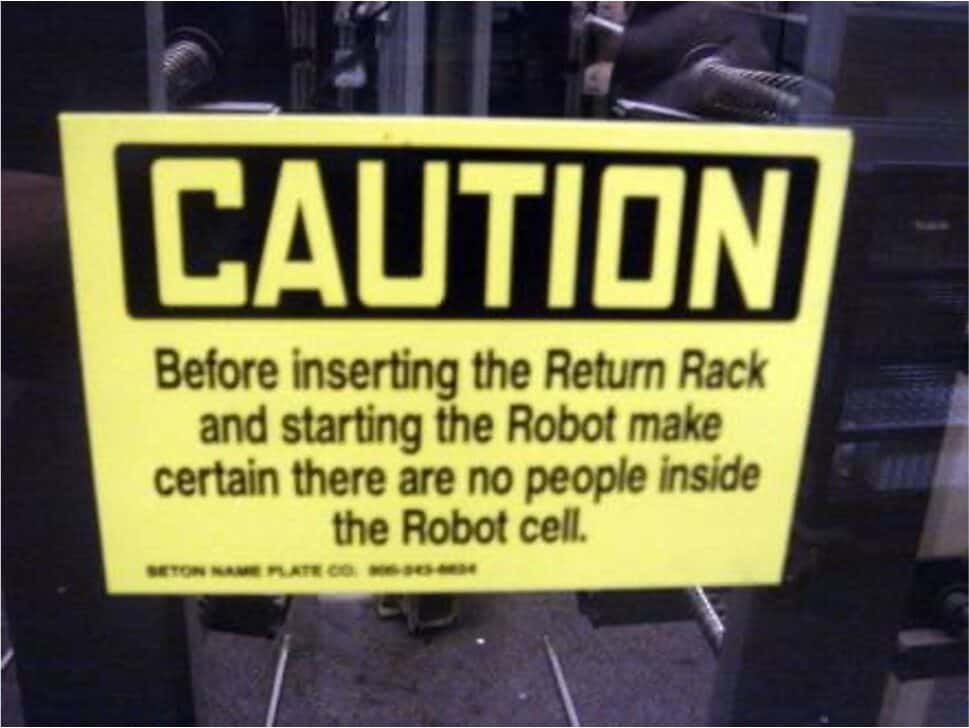
“Make certain”????
Now imagine the pressure of a backlog of medication orders, a stressed-out technician, and a manager focused on throughput. What happens then?
It could be bad. Fatal.
Pressure and Shortcuts: A Deadly Combination
“They take shortcuts, figure it's too much trouble to lock it out, or they get pressure from supervisors… to keep productivity moving.”
— Richard Fairfax, former OSHA enforcement director
We know this pattern. It's the same one we've seen when surgical checklists get skipped to stay “on time,” or when assembly line workers hesitate to pull the Andon cord because it “hurts metrics.”
If productivity is emphasized over people, then employees will follow suit–often at great cost.
What's the Role of a Leader?
In Lean Hospitals, I wrote that “safety must always be the first priority.” That doesn't mean safety is a box to check or a slogan. It means leaders must model it, enforce it, and continuously improve it.
The Wall Street Journal's heartbreaking examples–from Ashley Furniture to Miracapo Pizza–illustrate what happens when leadership fails to do that.
Training isn't enough. Telling people to “be safe” isn't enough. Creating systems that make it easy–and expected–to do the right thing is a hallmark of leadership.
Safety Is Not Optional. It's the Precondition.
At Toyota, safety isn't something that competes with productivity–it's what enables it. You can't have kaizen, learning, or improvement if your people aren't safe. And you won't have psychological safety if they're being blamed or pressured into dangerous shortcuts.
As I often say in psychological safety workshops:
“People don't speak up when they feel at risk.”
And I'd add: People won't follow safety protocols if they've been taught that speed matters more than safety.
Ask the Hard Question
When you see an incident like those in the WSJ article, the natural question is:
“Why didn't the worker follow the procedure?”
The better question is:
“Why was the process built in a way that made it so easy to skip?”
And even better:
“What pressures or systems made skipping feel like the ‘right' choice?”
Final Thoughts: It's Time to Lead Differently
There is no such thing as Lean without safety. As Toyota says, it's the doorway to all work.

There is no such thing as Respect for People if people are dying to keep up with production.
Let's hold ourselves–and our organizations–to a higher standard. As one lawyer put it in the WSJ article:
“Is it better just to shut the whole machine down and lose 15 minutes of production to make sure everyone will be safe? To me, the lawyer, I always say yes.”
As a Lean thinker, I say the same thing.
Safety must come first. Every time.
Reflection:
How are you balancing productivity and safety in your organization? Are there areas–like I've seen–where safety is quietly being compromised in the name of output
Let's not wait for a tragedy to ask these questions.