

Why Value Stream Maps Use That Factory Shape (and What It Actually Means)
If you've ever drawn or reviewed a Value Stream Map, you've probably used the familiar “factory” icon to represent a customer or supplier. It's a curious symbol — especially in healthcare or service settings — and many Lean practitioners eventually ask the same question: why is it drawn that way, and what does it really represent?
Well, it looks like what might appear to be a strangely-shaped building — or it might seem like a random shape:

In context, a VSM might look like this (a version posted by LEI):
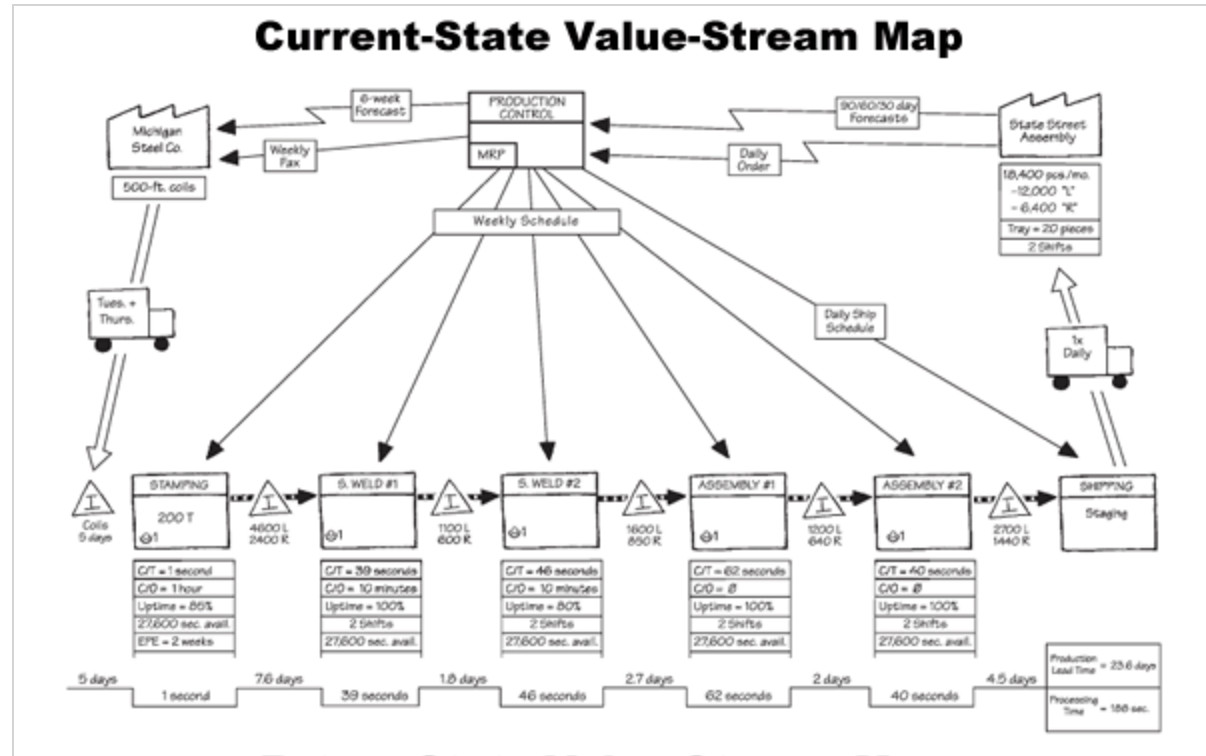
If we're going a Value Stream Map in healthcare, is our customer a factory? Should we hold to that “standard,” or maybe draw a patient requesting care or an appointment?
But if we're using a factory, why is it drawn this way?
The Sawtooth Roof Behind the Value Stream Map Icon
This style of factory roof is called a “sawtooth” roof. They're not ONLY found in Japan, but I saw this style of roof when visiting Toyota recently, as this one photo shows:

The building seen there was the original Toyota factory and it's now part of the complex called the “Toyota Commemorative Museum of Industry and Technology” — it's a great museum that I never get tired of visiting.
Here's a model of what this style of factory building looks like (a photo I took during this most recent visit):
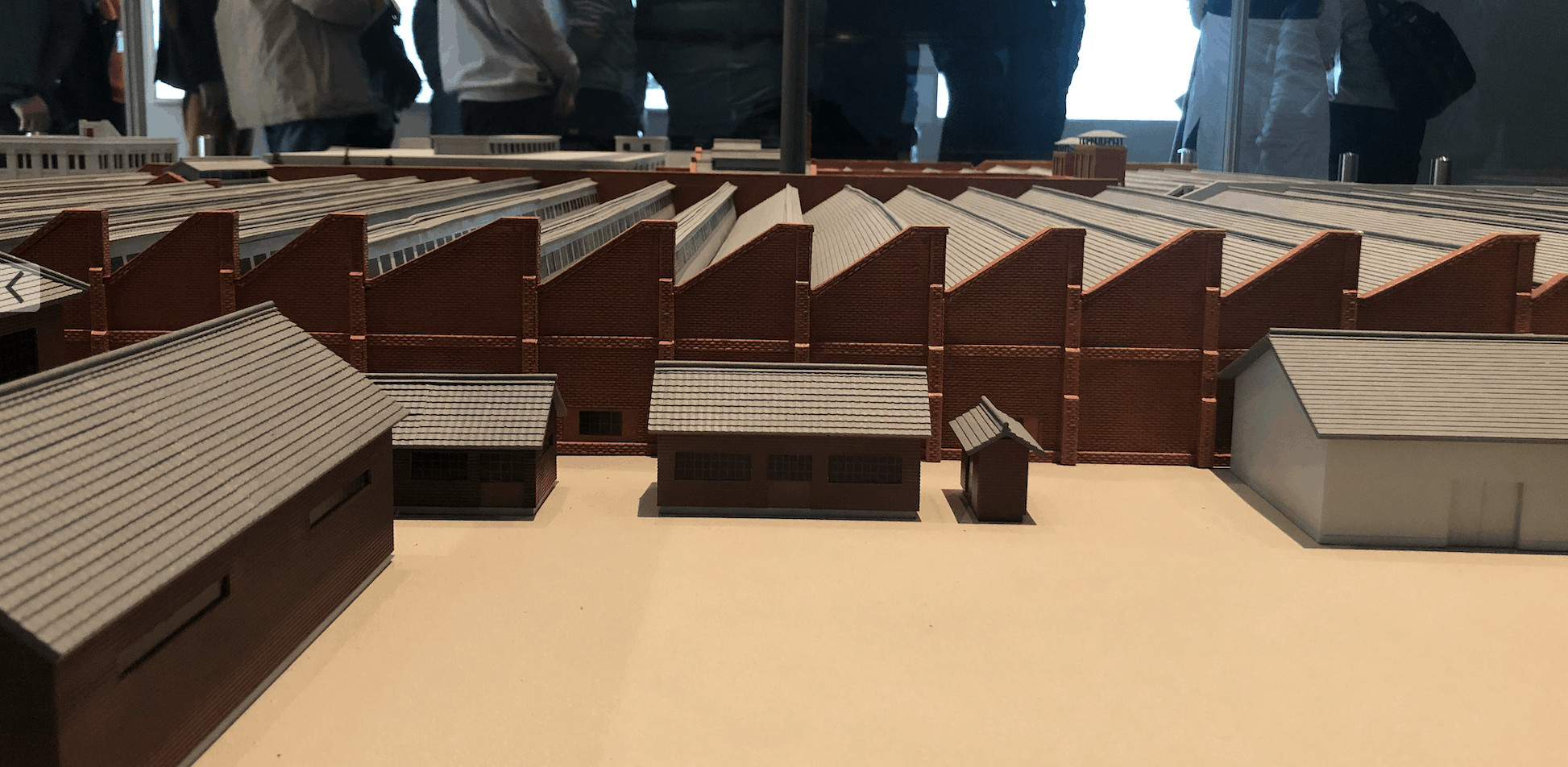
The Wikipedia page about sawtooth roofs talks about how this design helps bring in natural light and this design was popular before the spread of artificial lighting… and it's become more popular again as people and companies are more concerned about energy efficiency.
“The steeper surfaces are glazed and face away from the equator to shield workers and machinery from direct sunlight. This kind of roof admits natural light into a deep plan building or factory.”
I've seen this style of building in the United States and other countries, so this isn't just a Japanese thing.
I originally posted a shorter version of this on LinkedIn and that prompted some discussion.
As with many Lean “standards,” the real lesson isn't to copy the symbol blindly, but to understand its purpose — and then decide, thoughtfully, how best to represent value and flow in your own context.
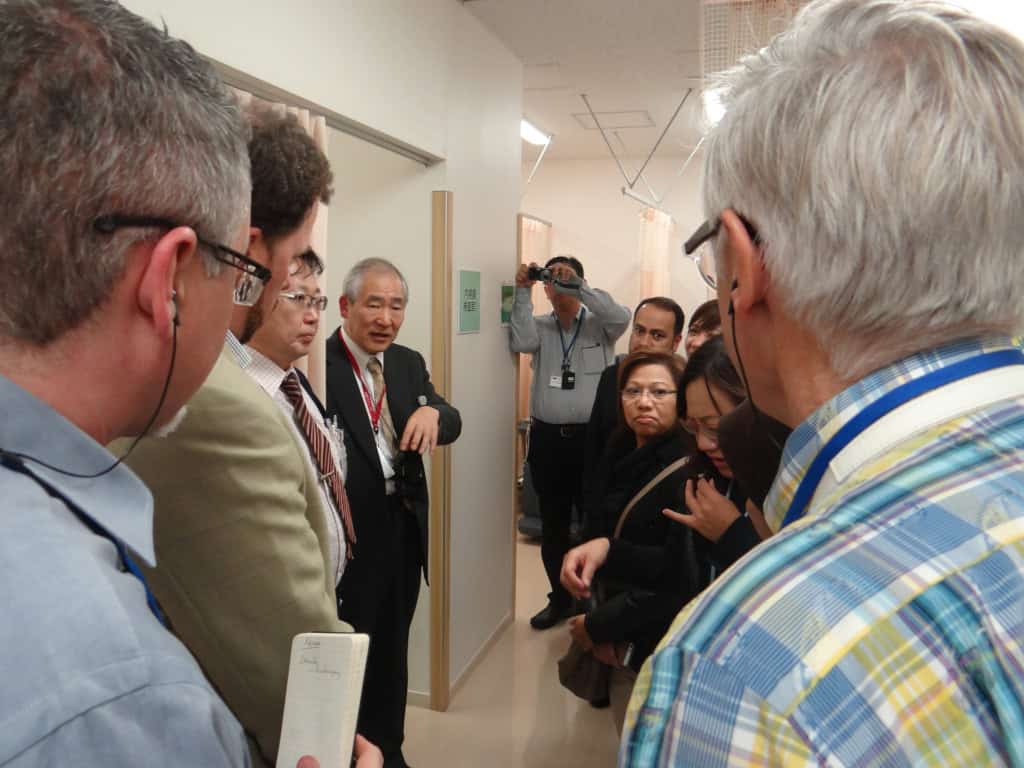
See Lean healthcare in Japan with your team
I help lead custom Japan study trips for hospital and health system leaders: Japanese hospitals and factories, prep before you go, and follow-up discussions once you are home.