How a Community Hospital Built a Culture of Continuous Improvement
I'm happy to have hosted, via KaiNexus, another free webinar. Click the link below to register to see the slides and recording, or scroll down for the YouTube recording.
How One Community Hospital is Creating a Culture of Continuous Improvement
November 28 from 1:00 – 2:00 pm ET
Presented by Mike McGowan, Director of Process Excellence at Marietta Memorial Hospital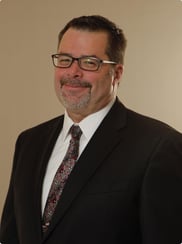
Mike is a graduate of Ohio University with a BS in Zoology. He has worked as a Medical Technologist, Chemistry Supervisor, Laboratory Director, and Senior Director in healthcare for the last 35 years, spending most of that time at Marietta Memorial Hospital. He is a lean six sigma black belt and a 2014 graduate of The Ohio State University with a Master's Degree in Business Operational Excellence. Mike is currently Director of Process Excellence at MMH.
In the webinar, Mike will discuss their “Lean journey” and some steps they have taken to create a culture of continuous improvement.
I first met Mike when he was a student in the MBOE Program at Ohio State (I'm sorry, The Ohio State University). It's a great program and I served as a mentor for two students a few years back, including Mike. I got to visit his hospital a few times and we talked a lot about his transition from being a lab director to being the lead on their continuous improvement (“process excellence”) program.
I've always enjoyed talking with Mike, as he's kept in touch after graduating and we spend a fair amount of time comparing notes. Mike and his hospital have also become customers of KaiNexus.
Mike and I recorded a short podcast to introduce him and to serve as a bit of a preview for the webinar:
As we were chatting before the podcast recording, it occurred to me that our promotional efforts for the webinar should emphasize that the lessons from Mike's hospital are not just lessons for other hospitals. These are lessons that are applicable to everybody's organizations in any industry. It's about people being people and large organizations being large organizations.
Many health systems have put a lot of effort into learning from manufacturers and companies in other industries. Doing so brings in fresh perspectives and stretches one's own thinking.
So, I hope you'll tune in for the webinar regardless of where you work. Unlike my last webinar, I won't be wearing a wig. Click here to register.
Watch the Webinar
Challenges and Barriers
When we do the webinars, we always ask attendees a general question that's not looking for feedback about the webinar.
We ask:
What is your biggest challenge related to innovation and improvement?
The responses we get are usually pretty similar. Last time, people said the following, indented and in italics, with my comments in between:
Navigating leadership and departments.
Top leadership doesn't embrace it; no one ever has time for it.
Those are two separate issues. Why doesn't top leadership embrace it? Maybe if leaders did embrace it, people would be more motivated to make time for improvement?
Going through the proper channels / having the opportunity to implement improvement ideas
Buy in from other process partners. Access to financial information.
Getting my colleagues on board
Implementation
Communication
Maintaining a connection to the leaders and the areas where work is being done.
Getting buy in. Also, healthcare is constantly changing and we are chasing it all the time. There never seems to be time to get ahead so that we can actually do process improvement.
That reminds me of this cartoon and this LEGO version of the idea.
Convincing clients to adopt genchi genbutsu, real-time data gathering, and leader standard work.
Making sure everybody understands the same thing when it comes to outcomes…
“Genchi genbutsu” is a Japanese phrase that means “go and see,” basically.
Sustaining improvement work
Lack of leader engagement in developing a lean management approach to align with other levels in the organization
Getting front line staff to understand and act on data
Maintaining meaningful ongoing leadership support.
Coming up with lead measures that are meaningful and relevant and engaging by the shop floor employees
Keeping leadership engaged in focused problem solving
As process improvement practitioner, my challenge is creating and interpreting control charts
That last comment happens to be the topic of my latest book, Measures of Success.
Do you face any of these challenges? It's easier to state the problem than it is to solve it, right?
What This Webinar Reinforces About Building a Culture of Improvement
This webinar highlights that creating a culture of continuous improvement isn't about tools, software, or slogans–it's about people, leadership behaviors, and persistence over time.
Mike McGowan's experience at a community hospital shows that progress happens when leaders stay engaged, create space for improvement work, and treat frontline ideas as assets rather than interruptions. The lessons apply far beyond healthcare, because the challenges are fundamentally human and organizational.
The barriers raised by participants–limited time, inconsistent leadership support, silos between departments, difficulty sustaining gains, and uncertainty about data–are not signs of failure. They are normal conditions in large, complex organizations.
What matters is how leaders respond to those barriers:
- Do they make improvement easier or harder to do?
- Do they coach and support, or delegate improvement “downward”?
- Do they treat resistance as defiance–or as feedback about the system?
The hospitals and organizations that make progress are not the ones without obstacles. They are the ones that keep learning, keep adjusting, and keep investing in people as problem solvers.
If any of these challenges sound familiar, you're not behind–you're right where improvement work begins.