
Patients Are Not Cars: Why Lean Still Works in Healthcare
Originally published May 4, 2016. Updated in 2026
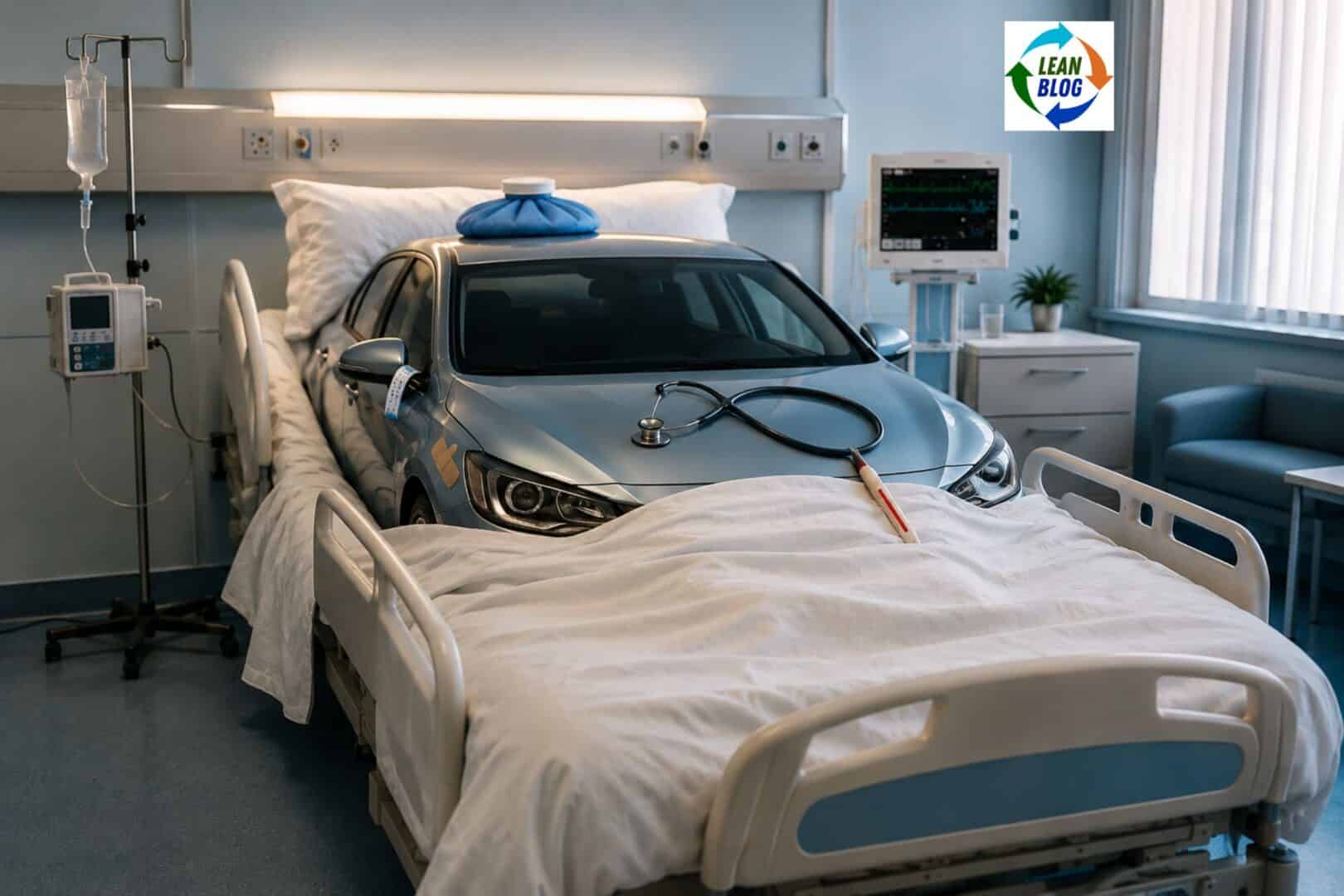
“Patients are not cars.”
I've heard that objection for twenty years now. It usually arrives as a conversation ender rather than a conversation starter. And the thing is, it's true. Patients are not cars. I've never argued otherwise.
But Lean was never a system for building cars.
Over those twenty years, I've had a lot of discussions with healthcare professionals (doctors, nurses, medical technologists, pharmacists) about applying Lean to improving healthcare. It's hard to ignore that Lean, which grew out of the Toyota Production System, has its origins in manufacturing. It's also hard to ignore the evidence from the past two decades that Lean thinking can make a real difference in hospitals and clinics, even if that difference is neither easy nor guaranteed.
Where the Objection Comes From
Plenty of people in healthcare are open to ideas from other industries. Checklists and safety practices borrowed from aviation are the familiar example. Others are skeptical, or cynical, about ideas from outside.
Skepticism is fine. I'd much rather have an open discussion about somebody's concerns than watch them nod along in agreement they don't feel and then go do nothing.
The implied (or sometimes directly stated) objections to using ideas from manufacturing in healthcare include things like:
- Every patient is unique!
- You can't turn a hospital into an assembly line!
- Medicine isn't just a bunch of algorithms; it's an art
- We're not just cranking out thousands of the same widget here…
- There's too much variation in healthcare for Lean to apply
Sometimes it seems to mean something closer to “leave me alone, I'm fine with how things are” even if the current healthcare systems in the first world don't always serve patients as well as possible (patients wait too long, costs are too high, and/or too many are harmed by preventable medical errors). I can't read minds, so I try not to assume that's what's happening.
I'll admit there are moments when it's hard not to react with a “Well, duh.” I try to resist. For the record, though, these two things are not the same:

When people say, “Patients aren't cars,” they might want us to back off and shut down the discussion. Do they expect us to say, “Oh, you're right… my mistake… never mind”?
Sometimes the Objection Is Earned
For a long time I treated “patients are not cars” mainly as resistance. I've come around on that.
Some people have watched a “Lean” program come through their hospital that turned out to be a cost-cutting headcount reduction plan with Japanese words attached. Some have been handed a standardized work document written by somebody who had never done the work. Some have raised a concern during a kaizen event and watched exactly nothing happen with it. There's a reason I've spent years writing about Lean As Misguidedly Executed.
If that's what somebody has seen labeled as Lean, then “patients are not cars” isn't closed-mindedness. It's a fair description of what was done to them.
So before I explain what Lean is, I try to ask what they've already seen. Usually something like, “What's been your experience with this?” The answer tells me whether I'm talking with somebody who doubts the idea or somebody who has a bad memory of how the idea got used on them. Those are two different conversations, and the second one isn't mine to win.
Lean Works in Aerospace and in Custom, Low-Volume Work
Lean is not a system for building cars better.
Lean works well in aerospace, even though people could rightfully say, “Airplanes are not cars!” Yes, planes are far more complex. They are produced in lower volumes. To some degree, every plane built is unique… but Lean still applies at companies like Boeing, Lockheed Martin, and others.
Lean is not a system for “cranking out thousands of widgets” that are identical. Last week, I visited a factory near Fort Worth that makes large signs for customers such as restaurants, hotels, gas stations, and hospitals. Every sign is unique, even if they share common branding and design elements. The factory produces relatively low volumes and highly customized products (see my blog post about them). But, Lean works.
That's also the answer to “every patient is unique.” Lean doesn't require low variation.
Why Lean Works in Healthcare
Lean works in healthcare (see some results here) because it's a flexible methodology, culture, and management system that's focused on:
- Developing people
- Leading people and teams
- Improving processes, leading to better quality and better flow
- Solving problems
- Redesigning how work is done
- Continuously improving
- Engaging everybody in that effort
None of that requires a car.
The way I've heard it described by people who worked inside Toyota and at NUMMI is that the system develops people, and the cars are what comes out the other end. Same plant, same workers, same union, different management system, dramatically different results. That's the part “patients are not cars” misses. The car was never the point.
It's also why the response to a mistake matters so much. If the reflex is to find the person who did it and discipline them, you don't have a Lean organization no matter what the whiteboards look like. Punishing people doesn't prevent medication errors, and everybody who works in a hospital already knows that. They're just waiting to see whether leadership does.
A Better Response Than “Well, Duh”
A Better Response Than “Well, Duh”
The next time somebody tells you patients are not cars, you can agree with them. They're right.
Then, instead of explaining, maybe ask what they've seen. What has been called Lean where they work? How did it go? Who benefited from it?
If the conversation reaches a point where examples help, there are plenty. Organizations like ThedaCare and Virginia Mason built long track records worth studying. I'd also say the record is uneven. Some organizations sustained the work. Some had a strong run under one CEO and drifted afterward. That's not an argument against Lean. It's an argument for paying closer attention to what makes it stick, which turns out to be leadership behavior repeated over years.
In 2005, applying Lean to healthcare might have seemed theoretical. Twenty years later, there's a lot more evidence that it works, and a lot more evidence about how it goes wrong.
What Lean Healthcare Is Actually About
Two things:
- Providing the safest, best quality, most affordable care that patients can get access to quickly
- Creating better workplaces for the people delivering that care
That's hard to argue with. What's harder is figuring out whether the person in front of you is objecting to that, or to something that was done to them under the same name.