A Lean Management System That Doesn’t Depend on the Lean Team — Emily Swaney, OhioHealth
Emily Swaney, VP of Operational Excellence at OhioHealth, explains how a Lean Promotion Office of 11 people supports a Lean management system for 35,000 associates. The approach relies on developing leaders as problem-solving coaches and on connecting daily huddles and frontline KPIs to what the organization measures.
Scroll down for how to subscribe, transcript, and more
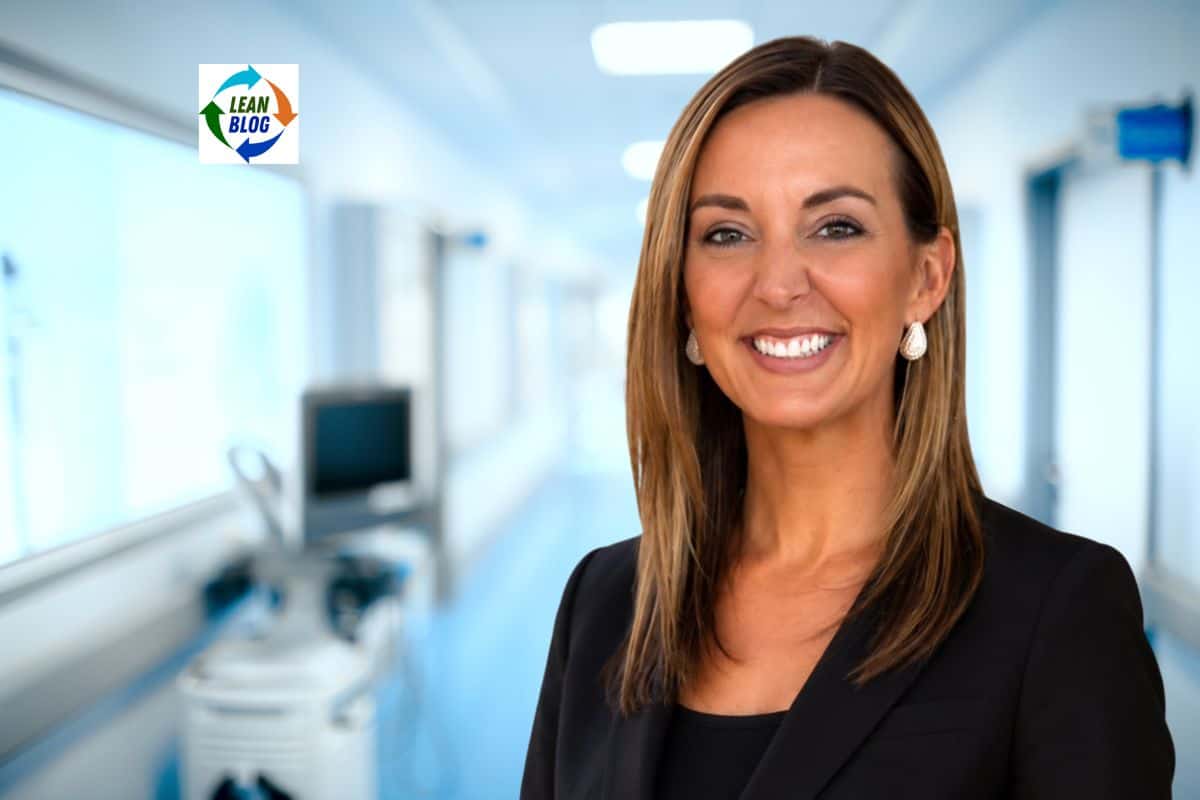
My guest for Episode #548 of the Lean Blog Interviews Podcast is Emily Swaney, Vice President of Operational Excellence at OhioHealth in Columbus, Ohio. Emily graduated from the MBOE program at The Ohio State University and is a Lean Six Sigma Black Belt. She has worked at OhioHealth since college, and her first job there, right out of high school, was delivering meal trays to patients. She now oversees both the Lean Promotion Office and the enterprise project management office.
We talk about how a Lean team of 11 people supports a Lean management system for 35,000 associates. Emily explains why her team doesn't lead projects and focuses instead on developing about 1,500 leaders as coaches, including managers who coach hospital presidents on their coaching. We also discuss helping leaders stop offering answers at the gemba, and why immediate patient safety concerns get a different response than process problems.
Emily also walks through OhioHealth's five-tier safety huddles, which roughly doubled the number of reported concerns. Leaders close the loop on escalations by bringing updates back to the front line during daily protected gemba time. She describes how frontline teams choose their own KPIs from hospital and department dashboards tied to the balanced scorecard. And she shares what's next: an associate idea platform and extending the management system into corporate functions.
What We Discuss in This Episode:
- How Emily got started with Six Sigma through a one-credit course with a guaranteed internship
- Why she sees Lean as a more natural fit than Six Sigma for healthcare and other service settings
- How a Lean Promotion Office of 11 people supports 1,500 leaders and 35,000 associates
- Why the Lean team doesn't lead projects, and how process owners take over after kaizen events
- Coaching leaders to stop being heroes and to ask questions that advance problem-solving at the gemba
- The patient safety exception to slow coaching
- Second coaches, including managers who coach hospital presidents on their coaching
- Five-tier safety huddles, good catches, and a roughly twofold increase in reported concerns
- Closing the loop on escalations during daily protected gemba time
- Connecting frontline KPIs to department dashboards and the balanced scorecard
- Using marketing skills to tell the story of the management system
- An associate idea platform and extending the management system into corporate functions
This podcast is part of the #LeanCommunicators network.


Watch the Episode:
Thanks for listening or watching!
This podcast is part of the Lean Communicators network — check it out!

Introduction: Emily Swaney and OhioHealth's Management System
Mark Graban: Hi, welcome to Lean Blog Interviews. I'm your host, Mark Graban. Our guest today is Emily Swaney. She is Vice President of Operational Excellence at OhioHealth, which is based in Columbus, Ohio. She's a graduate of the MBOE program at The Ohio State University. She's a Lean Six Sigma Black Belt, and her team is building — we're going to talk about this today — what OhioHealth calls a culture of 35,000 problem solvers. It's a management system rather than a program, and it spans strategy deployment, A3 coaching, daily management, tiered huddles, and more. So Emily, welcome to the podcast. How are you?
Emily Swaney: Thank you, Mark. I'm doing great, and super excited to be here.
Mark Graban: Well, we have a lot to talk about. I had a chance to visit you and some of the others up there at OhioHealth a while ago, and there are great things happening. I'm happy to dig into all of that. But just to get to know you a little better, I always like to ask people about their Lean origin stories. Could you tell us about your path into all of this, and your path into healthcare?
Getting Started Through a Six Sigma Course and a Guaranteed Internship
Emily Swaney: Yeah. It's funny. When I hear so many people answer this question, they came across continuous improvement at some point partway through their professional career, and mine is actually quite the opposite. I was studying operations management and marketing in undergrad, and I received an email from the School of Engineering offering a one-credit-hour course with a guaranteed internship. So immediately I started paying attention, because I knew I wanted that internship.
It was a Six Sigma Green Belt course. I signed up for it, and from there I had the opportunity to go into a healthcare system in Dayton, where I was offered the chance to lead a Six Sigma project. I immediately hopped into the continuous improvement field and loved it. I really loved the opportunity to partner with the front line on solving problems they were passionate about, and I recognized that this was really what I would love to be doing. From there, I applied to OhioHealth, where I still am. I've really spent my entire career in continuous improvement, specifically in healthcare.
But to your question of why healthcare, I'll say I actually grew up in the local hospital. My father was a pharmacist who worked in the hospital. I joined him for Take Your Child to Work Day, and then I was a teen volunteer in the hospital. My first job coming out of high school was working in nutrition services, delivering patients their trays at OhioHealth, where I am today. So I've spent my entire career in healthcare. I recognized my passion for the service industry, and specifically for a service industry where you're contributing to the health of our community. I haven't left since.
Mark Graban: So it's fair to say that coming into your undergraduate studies, healthcare wasn't part of your post-graduation plans?
Emily Swaney: No, I didn't know what I wanted to do at that point. I would say it was that internship that really narrowed it down to, this is the work I really love doing.
Why Lean Became the Focus Over Six Sigma
Mark Graban: So you started off with the Six Sigma course, and you're now a Lean Six Sigma Black Belt. I know the MBOE program covers the full range of Lean and Six Sigma. I'm curious what that path was like for you, broadening out from the Six Sigma approaches you started with.
Emily Swaney: That's a good question. While I was doing my Six Sigma project, the healthcare system where I was interning had hired some consultants who were using more of a Lean approach. So I was trying to marry the two, Lean and Six Sigma. I knew I needed to do the Six Sigma work for the course, but I was also able to observe people leading in a different way. It was a little less project-based from the desk and more about partnering with the front line and facilitating value stream mapping events.
Most of my exposure to Six Sigma has been academic, and my career has been primarily based on Lean over Six Sigma. In service-based industries, it can be really tough to lead effective Six Sigma projects, because there's always so much variation. I'm certainly not saying it's not possible. But from my perspective, Lean in general tends to be a more natural fit for a lot of service-based industries, including healthcare.
Mark Graban: Thinking about the OhioHealth approach, you call it operational excellence. Is that the general mix? In the intro, I read off — and I've seen and heard a lot about — what I would describe as Lean management practices. Is there also some as-needed application of Six Sigma skills within your team?
Emily Swaney: I think five or six of my team members are Black Belts. But in terms of practical use, I would say it is exclusively Lean. While I have the title of VP of Operational Excellence, our Lean team is called the Lean Promotion Office, so it stays true to that Lean side. I also oversee our enterprise project management office.
Using a Marketing Background to “Sell” the Management System
Mark Graban: Okay. We'll dig more into how that applies to the management system at OhioHealth. One other thing about your background: operations management is a classic starting point for Lean. But you also studied marketing. Have there been opportunities to apply what you learned in marketing to internal communication or to framing any of this?
Emily Swaney: Yes. It's funny, because early in my role, I remember thinking, “Oh gosh, why did I spend the time focused on both of these majors when one is a lot more practical than the other?” But especially as I stepped into a leader role, and even before that, a lot of what we do as we build a management system is make sure the why is really clear. We're essentially selling the management system. Here's why this management system is going to work for OhioHealth, and why it's going to work for our business.
So a large part of my role and my team's role is storytelling: “Here's the problem we're trying to solve. Here's what we've learned along the way. Here's the solution we're bringing to you through this management system, and here's the value it brings to you.” It wasn't intended when I selected that major, but it's this beautiful marriage of the left side of the brain and the right side of the brain coming together. It helps our customers — whether that's associates or leaders or patients — understand the value of continuous improvement, and specifically of our management system.
Mark Graban: I love how you connected the dots there. I had opportunities to study marketing in my MBA program and to practice it in different ways, and I think the parallels to problem-solving are so clear. The marketing piece starts with understanding your customer, understanding the situation and the problem to be solved, the job to be done. People use the word “salesy” in a negative way. They say, “I don't want to be salesy.” Well, what does that mean? When you're helping people solve problems, that should feel good to an engineer or a problem-solver or a practitioner. We're helping people, right?
Emily Swaney: That's right. It's spot on. That's not necessarily how most people's brains work — thinking, “How can I bring this forward as a solution that will work for you?” But it allows you to come forward confidently with the full package and the full story, which is something we can sometimes accidentally forgo.
An 11-Person Lean Team for 35,000 Associates
Mark Graban: Tell us about the structure of what you're leading under operational excellence. You mentioned the Lean Promotion Office might be the place to start. What's the size and structure of that team?
Emily Swaney: It's an incredible team of professionals with all different backgrounds. About half of my team has an engineering background, and the other half is a mix. I have two who are clinical — two nurses — and some who have business degrees like me. We have a total of 11 people on the team, including the leader of the team, which will be my backfill once that role is filled.
And it's a team of 11 trying to influence a culture of 35,000, Mark. That's the challenge. So we focus a lot on the structure of the team and the best approach to influence such a large organization in a way that doesn't rely on us constantly being at the table solving problems for people. That's where the management system comes into play. Our team's primary responsibility is to develop a comprehensive, mature management system that OhioHealth can rely on to drive our business results forward while keeping our associates engaged and our patients as healthy and as happy as possible.
Mark Graban: And roughly how many leaders are there to influence, educate, coach — whatever words you might use?
Emily Swaney: While there are 35,000 associates, there are about 1,500 leaders. I'm glad you asked, because in developing the management system, we're really focused on the ratio of 11 people influencing 1,500, versus 11 people influencing 35,000. So our investment has been in developing these leaders so they feel confident they can build a culture on their teams where people are never satisfied with the status quo, where people feel confident and capable of being problem solvers, and where they have standard tools and resources easily available to them. And lastly, that they have built-in coaching.
While we train leaders at the front line, we're also training leaders of leaders to be coaches, and we spend a lot of time investing in coaching competencies here at OhioHealth. We have structured gemba walks that occur at least three days a week at each of our sites. Our leaders go out, show up at the front line, hear about the problem-solving, and ask coaching questions. And while they're asking those coaching questions, somebody is coaching them on their coaching. So we've built a strong structure that doesn't rely on me and my small team going to every unit every day. We're building really competent coaches who are even closer to where the work is done, which is a lot more powerful.
Why the Lean Promotion Office Doesn't Lead Projects
Mark Graban: The math is easy there. It's a ratio of 150 to one. Even if you divided the organization up evenly, that's a lot of people to influence. To that point, in order to keep the focus on leadership and the management system, are there certain things you have to be careful that the Lean team doesn't do? Are there lessons learned about what not to get pulled into, so you have time to focus on leaders and the management system?
Emily Swaney: Of course. One obvious answer for us is that the team doesn't lead projects. We do facilitate kaizen events, but those are brief — a five-day event. That requires some setup and planning, the event itself, and sustainment. But at the end of the event, we have an agreement with the process owner: as you leave here, this is your work to drive forward. If anything wasn't completed in the event, or there are follow-up action items, we rely on our process owners to drive that work forward. That's a big one for us, because it allows us to move a lot more work forward than we could if we were facilitating long, extended projects.
I'd also say that about 60 to 70% of the kaizen events we directly support are at the system level. We've narrowed it down. We've said, “Our team is only so big. If there are process-related opportunities at the unit or department level, there just aren't enough of us to go around. So instead, we'll spend an hour coaching the leaders, making sure they have the right resources, and teaching them A3 if they're not familiar with it.” We'll offer them a coaching session at the midway point or at the back end.
So we've had to be creative in protecting our time and prioritizing where the organization will get the most benefit from our team, both in how we spend our time and in how we're skilling up our other leaders. There are only so many of us, and our leaders are all incredible subject matter experts in their areas of the business. How much more powerful will they be if they're also the experts in problem-solving, compared to us coming in as outsiders?
Coaching Leaders to Stop Being Heroes
Mark Graban: Thinking about the coaching, is there an example that comes to mind of one of the most frequent coaching points for the leaders you and your team work with?
Emily Swaney: Early in our journey, one of the most common pitfalls was that managers were still learning to not be heroes. By managers, I mean more the executives and directors. When they were out there, there was a lot of, “Have you thought of X, Y, Z?” What's interesting is that we've matured a lot in our coaching, and we're really far away from that now. It's few and far between that our leaders offer direct solutions. Now we're more focused on making sure the entire process is centered on problem-solving.
I'll use our gemba walks as an example. Our leaders show up at the units' KPI boards — key performance indicator boards. While they're there, sometimes they ask questions for their own understanding rather than to advance the problem-solving. They get a little stuck on, “Tell me more about the specific tool you built,” or “Tell me more about what happens when a patient does X, Y, Z,” and they get too far into the weeds on the specific process.
Instead, we need to back up and remember that the point isn't for us as leaders to be subject matter experts who are as close to the work as the front line. Our goal at the gemba is to advance the problem-solving. So sometimes we need to step back and think more about the coaching kata questions: What have you learned from this? What are you going to try next? How can I follow up with you? Leaders really want to know the work, the ins and outs of how everything flows, and the gemba walk maybe isn't the right time for that. You can still do it, but probably not while the focus is on advancing the problem-solving.
Mark Graban: I think that's a really interesting point, because a lot of traditional management mindsets have valued understanding the work. Leaders think it's their job to solve the problem, and if they don't solve it, they've failed their people. I see you nodding. Lean leadership flips some of that.
Emily Swaney: It does. It's okay to not have all the answers. And it's okay that we're going to move slower in our problem-solving. If you know the answer as a leader, and instead of sharing it, you ask the team what they've learned and what they'll try next, they might not try the solution you know with full confidence is going to work. Or they might try something that works a lot better than your solution. Which happens more often than we think, right?
Mark Graban: Yeah, a happy surprise. “What if my team doesn't have good answers?” Well, what if they do? Or let's test our ideas in practice, with some PDSA discipline or A3 problem-solving discipline. I think finding out the answer, as opposed to knowing the answer, is the best we can do.
The Patient Safety Exception
Emily Swaney: That's it. And I will add the one caveat, of course, when you're in a healthcare system. If there's an immediate safety concern, that's a moment where you step out of your slow coaching and go straight to, “Let's address that. I'm not going to let you fail as we go through this.” Healthcare can be a bit specific. You need to balance letting people learn and try when it's a process issue. But if it's related to patient safety, we're all over it.
Psychological Safety and Tiered Safety Huddles
Mark Graban: I want to talk more about something you brought up: the mindset of not being satisfied with the status quo, and people feeling safe to challenge it. To say, “It could be better. We're not providing ideal care. There are barriers preventing us from providing ideal care.” Unfortunately, some organizations shoot that down, or tell people, “Stop being negative.” Turning dissatisfaction with the status quo into kaizen, in a positive direction, requires a pretty high degree of psychological safety, where people feel they can point out the problem, suggest a better way, and be rewarded for it instead of punished. So what do you do to educate or coach leaders on helping people feel safe speaking up, whether you use the phrase psychological safety or not? What's your approach?
Emily Swaney: I'd say a couple of ways. One is our tiered huddles. We have five tiers at OhioHealth, with tier one being the front line, and ours are specifically focused on safety. If there's something where we could have a better process in place related to patient safety, or an escalation or a concern, that's built into our daily huddle process. We start with the escalations before we even talk about key communications or problem-solving. So we've built that structure to encourage people to speak up.
As we've implemented our tiered safety huddles, we've seen an increase — in a good way — in the number of escalations or reports we receive. It's almost 200%, because we're now saying, “We want to hear the things. Please tell us. If something is slightly off, we want to know.” That's primarily on the safety side.
On the problem-solving side, each of our huddles happens at the KPI board, where teams prioritize talking about their problems every day. Our frontline metrics are selected by the front line. We've given them all of the organization's measures of success. At the highest level, here's how your hospital is performing, and here's how your department is performing. Now that you're informed, you tell us which three KPIs you'd like to focus on and solve every day that connect back to your department's performance, which influences your hospital's performance, which influences the system's performance. Because they select these KPIs, they're truly invested in them. It's theirs to own. It's their processes that they work through every day. But it's also connected to our organization's performance and our balanced scorecard.
Mark Graban: It cut out a little bit. What did you say the percentage increase in reporting of safety concerns was?
Emily Swaney: I'd have to look, but I'm estimating it's around 200%.
Mark Graban: Roughly.
Emily Swaney: Yeah, it's about twice as many as we used to get, which is pretty significant. And those are at the lowest acuity level. It's not that we weren't hearing about the critical concerns before. It's that we're now hearing much more about things that weren't making their way to us at all, because people maybe deemed them not important enough to share.
Good Catches and Looking for Patterns
Mark Graban: A friend of mine who's an ER doc often uses this example. Let's say a patient in the emergency department was almost given the wrong dose of ibuprofen. If they were okay to be getting ibuprofen and the dose was a little high, that's not really going to harm anybody. A lot of people would say, maybe to your point, “What's that worth reporting?” But it could be the same underlying failure mode that leads to an error with a different medication that might actually be harmful. So it's about helping people understand that it is worth reporting. And turning it back to you as a question: people might say, “We don't have the capacity to solve that.” How do the tiered huddles and those different layers help something like that get prioritized?
Emily Swaney: In your exact example, we'd call that a good catch. We share good catches in our tiered huddles, so it's not just what went wrong. We share them at every tier throughout the organization. At tier one, we share all of the good catches locally at the unit. At tier three, we share good catches at the hospital level. At tier five, they'll share a couple of examples of good catches from the past 24 hours.
Then we have two different approaches. If it's an immediate concern, and we know there's something more going on beyond this particular instance, we immediately launch a root cause analysis through our quality team. Separately, each month we take a global step back and look at the themes that came through the tiered huddles. When you're only looking at the past 24 hours, you might not recognize that something more thematic is going on. So we look at the last 30 days. What were the themes? What actions do we need to take based on what we've seen over the past month? What should we be problem-solving around?
We have a great partnership with our quality team. They're focused on immediate improvements. When there's something really big, maybe across the entire system, they partner with our team to address it. Maybe that's a simple SBAR because we quickly know the solution, or maybe it requires a lot more work and we pull together some kaizen activity around it.
Mark Graban: So that step back sounds like a Pareto process — looking not just at each individual day, but at patterns and trends.
Emily Swaney: Yep, that's it. That's been really helpful, and it's launched some important work for our organization. We implemented our tiered huddles in spring of 2023, so at this point we've PDSA'd a lot. We've made a lot of improvements, not just to the tiered huddle process but based on findings that came out of it, and that has allowed us to reduce our serious safety events along the way.
Mark Graban: What happens if something comes up during the day that's urgent enough that some people might call it a stop-the-line situation, where it needs to be communicated before the next huddle? Is there a separate process for that? Is it handled through a patient safety process that was already in place?
Emily Swaney: Typically, people escalate to their leader, and their leader escalates through the chain of command. There's nothing overly formalized or built into our management system for that, other than: if you see something, say something, and your leader will make sure you get the support you need to address it.
Closing the Loop Through Protected Gemba Time
Mark Graban: One of the challenges is having the capacity to respond — whether it's things brought up through the huddle, or the more proactive work of learning from good catches and putting something in place that might prevent the next big incident. And then giving a response and closing the loop with the people who brought things up. As you work toward increasing the maturity of the management system, what kind of work is happening in those areas?
Emily Swaney: It's funny. As we started our tiered huddle process, we actually held a kaizen event on our root cause analysis process, because the volume went up so significantly. We realized we needed to significantly increase our throughput. So it's funny that we did a little continuous improvement on that.
Mark Graban: Good.
Emily Swaney: One of my favorite things we've done is around closing the loop. We recognized immediately that if we were going to have tiered huddles, we couldn't have people escalating and then wondering what happened to their escalation. As we built the tiered huddles, we partnered with quality, and the Lean Promotion Office's job was to incorporate them into our existing management system. We did not want the tiered huddles to be a separate tack-on. So we took a global view and asked, “How can we use what we already have in place and build this into our management system so it feels intentional?”
Two things stood out. One is that the huddles happen at the KPI boards, which is right where the key communication should be. We're problem-solving there every day, and all of this fits together. The second was how we could use our gemba protected time, which we have every day from 10:30 to 11:30. Managers don't attend other meetings during that time. It's on their calendars, dedicated to gemba. We knew that existed, and we knew it was going to fall right in the middle of the tiered huddle structure. At first we thought, “Oh no, what have we done? Do we need to change this?” But as we worked through what our closed-loop feedback process would be and how it would actually work, it turned out better than if we had scheduled the gemba time around it on purpose.
Our tier one huddles are at the start of shift, anywhere between 7:00 and 8:00. Tier two is only at three of our larger sites, where managers report out to directors, typically around 8:30. Then at 9:00 we have the hospital-wide huddle, which is tier three. That's where everything comes together at the hospital level. At the end of tier three, they ask, “Are there any key communications coming out of tiered huddle that we need to cascade while we're at gemba?” They leave with a documented list of the escalations from that day's huddle where we need to close the loop.
So when they go to the floors at 10:30, they're within four hours of the start of the shift. People are hearing, “Here's the latest on your escalation.” Maybe it's been resolved. Maybe it's been escalated to the next level. But every day, you get a live update: “You told us this just a couple of hours ago, and here's where we are.”
Structure and Accountability for Gemba Walks
Mark Graban: I'd love to hear more about the gemba protected time. Other healthcare organizations have done that, but it's not common. It's not the norm at hospitals, so OhioHealth and others are a positive example. How much specific guidance is there for going out to the gemba — whether you call it leader standard work or not? I could see some leaders being uncomfortable at first: “What do I do when I'm out there?” Or they might go say hi to people, which is fine. But back to your point about the best use of time, how much structure or follow-up coaching is there so leaders aren't just checking the box — “Yeah, I was out there” — without accomplishing anything?
Emily Swaney: There's a lot built in. One is that there are expectations for how frequently leaders attend, and that's built into how we assess their progress in management system maturity. There's a lot we could unpack there. If leaders hold meetings during gemba protected time, we will follow up with them specifically and encourage them to move those meetings.
A lot of our sites also have visual management posted in their administrative conference room, where everybody is in and out. They post each leader's name, who went, how frequently they went, and even whether they've been to all of the units, to make sure there's leadership presence at every unit.
The last thing I'll highlight is that while each unit or department has its own KPI board with the problems it's focused on solving, our administrative teams have their own KPI boards as well. They pick their KPIs the same way our units do, but theirs focus on whether they did what they said they would do. For the health of this process: Did at least one executive join gemba today? Did we ask leading questions today? If not, let's dig into that. They hold themselves accountable through the problem-solving built into their KPI boards. So again, it's the system supporting it. It's not the Lean Promotion Office reaching out and saying, “You're not doing what you said you would do.” We've built a system that holds all of our leaders accountable to being part of it.
Coaching the Coaches
Mark Graban: I could see some of that coaching coming from the Lean Promotion Office being helpful. How much comes through the direct line of leadership — a director getting a reminder or some coaching from their vice president, or whatever that leader-to-leader pairing would be?
Emily Swaney: That's funny you say that, Mark. That certainly happens. One of my favorite things we've built into this process is that we use the coaching kata, and on the back of the coaching kata card we have a checklist of how the leader showed up. It's intended for new coaches specifically, so they receive coaching on their coaching.
We have people trained in what we call second coaching, which is the role that coaches the coach. That might be a manager who ends up coaching the hospital president, and that's part of the beauty of this process. It goes both ways — literally every which way. People feel safe in that space because there's a very clear description of what good looks like, and you can give real examples. You can say, “Hey, this sentence came out of your mouth. How did they react when you said that? How did that feel to you? If you had a chance to do it again, what might you say differently?” It becomes a safe space where titles go out the window. We're focused on making sure anybody who shows up is contributing to our front line feeling safe and problem-solving.
Mark Graban: That's a really great sign. Leaders have to welcome that coaching, or it might only happen once. It's another example of speaking up and challenging the status quo — is that being rewarded or not? I'm not trying to do an assessment here, but that sounds like high maturity in that component.
Emily Swaney: Oh, absolutely. It took a while.
Connecting Frontline KPIs to the Balanced Scorecard
Mark Graban: I want to go back to another area that sounds like it has an incredibly high level of maturity: strategy deployment, and connecting goals and specific metrics across departments. I'd love to hear more about how the front line selects metrics. In a lot of organizations, I still see very top-down deployment without — call it catchball — the opportunity to push back and say, “That's not really the right metric for our team for patient safety. We should be measuring something else.” Tell us more about that process and how you got to that point of maturity.
Emily Swaney: It's been a journey. When we started frontline KPI boards in early 2017, the front line was selecting what we called pebbles in their shoe. It was, “What are the things you deal with every day that bother you? We want to give you the tools and capability to solve them.” And it was working great. They were solving problems.
But our senior leaders challenged us. They said, “This is really good. We've got something good going here. But I'm not necessarily seeing the connection back to the balanced scorecard,” which is what we use at OhioHealth for our measures of success. We have four quadrants: quality, service, culture, and finance. We said, “We hear you, and we actually agree.” So we went back and assessed our process. If we want the front line solving the things that are most important to the organization, they first need to know what's most important to the organization.
One difference I've seen in a lot of other organizations, even large ones, is that there aren't always clear, specific measures of success at the highest level. We were fortunate to have that as a starting point. Within those four quadrants, there were clear measures that told us how we were scoring. But when we — the Lean team — asked each quadrant owner to walk us through their measures, we thought, “These are pretty complicated.” A lot of people weren't going to be able to connect the dots, because the measures got pretty niche in each area of expertise. So our challenge was making this make sense at every layer of the organization.
At the highest level, each of the four quadrants of the balanced scorecard can score anywhere from zero to four, with four being the highest. We said, “Let's identify some leading indicators that make more sense to our operators.” We standardized a dashboard across all of our hospitals that says, “If you want to move closer to a 4.0 in each quadrant, these are the very few leading indicators you should focus on.” For each quadrant, there were five to seven things. If you address those five to seven things, we feel confident you'll be inching closer to a 4.0.
At that point, we felt pretty good at the executive level, and we put a lot of rigor into that management. We look at those measures each month, and the sites have a standard expectation: if you're missing a measure for two or more months, you do a countermeasure on it. That countermeasure is presented locally at your hospital, and it's also presented at a large system meeting where we bring together all of our hospital executives and all of our senior vice presidents connected to operations. We learn right alongside each other. We're all solving the same problem, so let's understand what you learned, what you're trying, and what's working and what's not. That happens at the hospital level and then rolls up to the system level.
But then there was a gap. That was a really good start, but it was at the hospital executive level, and the front line still didn't know what they should be tracking. So we partnered with every department in our hospitals to create department dashboards. Each department looks at the executive dashboard and selects leading indicators at the department level that will help improve the overall care site's dashboard. Each department has no more than 12 metrics, all connected back to the balanced scorecard.
That becomes the connection point. The department dashboard and the hospital's balanced scorecard live on the unit's KPI board, so people can see how the hospital is performing and how their department is performing. Based on that information, they select the three specific problems they want to solve, which are the three KPIs on their board.
It started at a very high, lagging level for the system, and we kept making it more and more leading until the front line is problem-solving on it every day. That ultimately affects how their department performs, which affects how the hospital performs, and then the system's overall performance. We've had to pull that thread all the way through the organization so everybody is clear, from their role, on what good looks like for them today and what they can keep improving to help our patients and our organization be better each day.
Executive Buy-In and Results
Mark Graban: One more question before we start wrapping up, related to metrics and what we're doing to move the needle. Looking at operational excellence over the last 10 years or more, how do you think your executives would answer a peer at another organization who asked about the impact of this work on performance in those key dimensions?
Emily Swaney: I have full confidence that's the story our CEO and COO are telling when they go out and share how our organization is successful. It's the structure and the rigor of the management system. About six months ago, our CEO called me and said, “Hey, I'm going to start presenting this. I need one slide that really tells the story of our management system, because this is the key to success, and I want to make sure I can share that and some of the why behind it.”
So there's significant buy-in. This allows every individual in our system to understand their role and improve the quality of care we provide. And our business is in a pretty healthy place because of the structure, the rigor, and our discipline in keeping the foot on the gas no matter what, and making sure there's accountability around it.
Mark Graban: And that was an opportunity to put your marketing hat back on, I guess.
Emily Swaney: That's it.
Mark Graban: Being able to articulate value and tell the story. There's the measurable impact, and there are also the human stories and connections that are really strong in healthcare, where this has had an impact on people, their work, and their careers.
Emily Swaney: Yeah, that's it. As I've mentioned, we're keeping our patients significantly safer and healthier, with an overall better quality of life. And our associates love working here. We continue to be one of the best places to work, and I think that's partly because we empower people. When there's something in your job that's painful, don't just sit with that. Let's take the time to make that process better and make this a place you love working, where you feel supported by your leadership. We're trying to build a culture of leaders who aren't just out there providing solutions and firefighting, but who are empowering you to do your best every day when you show up.
What's Next: An Idea Platform and Corporate Functions
Mark Graban: So maybe the final question, Emily. I appreciate the mindset you're sharing about continuous improvement of the methodology and the management system, and about continuing to close gaps between where you are and what's ideal. Looking ahead, what comes next over the next year or two or three?
Emily Swaney: We've got a nice, healthy Lean roadmap, so I'll highlight a couple of things. One is that we're building out an associate idea platform. It's for when associates have ideas that aren't directly connected to the organization's performance, and that aren't a process-related problem to be solved through the KPI boards. How do they get the opportunity to share those ideas at a larger scale? We piloted it for a few months, and at this point we're all in and starting to scale it. We're super excited, and I think we'll learn a lot as we go.
The other thing: we occasionally host people at OhioHealth, and one of the best ways we learn about our gaps is the questions visitors ask where we think, “We don't have a great answer to that.” One question that came up was, “Tell me more about your corporate functions and their involvement. A lot of what you're telling me is about care sites.”
So over the last year, we've worked to define what good looks like for our management system in a corporate function. We want it all to be the same, but it will have its own nuances, and it will feel a little different in an area that's more strategic than operational. We have a management system assessment tool we use for our care sites, and now we have one for corporate functions as well.
Now it's about closing that gap. Some of our corporate functions are amazing. They get it, they've been all in, and they have their own A3s and their own problem-solving going on. But I'd say we're not mature yet in that space. We're working to build our muscle in the corporate functions and figure out what this looks like for our entire system — both the people serving patients at the front line and our finance team, our quality team, or our revenue cycle team. How do we get everybody on the same page? It's a good challenge for us. There's still a lot to learn, but I think we're already making good strides.
Emily's Expanded Role
Mark Graban: Well, keep moving forward. There's been a lot of great progress, and I'm sure there are great things to come. So thank you, Emily. Again, our guest has been Emily Swaney, Vice President of Operational Excellence at OhioHealth — a recent promotion. Congratulations.
Emily Swaney: Thank you.
Mark Graban: One final question — I have a bad habit of this. Tell everybody a little more about what your expanded leadership role covers now.
Emily Swaney: Historically, I was the senior director of the Lean Promotion Office, where I led a team of 10. I get to keep them, which is amazing, and I'll continue to oversee that team. I'm also expanding my role to cover the enterprise project management office, or EPMO. That team is focused on project managing the organization's large strategic initiatives. So again, it's a beautiful marriage of the two spaces, because we sit at the table during the very first conversations about OhioHealth's strategy. I now get to make sure those teams are aligned and brought in at the right times to do the right work for the organization.
I'm really excited about it. I'm just entering week four of the new role, and as any good Lean practitioner would do, I'm spending a lot of time at the gemba, soaking it all up, going to meetings, and learning as much as I can so we can make a path forward together.
Mark Graban: That's great, Emily. Thank you for your time, and thank you for letting us steal you away from the gemba for about 50 minutes to share what you're doing. I know it's going to help educate and inspire people who are listening. It feels like an overdue invitation to be on the podcast, so I'm sorry for not having you here sooner, but I'm glad you could join us.
Emily Swaney: No, I'm so glad to be here, and I appreciate the invitation, Mark. Always good chatting.