Leadership Failure: How Refusing to Be Wrong Hurts Teams and Innovation
“I am never, ever wrong.”
That's a statement that should disqualify an applicant from ANY leadership position.
If a leader insists on being right, what happens when someone else sees a problem with the plan? They may decide that staying quiet is safer than raising a concern. The error remains, but the opportunity to correct it gets smaller.
Leaders who claim they're never wrong create an environment where fear of failure stifles innovation, and team members are less likely to speak up or challenge ideas. This is the opposite of what effective leadership requires.
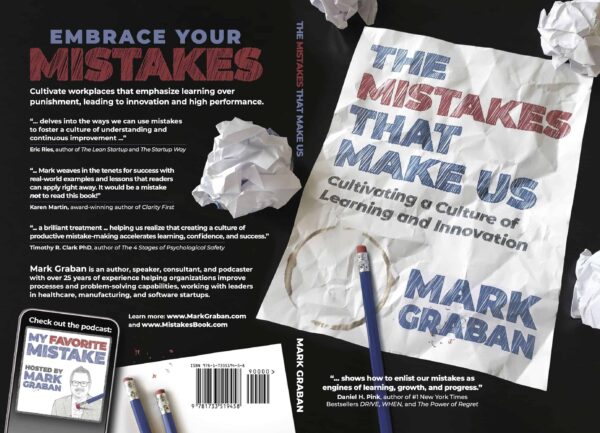
In The Mistakes That Make Us, I emphasize that a psychologically safe environment, where mistakes can be admitted and learned from, helps people surface problems so they can work on improvement.
Admitting a mistake is a starting point
A leader's role should be to model humility and vulnerability, acknowledging their own missteps. This approach not only builds trust but also encourages continuous improvement.
Hear Mark read this post — subscribe to Lean Blog Audio
If leaders can't admit their own mistakes, they set a dangerous precedent, leading to defensiveness, blame-shifting, and a lack of accountability across the team. A more useful response is to acknowledge the mistake, address its consequences, and explain what will change.
This aligns with the core principles of Lean and Kaizen.
Learning from mistakes and preventing them belong together. We should reduce avoidable errors and protect people from harm. When we test an idea, we can keep the test small, consider the risks, and decide how we will check the result.
Leaders who claim they're never wrong not only miss personal growth opportunities but also stunt the growth of their teams.
Let's choose leadership that's courageous enough to admit things like:
- “I don't have all the answers,”
- “I was wrong,” and
- “I might be wrong,”
Those words become credible when people see what happens afterward.
Try a more specific admission
For example, a leader might say: “I assumed we could meet that deadline without checking the workload. I was wrong. Let's review what is realistic and what needs to change.” This names the assumption and opens a discussion about the work.
Then follow through. Ask what you missed, listen without defending the original decision, and agree on a change. At the next check-in, review whether that change helped.
For workplace examples, read the KaiNexus and Value Capture excerpts. The psychological safety webinar explores the connection to continuous improvement.
Read a sample, then decide
Read a free preview of The Mistakes That Make Us: Cultivating a Culture of Learning and Innovation. Explore its approach to learning, accountability, and improvement before deciding whether it is right for you.
Find available editions on the book website, or bring these discussions to your leadership event.
Make it safe to learn from mistakes
In The Mistakes That Make Us: Cultivating a Culture of Learning and Innovation, I share stories and practical steps for leaders who want people to admit mistakes, learn from them, and prevent them from happening again. It received the 2025 Shingo Publication Award.






This comment, from the same job candidate, should also be disqualifying:
“I’ve always been a leader. I’ve never had any problem leading people. If I say do it, they’re going to do it. That’s what leadership is all about.”
Real comments.
[…] Management Failure: How Refusing to Be Unsuitable Hurts Groups and Innovation – Mark Graban explains true management is not about projecting infallibility–it is about fostering a tradition the place errors are seen as alternatives for studying and progress. […]