

Why People Drive Around the Gate: A Lean Lesson on Standardized Work
TL;DR: Workarounds are not a sign of employee resistance. They are signals that standardized work or supporting systems make the “right way” harder than an alternative.
I've spent years using a single photo in presentations to make a simple Lean point: when people create workarounds, the problem is rarely the people. The problem is usually the system.
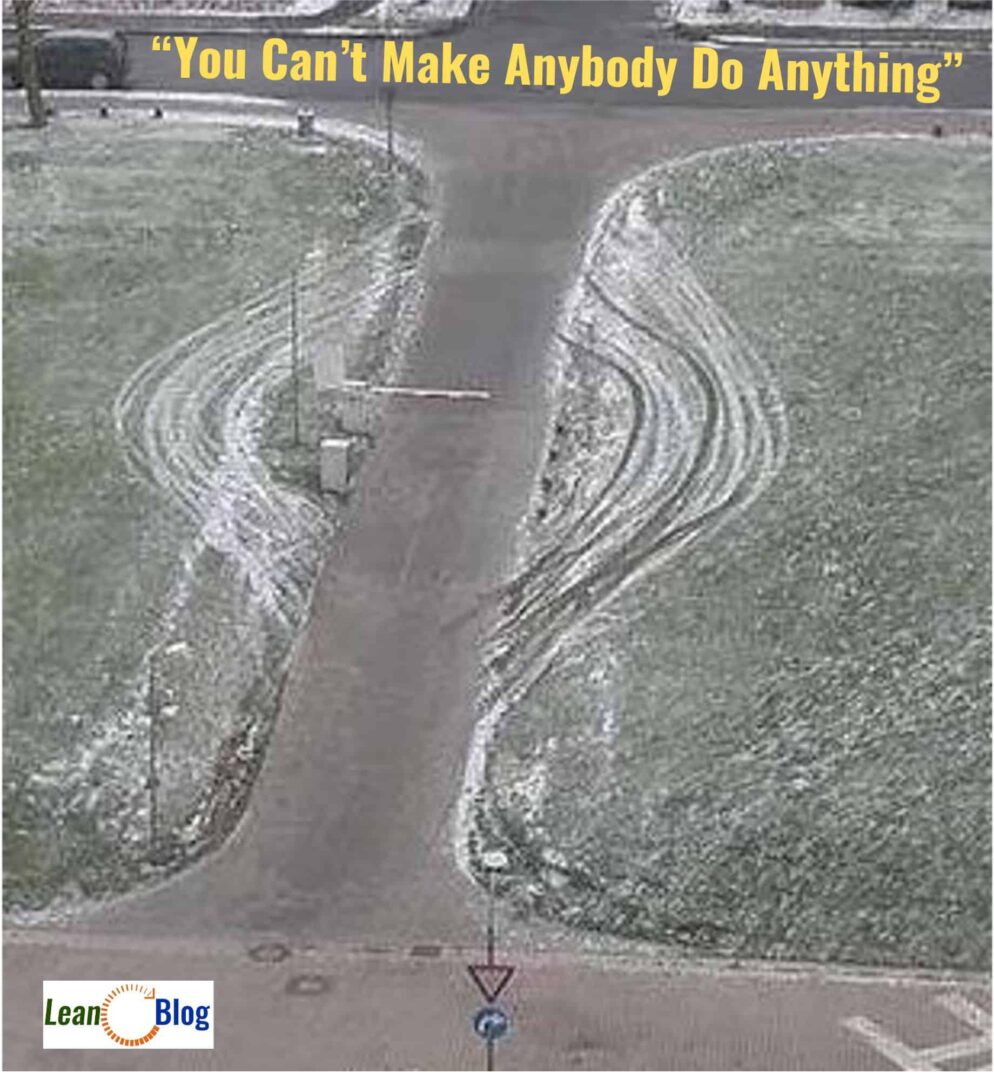
The image shows a driveway with a gate meant to control access. Yet tire tracks in the snow make it obvious that drivers routinely go around the gate instead of through it. It's a perfect visual metaphor for what happens in organizations when standardized work makes the “right way” harder than an available alternative.
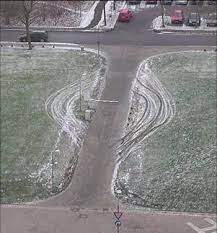
I was first given this photo by a hospital laboratory director who understood standardized work deeply. He believed, as Toyota teaches, that standardized work must be created by the people who do the work–and that leaders are responsible for making it easy to follow. He also understood something many organizations miss: you can't force compliance and expect it to last.
For nearly 15 years, I used this image without knowing where it came from. That mystery turned out to be less important than the lesson it keeps teaching.
Engaging the Team in Redesign and Continuous Improvement
One Toyota principle he embraced while we were redesigning the core laboratory was that standardized work should be created by those who do the job. I led a dedicated “Lean Team” that was drawn from laboratory staff. They were the ones who analyzed the current state and proposed a new lab layout that would dramatically improve flow and turnaround times.
But transforming the lab for better performance wasn't just a matter of physical changes to the space. It was as much about changing how work was done (standardized work), managed, and improved.
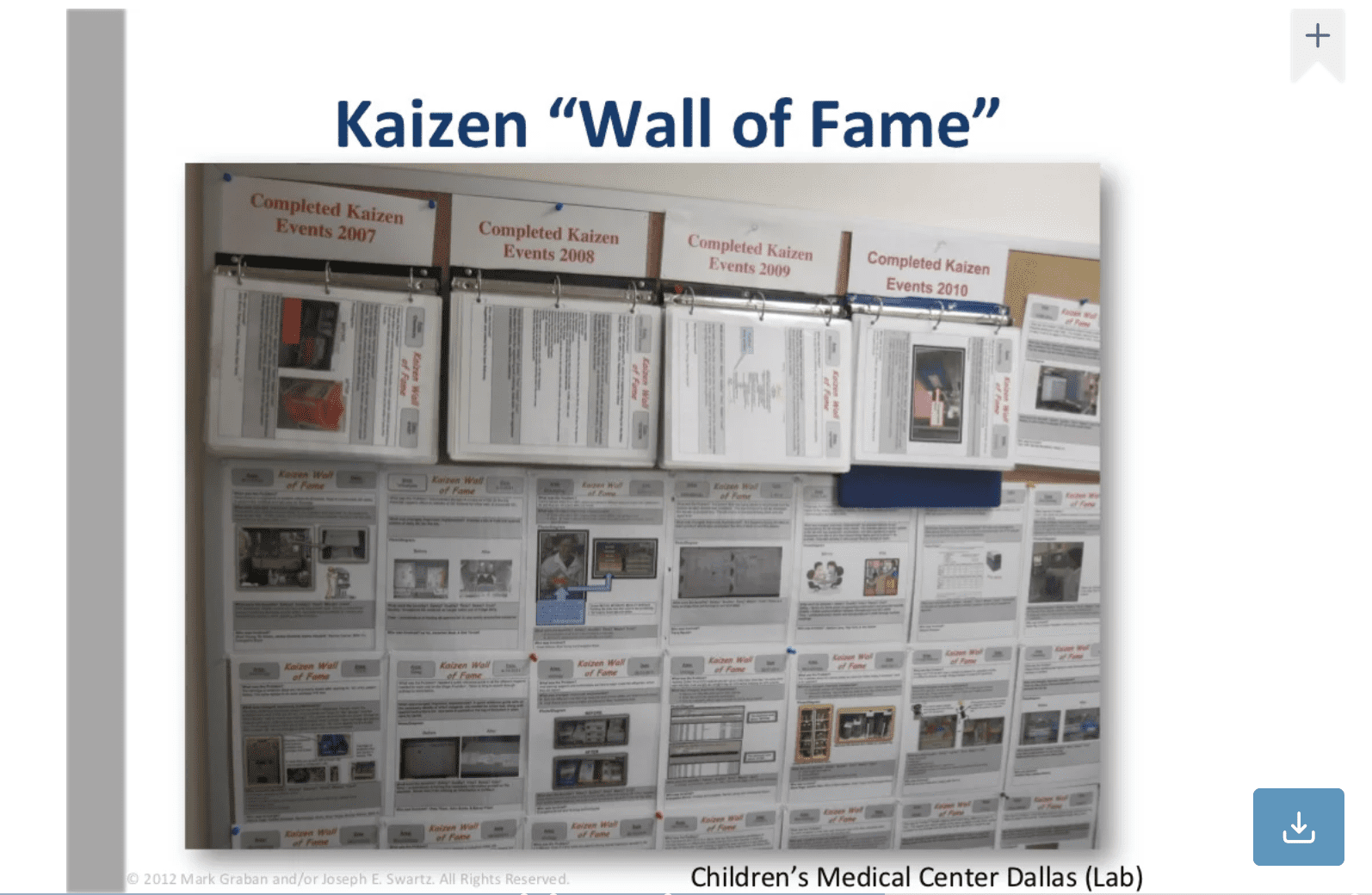
They became one of the best “Kaizen”– style continuous cultures that I've ever seen in healthcare (and one of their Kaizen boards can be seen here on Slide 29 of this presentation I gave, and their recognition and sharing “wall of fame” can be seen on Slide 35). You can also learn more about this in my Healthcare Kaizen book series.
But, back to the mystery image after these photos.
Over the years, I've used this photo as a way to prompt leaders to think differently about standardized work and so-called “non-compliance.” What looks like people ignoring rules is often something more important: a visible signal that the system makes the wrong thing easier than the right one.
Workarounds Are Signals, Not Rule-Breaking

Managing Standardized Work
When the lab director, Jim, and I would talk about standardized work, we'd talk about:
- Writing standardized work documents
- Training employees on using the standardized work
- Supervising the standardized work
- Improving the standardized work
It was, to me, a properly holistic view of a standardized work system.
When it came to supervising standardized work, Jim wanted employees in the lab to internalize WHY work should be done a certain way. To me, that illustrated the “Respect for People” principle as well as anything.
He believed in making it EASY for people to do the right thing, which means having the right support systems in place to make sure they had the right materials and supplies available, among other things.
Jim didn't want supervisors to be policing the workforce, looking for “violations” of standardized work. He wanted supervisors and managers to be supportive coaches. I agreed with him on all of that.
This distinction matters because standardized work does not exist in isolation. It only works when leaders design the surrounding system to support it. Without that support, even well-trained, well-intentioned people will find faster, easier, or safer alternatives.
Why Standardized Work Fails Without Support Systems
One day, Jim showed me this image and said something like, “You know, you can't really make anybody do anything.”
Jim wasn't bad-mouthing the employees. He didn't think people were being “non-compliant.”
So, back to this image — and I never thought to ask him about its origin.
You see a road or driveway with an access gate and its arm coming down to block the road.
You can't make people use the access gate if they have an easier alternative.
But what's happening? Because of the snow on the grass, it's very visually apparent that people are just driving around the gate!
So what should a Lean leader do when we see people driving around the gate? We should ask why. Why are people driving around the gate? We should assume people would be fine with doing the right thing if the right thing (staying on the road) were easy.
We should ask questions. We should go and see, investigate, and talk to people. Here, with a photo, we can only speculate.
When leaders encounter a workaround — whether it's driving around a gate or bypassing a procedure — the most important response is curiosity. The goal is not to stop the behavior first, but to understand what problem the workaround is solving for the people doing the work.
What Lean Leaders Should Ask When They See a Workaround
- Why are people driving around the gate?
- Is the gate broken?
- What makes the gate go up?
- If there are access cards or transponders, are they broken or too hard to get?
- Does the gate open too slowly?
- Does the gate only work properly during certain hours, but people need to get through before or after those times?
We should think about our own workplace the same way. If we see “workarounds” (similar to the literal “drivearounds” in the photo), we should ask questions rather than blame people for employing them. We need to understand what problem made the workaround necessary and we should eliminate that underlying cause.
Many of our workplace workarounds (especially in healthcare) don't leave such an obvious trail after the fact. We might need to work harder to see the workarounds in the moment. We should encourage people to speak up about the need for workarounds instead of just suffering through.
The Origin of the Photo — Discovered!
I had always wondered about where that picture was taken. From the road signs (and the snow) it might in Europe, since these clearly aren't American-style signs.
It wasn't that important of a mystery to me, as the image was still useful in presentations and when coaching leaders and prompting conversation.
I was really surprised to get an email out of the blue back in July from Pedro Tenório, an MBA student in Brazil. I believe he saw the image as part of a recorded “Lean Healthcare” education session I did for PUCRS Online.
He wrote this (and said it was OK to share with his name):
“Context and setting for the people driving around the gate:
I took a screenshot of the presentation, reverse image searched, and found a wider picture:
It was apparently some kind of parking lot. Then I looked at the traffic signs and snow, and started searching for some snowy place: Europe? North America?
After a while, I've found it:
It's the University of Bielefeld (Germany).
They have since put up some kind of post to avoid people driving around.”
Wow!
This image is apparently used a lot by others, especially in the context of “driving around security gates” (or for analogies people might create).
Here is a screenshot that shows the exact same location (taken from the opposite end of the driveway):
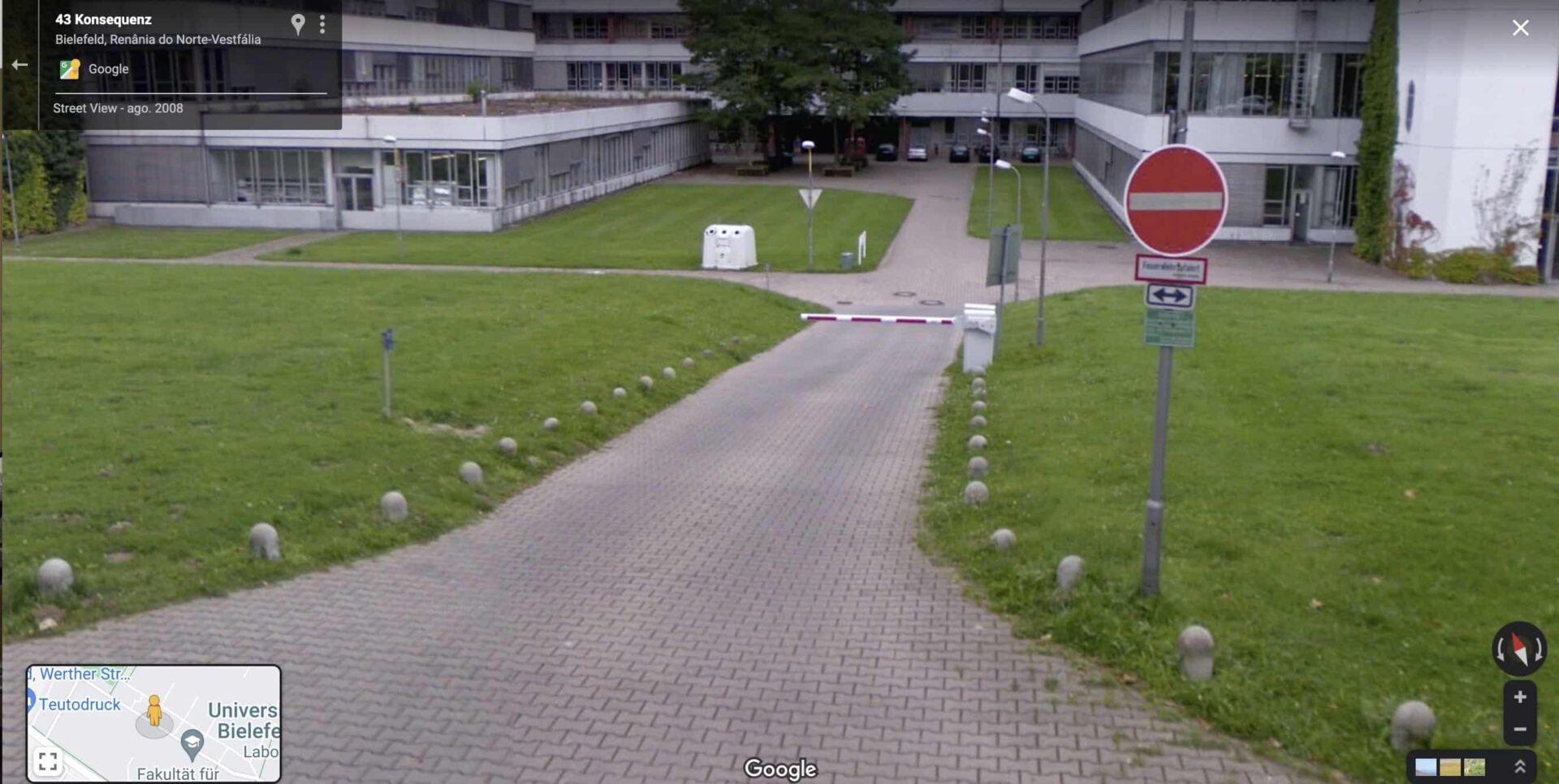
In Google Maps, you can move around and interact with the view (and I still don't know how Pedro found this within Google Maps, which is amazing).
When you zoom out in Google Maps, it looks like the gate is designed to allow people out to the street. The gate (as I'm guessing from the “Do Not Enter” sign) seems to be designed to keep people from getting in where they're supposed to be going out.
And that's probably why people were driving around the gate — they wanted to go the “wrong way” on a one-way driveway. That's what happens when we don't “go and see” (in person or via Google Maps). I'm guessing that the gate opens automatically when you're trying to use it properly, to leave.
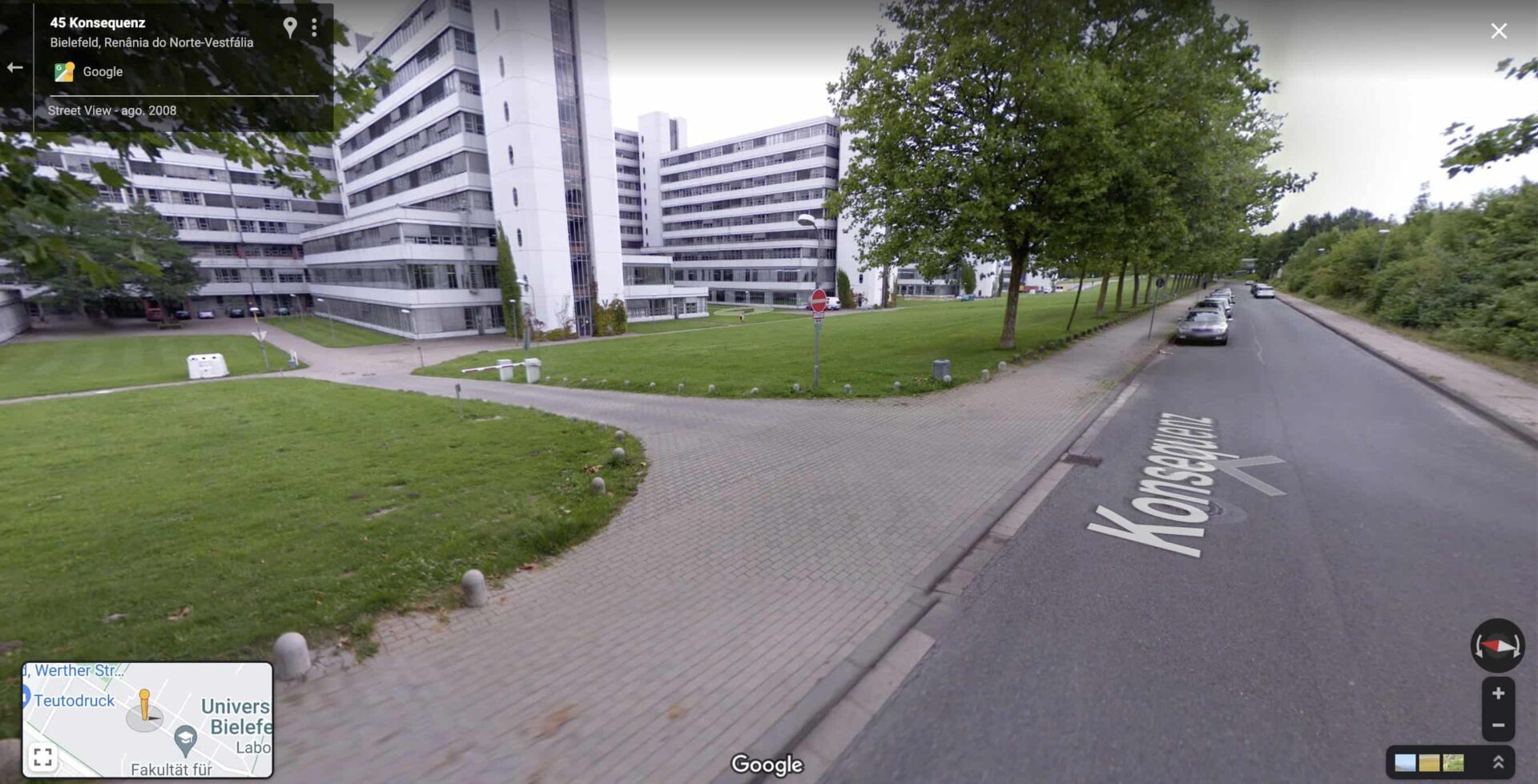
That's a question I had never thought to ask: “Is it a one-way driveway?”
Now that we understand that it's a one-way driveway, we could ask questions like:
- Why do people want or need to enter there?
- Are the correct entrances not convenient enough?
Or, you could start asking, “How do we prevent people from going the wrong way?”
Countermeasures could include fences, but they chose these concrete posts (which are probably less expensive and easier to install).
Once the origin of the photo became clear, the lesson became sharper. The behavior made sense once the system was understood. That's exactly what happens in our workplaces when we finally stop blaming people and start examining design.
Fix the System, Not the People
So, that solves the mystery — or mysteries — of where the photo came from and why people were driving around the gate.
Thanks again, Pedro!
I sent him a Kindle copy of my book, Measures of Success, as a thank-you.
Workarounds aren't a failure of people; they're feedback about the system–and Lean leaders use that feedback to make standardized work easier to follow and improve.
When leaders treat workarounds as learning opportunities instead of violations, standardized work becomes sustainable. If you're seeing “drivearounds” in your organization, I help leaders diagnose and fix the systems behind them. Let's talk.
Frequently Asked Questions
Q: Are workarounds a failure of standardized work?
A: No. Workarounds usually indicate that standardized work or its supporting systems make compliance difficult or impractical.
Q: Should leaders enforce standardized work more strictly?
A: Enforcement without understanding why workarounds exist often increases risk. Lean leaders investigate system constraints first.
Q: How does this relate to Respect for People?
A: Respect for People means designing systems that make it easy to do the right thing–not blaming people when systems fail.






How can we make sure that while we encourage open communication and understanding why things are done, we also keep clear rules and processes to ensure everything runs smoothly and safely?